



Books
Fiction


Review: ‘The Anatomy of Exile’
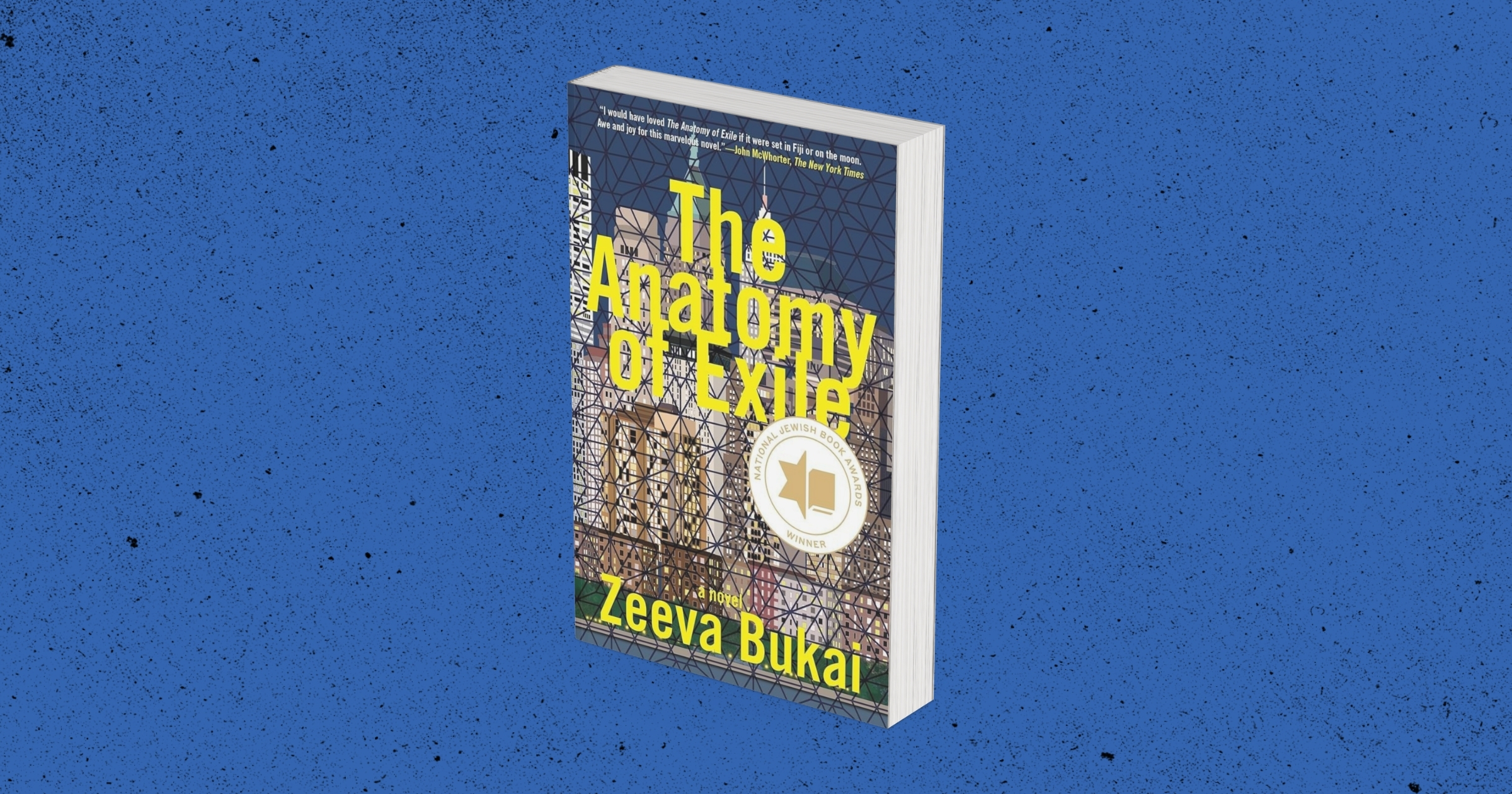
The Anatomy of Exile
By Zeeva Bukai (Delphinium Books)
Framed within two Romeo and Juliet-type stories, Zeeva Bukai’s debut novel, The Anatomy of Exile, is more than a tale of star-crossed lovers. Set between pivotal events in Israel’s history—the 1967 Six-Day War and the 1973 Yom Kippur War—the novel investigates ideas around home, exile and belonging and whether different peoples can coexist in peace.
In the opening scene, Tamar, an Ashkenazi woman, and her Mizrahi husband, Salim, are on the beach in Tel Aviv shortly after his return from service in the 1967 war when they learn that Salim’s sister, Hadas, has been killed by an Arab gunman in what is assumed to be a terrorist attack. It takes years, and Tamar and Salim living in a different country, before Tamar reveals to Salim that Hadas had been carrying on a long-term affair with her killer, Daoud, despite being married to an Israeli Jew.
In flashbacks, Bukai carefully reveals the background of her protagonists. Salim and Hadas were smuggled out of Syria to Mandate Palestine in 1944 as children. A few years later, they and other Mizrahi Jews were settled near Tel Aviv in a beautiful but run-down former Arab village, Kafr Ma’an, that had been abandoned by its Arabs residents as they fled—or were forced to flee, as Hadas posits—during the 1948 War of Independence.
Tamar’s parents had escaped from Poland to Tel Aviv before the Holocaust. Teenage Tamar falls in love with and marries Salim and moves in with him in Kfar Ma’an, despite their different backgrounds and prejudices in both families. Indeed, Tamar’s mother objects: “You’re killing me with this Arabische Yid.”
Bukai’s lyrical writing shines in describing the Israeli scenes, especially Tamar’s beloved Kafr Ma’an: “Her first impression of the village was that of a dilapidated Eden. Groves of citrus trees heavy with unripened fruit perfumed the air.”
Hadas loves Kafr Ma’an, too. It was there she met Daoud—son of one of the Arab villagers who had left the town—and where they started their relationship. As a married woman, she continues to rendezvous with him in the abandoned houses of Kafr Ma’an, long after the Jews there have been resettled to Tel Aviv. It is where she feels most at home, and also where she is found dead.
Devastated by his beloved sister’s death, and despite Tamar’s objections, Salim relocates his family to Brooklyn.
“People want to kill us here,” he says of Israel. “For what? Land? A house?” Indeed, longing for land, a house—a place to call home—forms the beating heart of this book.
In Brooklyn, Tamar’s teenage daughter Ruby falls for Faisal, the son of a Muslim family who had moved to the United States from Jaffa, then an Arab majority city and part of Tel Aviv. Scarred by Hadas’s death and continuously uncomfortable with her life in the United States, Tamar wants to separate the two. Samir, however, is more sanguine and, surprisingly, feels a connection with Faisal’s parents, speaking to them in Arabic, a language that Tamar does not understand. The tides of otherness are constantly shifting in this novel, not just in the differences between Arab and Jew, but also between Mizrahi and Ashkenazi—and between generations.
The novel includes a return to Israel for some of the characters and a post-1973 war riot in Jaffa, with men in keffiyehs shouting, “Free Palestine now!” According to its author, The Anatomy of Exile was years in the making; nevertheless, it is also a book for our time.
The novel ends abruptly, leaving the reader to answer many central questions. But the final sentence sums up the themes of hope and tragedy for the characters, and for Jews and Arabs in the Land of Israel: “Tamar closed her eyes and saw Kafr Ma’an as it had been, as it could have been.”
Elizabeth Edelglass is a fiction writer, poet and book reviewer living in Connecticut.
 Facebook
 Instagram
 Twitter

Leave a Reply