



Being Jewish
Commentary


The Case for Unplugging on Shabbat
I did not know about Charlie Kirk until his shooting on September 10, 2025, made headlines, and I am sure he had never heard of me. But it turns out that he and I had something in common—a focus on Shabbat as a time of separation. I recently published a book called The Shabbat Effect: Jewish Wisdom for Growth and Transformation; Kirk’s posthumous book, Stop, in the Name of God: Why Honoring the Sabbath Will Transform Your Life, came out soon after.
Kirk, a Christian and a popular conservative public figure, had been keeping what he called a “Jewish Sabbath” since 2021. He reportedly said that year at an event sponsored by Turning Point USA, the conservative organization he founded, that every Friday night “I turn off my phone, Friday night to Saturday night. The world cannot reach me, and I get nothing from the world.”
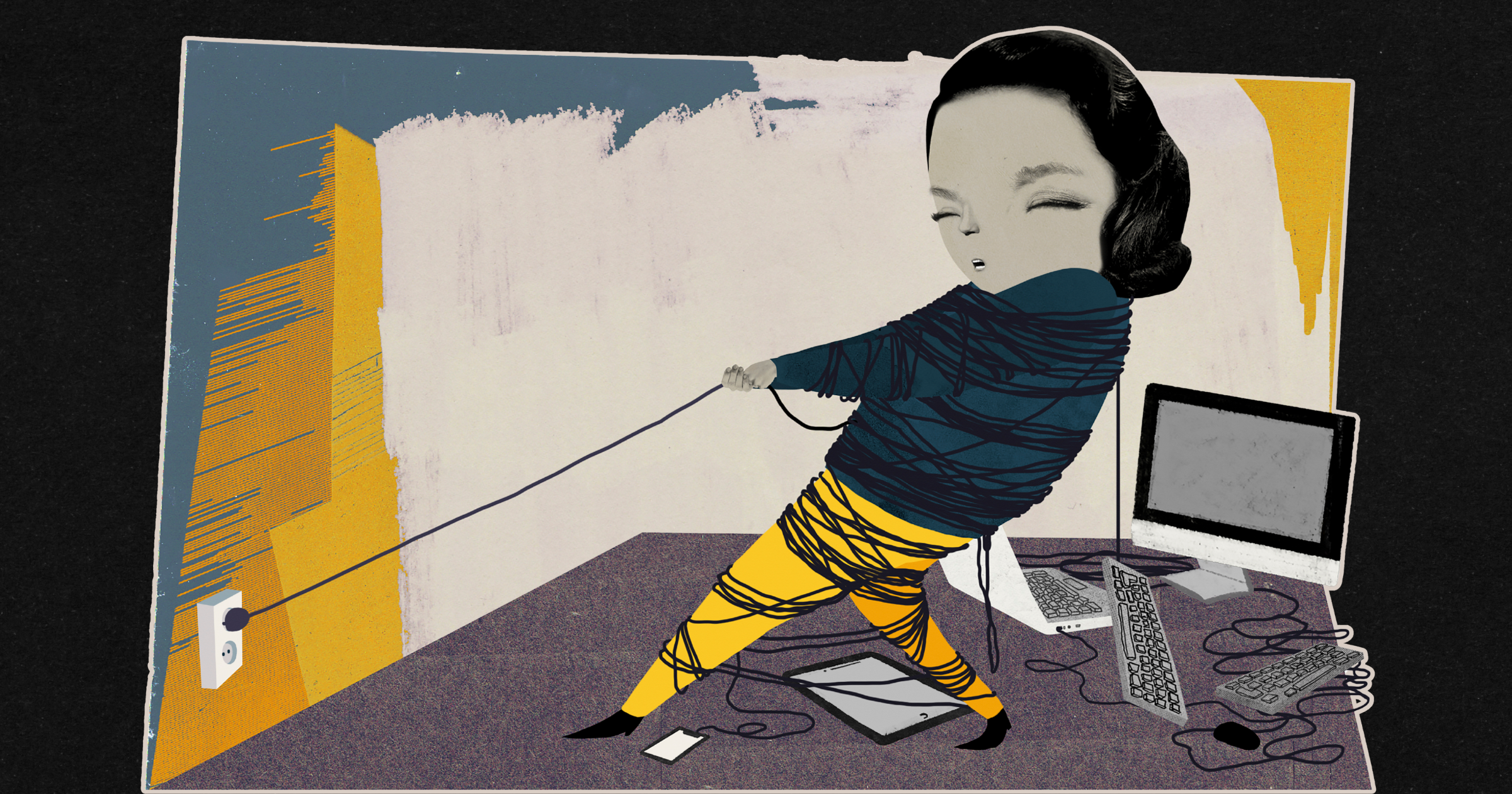
According to articles in The New York Times and other publications, the idea of Shabbat as a time to take a break from our relentlessly frenetic and anxious world and to reconnect with oneself and one’s friends has been trending over the past several years. Much of the focus has been on taking a digital Shabbat, a break from electronics and social media.
Indeed, there are many books from non-Jews—and some Jews—that promote the health and wellness benefits of what author and filmmaker Tiffany Shlain, a secular Jew, calls a “Tech Shabbat.”
But there is significantly more to keeping a truly Jewish Shabbat than taking a break from your cellphone. (If that were really what Shabbat is about, what accounts for Jewish observance of the day for thousands of years before the iPhone landed in our hands?) Yet there is no denying that one of the most significant acts people in our modern world can do to create a Shabbat experience is turn off their phones.
And from my own experience, I have seen how difficult it can be to do so.
My travels speaking for The Mussar Institute, an organization dedicated to the Jewish spiritual discipline of mussar, which focuses on self-development, has taken me to many Orthodox synagogues. In most, including the one I attend, there is a sign indicating “no cellphones” during prayer services.
Nevertheless, it is rare when a phone does not ring, beep or buzz somewhere in the congregation, even on Shabbat. And if that is the case in the Orthodox community, where use of electronics on Shabbat is banned according to Jewish law, what of other Jewish communities?
The challenge to liberate ourselves from addiction to devices is just the latest chapter in the long history of struggle between the physical and spiritual aspects of our human lives. Judaism sees the spiritual as the clear priority, but it acknowledges that the physical body and the material world are necessary anchors for the spiritual. The perennial problem we contend with is when physical pleasures are so addictive that instead of serving our holy aspirations, they cut us off from the spiritual. This is the condition of the modern world.
Six days a week we live in the material world. The seventh day is set apart from the others as holy, our opportunity to savor the delights of the spirit. Welcoming what is simply mundane—or, worse still, things that distract or even defile, such as social media—into the realm of the holy disrupts our sense of sanctity and makes it harder for holiness to dwell within us.
Shabbat weaves together the religious and the spiritual in a way that is summed up in one of the central symbols of the day: the kiddush cup. When we raise the cup on Friday night and recite the blessing over wine, we acknowledge that we have crossed from ordinary time into the holiness of Shabbat. The verbal formula we recite is directed to the wine, the agent of that sanctification; the cup gets no mention.
Yet just as we need the cup to contain the wine, to protect it and prevent its contamination, so, too, we need Shabbat as a time-bound vessel to contain and protect the spiritual and the holy.
If the kiddush cup were to crumble, the wine would spill, and no sanctification would be possible. Likewise, when we permit or even facilitate ordinary matters to penetrate the seventh day, no sanctification is possible.
If we are truly committed to experiencing a spiritual day of peace, rest and joy, then we have no choice but to press pause on the relentless assault that media wages on us. If phones, tablets and laptops are allowed on Shabbat, then peace, joy and rest are simply unattainable.
What drives us to the phone is the desire to communicate, to have instant access to information, to be included in the conversation. Pressing the off button becomes possible for us only when we gain mastery over those desires.
Relieving yourself of your cellphone is one of many things you can do to make sure the time-bound vessel of Shabbat is whole. In doing so, you gift yourself a closeness to the holy as you act on the Torah’s injunction, “Kedoshim tihiyu”—you shall be holy.
Alan Morinis is the founder of The Mussar Institute. His most recent book is The Shabbat Effect: Jewish Wisdom for Growth and Transformation.
 Facebook
 Instagram
 Twitter

Leave a Reply