



Health + Medicine


Black and Jewish Moms Unite to Fight Bias in Maternity Care
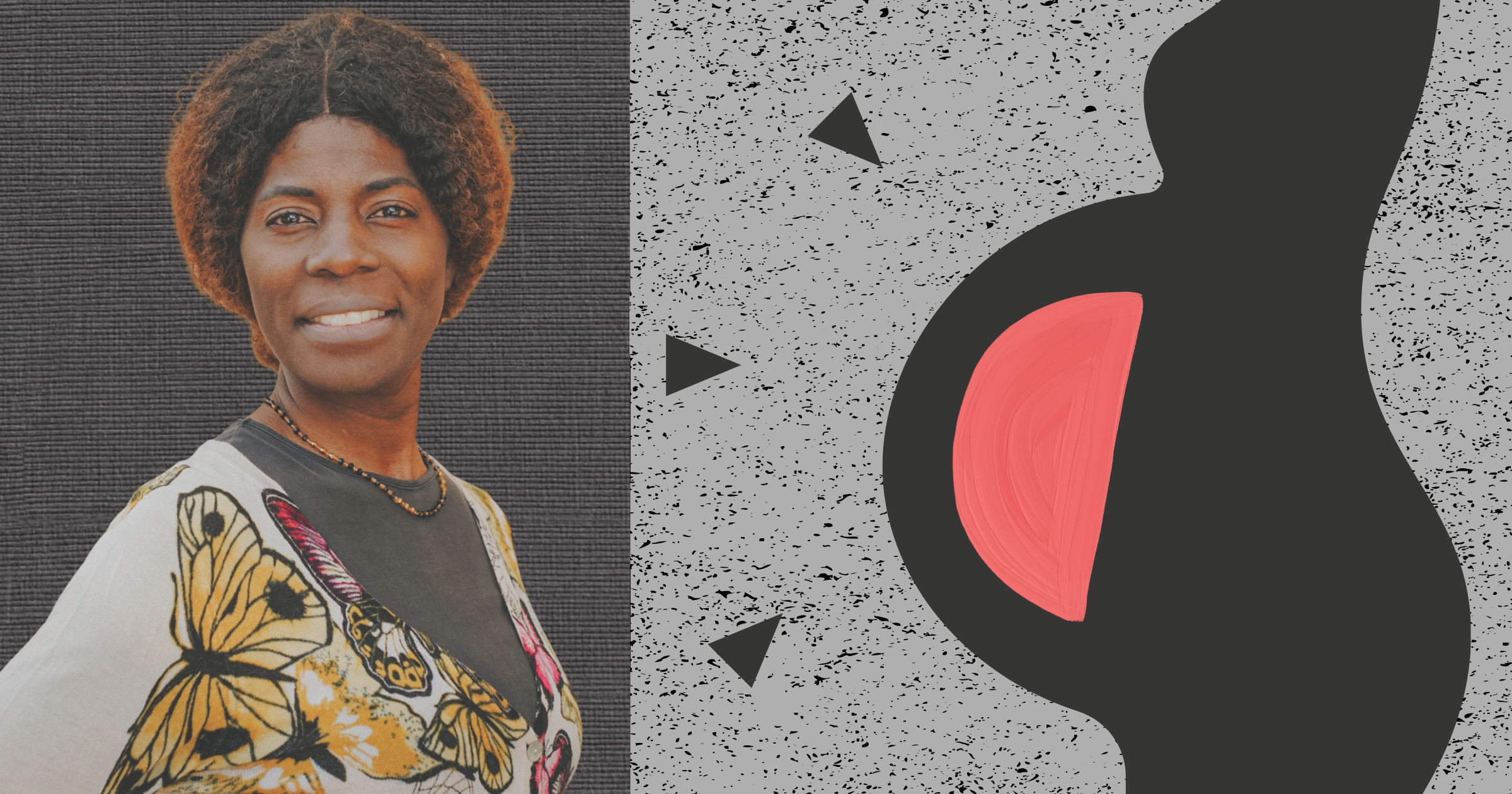
“You’re Jewish. Shouldn’t you be praying right now?” Already several hours into a difficult labor with her youngest child, Maayan Zik, an Orthodox Jew of Color and mother of four, ignored what she took to be a presumptuous question from the labor nurse—and one rooted in stereotypes about observant Jews.
Eleven years later, as she and her husband consider having another child, she’s unsure where to turn for care in a climate that has become even more precarious for visibly observant Jews after the Hamas attacks of October 7, 2023, and the ensuing war in Gaza, when incidents of antisemitism have increased significantly.
“Potentially, I’d like to have another child. But now I think I’d rather have a home birth, since I’m Jewish and my husband is Israeli,” Zik said in an interview from her home in the Crown Heights section of Brooklyn. “When you’re in your most vulnerable space, you want to feel safe with your providers and know they don’t carry prejudices.”
A similar mix of fear, doubt and alarm that she witnessed in her work as a doula inspired Ilana Ybgi, also an Orthodox Jew of Color, to launch the Crown Heights Birth Justice Project last year, not only to address concerns felt by Jewish mothers but also to serve as outreach to other neighborhood women. Ybgi’s initiative brings together Black women, a group that also experiences bias in maternity care, especially around pain management, and Orthodox Jewish women—including some Jews of Color—for facilitated sessions. The first gatherings were held last summer, with more scheduled for early this year.
Participants, most of them already mothers, learn to advocate for better maternal health care and support one another through pregnancy, postpartum and beyond. The dialogue-heavy workshops, therapeutic drawing exercises, lectures and Q&As with experts also aim to encourage women to name and confront antisemitism, racism and bias in the birthing world.
“Since October 7,” Ybgi said, “there’s been a lot of hatred directed toward people like me,” noting that she is aware of colleagues who have said that they wouldn’t care for “Zionist women and their babies” and that some were calling on “all birth workers to march against Israel.”
Stereotyping patients in medical settings can have serious consequences, added Ybgi, who, with her background as a doula, opted to deliver her three children at home with the support of her husband. She is also a stepmother to her husband’s two children from a previous marriage.
She launched her project in Crown Heights since it’s her home—and because the Brooklyn neighborhood has long been a crossroads of Black and Jewish life, marked both by an uptick in anti-Jewish violence after October 7 as well as lingering tension from the 1991 race riots, which occurred after a driver in the motorcade of the late Rebbe Menachem Mendel Schneerson struck two children of Guyanese immigrants, killing one. Ybgi set out to bring the Black and Jewish communities together through the shared experience of motherhood.
Her mission earned the project a grant from the Jews of Color Initiative (JOCI) to address antisemitism through a Jews of Color lens.
“I was impressed by Ilana’s impact, the way she applies concepts of racial and reproductive justice,” said Ilana Kaufman, CEO of JOCI, which was founded in 2017 to focus on grant making, community education and research into racially diverse Jewish populations. “She’s a community builder who brings calm and optimism. This project creates opportunities for many women to feel truly advocated for.”
There is a longstanding stereotype that Black women in labor have a higher pain threshold than others, as recently noted in a 2025 Journal of Clinical Medicine report. In addition, according to a 2019 study conducted by the National Institutes of Health, medical providers are less likely to recognize pain in Black patients’ facial expressions. And the Centers for Disease Control and Prevention report that Black women are two and a half times more likely to die from pregnancy-related complications than white women.
Orthodox women face bias around pain management and intervention in childbirth, too, said Ybgi. “Visibly Orthodox women are often treated as ‘naturally’ equipped to give birth without help,” she said, probably due to many of them having significantly more children than secular women. “If a woman is an Orthodox Jew of Color, that bias compounds.”
Other misleading impressions about Orthodox mothers are the beliefs that they need male approval for any medical decision or are prohibited from using pain relief.
Zik lives within the same tight-knit Lubavitch area as Ybgi. She recalled that on the night she gave birth to her youngest, she requested an epidural but was told both anesthesiologists on duty were unavailable.
“Part of me thought they said that because they thought, ‘Oh, she’s had three kids before, she knows what to do,’ ” she recalled.
Shawnee Benton Gibson, a social worker and maternal health activist in New York City who facilitated a session for Ybgi, spoke about her own difficult births and experiences with postpartum depression, for which she received no treatment or support. “I call what I did ‘white knuckling,’ just getting through it because that’s what you did back then,” Gibson said. Her daughter, Shamony Gibson, had even less support.
Immediately after delivering her second child in October 2019, Shamony experienced shortness of breath and chest pain. Despite repeatedly reporting her symptoms, doctors and nurses dismissed her concerns. Thirteen days later, she died from a pulmonary embolism. Her story is featured in the Peabody Award-winning 2022 documentary Aftershock, which examines how systemic failures in health care—especially for women of color—lead to preventable deaths.
Gibson, who is not Jewish, said she felt compelled to lead a session because racism and antisemitism in health care affect everyone.
“If you are a person with a womb, came from a person with a womb, or know someone with a womb—that means everybody—you need to be in this conversation,” she said.
Ybgi said she’s been heartened by how project participants openly share their stories. At the inaugural session last summer, held at Grassroots Brooklyn, a florist shop on Eastern Parkway, women chatted over fresh fruit and sushi, relaxing on comfortable couches surrounded by blooms and greenery.
“It was very cozy and intimate. It felt like being in someone’s living room,” Ybgi said of the gathering that drew more than a dozen individuals. “I didn’t anticipate how much women would share. They’ve found common ground, realizing their mothers and grandmothers didn’t always get the care they needed, or that their own concerns were dismissed.”
Zik agreed. “It was like a therapy session,” she said. “I had the right resources, learned how to advocate for the right medical team and made real connections with other women.”
That access to area experts, including consultants from Brooklyn Lactation Support and Midwifery Care, appealed to local mom Chani Farron, who already had an interest in working in a maternal health setting.
“I’ve been at my sisters’ births, and that got me thinking of becoming a doula. There’s something thrilling about being there at the beginning of life,” said Farron, a mother of three, adding that she hasn’t yet begun formal doula training. Spending time with women at project events who are from different, but geographically close, communities in Brooklyn is further empowering, she said.
“We might look different, but we share experiences,” Ybgi said. “Shared vulnerability can be a starting point, not an obstacle. It’s about getting people to talk. That’s where the real work begins.”
Cathryn J. Prince is a freelance journalist and author of the forthcoming book For the Love of Labor: The Life of Pauline Newman.
 Facebook
 Instagram
 Twitter
Amy Levine-Kennedy says
Super compelling. I will be sharing this with my daughter, a family medicine resident who does a lot of OB training. Thank you for bringing this issue to light.
Nicola Downes says
A really inciteful peace. It’s also really heartwarming to know as a Jew of colour that Black and Jewish coalitions are being built across so many subject matters, especially simce there has been such a recent crisis in Black and Jewish relations.