



Books
Fiction


REVIEW: ‘Letters from the Afterlife’
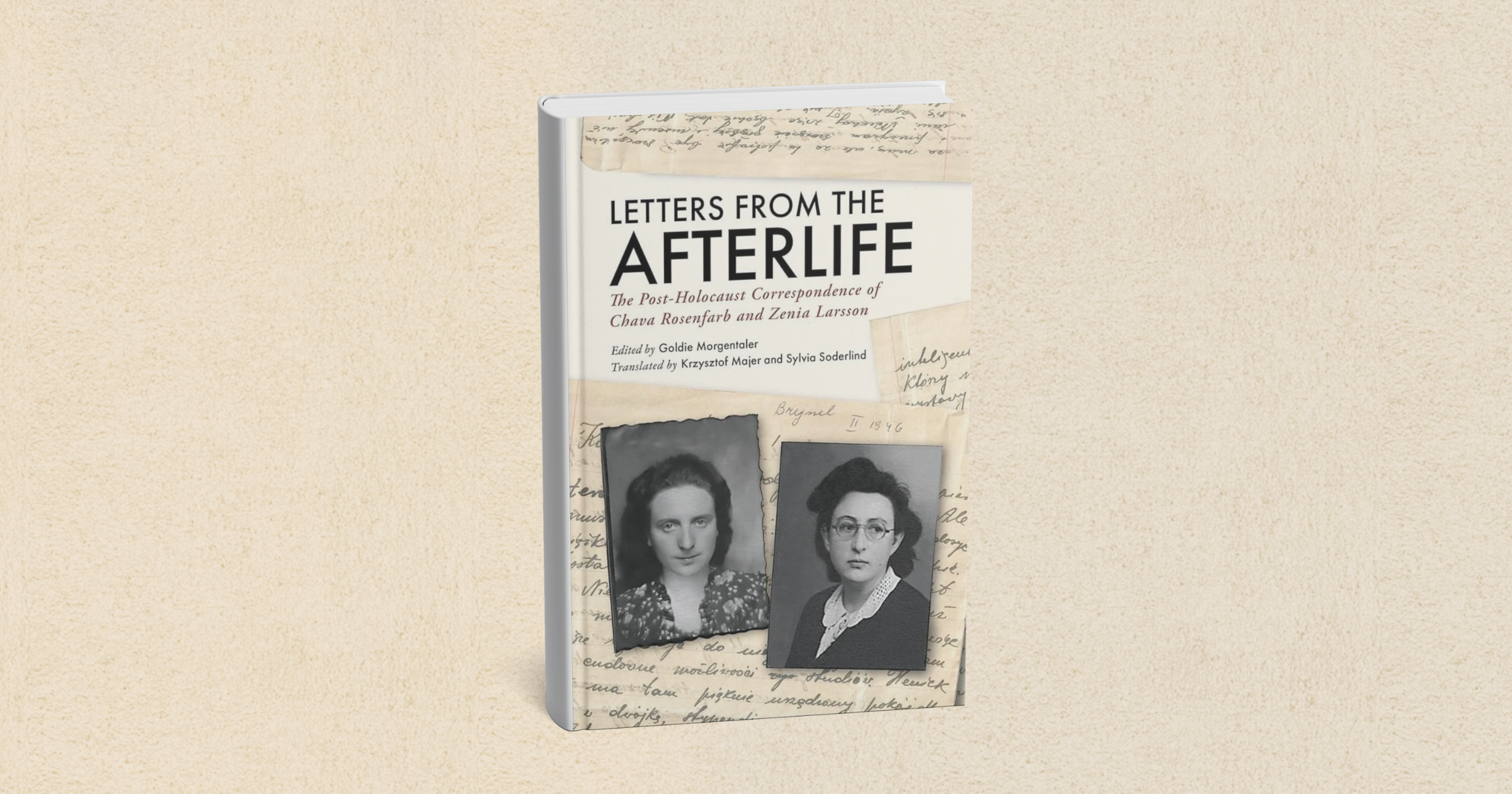
Letters from the Afterlife: The Post-Holocaust Correspondence of Chava Rosenfarb and Zenia Larsson
Edited by Goldie Morgentaler. Translated by Krzysztof Majer and Sylvia Söderlind
(McGill University Press)
Letters from the Afterlife offers much to ponder, opening a window into a remarkable postwar story told in real time. Gathering the correspondence between two articulate women rebuilding their lives after the Holocaust, the book reveals innermost hopes, frustrations and private reflections rarely captured in traditional historical accounts.
The letters between distinguished Yiddish writer Chava Rosenfarb and sculptor and author Zenia Larsson span 1945 to 1971. Writing across continents, they share joys and sorrows, the challenges of adjusting to new worlds and their deep affection for each other. In the introduction, Goldie Morgentaler—Rosenfarb’s daughter and the book’s editor—provides rich background on the women and their wartime and postwar experiences.
Rosenfarb, born in 1923, and Larsson, born in 1922, were childhood friends from Lodz who survived together through the ghetto, Auschwitz, the Sasel slave labor camp and Bergen-Belsen. After liberation, circumstances and geography separated them, with Rosenfarb settling in Montreal and Larsson in Sweden.
The book offers insights into their artistic creativity. In a letter dated November 28, 1950, Rosenfarb reflects, “I have never craved fame. It was always creation that I loved, that moment when the music inside my heart becomes clothed in words and pours out from under my pen in melodious stanzas.”
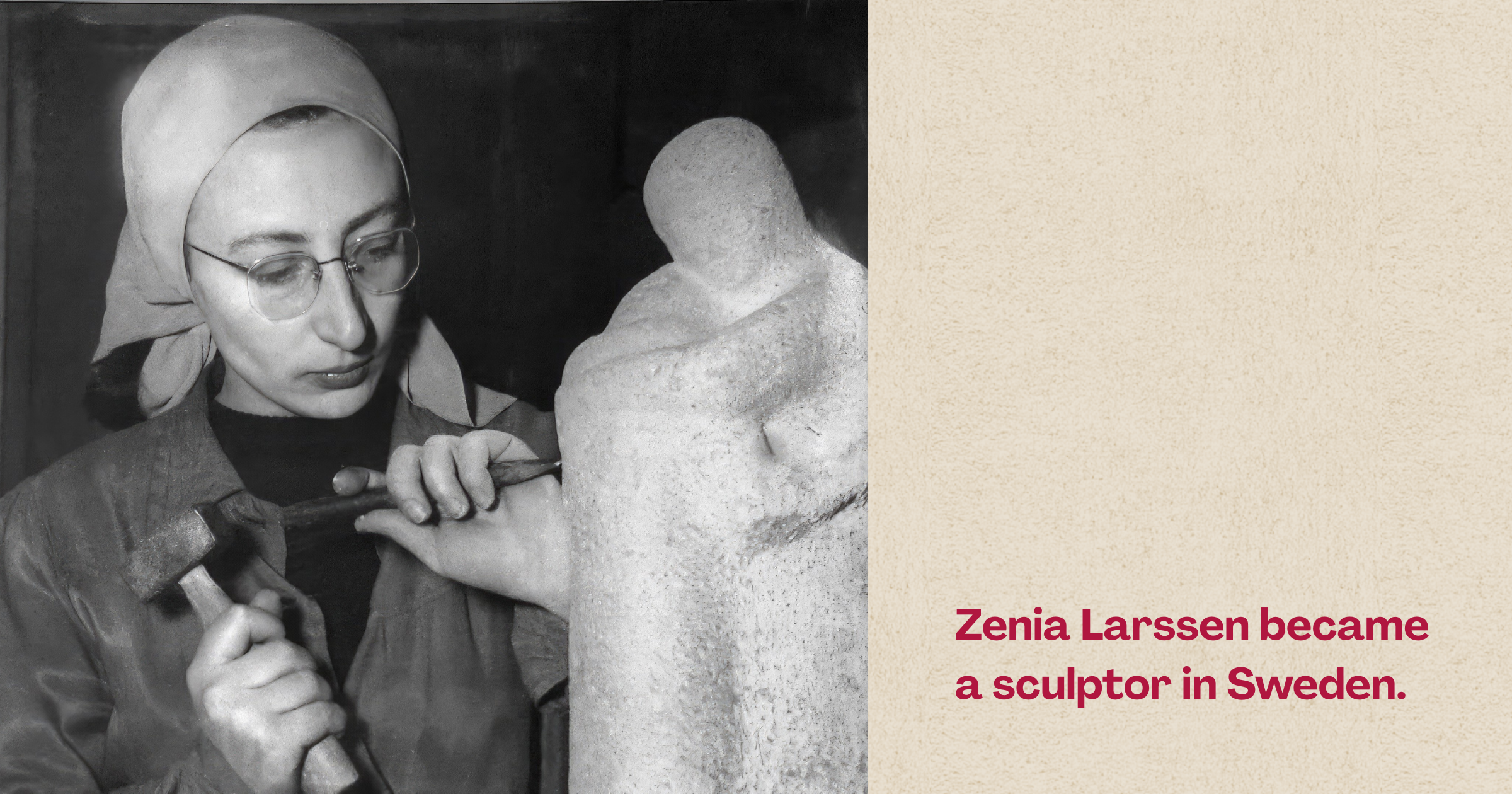
That drive to create after profound trauma runs through the correspondence. Both women were displaced from their origins, lost family members and suffered in the camps yet were able to create art. Rosenfarb became a world-renowned Yiddish writer of poetry, fiction and drama. Larsson published 11 books in Swedish and trained as a sculptor at a prestigious art academy.
I found myself reflecting on the language challenges that accompany displacement. The friends wrote in Polish, the language of their childhood. Rosenfarb would have preferred Yiddish, but Larsson was not fluent; unlike Rosenfarb, she had not attended a Yiddish-speaking school in Poland. Over time, Larsson began losing her Polish as she grew more comfortable in Swedish, and Rosenfarb’s command of Polish also weakened. This correspondence grew more difficult as the years progressed and their facility with a shared language eroded.
Their lives mirror the broader experiences of many Holocaust survivors. They had to adjust to entirely new circumstances, foreign countries and unfamiliar cultures and customs. Both faced economic hardship in the years immediately after the war. Rosenfarb and her husband initially settled in Brussels before immigrating to Montreal, where her husband restarted his professional path by enrolling in medical school. Rosenfarb continued writing in Yiddish, even as she navigated the daily demands of life in English and French.
Larsson remained in Sweden and married a non-Jew—a common path among women brought from Ravensbrück and Bergen-Belsen to Sweden by the International Red Cross at the end of the war. An early Lund University study, not mentioned in the book, includes interviews with survivors in Sweden and offers valuable detail. (I wrote about the rescue effort, the Lund archive and interviewed some of these survivors for my book, The Jewish Women of Ravensbrück Concentration Camp.)
Letters from the Afterlife prompts reflection on how much technology has transformed communication. The two friends had no WhatsApp, Zoom or email, and international calls were prohibitively expensive and therefore rare. Their pen-and-paper correspondence would be unlikely today. The book offers a nostalgic window into pre-digital communications, and it suggests that in gaining instant, global contact, we may have lost something intimate and irreplaceable.
Rochelle G. Saidel, Ph.D., is the founding executive director of Remember the Women Institute, an organization based in New York City that for 28 years has conducted and encouraged research and cultural projects that integrate women into history, especially Holocaust history. She has authored or edited eight books on the Holocaust.
 Facebook
 Instagram
 Twitter
Leave a Reply