



Books


REVIEW: ‘This is Not About Us’
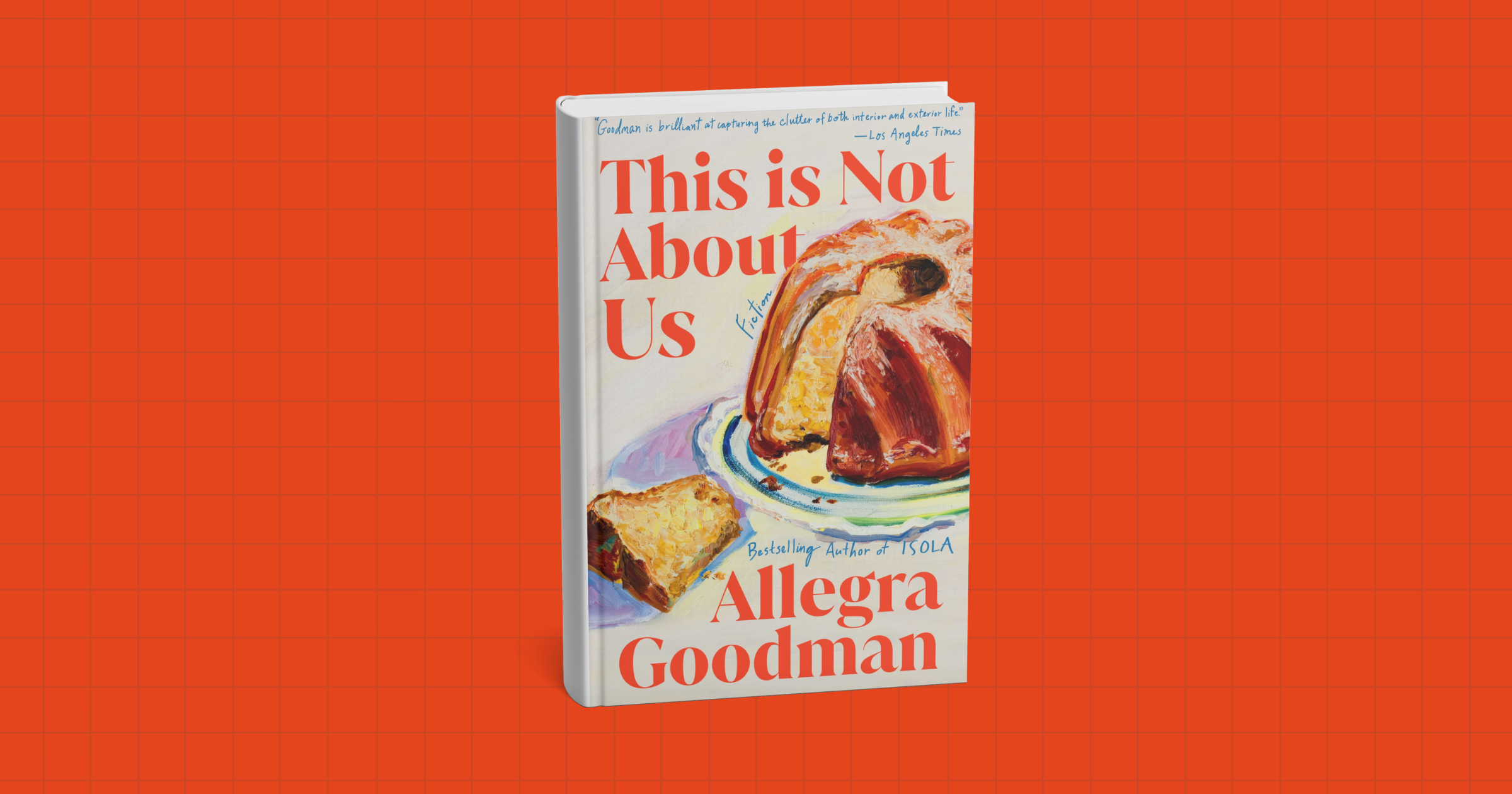
This is Not About Us
By Allegra Goodman (The Dial Press)
If Tolstoy had been Jewish, he might have written, “Every dysfunctional family expresses its mishegas in its own way.” But he was not—and that’s O.K., because the arbiter of Jewish American family tsuris, Allegra Goodman, is alive and kicking and brimming with stories of Jewish Americans in all their delightfully idiosyncratic ways.
Goodman has been wowing readers since her undergraduate days at Harvard, in the late 1980s, when she released Total Immersion, a collection of short stories. Still in her 20s, she followed it up with the critically acclaimed second collection, The Family Markowitz.
Since then, Goodman has written another 10 books of fiction—most infused with Jewishness.
The good news for lovers of her earlier works is that she has returned to a similar format in her latest, This is Not About Us, a novel in stories that introduces readers to several generations of Rubinsteins. Lawyers, doctors, musicians, book editors, college counselors and other various and sundry white-collar professionals, these relatives float in and out of each other’s lives in the quadrants of upper-middle-class Jewish East Coast suburbia. Saddled with envy, anxiety, guilt, long-held grudges and remorse, they also show themselves capable of love and caring, often through well-meaning yet clumsy interventions.
The stories touch more than a chord and a heartstring, with readers hungering to find out how the family discord threaded throughout the book will play out. Will sisters Helen and Sylvia, the family matriarchs, have a rapprochement after a schism that occurs at the shiva for their baby sister, Jeanne? Will Richard, Sylvia’s only child, find happiness again after his divorce from childhood sweetheart Debra, whom he has known since they were camp counselors at Ramah?
These predicaments, and many others, are not the stuff of a Jewish soap opera. They are beautifully rendered, complex portraits of complicated people living in a world that they find increasingly inscrutable and impenetrable. Like a deft painter, Goodman, with the economy of a brushstroke or two, brings to life characters the reader will care and think about long after their stories come to a close.
In one of Goodman’s most potent, incisive tales in the collection, “Kumquat,” octogenarian Helen, knowing full well that she is a difficult person with little hope of changing, is consoled by her husband, who tells her she is like a kumquat.
“ ‘Kumquats?’ Helen protested. Bitter marmalade was one thing. Delicious. But kumquats? Was she so sour? Was her skin so thin? ‘I don’t like kumquats.’ ”
“ ‘Well, there you go,’ said Charles. ‘I do.’ ”
The kumquats, kugels, soups, salads and vegan seder foods that have as much a place in these stories as the characters who prepare them will make readers hungry—not only for Sylvia’s apple cake, the initial cause of the sisters’ schism, but also for more Rubinstein tales.
Like a child who pleads for another bedtime story, readers will leave This is Not About Us wanting one more story—and then a second helping.
Robert Nagler Miller writes frequently about the arts, literature and Jewish themes from his home near New York City.
 Facebook
 Instagram
 Twitter
Susanna Levin says
I’ve never understood the concept of “Jewish guilt.” I grew up in Jewish suburbia, deeply involved in synagogue life (I lived across the street from our shul). Guilt was something you felt for doing something wrong — no more no less.