



Arts
Exhibit


The Jewish Women Who Pioneered Photography as Art

In 1940s Jerusalem, German-born photographer Lou Landauer campaigned for funds to open a photography department at the Bezalel Academy of Arts and Design. In archival notes, she writes about being dismissed because “photography is only for documenting art, not an art form itself.” The academy wouldn’t establish such a department until the 1980s.
Walking through the new exhibition, “20×20: A Lens of Her Own: Pioneering and Contemporary Women Photographers” at ANU-Museum of the Jewish People in Tel Aviv, the dismissal feels absurd. Landauer—an influential artist and educator who taught at Bezalel and whose botanical photographs are on display—is one of 20 trailblazing female photographers from the early 20th century whose work is presented alongside that of 20 female photographers active today. The exhibition brings to life a brief but astonishing chapter in the history of the medium, set between the two world wars.
The Jewish pioneers showcased at ANU include fashion and celebrity photographers like Yva, famed in Weimar Germany, and Madame d’Ora, who took pictures of Coco Chanel and Pablo Picasso; Claude Cahun, acclaimed for her staged self-portraits; and photojournalist Julia Pirotte. They all worked in a period of political turmoil, social upheaval and rapid technological change.
As photography professionalized, women’s leading role in the field faded, overtaken by some of the men who had been their students. The ANU exhibit, open through January 2027, aims to restore these historical figures to their rightful position as trailblazers.
These women traveled widely and exhibited internationally. Many had trained at the famed Bauhaus school in Germany, where Lucia Moholy, also in the exhibition, helped build a photography department with her then-husband, Laszlo Moholy-Nagy. Most worked in Western Europe—Berlin, Vienna, Paris.
With the rise of Nazism, the majority of these women fled Europe, some to the United States, some to Argentina and some to Mandatory Palestine, where a group of them founded the first photography studios in Tel Aviv.
These women made their way in the world through fortitude and sheer talent, often in the face of grim odds. Polish-born Julia Pirotte photographed the French Resistance while fighting alongside them in Marseille, then returned to Poland to capture the aftermath of the 1946 Kielce pogrom. Her images of the tragedy remain among the only visual records of its occurrence.
In the exhibit, Pirotte’s black-and-white photos of women and children in Marseille are placed next to Israeli photojournalist Avishag Shaar-Ya-shuv’s color photos of women and children evacuated from communities near the Gaza envelope after the Hamas attacks of October 7, 2023. On the same wall is Shaar-Yashuv’s portrait of Rachel Goldberg-Polin and her husband, Jon Polin, taken before their son, hostage Hersh Goldberg-Polin, was murdered in captivity.
Yva, whose real name was Else Neuländer-Simon, was among the most influential fashion photographers of the Weimar era and even trained legendary photographer Helmut Newton. Yva was deported in 1942 and murdered at Majdanek. Her images are paired with Israeli fashion photographer Michal Chelbin, whose photos of models and dancers have a similar dreamy look.
In addition to her glamorous portraits of models and fashion icons on display, the exhibition includes Yva’s bold experiments with photomontage in which she layered multiple images to create a sense of movement. In one example, three dancers caught mid-motion appear superimposed over a saxophone player. Techniques now used in Photoshop trace their lineage to innovations like hers.
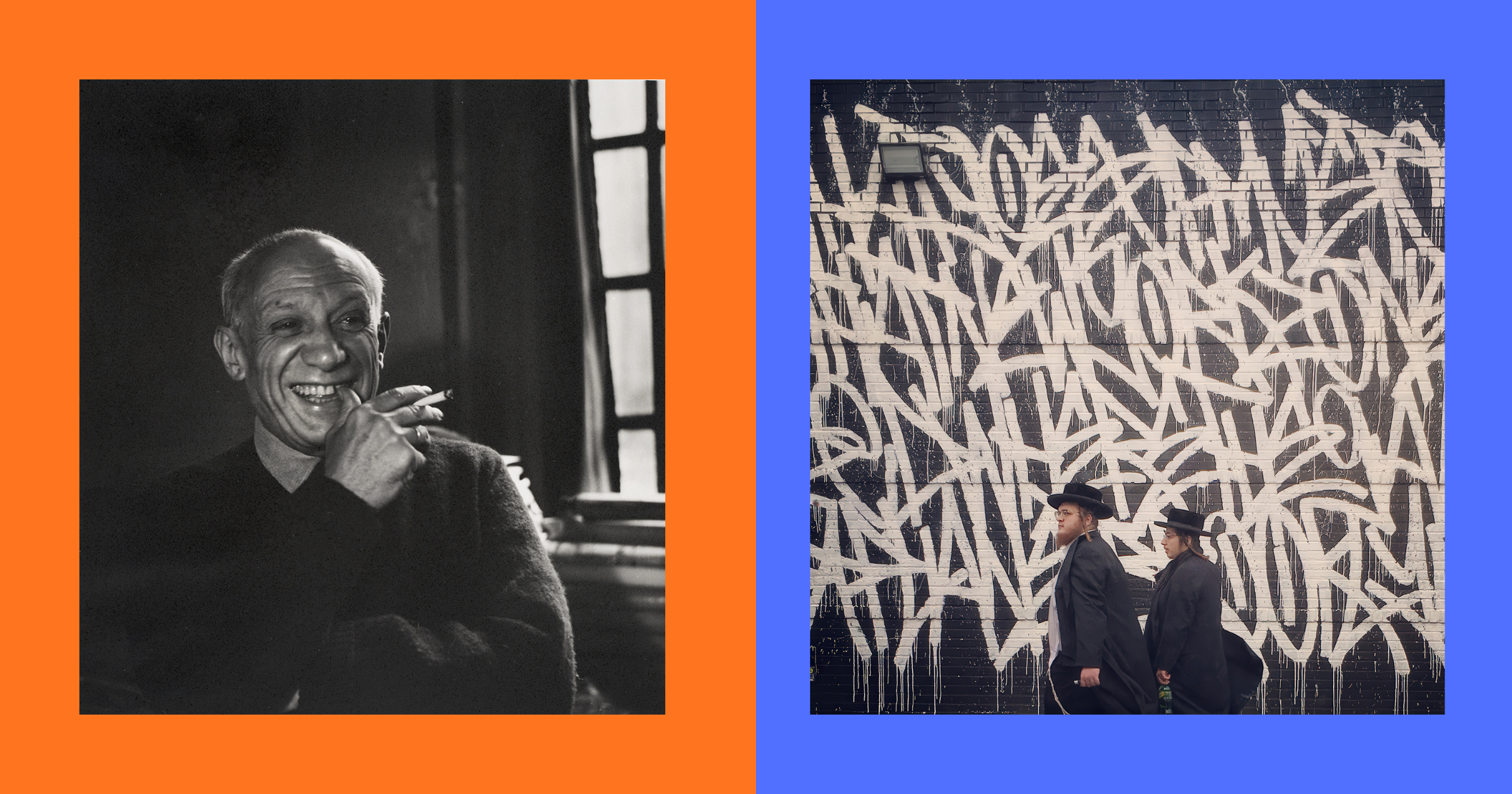
Then there is Austrian-born British photographer Edith Tudor-Hart, a Soviet agent who helped recruit the Cambridge Five, a ring of spies in the United Kingdom that passed information to the Soviet Union. She also documented impoverished working-class Britain between the wars. Her intimate snapshots of family life in 1930s Britain—a clothesline from a bird’s-eye view, a poor London family crowded onto one bed—are on display.
Michal Houminer, co-curator of “20×20” with Assaf Galay, spent five years researching and assembling an extensive list of early photographers for the exhibition. She then invited contemporary female Jewish photographers from around the world to identify one of their predecessors whose work most spoke to them.
The exhibition, Houminer said, is about “the resemblance between then and now. In the end, we all speak the same language.”
Some matches are eerily precise; others resonate in theme rather than content.
Canadian-born American digital photographer Jill Greenberg is one of the contemporary artists. “The exhibition is so important,” she said via email, “especially right now, when Jewish artists are facing similar challenges now as antisemitism is out in the open again, as evidenced by boycotts of Israel, Israeli artists, musicians and actors.”
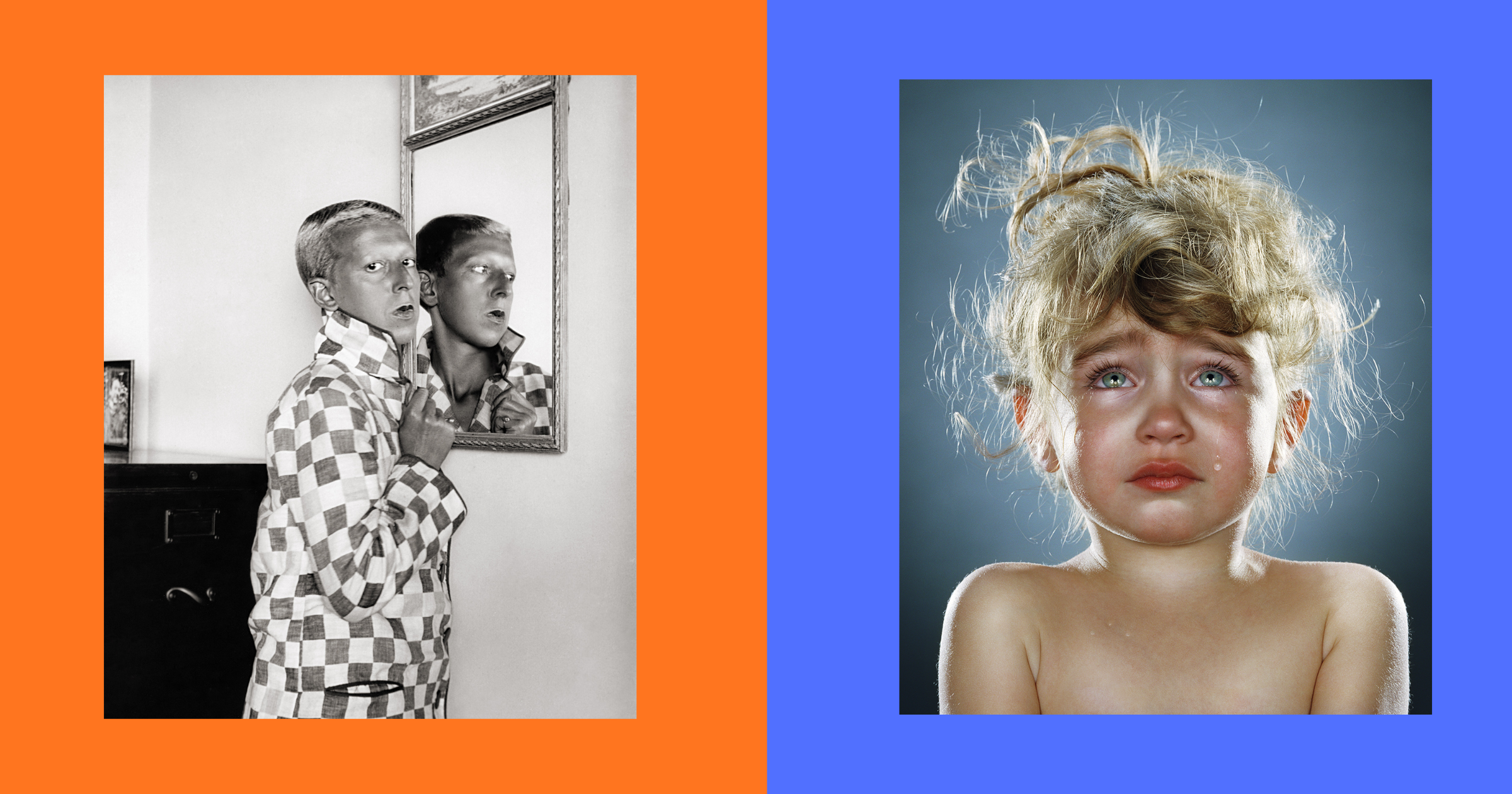
Greenberg uses Photoshop and digital manipulation in her oversized portraiture. An image from her “End Times” series of crying children—a commentary on environmental and political turmoil—is included in the ANU exhibition. As her pioneer, she selected Lucia Moholy, who documented Bauhaus buildings, products and workshops so meticulously that her images became the school’s visual identity, although many went uncredited for decades or were misattributed to male colleagues.
Moholy “was a polymath and a trailblazer who used a pseudonym occasionally,” said Greenberg, noting that she herself also has used a male pseudonym in her work to engage “with the perception of art-making from a man’s point of view.” She added, “At this point, my gender is not the biggest threat to my career. My Jewishness is.”
Each of the 20 contemporary photographers recorded a three-minute clip describing how she approached the exhibition. Visitors can listen to these stories as they move through the gallery. Amy Touchette, a street photographer in New York City, speaks about the pioneer she selected: Eva Besnyo, a Budapest-born street photographer and prominent member of the Nieuwe Fotografie (New Photography) movement, which championed photography as an independent art form. She took pictures of the women’s labor movement, immigrant communities and working-class life in Berlin and Amsterdam.
In her clip, Touchette explains that she connected to Besnyo’s sense of “quiet observation.” Their images align almost seamlessly in gesture and mood—from Touchette’s images of women in head coverings walking with children along a Brooklyn street to elderly men sitting on stoops, their legs draped over the steps. A century apart, both women were drawn to nearly identical subjects.
“Many times, we think we’re doing something new,” said Houminer, the ANU exhibition’s co-curator, “but someone preceded us.” Looking at the incredible female photographers of the past is a reminder to the creators of today that “we’re always standing on the shoulders of those who came before.”
Jessica Kasmer-Jacobs is a former books editor at The Wall Street Journal and literary agent. She has published essays and criticisms in The New York Times, The Washington Post, The Boston Globe and The Wall Street Journal. She lives in Tel Aviv.
 Facebook
 Instagram
 Twitter

Leave a Reply