



Health + Medicine


Hadassah’s Plastic Surgeons Restore Faces and Renew Hopes
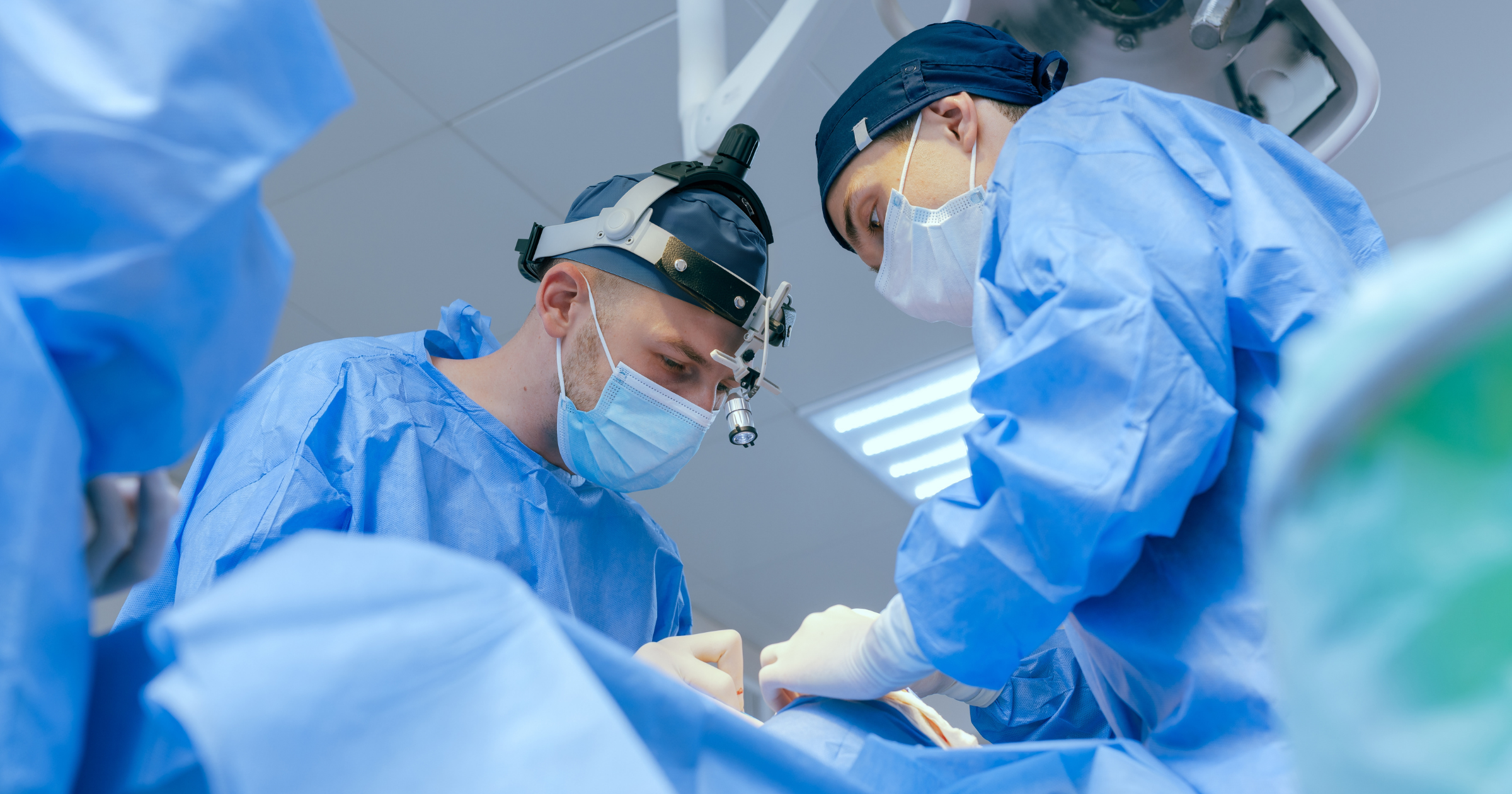
There were seconds when the 34-year-old reserve soldier in battle in Gaza believed all would be well. The bullet had merely scraped his scalp and sliced off part of his ear. But the heat generated by the bullet traumatized his brain, making the tissues swell within the confines of his skull. Pressure built behind his eyes, his head pounded, nausea washed over him and his world tilted.
The 20-year-old female soldier stationed at the Zikim training base south of Ashkelon has no memory of the projectile that hit her head on October 7, 2023, during the Hamas attacks on Israel. The recruits she was defending dragged her body to safety, believing they were carrying a corpse.
These are two of hundreds of victims of the war with Hamas who have suffered catastrophic facial injuries in the past two years. At the Hadassah Medical Organization, emergency room physicians, surgeons and others gave them lifesaving emergency care. Then, the Department of Plastic and Aesthetic Surgery joined the team.
“Our aim is to give our patients a normal, livable existence,” said senior plastic surgeon Dr. Stav Sarna Cahan, head of the Burns Unit, which is located in Hadassah Hospital Ein Kerem and part of the larger plastic surgery department headed by Dr. Alexander Margulis. “Your face is how you express yourself to the world, and its repair helps patients feel and function like themselves again.”
Over the past two years, necessity has sharpened the skills of HMO’s plastic surgeons, pushing them to reduce elective procedures to prioritize repairing the injuries of soldiers and war victims. At the same time, they are exploring new technologies, including culturing healthy skin cells, robotic handling of microscopic tissues and artificial intelligence-assisted surgical planning.
Faster battlefield evacuation and advances in medical technology have doubled survival rates for Israeli soldiers over the past 20 years—and with these developments has come a surge in the work of plastic surgeons, especially in treating facial injuries.
“Shrapnel and explosives to the face can affect breathing, eating, speaking, seeing and smiling,” said Dr. Allan Billig, a senior plastic surgeon. “Repair involves reconstructing and sometimes remodeling underlying structures, managing skin, nerves and muscles, minimizing scars and restoring function, all with close follow-up and sometimes revisions.”
On the morning of October 7, plastic surgery, like every other Hadassah department, moved into emergency mode. “We didn’t know the kind or number of casualties, so we planned for the worst,” Dr. Sarna Cahan said. They discharged patients who could safely go home and prepped teams of surgeons, specialized nurses, pain-management experts and others.
During those early days, the Burns Unit treated dozens of patients, most of them soldiers. One was a tank platoon leader and father of three whose vehicle was hit by an anti-tank missile. Pulled from the blaze with devastating burns to his face and upper arms, he was evacuated to a southern hospital, intubated and transferred to HMO. He is still recovering as an outpatient.
“His healing has been slow but steady,” Dr. Sarna Cahan said. “With new techniques, the excruciating daily bandage-changes and debridement”—removal of dead, damaged or infected tissue—“are minimized.”
His treatment involved covering wounds with dermal substitutes of bovine collagen and shark cartilage, complemented by donor skin from the Israel National Skin Bank—located at HMO, it is Israel’s central facility for preserving and storing human donor skin for reconstructive grafts. Robotic microsurgery then sutured his torn skin and muscles, reshaping tissue to look natural.
“This young man’s burns slowly healed, but his eyelids were left misaligned, so we surgically reconstructed first his lower lids and then his upper,” Dr. Sarna Cahan said. “Rehab has been months long, but the improvement is striking.”
Changes to army equipment also contribute to improved outcomes. Flame-resistant uniforms increasingly used since 2023 have been lifesaving. “A reserve officer was protected by his uniform from the blast of a boobytrap in Gaza, though his face sustained severe burns,” Dr. Sarna Cahan recalled. “After surgery, debridement and reconstruction, he returned to his army unit at his own request.”
Craniofacial surgery—correcting conditions that affect the structure, function or appearance of the head and face—is Dr. Billig’s specialty. He led the reconstruction team that treated the reservist whose brain swelled from the heat of the bullet that grazed his scalp.
Podcast: Hadasah on Call
Decode today’s developments in health and medicine with the Hadassah On Call: New Frontiers in Medicine podcast. In each episode, journalist Maayan Hoffman, a third-generation Hadassah member, interviews one of the Hadassah Medical Organization’s top medical professionals. Catch up on recent episodes, including an inside look at HMO with Gideon Melmed, executive director of Hadassah Offices in Israel, that highlights innovations from AI-driven cancer care to tuberculosis vaccine research that may reduce dementia risk. Subscribe here or wherever you listen to podcasts.
To relieve the pressure inside his head, neurosurgeons gave his brain space to expand by removing a piece of his skull. “The excised piece left a cavity, with no bone to hold his hair-bearing scalp,” Dr. Billig recounted. “This wasn’t only unsightly but also put him at risk of seizures, irritability and loss of balance and memory.”
Drawing on skills acquired during a fellowship in Canada, Dr. Billig and his team rebuilt part of the soldier’s skull and scalp. “We created a custom implant that fit as perfectly as a jigsaw piece, 3-D printed from a durable, lightweight, biocompatible polymer known as PEEK—the Rolls-Royce of implants,” he said.
Dr. Billig’s fellowship was at the University of Toronto Sunnybrook Health Sciences Centre under internationally renowned Dr. Jeffrey Fialkov, head of the Toronto hospital’s plastic surgery department. The son of a Holocaust survivor, Dr. Fialkov was a frequent visitor to Israel during the Hamas war, teaching and guiding complex surgeries of the head, eye socket, neck and jaw.
Having Dr. Fialkov’s guidance while the volume and complexity of cases increased and 30 percent of Hadassah staff were on reserve duty during the war was “a game-changer,” Dr. Billig said.
The female soldier shot in the head at Zikim and brought to HMO in critical condition was among those who benefited from Dr. Fialkov’s expertise. Doctors kept her deeply sedated for a month as they fought for her life, but her right eye and the bony orbit that held it could not be saved.
An oral surgery team—often used for repairing complex facial trauma due to specialized training in facial anatomy and trauma surgery—prepared the destroyed eye socket for a prosthetic with slivers of bone from her scalp. “Then our plastic surgery team came in,” Dr. Billig said. “We grafted fat to her temple region to restore normal contour to her face, using its other, less-damaged side as a template.”
Dr. Fialkov continues to train Israeli plastic surgeons at Sunnybrook in an ongoing collaboration with Hadassah and facilitates fellowships for Israelis at other leading Canadian hospitals. “Anything related to Israeli medicine holds a special place in my heart,” he said.
Functional recovery can take months, even years, as wounds heal, movement is regained and swelling settles. Scarring remains a persistent issue, impacting both appearance and function, and many patients must cope with disfigurement along with post-traumatic stress. A dedicated clinic to address their long-term needs recently opened at Hadassah Hospital Mount Scopus.
“No two injuries are ever the same,” Dr. Billig said. “The work is demanding and the responsibility to our patients immense. We’re constantly searching for solutions, thinking outside the box.”
“We grow close to our patients, to their whole families,” Dr. Sarna Cahan said. “They come in hurt, afraid, in pain, but determined to recover. I’m awed by their resilience, their will to heal and move forward. They’re truly heroes.”
Wendy Elliman is a British-born science writer who has lived in Israel for more than five decades. She is the author of the new book, The Outsiders Who Built Irish Entertainment: Maurice and Louis Elliman.
 Facebook
 Instagram
 Twitter
Leave a Reply