



Books


REVIEW: ‘You’ve Told Me Before’
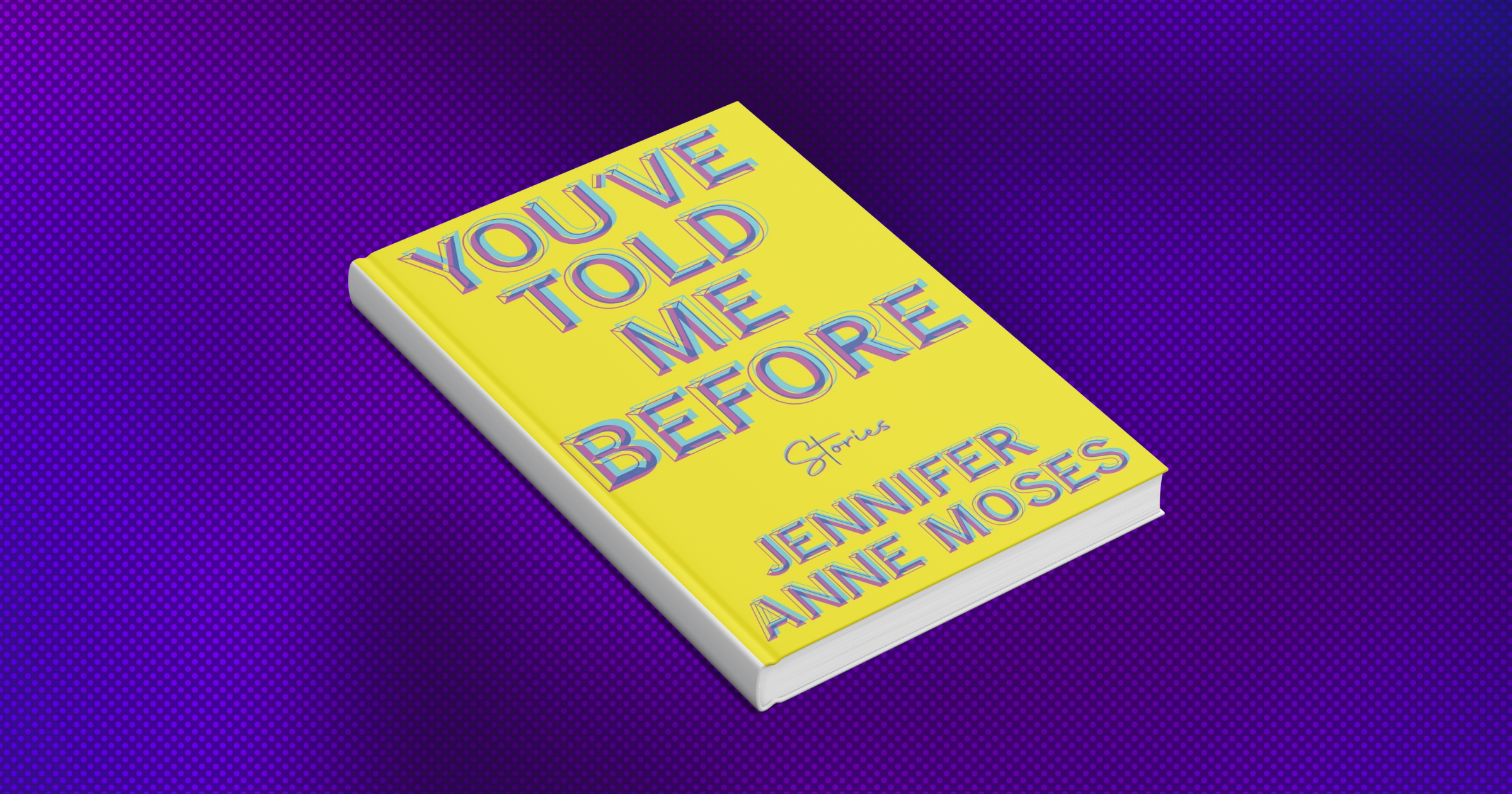
You’ve Told Me Before: Stories
By Jennifer Anne Moses (University of Wisconsin Press)
Jennifer Anne Moses’s new story collection, You’ve Told Me Before, is a showcase of the author’s humor, wit and emotional depth. In 12 vignettes, Moses takes on subjects such as antisemitism, marriage and mother-daughter relationships with both directness and nuance.
The author of seven previous books, this is her first short story collection, yet she makes the genre her own. Indeed, this collection may position Moses as this generation’s Grace Paley. But while that Pulitzer Prize-winning master of the short story drew on New York City’s Greenwich Village, the Vietnam War and the mid-20th century’s social justice struggles, Moses mines the more familiar terrain of Jewish middle- and upper-middle-class suburbia and American affluence.
In the title story, septuagenarian Nan looks back on her life and her early marriage, dull relationships with her children and husband and her ties to her formidable mother, Betsy, who thwarted her from marrying her true love. It’s a family with familiar dynamics, explored in fresh ways.
When Nan visits Betsy in the nursing home, Betsy, who has dementia, doesn’t recognize her daughter. Nevertheless, Nan is determined to confront her about her relationships. Unlike her earlier years, she isn’t seeking her mother’s permission—she is claiming her own truth. Suddenly, Betsy comes alive and yells out “Love! Love! Love! Isn’t that what we’re talking about?” And indeed, it is.
In “Jewish Wars,” the ironic title lands immediately in this tale of a literary brawl between Nora, editor of Lost Languages, an obscure academic journal, and Rachel Grossman, a former student and now successful novelist. Call it jealousy, righteous indignation or plain cantankerousness, but Nora’s takedown of Rachel’s latest op-ed about sizeism and sexism is anything but fair. Nora publishes her screed, “Whining All the Way to the Bank,” in Tablet magazine.
Real life and fiction collide in this sometimes cringey, sometimes hilarious war of words. At its core, the story wrestles with a familiar question: What makes writing “real” literature? Cultural relevance? Critical acclaim? Book sales?
Throughout the collection, Moses is unflinching about her characters and their motives. In “The Dick”—not the title character’s actual name—June, a middle-aged professor of Jewish literature, buys a summer house in the Adirondacks with her husband, hoping for a quiet retreat for themselves and their adult kids. Instead, they discover that their neighbor is a sexist, dog-hating antisemite.
With each encounter with this troubled man, Moses ratchets up the tension. His antisemitism carries a steady, unsettling threat of violence, and their exchanges leave June—and the reader—on edge. The story’s ending is unexpected and triumphant, though not fully resolved.
Other stories tackle familiar tropes, such as a Jewish mother’s overinvolvement in her daughter’s dating life and the young woman who pines after her friend, yet each is written with a distinct, self-aware twist.
A social critic and keen observer of people, Moses treats these Jewish stereotypes, indeed all the flawed, ordinary people in her tales, with gentle ridicule and affection—and sometimes tough love. Her highly original stories, rich with sharp detail, are carried by the steady, intelligent voice of a writer readers can trust.
Judy Bolton-Fasman is the author of Asylum: A Memoir of Family Secrets.
 Facebook
 Instagram
 Twitter
Leave a Reply