



Health + Medicine


The Double Lives of Hadassah Doctors and Nurses
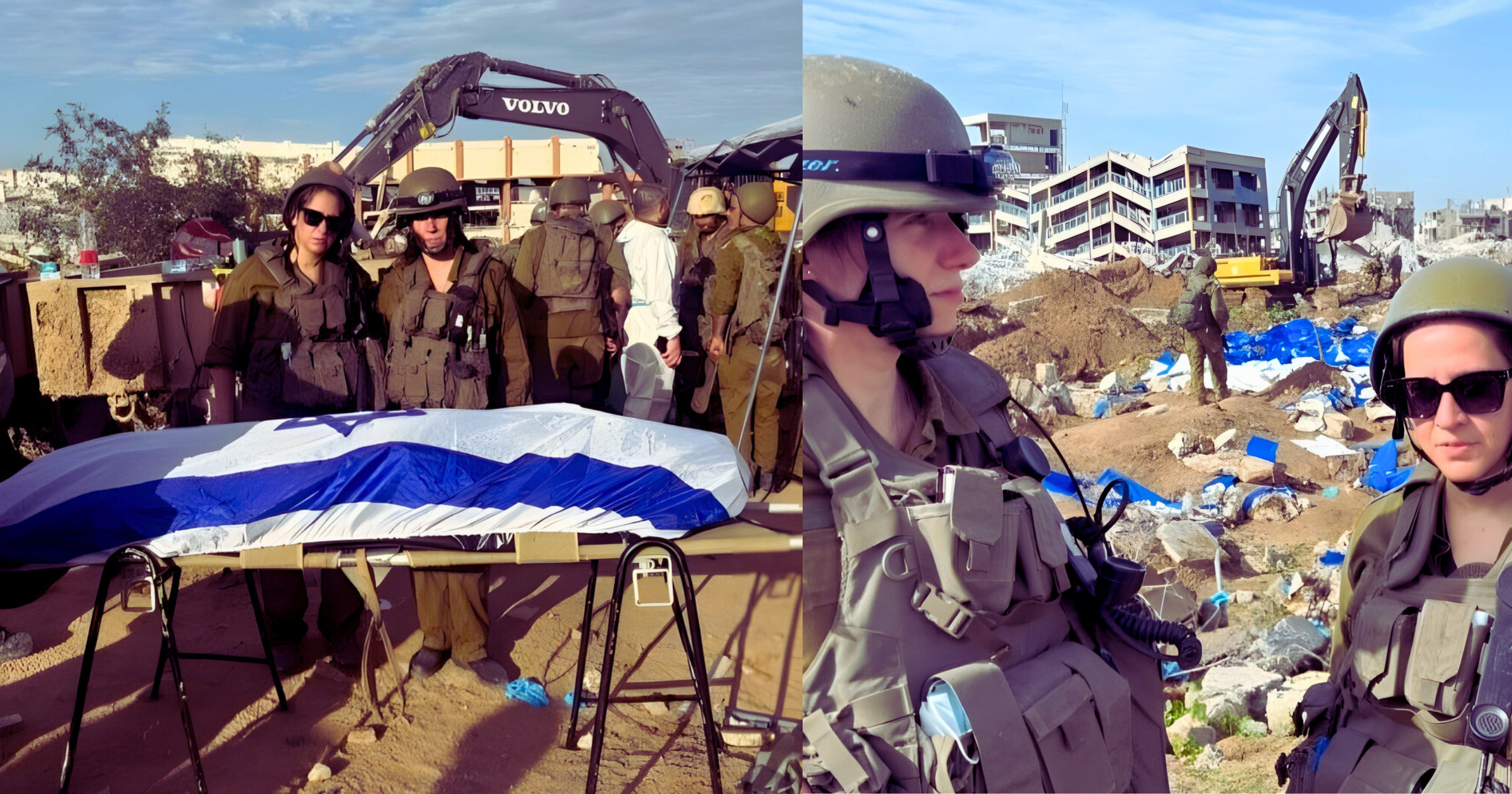
In her day job, Hadassah dental instructor and oral and facial reconstruction specialist Dr. Esi Sharon-Sagie teaches residents at the Hebrew University-Hadassah School of Dentistry how to return functional and beautiful smiles to patients with severe dental problems. She’s known to have a remarkably light touch and for expertise in subjects like hypodontia, a congenital condition in which a person never grows a full set of adult teeth. Over the last two and a half years, Dr. Sharon-Sagie has become the worldwide expert, lecturing to Interpol and other organizations, on the identification of deceased persons by examining their teeth, or fragments thereof.
Even before October 7, 2023, Dr. Sharon-Sagie has served as the volunteer head of the dental identification unit of the Israel National Police Division of Identification and Forensic Science. She and her team of dentists have confirmed or ruled out the identities of victims of the October 7 Hamas massacre and hostages murdered in Gaza. Summoned day or night to the Abu Kabir Forensic Institute in Tel Aviv, she would leave at a minute’s notice, changing from her teal Hadassah Medical Organization scrubs to a police oxford blue uniform.
On Saturday, January 28, 2026, she was summoned for the first time into Gaza itself, this time as an Israel Defense Forces soldier and outfitted in olive greens and a combat helmet. Military intelligence believed that the last deceased hostage, Master Sergeant Ran Gvili, had been reburied in al-Batesh, a Muslim cemetery in the northern Gaza Strip. To find Gvili among the hundreds of buried bodies, the forensic dentists would need to be on site. Her deputy in the police forensic unit, Hadassah dentist Dr. Ilana Engel, was also recruited.
On the following Monday, after ruling out more than 250 bodies, Dr. Sharon-Sagie found one with the personal dental structure that made up Gvili’s biological signature. The other 19 dentists and one anthropologist on her team stood around her in a circle as she made the positive identification.
Said Dr. Sharon-Sagie of that moment, “My heart was pounding, but it was no time for emotion. I had to stay totally focused. There’s no room for error in this work. Now military intelligence could call Rani’s parents.
“And then I felt a wave a sadness for everything I’d seen over the last two and a half years. Together with the sadness, I also felt that I was given a great privilege to serve my country with what I know how to do: dental identification. Standing in that circle, we looked at each other and nodded. I knew the most significant mission of my life was now over. The last hostage was going home.”
Despite the uncertainties Israel still faces, the return of the last hostage marked a moment of collective exhale. However, we cannot resume our lives without first honoring the HMO men and women who have lived double lives like Dr. Sharon-Sagie’s since October 7. They have been saving lives in emergency rooms, operating theaters and maternity wards, and then—without pause—changing uniforms to serve on the battlefield. With no expectation of recognition, they simply showed up to fulfill whatever role their patients and Israel needed.
With a decade of experience in intensive care, emergency and surgical nursing, Itzik Kara serves as the operational administrator of the Gandel Rehabilitation Center at Hadassah Hospital Mount Scopus. But the 56-year-old father of three is also a trained paramedic who, in his spare time, is a volunteer and team leader for United Hatzalah of Israel emergency medical service. A yellow intensive care ambulance is always parked outside his home in Modiin, just in case.
By 6:30 a.m., on October 7, 2023, Kara had heard about the surprise attack on Israeli kibbutzim and villages along the border with Gaza, an hour drive from his home. A rescue ambulance requires four people, and Kara phoned three volunteers who agreed to form his team. By 7:30 a.m., they were speeding south, ignoring warning sirens, the rockets flying above and the bullets from Hamas sharpshooters positioned on Route 232. Kara recalled that he and his volunteers were thrown back and forth in their seats like riders in bumper cars as the ambulance driver swerved to avoid hitting broken cars, debris and dead bodies.
The first soldier they picked up on the highway had a serious head wound, a punctured lung and a hand injury. Kara inserted an IV while his teammates provided oxygen and staunched the bleeding, then they delivered him to a nearby hospital. The next soldier they found had a worse injury, this one to his chest. He had spent hours lying in an armored personnel carrier that was hit both by a Hamas anti-tank rocket and a grenade. The team treated him and drove him to the closest hospital, in Ashkelon.
All day, the yellow ambulance drove back and forth along Route 232, which on October 7 gained the moniker “Road of Death,” picking up patients and delivering them to hospitals. Toward the end of the day, Kara performed an ultrasound in the ambulance for a pregnant kibbutznik who had escaped the devastated Kibbutz Kfar Aza. At 10 p.m., he went home, showered and ate his first meal of the day.
The next day, on October 8, Kara rose early and went to his day job at HMO. He didn’t mention anything about his day on the Road of Death to his co-workers and colleagues.
Kara is one of many HMO staffers who became heroes on October 7 as well as during the ensuing two years of war. HMO’s human services department estimates that over 530 men and women staff members served in reserve units in the IDF, splitting their time between the battlefront and hospital floors.
I know Kara’s story because six months after that devastating day, I happened to be chatting with him in the hall outside his office at the Gandel Rehabilitation Center and the subject of the start of the war came up.
“What were you doing on October 7?” I asked. He told me his story but shrugged off any claims to heroism.
Kara, because he is a civilian and not a reservist, can be named. The doctors I’m about to mention cannot be fully identified because they are all IDF reserve officers. Every one of them deserves our gratitude and appreciation.
Take for example Dr. S, an orthopedic surgeon. As a reservist, both during the war and today, she is in charge of medical care for soldiers in the division stationed along Israel former border with Gaza. On October 7, she was at home with her husband and children when her phone began ringing incessantly. Like Kara, she drove under fire to her base near Gaza.
She had to map out logistical details—the availability of ambulances and medical equipment; where to place the wounded—even as her base was under attack by Hamas.
Later on in the war, there was one point when the outpost was short on plasma units and had to turn to HMO to help supply the wounded soldiers. “At least one Hadassah doctor was in every fighting battalion during the war,” she said, ready to respond to such emergencies.
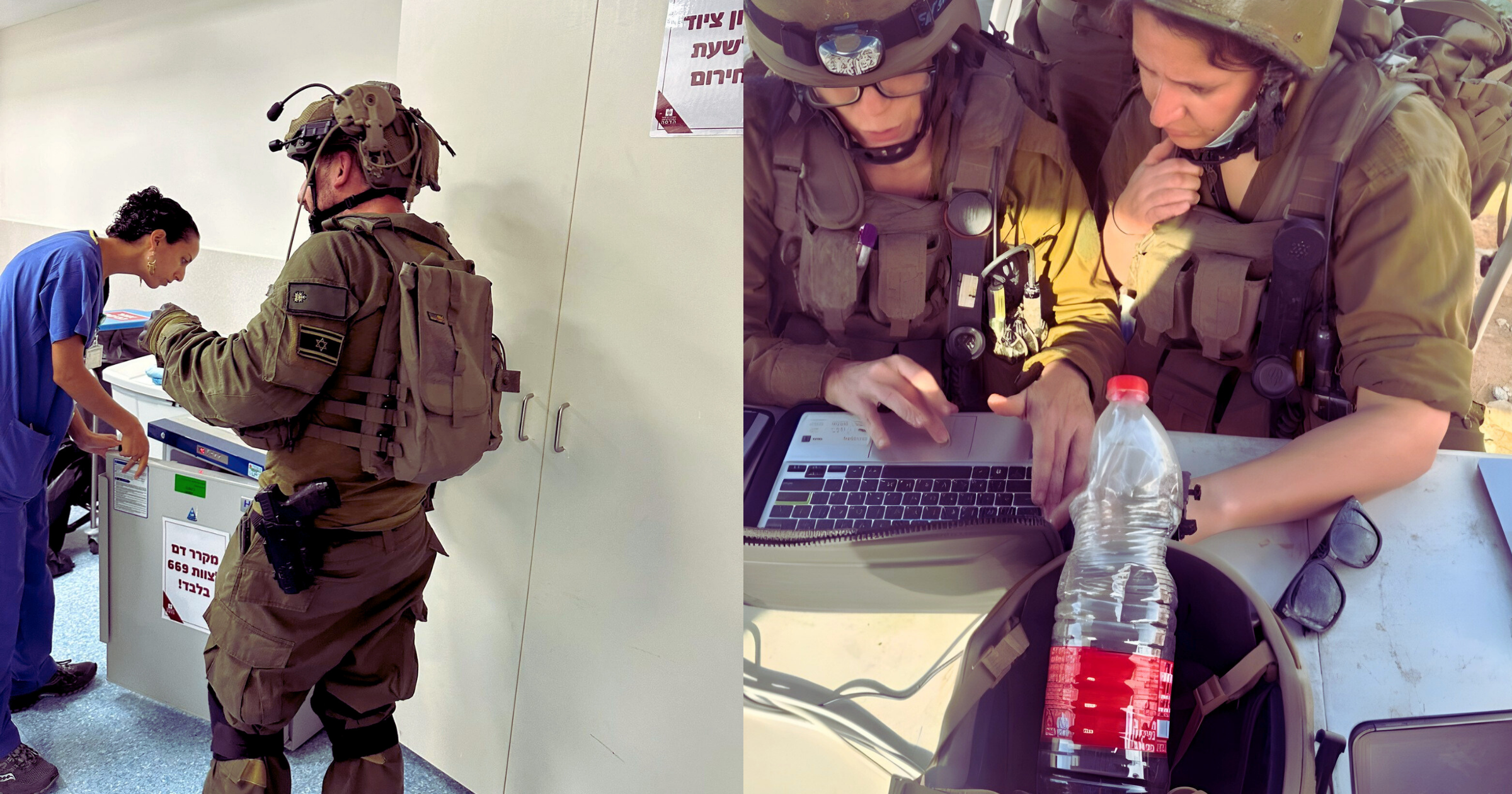
Then there is Dr. M, a senior surgeon at Hadassah Hospital Ein Kerem and a reservist in a paratrooper’s unit.
On October 7, which was both Shabbat and the holiday of Simchat Torah, he had planned an early morning bike ride with his son. Instead, as sirens sounded, he reached in the closet for his tidily folded army greens, pulled on his reddish-brown combat boots—the distinctive footwear traditionally worn by Israeli paratroopers—and drove to the paratroopers’ base, not knowing that he would spend over 300 days as the chief medical officer for 3,000 paratroopers.
In between call-ups, he continued his day job in the operating room, employing the latest methods of robotic surgery and conducting groundbreaking research with organoids, the tiny models of organs that can be used in personalized cancer therapy for patients.
As part of his military work, he was tasked with the decision of whether to call in a rescue helicopter to evacuate wounded soldiers from inside enemy territory. Summoning a helicopter crew to fly into danger is never an easy call, since it puts everyone at risk of fire. His judgment in these instances was sound: None of the soldiers evacuated by the helicopters that he ordered died from their wounds, and none of the helicopters he summoned were lost.
There are doctors riding in those rescue helicopters, too. Like Dr. B, an intensive care specialist. Throughout the war, HMO doctors were divided into two categories: those who were required to stay full-time at HMO and those who could work in the field. Dr. B was frustrated at first because he was assigned by HMO to the hospital. Later, that changed and he was permitted to join his reserve unit and take part in rescue missions, resuscitating wounded soldiers aboard helicopters.
Dr. X flew helicopters during his initial army service. Today a reservist as well as a senior anesthesiologist known for his skill and cool under all circumstances, he took part in a special mobile land rescue unit in Gaza that provided medical care in the field as battles raged.
Dr. P still serves in his old fighting special forces unit dubbed Kingfisher. Does he serve as the unit’s doctor? “That, too,” he said to me, cryptically.
In addition to being both doctor and fighter, he explained, he took on another job—questioning doctors inside Gaza hospitals to determine if they were indeed medical professionals or terrorists disguised as doctors.
I saw him at HMO during one of his breaks from military service as he was getting ready to perform a cardiac catheterization at Hadassah Hospital Ein Kerem. His neck was tanned leathery brown; his face sunburned from the blistering Gaza sun. I was so glad to see him alive and whole that I found myself inappropriately hugging him.
Dr. R, a critical care doctor and nephrologist, took a break from his service as a doctor with a fighting unit to go to Syria in July 2025. As part of the IDF’s support of Druze citizens of Syria, he treated Druze patients who were refused care there after the fall of the Assad regime, including setting up an emergency dialysis unit.
Throughout the war, these extraordinary men and women left their homes and families to go straight to the battlefield, switching from white coats to ceramic bulletproof vests.
If you meet these doctors and nurses in their clinics or presenting groundbreaking papers at international conferences, you’ll mistake them for ordinary people, not the superheroes they are.
On Sunday, October 8, 2023, when Itzik Kara finished his working day at the Gandel Rehabilitation Center, he wanted to change clothes and continue rescuing civilians and soldiers in the South. But the highway was blocked, judged too dangerous for travel.
“Only on Sunday did I realize what danger we were in on October 7,” Kara said. “The four of us in the ambulance were concentrating so hard on caring for the wounded that even though we saw the murdered bodies, and we heard the rockets, we somehow had the ability to ignore them and keep working. Thankfully, none of us was injured and the ambulance wasn’t even scratched. Every wounded patient we rescued survived.
“I don’t consider myself a religious person,” he added, “but there’s only one explanation to travel through the Road to Death so many times and emerge alive. We had to have had assistance from above.”
Barbara Sofer, an award-winning journalist and author, is Israel director of public relations for Hadassah, The Women’s Zionist Organization of America.
 Facebook
 Instagram
 Twitter

Leave a Reply