



Arts


Bill Aron’s Lens on 50 Years of Jewish Life
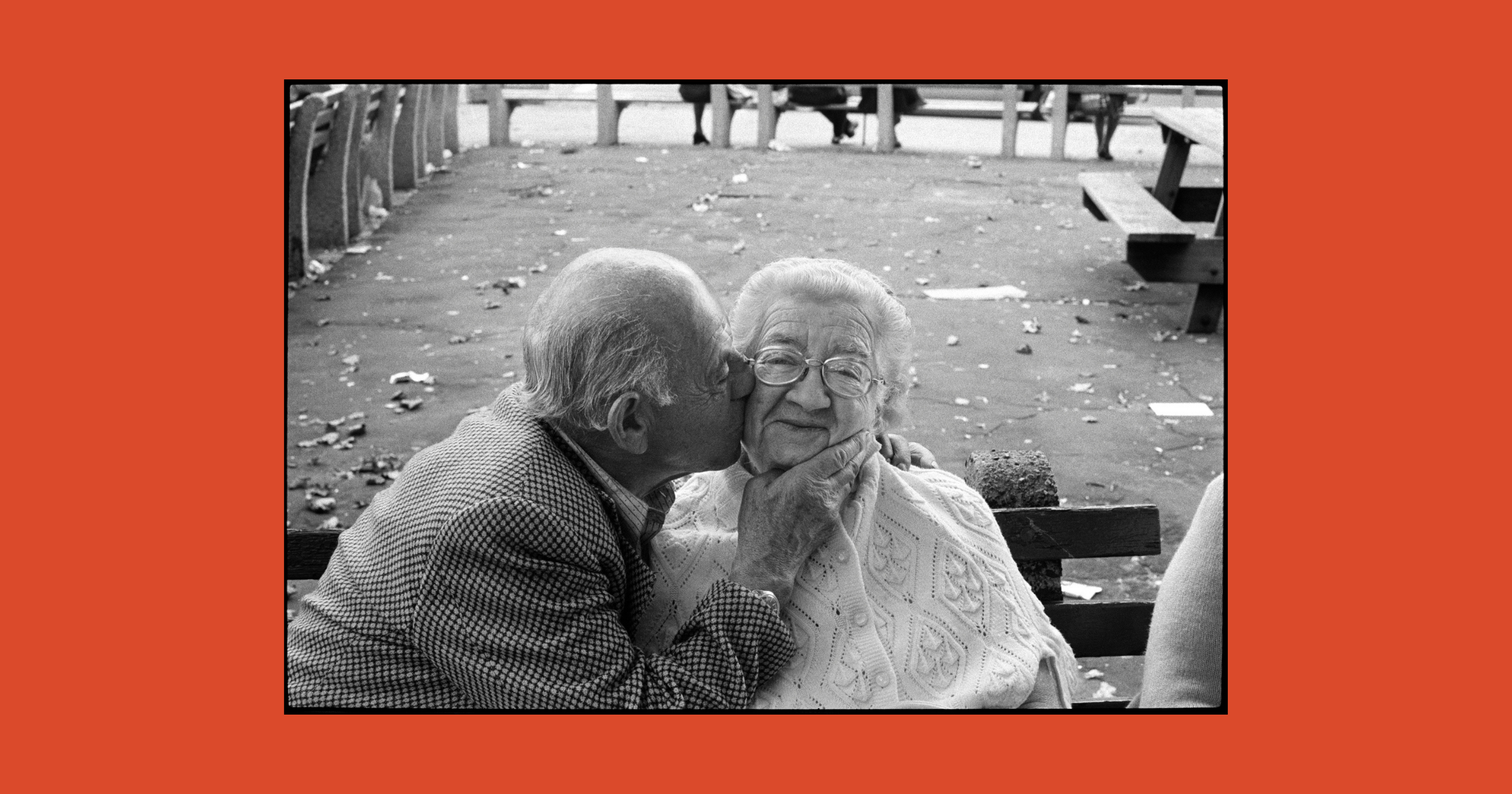
In his early career as a street photographer in the 1970s, Bill Aron came across an elderly couple sitting on a bench on the Grand Concourse in the Bronx. He stopped to talk and asked if he could take their picture.
“At one point, the husband said, ‘Here, catch this,’ and he leaned over to kiss his wife,” recalled Aron, talking over Zoom from his home in Los Angeles. The photo he took caught her beatific smile and the grace of old age and affection. Holocaust Survivor Couple remains one of Aron’s most iconic photographs.
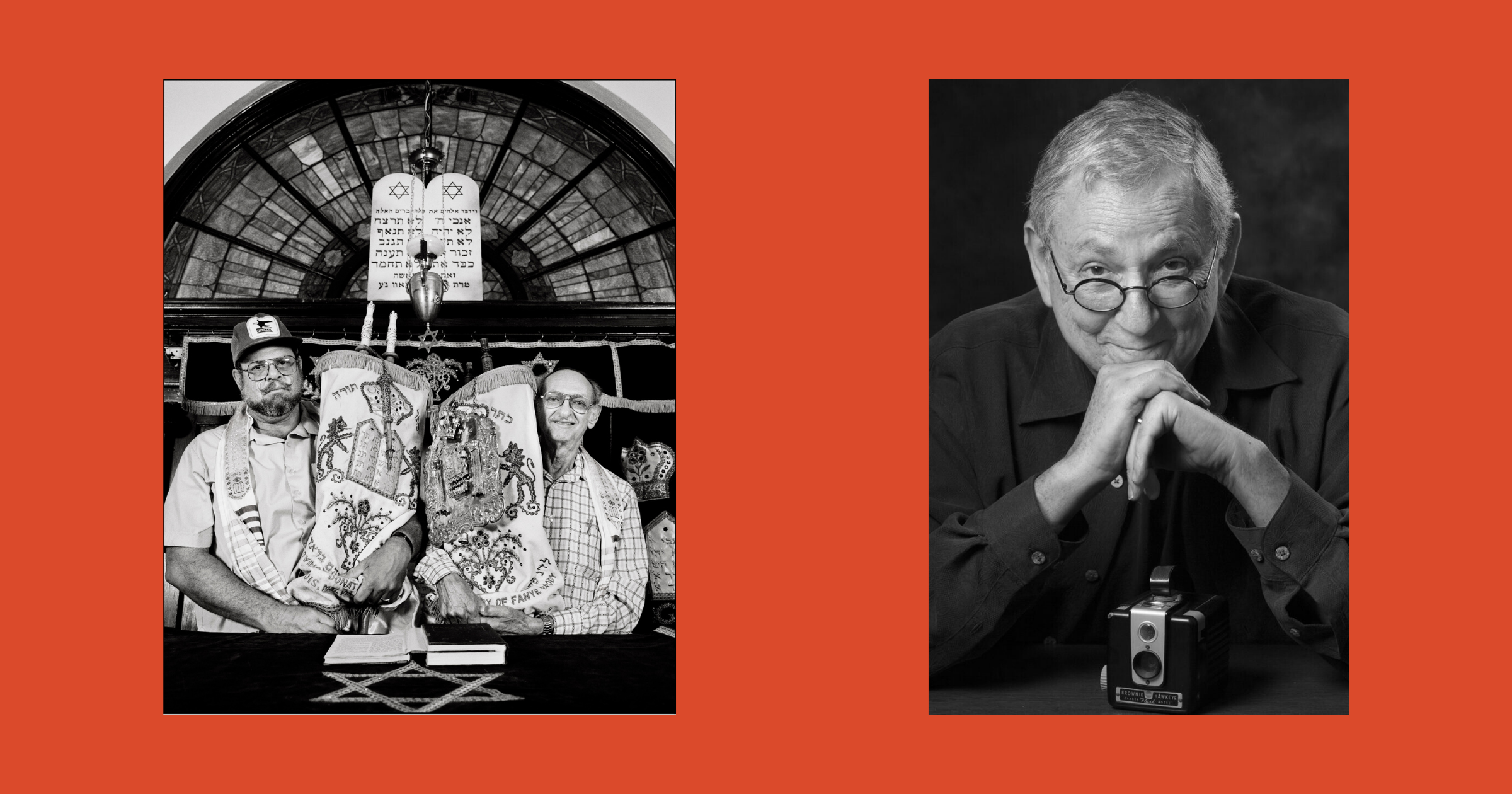
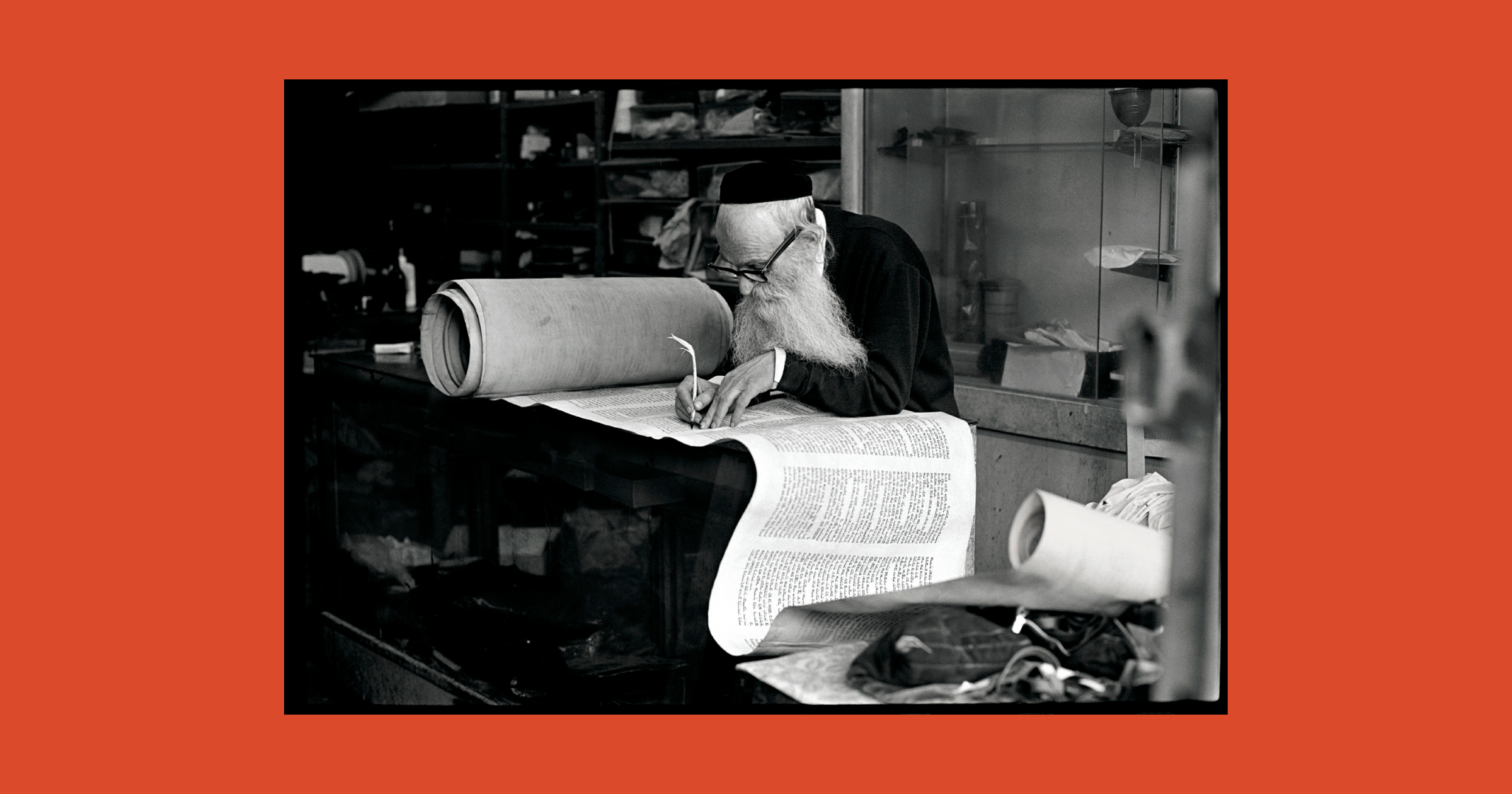
Through the lens of his camera, the photographer has told the stories of Jewish life around the globe, capturing portraits of joy, triumph, spirit and serenity over 50 years. Among his well-known photographs are images of women carrying Torah scrolls on Simchat Torah in New York in 1976; a middle-aged couple—the last Jews of Eudora, Ark.—in a poignant embrace in their liquor store in 1990; a vibrant market day in 2011 at the Damascus Gate of Jerusalem’s Old City; and a throng of Bobover Hasidim dancing with their rebbe on Purim in Borough Park, Brooklyn, in 1975.
“Stories are why I’m a photographer,” Aron said. “I am incredibly grateful that so many people have opened their hearts and their homes to me, so I feel a responsibility to keep alive the stories they have told me.”
These images and more are part of a new exhibition, “The World in Front of Me: A Bill Aron Retrospective,” at the American Jewish Historical Society (AJHS), located at the Center for Jewish History in Manhattan, through June 4. Aron, now 84, co-curated the exhibition of 50 of his photographs. He has also entrusted his archive of 100,000 negatives, thousands of prints—most of them black and white—and extensive digital materials to the AJHS.
An accompanying podcast series hosted by journalist and author Ruth Ellenson provides a deeper look into Aron’s work and legacy. Told through five eras of history, the podcast explores Aron’s experiences documenting Jewish communities around the world, complemented by interviews with noted historians.
A second exhibition, “People & Places: The Photography of Bill Aron,” runs from March 14 to April 26 at Boston’s Pucker Gallery, which has represented Aron for most of his career.
The photographer’s work is in the collections of museums and galleries worldwide, including the Museum of Modern Art in New York City, the Art Institute of Chicago, the Israel Museum and more. His books of photography include From the Corners of the Earth: Contemporary Photography of the Jewish World; Shalom, Y’all: Images of Life in the American South; and New Beginnings: The Triumphs of 120 Cancer Survivors, inspired by his own 20-year journey since he was diagnosed with prostate cancer. He is currently preparing The Invincible Spirit: 100 Holocaust Survivors for publication.
“Bill is the dean of American Jewish photography,” said Sarah Hopley, managing curator and AJHS director of engagement and operations, noting that the number of institutions that include Aron’s work in their collections attests to their cultural and historical value. “His photographs ask, ‘What does a Jew look like and how do I capture that?’ ”
From a Shabbat table in Mississippi, with candlesticks, challah and a pecan pie in front of a curtained window and an expansive field of cotton beyond, to a quintessential New York City scene in which a Hasid waits in front of a graffitied subway train, his photographs show that Judaism is not monolithic, she added.
Aron refers to many of his photos as his “children” because of the care, time and responsibility he feels toward them. Among those “children” is the photo of the elderly Holocaust survivor couple on a park bench in the Bronx, a copy of which hangs in his bedroom.
When he and his wife, Isa, were younger, the photograph served as an inspiration for them to live a long, loving and contented life together, he said. Now, he added with a chuckle, “We have come to realize that we are that old couple.”
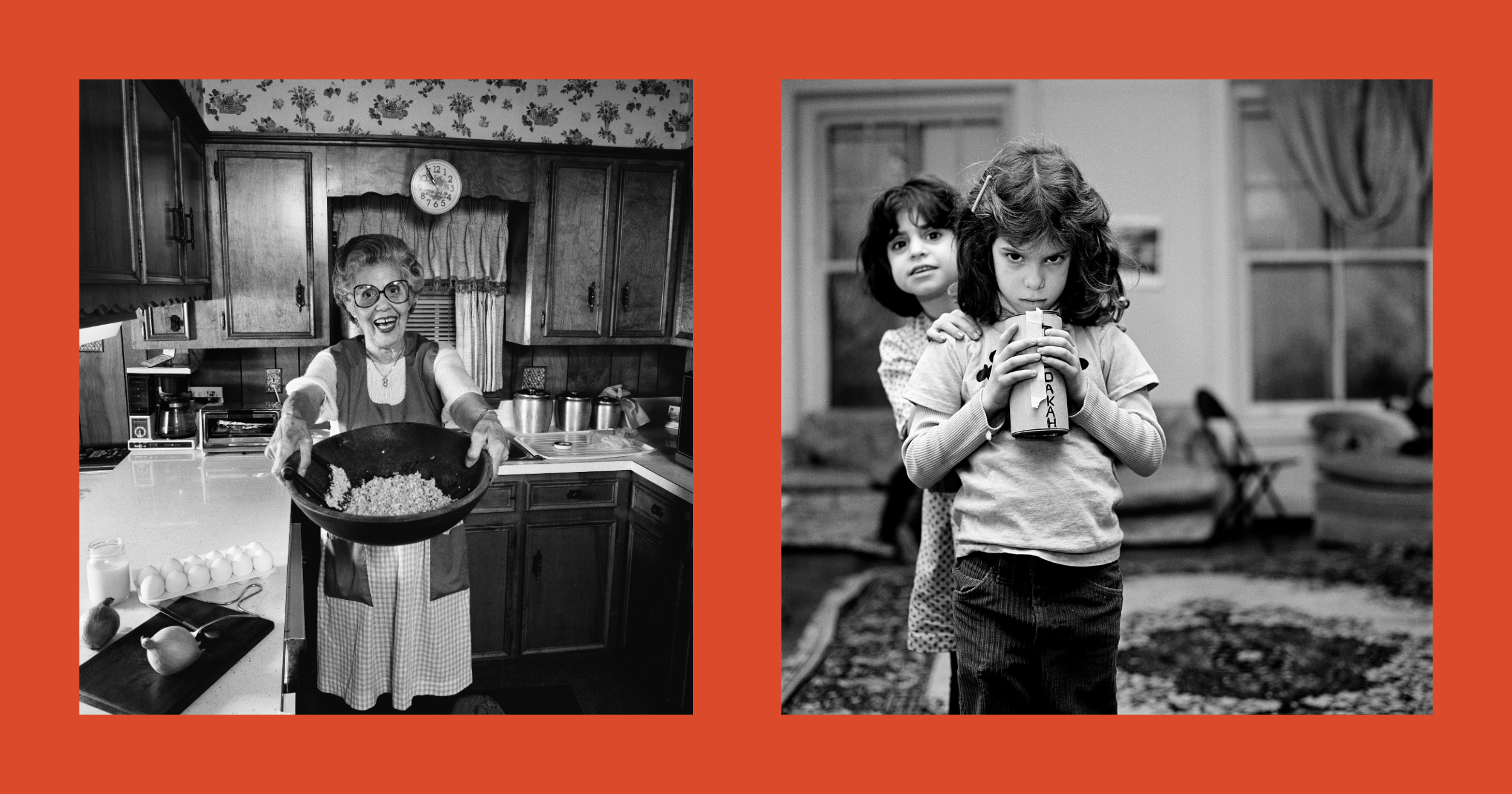
Aron’s portraits not only reveal the personalities of his subjects but also the time and place they represent. For a project commissioned by the Museum of the Southern Jewish Experience, now in New Orleans, he photographed Henrietta Levine in 1991, smiling as she held a bowl of chopped liver in her Pine Bluff, Ark., home. “She had the same oval wooden bowl and the same chopper as my mother. It was like walking into my past,” said Aron, who noted that he has been vegan since his cancer diagnosis.
Indeed, Aron’s photos tell stories about his own search for belonging. He grew up in Philadelphia in a Conservative-affiliated Jewish home until his father died when he was 9; his family then joined a Reform congregation. He didn’t take Jewish observance seriously until the mid-1970s, when he immersed himself in the song-filled Judaism of the New York Havurah, an intimate, nondenominational and egalitarian group. The havurah became a frequent subject of his work. Today, he belongs to Temple Emanuel, a Reform synagogue in Beverly Hills.
Aron said his interest in photography began when he was 12, after a lucky nickel bet at the roulette wheel at the Steel Pier in Atlantic City, N.J. He chose a Kodak Brownie Hawkeye camera as his prize, sparking a lifelong drive to preserve moments on film.
Initially, he did not pursue photography as a career. He spent four years in the Peace Corps in Turkey, then earned a Ph.D. in sociology from the University of Chicago. During his postdoctoral job placement at Albert Einstein Medical Center in New York City, he worked for Project Ezra, which serves frail elderly residents on the Lower East Side. Around that time, he began photographing his surroundings as a hobby—work that drew professional acclaim. He soon moved beyond candid scenes to environmental portraiture, staging images and incorporating details to better represent his subjects’ lives.
The urgency he feels in telling the stories of families who not only survived but thrived after the Holocaust is apparent in a cheerful portrait of survivors Vera and Sigi Hart at their home in Los Angeles; the photo is on display in the AJHS exhibition. You can almost hear Sigi’s belly laugh, while his wife sports a wide smile.
Recounting the story of that meeting, Aron said that over a cup of tea, Sigi told him that every member of his family survived, some in hiding, some in camps. Aron then asked how he accounted for that miracle. Sigi replied that once, when the local rebbe was passing through his grandfather’s Polish town, his horse and cart got stuck in the mud. Strong from working in the fields, his grandfather lifted the cart free. “ ‘In the way you helped me get out of this trouble,’ the rebbe had blessed him, ‘may you and your children and your children’s children be helped out of their troubles.’ ”
In his images of Israel, Aron explores the concepts of time and space. The photographer spent his junior year of college at Hebrew University of Jerusalem and has visited Israel many times since. In one photograph, on display at the AJHS, a cascade of wide stone steps resembles a tallit. In others, multi-image color panoramas seamlessly stitch together photographs taken in the same place but at different times of day into a single image. “I wanted to visually reconcile past, present and future to come to terms with the passage of time,” he said, quoting Norwegian poet Olav Hauge’s poem “Today, I Saw” to further explain his purpose: “ ‘Today I saw two moons. One new and one old. I have a lot of faith in the new moon but it is probably just the old one.’ ”
Aron’s poetic spirit infuses his photographs with deep empathy, creating a visual record of contemporary Jewish life and universal human experience.
“Photographing Jewish life allows me to honor both continuity and change,” he wrote in a catalog essay for his Pucker Gallery exhibition, “to witness tradition as it persists, adapts, and finds new expressions.”
Rahel Musleah has expanded her Explore Jewish India tours to include immersive new adventures in Vietnam and Cambodia.
 Facebook
 Instagram
 Twitter
Leave a Reply