



Israeli Scene


Israelis Approach New Iran War With Hope and Uncertainty

It was the best of times, it was the worst of times.
When the war with Iran that Israel had long awaited finally began the morning of February 28, Israelis greeted it with a mix of dread and anticipation. Anticipation, because for decades Iran has represented a growing threat to the Jewish state, and the big showdown with the Islamic Republic finally was at hand, offering some hope for a resolution.
Israel’s swift elimination of Iran’s supreme leader, Ayatollah Ali Khamenei, in the conflict’s opening salvo and America’s decision to join the war lent the day an air of exhilaration. When the Shabbat Torah service at my synagogue was interrupted by our first air raid siren around 10:30 a.m., the mood in the bomb shelter was downright jovial—and not just because a big bat mitzvah kiddush lay ahead.
But in war-weary Israel there was dread, too, at the prospect of yet another round of fighting. Despite the country’s myriad defenses—from in-home safe rooms and early warning systems to sophisticated anti-missile defenses—Iran’s ballistic missiles and drones surely would exact a toll. How heavy remained to be seen.
I quickly lost count of how many times my family and I rushed to the bomb shelter during the war’s first few days. My two younger children slept there, and we covered the floor in camping mattresses for nighttime attacks. In-person school was canceled, Zoom school was interrupted by air raid sirens, and, on Purim, we had to pause our synagogue’s bomb shelter megillah reading when our phones blared with warnings of an incoming drone attack by Hezbollah.
The parallels between the Purim story, when Jews in the 4th century BCE defeated and killed their Persian archenemy, and the events unfolding in Iran right now were not lost on anyone.
Much uncertainty lies ahead. We don’t know how long this war will last, who in Israel will pay for it with their life or what the outcome will be.
As with so much else in Israel, it’s a glass half-full, glass half-empty situation.
On the plus side, Israel has managed to kill its nemesis in Tehran, and Iran is weaker than it has been since the Islamic Republic came into power 47 years ago. Israel has a historic opportunity to dramatically improve its position in the Middle East.
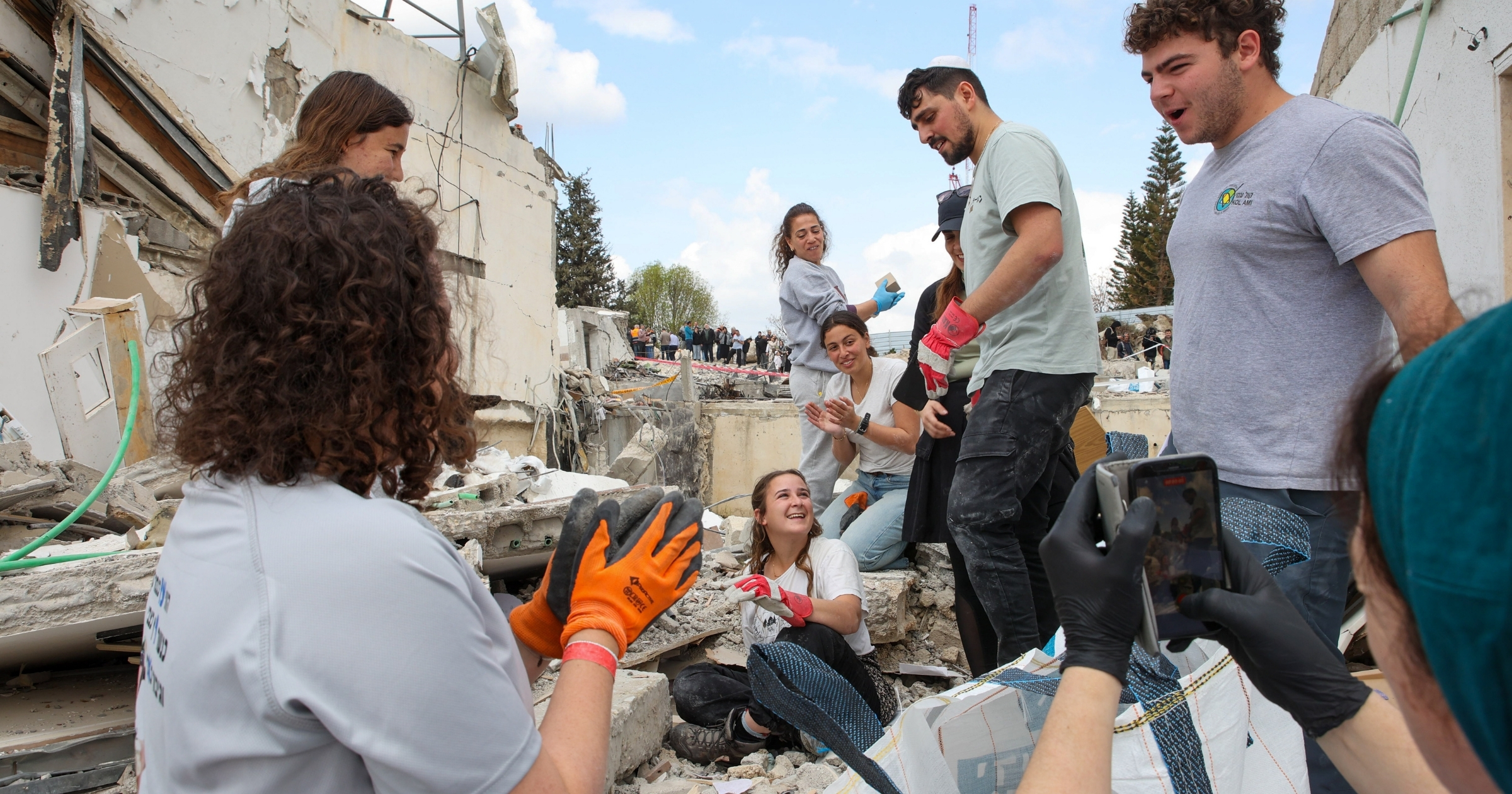
Look how far it’s already come: Hezbollah, Israel’s antagonist in Lebanon, is a shadow of what it once was, thanks to Israel’s successful offensive against the group in late 2024. Hezbollah’s downfall removed the pillar upholding the murderous regime of Syria’s Basher al-Assad, and now Syria isn’t much of a threat anymore. The prospect of future peace with Damascus no longer seems far-fetched.
As for the rest of the Arab Middle East, Tehran’s attacks against its neighbors in the Persian Gulf have brought those states in closer alignment with Israel and against Iran. If the regime in Tehran falls, Israel will deserve credit for liberating not just the Iranian people from their despotic overlords, but the entire Middle East from its regional menace.
What regional enemies will remain for Israel? The Houthis in Yemen, who surprisingly have sat out this conflict so far. Hamas, which remains sworn to Israel’s destruction. But the days when the Arab Middle East was united against Israel will be relegated to the dustbin of history.
And yet. It’s far too soon to write a happy ending.
Over the last two and a half years, Israel has fought wars with Hamas, Hezbollah, the Houthis and Iran’s mullahs. Nearly 2,000 Israelis have been killed.
Iranian missiles can hit anywhere in the country, with lethal results. Nine people in Beit Shemesh were killed on Sunday when their bomb shelter bore a direct missile strike.
I can’t even go to the supermarket without taking into account how far I’ll be from a shelter, much less visit family in Jerusalem 30 minutes away. Three people were wounded in a missile strike on a highway just outside of Jerusalem on the second night of the war.
When I stepped outside one afternoon for some fresh air, I barely made it to the corner park when my phone buzzed with a warning. I hesitated a moment before turning around. The air raid siren caught me a few steps from home, and I reached our reinforced safe room out of breath. Just after we closed the door, we heard a huge metallic-sounding boom. Like so many sounds of war, it’s unclear to us what it was.
Israel is a first-world, high-tech powerhouse and practically part of Europe with its membership in European sports leagues, low-cost airline connections to the continent and economic integration with the West. This is the Israel many Israelis saw themselves living in before October 7.
That terrible day and the wars since are a reminder that this idea of Israel is something of an illusion. Israel is also an island where wars can close the only routes in and out, where sons and daughters are conscripted to fight in dangerous wars and where once they finish their army service, they may be subject to venomous hate and possible arrest elsewhere in the world.
We hope and pray for better times, and victory in this war. How this story ends remains to be seen.
Uriel Heilman is a journalist living in Israel.
 Facebook
 Instagram
 Twitter
Leave a Reply