



Israeli Scene


In a Jerusalem Bomb Shelter: Part II
There’s a notice newly pinned to the door of a public bomb shelter in Jerusalem, where I’ve spent no small amount of time since Saturday. It’s a QR code, adapted from a dating app. Scan it with your phone and it’ll match you with other singles taking refuge inside.
Looking for something less romantic? Download an app that calculates the least likely time that a missile siren will interrupt your shower. (When I first tried the app, for me, in southern Jerusalem, 5:38 p.m. was apparently optimal.)
Alongside digital-age tools that help us time our showers and navigate our shelters while deadly ordnance rains down, we’re also living inside a 2,500-year-old story. Haman, relates the Book of Esther, which is read on Purim, sought “to destroy, to kill and to annihilate all the Jews, young and old, little children and women, in one day….” That feels unnervingly contemporary.
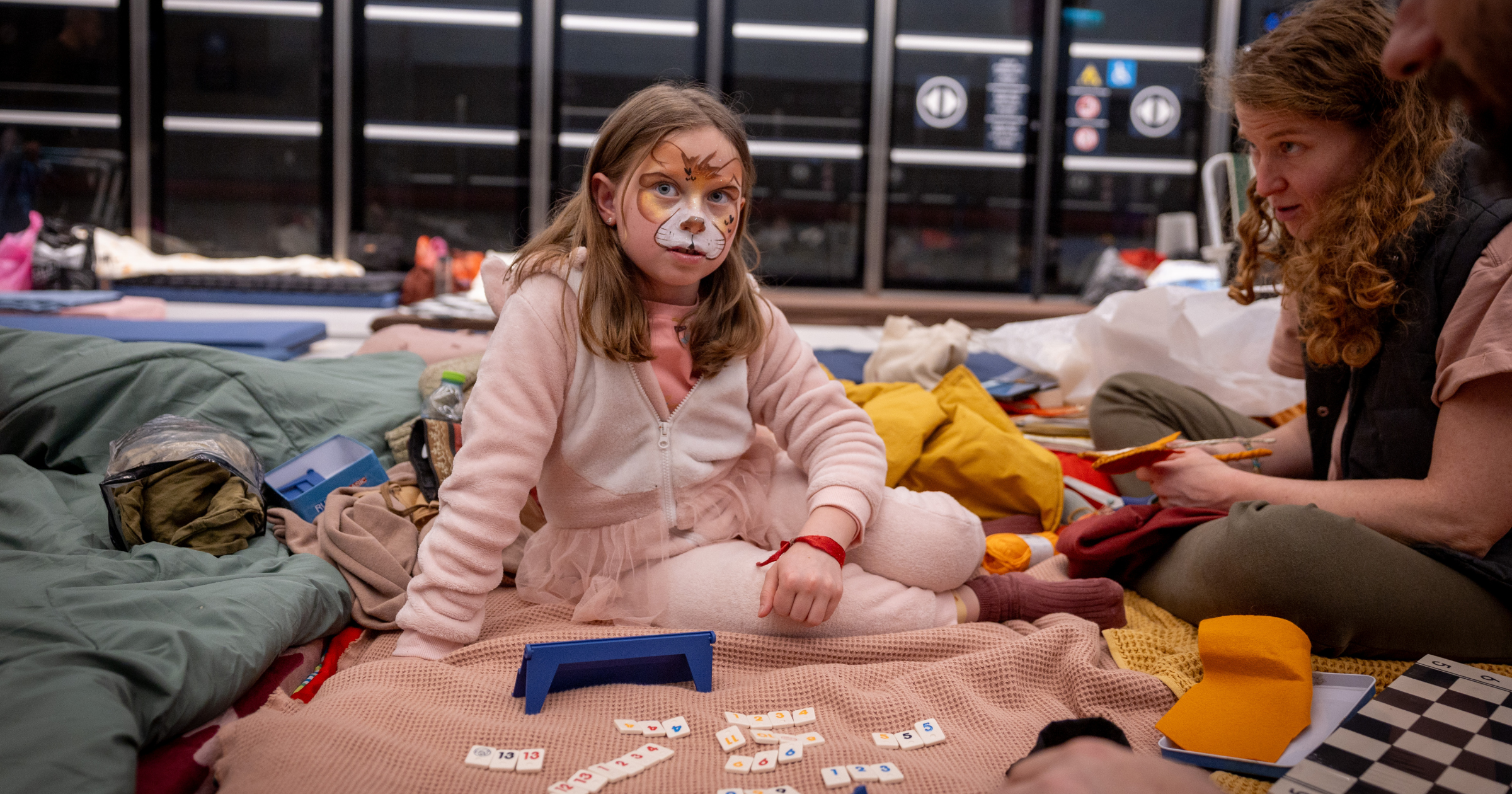
We celebrated Purim in Jerusalem just a few days after the war with Iran started. With synagogues shuttered and public gatherings restricted, we read the Book of Esther in the bomb shelter. We’re strangers, thrown together by proximity and reinforced concrete, but we’re Jews, and the choreography was familiar to us all. Adults and children, we were all in costume—dinosaurs, pirates, chefs, bumble bees, geishas, Puss in Boots. (I wore a rabbit suit.)
A folding table was brought in and draped with a festive cloth. A parchment scroll of Esther was procured. Sweet red wine was passed around in plastic cups. “Next year in a free Tehran!” called out someone, updating the traditional Passover refrain. The shelter’s grim, cold utilitarianism receded, and “the Jews had light and gladness, joy and honor,” to quote Esther.
Even after the end of a holiday noted for celebrations and joy, the mood in the public shelter remains surprisingly buoyant, the same way it was during the 12 days last June when Iran last attacked. When the warnings come—our phones buzz, flash, vibrate and instruct—we file calmly from our homes, cross the road to the shelter, hold open its heavy doors for one another, atypically wave others ahead and nod ruefully at the regulars. Inside, we wait patiently, angling our phones at the reinforced walls in search of reception that allows us to check that our kids are safe and to find out who’s firing at us this time.
A young woman sits cross-legged on a mattress, a sleeping baby snuggled against her and a subdued toddler leaning into her side. A middle-aged man earnestly plays Scrabble on his phone. A circle of twentysomethings plays cards. A Dutch woman nurses a nosebleed. Canine etiquette is quietly negotiated among the half-dozen dogs in the shelter. Conversations are in Hebrew, English, Russian and emphatic French. Even just a few days in, we’ve settled on regular seats.
I favor a white plastic chair near the entrance where the Wi-Fi is strongest. This makes me among the first to receive the all-clear. I stand and announce: “We can leave,” and we shuffle toward the exit.
Up the stairs and into sunlight, life resumes with its strange double register. We go home and reheat the coffee we were about to drink, risk a shower, finish an email. As we read on Purim, “[Though] the lot was cast…the outcome was turned.”
Wendy Elliman is a British-born science writer who has lived in Israel for more than five decades.
 Facebook
 Instagram
 Twitter
Leave a Reply