



Books
Personality


Matti Friedman on the Enduring Legend of Hannah Senesh
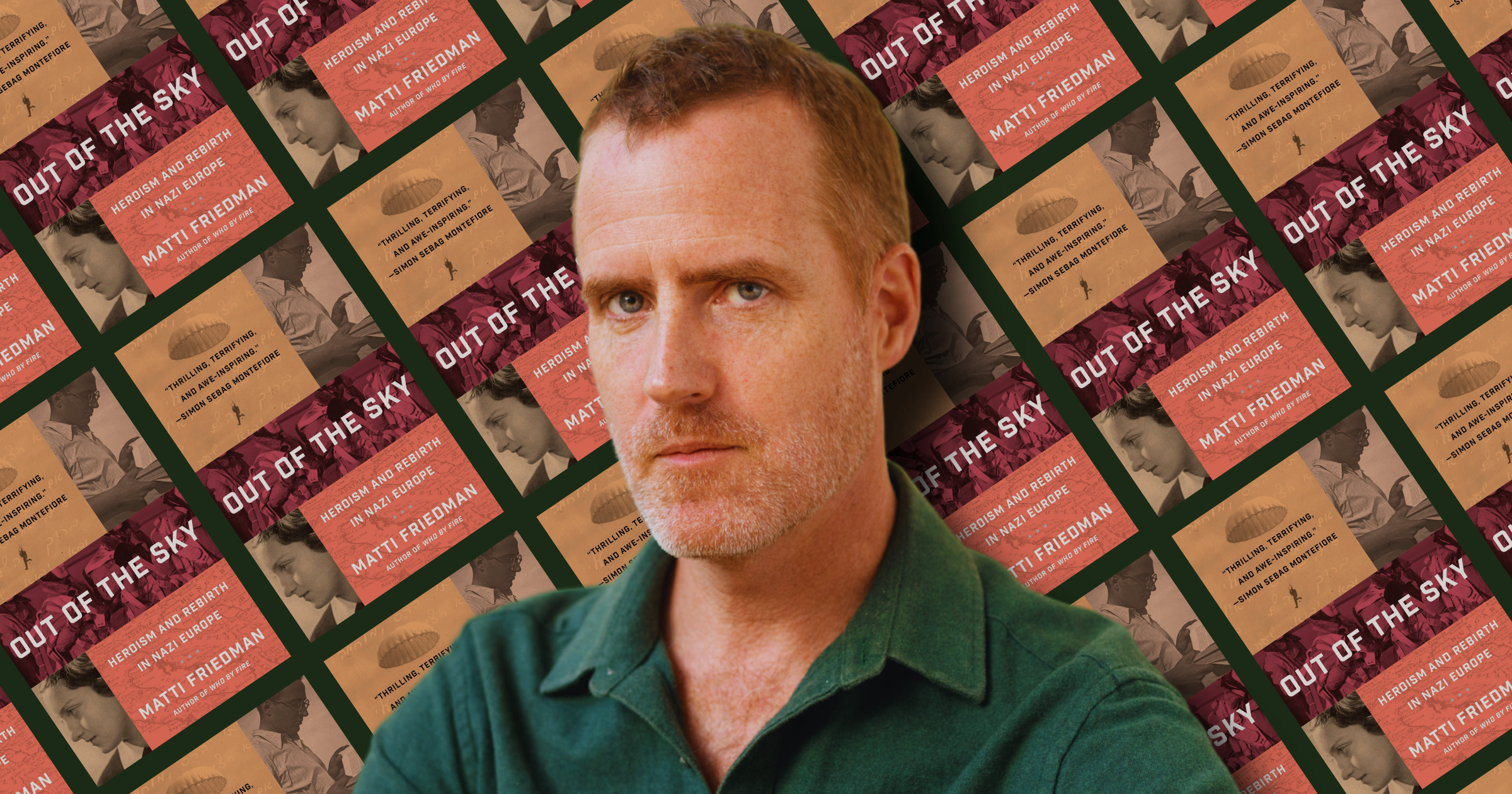
In his new book, Out of the Sky: Heroism and Rebirth in Nazi Europe, Canadian Israeli journalist and prize-winning author Matti Friedman trains his lens on one of Zionism’s early heroes: Hungarian-born Hannah Senesh and several other young Jewish idealists who parachuted behind Nazi lines in a failed attempt to support the Allied war effort and rescue Hungarian Jews.
Originally from Toronto, Friedman immigrated to Israel at 18, joined the Israel Defense Forces and later worked as a reporter for the Associated Press. His army experiences ended up serving as the basis for his popular first book, Pumpkin Flowers: A Soldier’s Story of a Forgotten War.
Friedman spoke to Hadassah Magazine about Senesh’s ill-fated mission that has become Zionist legend as well as the challenges Israel faces today. Friedman, 48, lives in Jerusalem with his wife and children. This interview has been edited for brevity and clarity.
What about the Hannah Senesh story has made her mythologizing so potent in Israel?
This is one of Israel’s founding myths. It kicks in almost immediately after her execution in Budapest by Nazi-allied Hungarian forces in 1944, when the Jews are just victims. They have very little agency. Zionism is trying to will this state into existence, but it doesn’t look very likely. The Jews are being slaughtered.
Brave Hannah and these parachutists are the opposite of people being led at gunpoint to the gas chambers. They wear uniforms, jump out of airplanes, cross borders. They do what Zionism wants to do, which is restore the Jews to the world of action and stop us from being victims.
Hannah’s story specifically is very resonant because she’s so unique. She’s a young woman doing a job that we associate with men, she’s wedded to the cause, she writes poetry. She becomes the perfect heroic figure to represent this mission to save Jews, even though, in practical terms, she accomplished nothing.
In fact, that’s the mystery of the book. I’m trying to figure out why people who accomplish nothing became heroes.
What meaning does her story hold for us at this moment, two and a half years after the Hamas attacks of October 7, 2023?
In many ways, the story of the parachutists is what we’re doing since October 7. We’re living in times that obviously are not as bad as the 1940s, but they’re reminiscent. Sometimes things seem hopeless, and it’s worth remembering what the Zionist instinct was in 1944: If you’re faced with an impossible situation, what you have to do is act and not sink into despair.
You don’t get into bed and pull the covers over your head. You ask yourself, “what am I going to do?” That is the classic Zionist question.
Is there a thread that runs from Senesh to your own Zionist experience?
The parachutists were idealistic young people who came to pre-State Israel looking for something. I moved to Israel at 18—the same age as most of the parachutists. I was drawn by something I thought I would find in this country. Their stories spoke to me in a deep way that I didn’t know when I started the book.
When you were writing this book about the British, Germans and Jews—who are no longer enemies today—did you ever imagine that one day Palestinians and Israelis might also overcome their hostilities?
One thing we’ve seen in this war is that one of our strongest friends has been Germany. We just take that for granted. Israelis love Germany. The story of Europe would seem to suggest that things can radically change. So history isn’t a reason for pessimism; it can be a reason for optimism. The situation here is very different than Europe, and the religious nature of the Islamic war against Israel makes this a different kind of conflict. But things can change.
How have these last three years of anti-government protests and war altered how Israelis see themselves and their future?
People are more pessimistic. We’ve seen not only the deranged face of our enemies, which I think many of us didn’t want to see before October 7, but the divisive, irresponsible nature of our own government. We’ve seen incredible divisions inside Israeli society. We’ve seen willingness to stoke those divisions for political gain. For a lot of Israelis, the combination of psychopathic enemies and incompetent leadership is very frightening. Many are holding onto the hopes that this government was an aberration that will be corrected in the next election. We can’t change our enemies, but we can definitely change our leaders.
What might this next election, which will take place in October, tell us about Israeli society?
The power of the rational majority is what’s being tested. Is there a solid majority that believes, for example, that if there is a mandatory draft, it should apply to everyone? That if an absolute catastrophe results in the death of more than 2,000 Israelis, it should be investigated in a serious way? Should we be governed by the rule of law, or should we be more like a religious republic, where the army is kind of a tribal militia and the discourse is set by clerics?
Those questions are being put to a vote. It’s a cliche to say that an election is the most important one in Israel’s history. But this one is.
Given everything that’s happening, how do you avoid despair?
Go back to our heroes, to people who lived at a time, in the 1940s, that was much darker than ours. What is this compared to that? We’re sitting in a state that is massively flawed and a bit battered but pretty amazing compared to what anyone would have expected in 1944. Who are we to despair if Hannah Senesh didn’t despair?
Reading history is actually a way of becoming more hopeful. The story of this country is the story of incredible accomplishments against steep odds, including at times of utter darkness and despair.
Uriel Heilman is a journalist living in Israel.
 Facebook
 Instagram
 Twitter
Leave a Reply