



Books


Review: ‘Isabela’s Way’
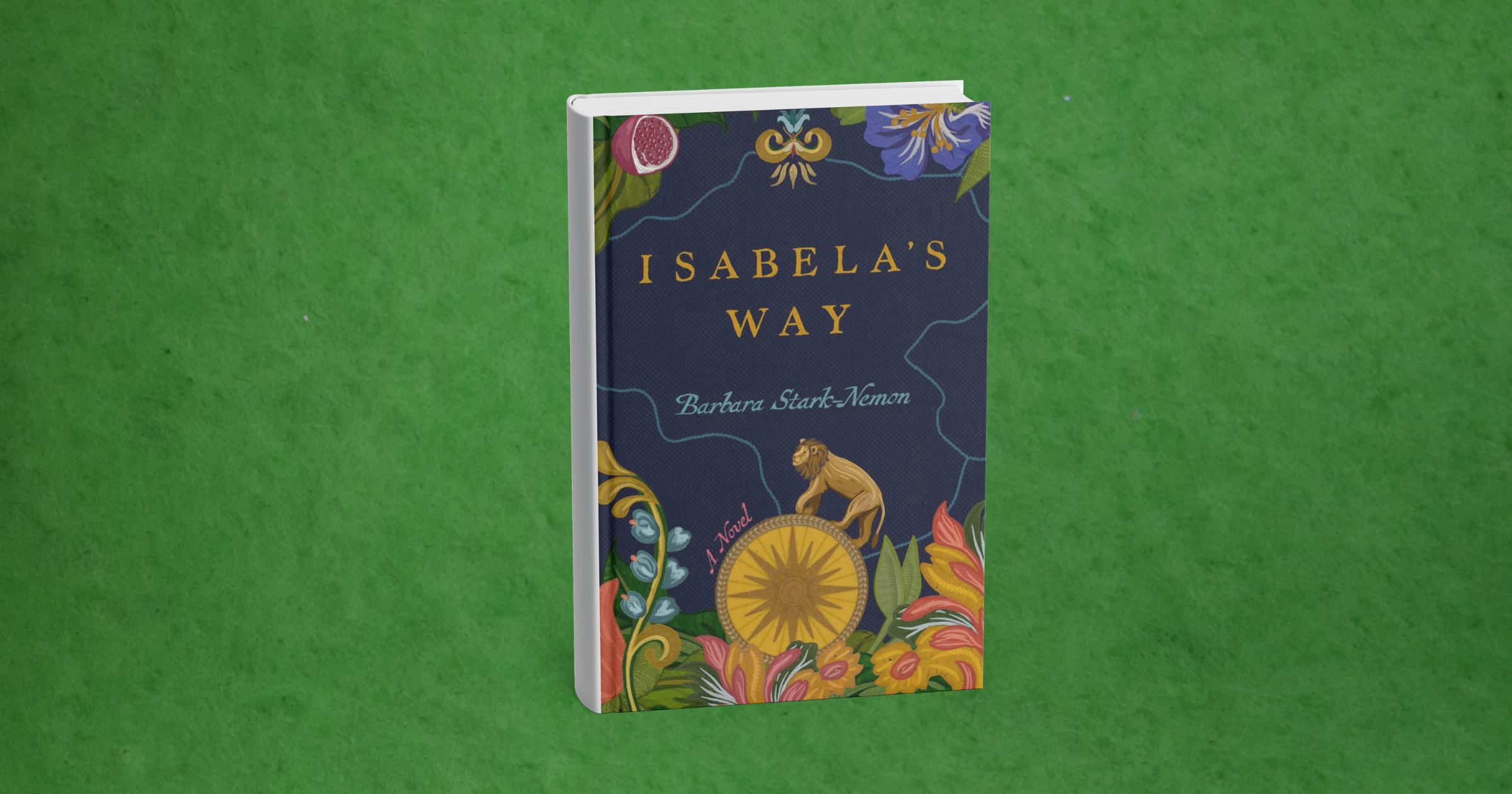
Isabela’s Way
By Barbara Stark Nemon (She Writes Press)
The phrase “underground railroad” was coined in the Civil War era to describe a network of places and people helping fugitive slaves escape the American South. Could there have been an underground railroad for Jews and New Christians—those forcibly converted to Christianity, also called conversos—seeking to escape the Inquisition in 17th-century Portugal? In Isabela’s Way, award-winning author Barbara Stark Nemon imagines such an escape network built by Jews, New Christians, righteous Christians and one 14-year-old girl: Isabela de Castro Nuñez.
Isabela lives in Abrantes, Portugal, the daughter of a textile merchant. Her mother, Mariem, a skilled embroiderer, has taught Isabela to sew. Isabela knows she’s a New Christian; among the traditions she has been taught is to kiss a notch in the doorpost every time she enters her home. She is, however, unaware both that the notch is in place of a mezuzah and that her family’s roots are Jewish.
In 1605, as the Inquisition intensifies in Portugal, Isabela’s father, Gabriel de Castro Nuñez, travels to Hamburg, Germany, seeking refuge for his family and others in his community. After determining that Protestant Hamburg is safe, he sends for his wife and daughter. He expects that Mariem will use her embroidery skills to create banners stitched with coded symbols indicating safety or danger, to be hung in doorways along the route for future escapees. But Mariem has died of the plague, and the responsibility to escape, embroider and forge a path for others falls to Isabela.
Isabela is the star of this book, but the author uses an omniscient narrator to share the experiences of a varied cast of supporting characters. One of them is David de Sousa, Isabela’s best friend and, maybe, love interest. He is another teen who has inherited a job beyond his years as magistrate of the New Christians of Abrantes, charged with persuading other community members to flee.
Isabela’s Way illuminates the Inquisition in Portugal. Many of us are familiar with 1492 as the year of the Jewish expulsion from Spain, yet Jews and forced converts continued to live in Portugal through much of the 16th century, protected by their contributions to the economy. But the novel describes how even former Jews and their descendants living fully Christian lives, like Isabela, were no longer safe by the 17th century.
Nemon packs a great deal of information, along with adventure and danger, into 250 pages. Too often, however, the most suspenseful moments are summarized rather than fully dramatized. When circumstances force Isabela to cross the Pyrenees into France instead of traveling by ship, the journey is reduced to a single line. When Isabela and another New Christian are attacked—possibly raped—the episode appears only as a brief allusion in later dialogue.
This reader would have especially appreciated further explorations of Isabela’s connection, or lack thereof, to her Jewish roots. Even when meeting Jews on her journey, she insists, “But I am Catholic.” Isabela’s coming-of-age from competent girl to powerful woman should have included her investigation into her roots.
Despite these quibbles, Isabela is a compelling character. She labors throughout her trip to stitch the banners that signal her people’s path to freedom. In this inventive book, a woman’s embroidery skills will help save her people.
Elizabeth Edelglass is a fiction writer, poet and book critic living in Connecticut.
 Facebook
 Instagram
 Twitter
Leave a Reply