



Books


REVIEW: ‘Dog’ by Yishay Ishi Ron
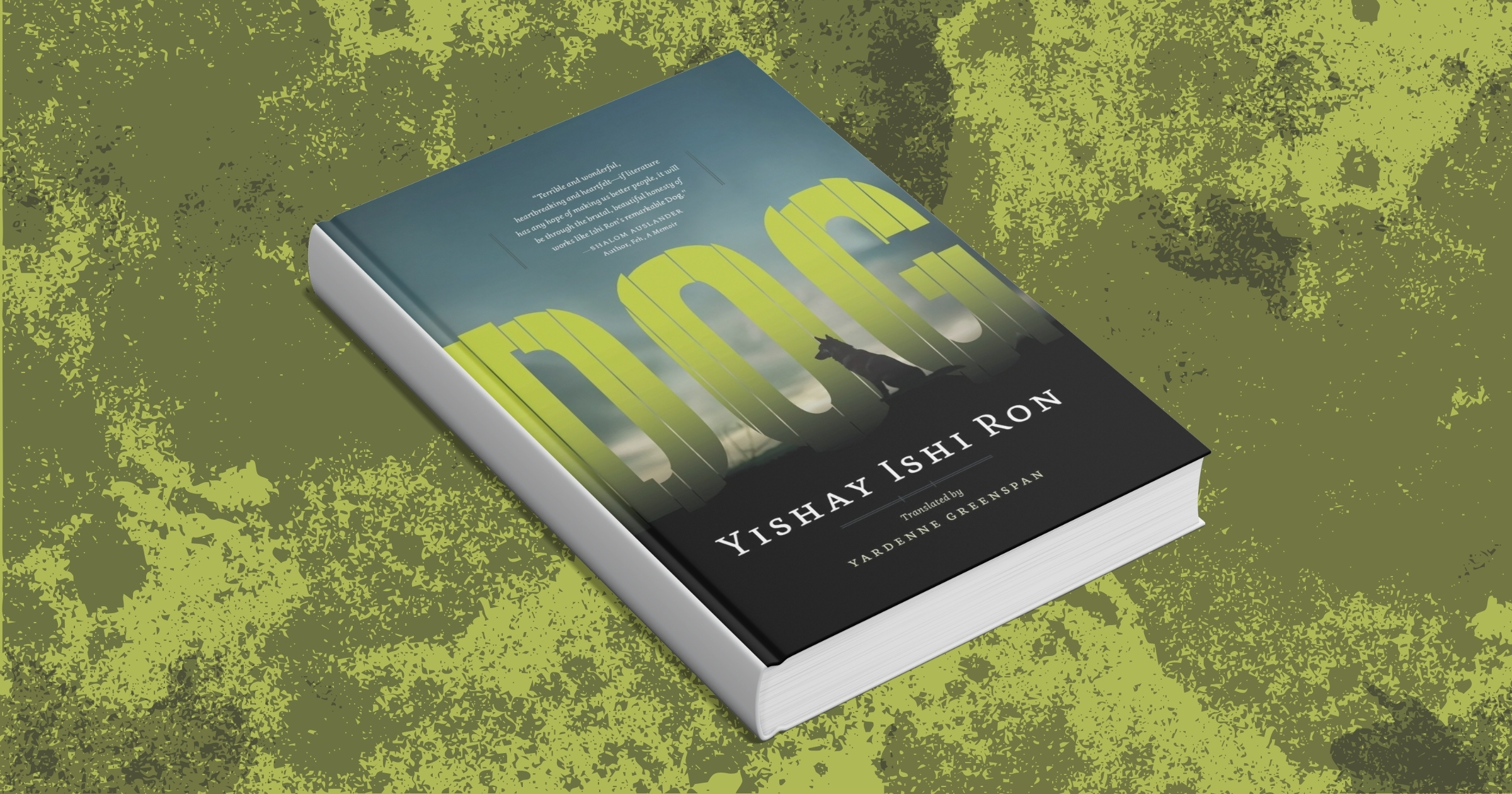
Dog by Yishay Ishi Ron
Translated by Yardenne Greenspan (Soncata Press)
Winner of two National Jewish Book Awards, Yishay Ishi Ron’s Dog is a slim but harrowing volume that drags a reader deep into the fears, pain and misery of a former Israel Defense Forces commando officer. Known only as Geller because of his fixation on bending a spoon like the famous Israeli mentalist Uri Geller, he is a homeless drug addict, isolated from family and friends and spiraling downward. Without a change in his condition, the book conveys, he is sure to be dead soon.
Geller’s only companions—if they can be called that—are a violent thug, a handicapped junkie and the sympathetic cafe owner who charges the former military man’s phone and gives him coffee before his daily panhandling. Geller spends his time shooting up heroin and studying a grainy YouTube video of Uri Geller bending a spoon on The Tonight Show. The only aspect of his life that Geller feels he can influence is a spoon, which he carries on a chain around his neck.
Ron takes us on a dizzying, immersive roller-coaster ride through Geller’s disordered, tortured mind. He is never sure whether he is in Tel Aviv or in the killing grounds of Gaza, where one of his soldiers died in his arms and others in his squad were killed in a burning military vehicle. One memory that Geller keeps rerunning in his mind is of one of his soldiers shooting a dog for no apparent reason.
His downhill trajectory begins to turn around, and the possibility of redemption is offered, after Geller rescues a stray dog from the thug with whom he shares a trash-ridden alleyway. At the same time, he meets Doris, a lonely woman who makes a living cleaning apartments.
But this is no smooth ride away from his self-imposed despair and isolation. Echoing Geller’s personal disintegration, the narration vertiginously switches points of view to his two self-appointed saviors: the abandoned canine called only Dog and Doris. Dog’s sections provide brief, humorous respites from the book’s grim atmosphere, while the moments that focus on Doris are nearly as sad as Geller’s. These brief moments widen the tale beyond Geller’s self-absorbed near-madness and provide him with at least the potential for a second chance.
In the author’s note, Ron, himself an IDF veteran, describes how Geller’s experiences are based on his own struggles with PTSD and addiction. The recurring disorientations and drug-addled “jonesing” Geller suffers is described with agonizing authenticity, pushing the reader to wish him a full recovery.
Ron only briefly explores why Geller has not sought or received help from the IDF or any Israeli health facility for his ailments, since there are resources available to those who are struggling. In a country where violence, war, death, moral quandaries and existential worries wound all its citizens, it is not difficult to view Geller as a stand-in for all Israelis, nearly all of whom face their own disorientations, trauma and anxiety. Ron’s book does not offer easy answers, which is as it should be.
Alan D. Abbey is a journalist and book reviewer in Jerusalem. He is currently writing a novel set in Roman-occupied Judaea in the years between the death of Jesus and the destruction of the Second Temple.
 Facebook
 Instagram
 Twitter

Leave a Reply