



Arts


YIVO Seeks to Demystify Prewar European Jewish Life
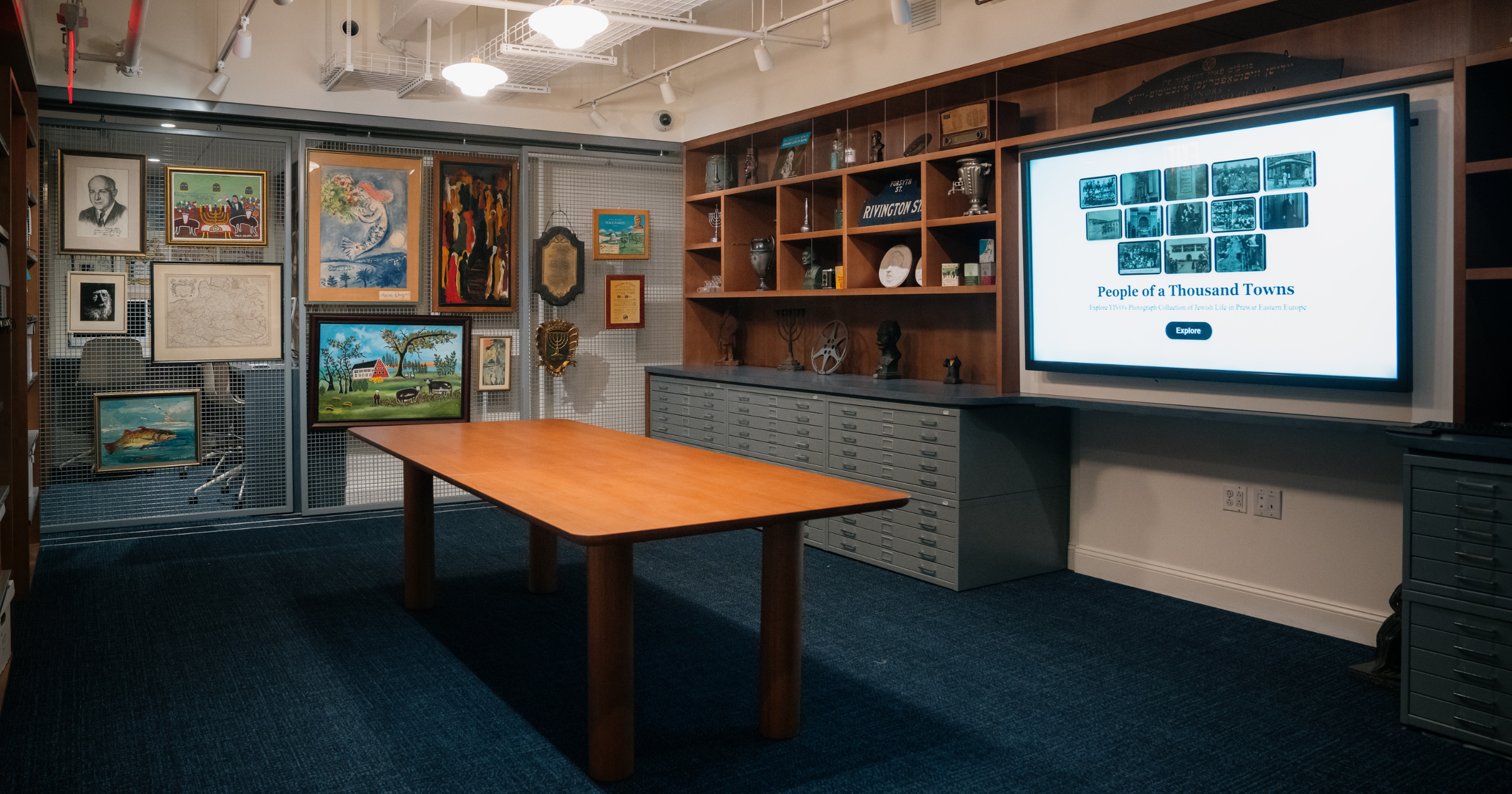
Whether creating Yiddish theater posters at a hands-on design station or leafing through a Sholom Aleichem story in a cozy reading nook, students visiting the newly opened YIVO Learning and Media Center can immerse themselves in every aspect of Eastern European Jewish life before and during the Holocaust.
More importantly, said Alex Weiser, YIVO’s director of public programs, time spent at the center in Manhattan could help demystify the organization’s archives—home to more than 24 million artifacts collected over YIVO’s 100 years—and spark deeper interest in Jewish history and culture for high school and university students, whether Jewish or not.
“YIVO, like other institutions, once saw its role as protecting material from people, not protecting material for people,” Weiser said. “We want to reverse this.”
So far, more than 1,000 students from secondary schools and universities in the New York City area have toured the center.
“It opens up a world,” said Yaelle Frohlich, a history teacher at the Orthodox Frisch School in N.J., who has brought a class to the center. “Students gain a much deeper sense of what an archive is, what it does and why it matters. They’re amazed at how much there is—and how alive it feels.”
Among the many displays, visitors can explore a touchscreen map filled with photographs of shtetls, listen to haunting niggunim melodies or type on Yiddish-language typewriters.
In advance of International Holocaust Remembrance Day on January 27, YIVO’s mission, Weiser said, remains especially relevant—and urgent, since fewer than 230,000 Holocaust survivors are alive in the world today, according to an April 2025 Claims Conference report. But through primary source materials, such as diaries and survivor testimonies, students can learn how European Jews lived and expressed themselves before World War II.
“It’s important that even when we’re talking about the Holocaust, we focus on Jewish life,” Weiser said. “We ask, ‘How did they express their identities? What languages were they speaking? What events did they go to? What books were they reading?’ By exploring these questions with students, we show that Jews were so much more than just victims of this terrible atrocity.”
Cathryn J. Prince is a freelance journalist and author of the forthcoming book For the Love of Labor: The Life of Pauline Newman.
 Facebook
 Instagram
 Twitter
Leave a Reply