




Wider World


Australia’s Jews Confront a New Reality
After watching graphic footage and reading extensively about the sexual violence directed at Israeli women on October 7, 2023, and at some of the hostages held by Hamas in Gaza, Lee Kofman, an Australian Jewish writer, said she had found it difficult to be intimate with her husband. She described feelings of guilt, unease and discomfort, and a sense of disconnection from her own desire after such extreme violence was inflicted on her people.
Even before the terror attack at Bondi Beach in Sydney, for many in Australia, the surge in antisemitism since the Hamas attacks had not been confined to protests, headlines or social media. It had reached into the most private corners of their lives, reshaping relationships, careers and even intimacy, while forcing a reckoning with identity, safety and belonging.
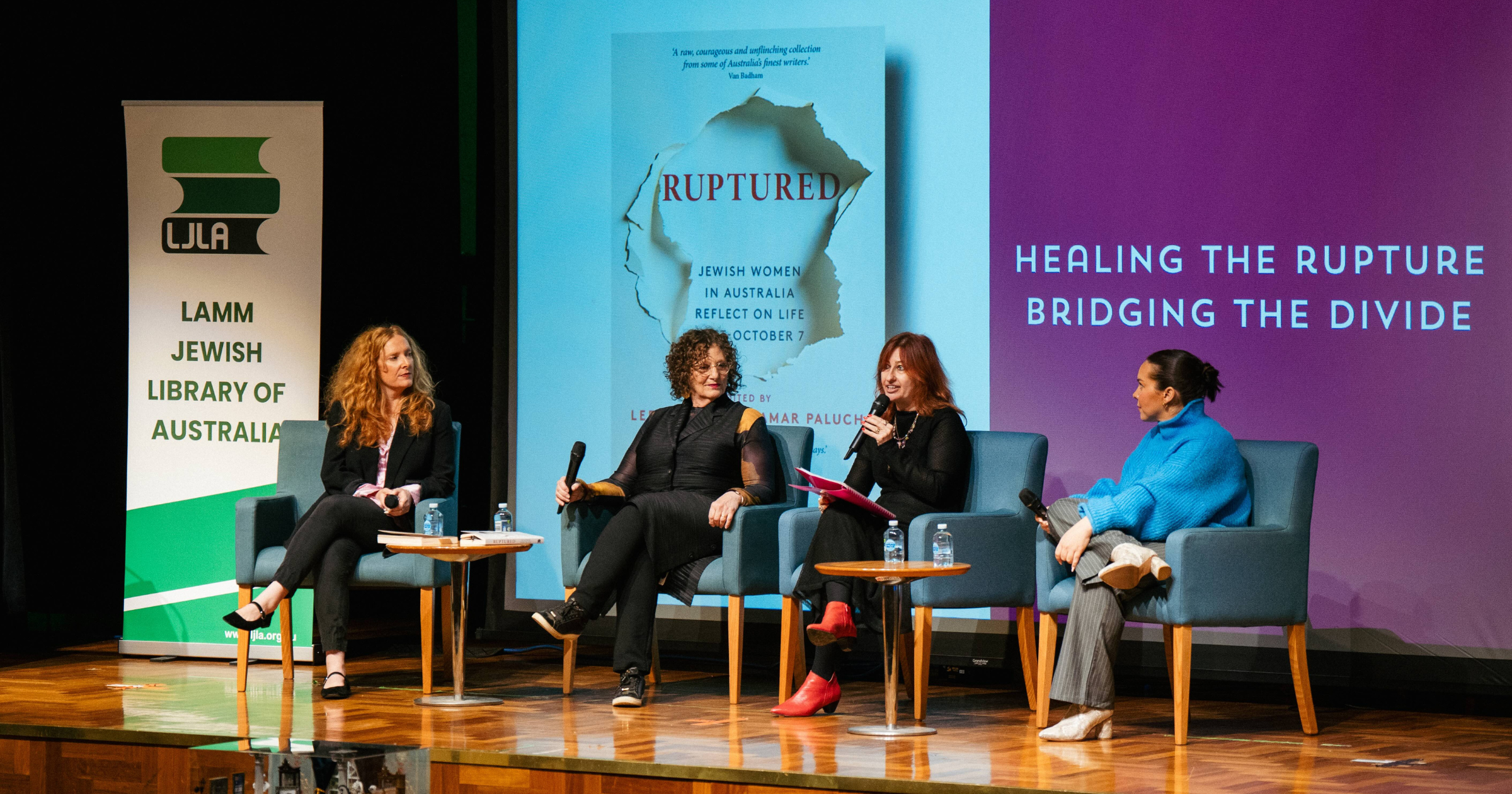
Kofman explored how this shift impacted women with fellow writer Tamar Paluch in Ruptured, an anthology published in the aftermath of the Hamas attacks that brings together reflections from Australian Jewish women grappling with isolation and silencing at a time of rising anti-Jewish sentiment.
“The antisemitism had a lot of repercussions for many of us,” Kofman said, echoing similar sentiments expressed by Jewish women in the United States and around the world. “We no longer trust the feminist and progressive spaces where we used to feel comfortable. Now, we feel like second-class citizens there.”
Those deeply felt personal fractures have unfolded alongside a broader national shift. What once felt like a distant conflict began to feel uncomfortably close for Australian Jews, culminating in the violence at Bondi that shattered any remaining sense of insulation.
Joel Burnie has been to Israel more than 15 times since the Hamas massacre. He visited the Gaza border area in the South, where kibbutzim were burned to the ground and families murdered inside their homes. He watched the 47-minute uncensored footage of the attack compiled by the Israel Defense Forces.
When he sat for an interview in early December in his office on the 24th floor of a high-rise in downtown Sydney, overlooking the city’s stunning harbor, he probably could not have imagined that anything resembling those scenes would ever reach the shores of his home country.
But days later, on December 14, 2025, the first night of Hanukkah, gunmen Naveed Akram, 24, and his father, 50-year-old Sajid Akram, opened fire along the iconic Bondi Beach waterfront, killing 15 people taking part in a Jewish-sponsored holiday festival. In a nation that prides itself on safety and multicultural harmony, the attack shattered a long-held sense of peace.
“There was very little difference between the way that Hamas gunmen killed innocent civilians in the kibbutzim of the South and how these shooters were picking off Jewish people in Bondi Beach,” Burnie, executive manager of the Australia Israel and Jewish Affairs Council, said in an interview conducted over Zoom after the shooting. “The correlation between the two events, the visuals of the two events, is very strong, very real.”
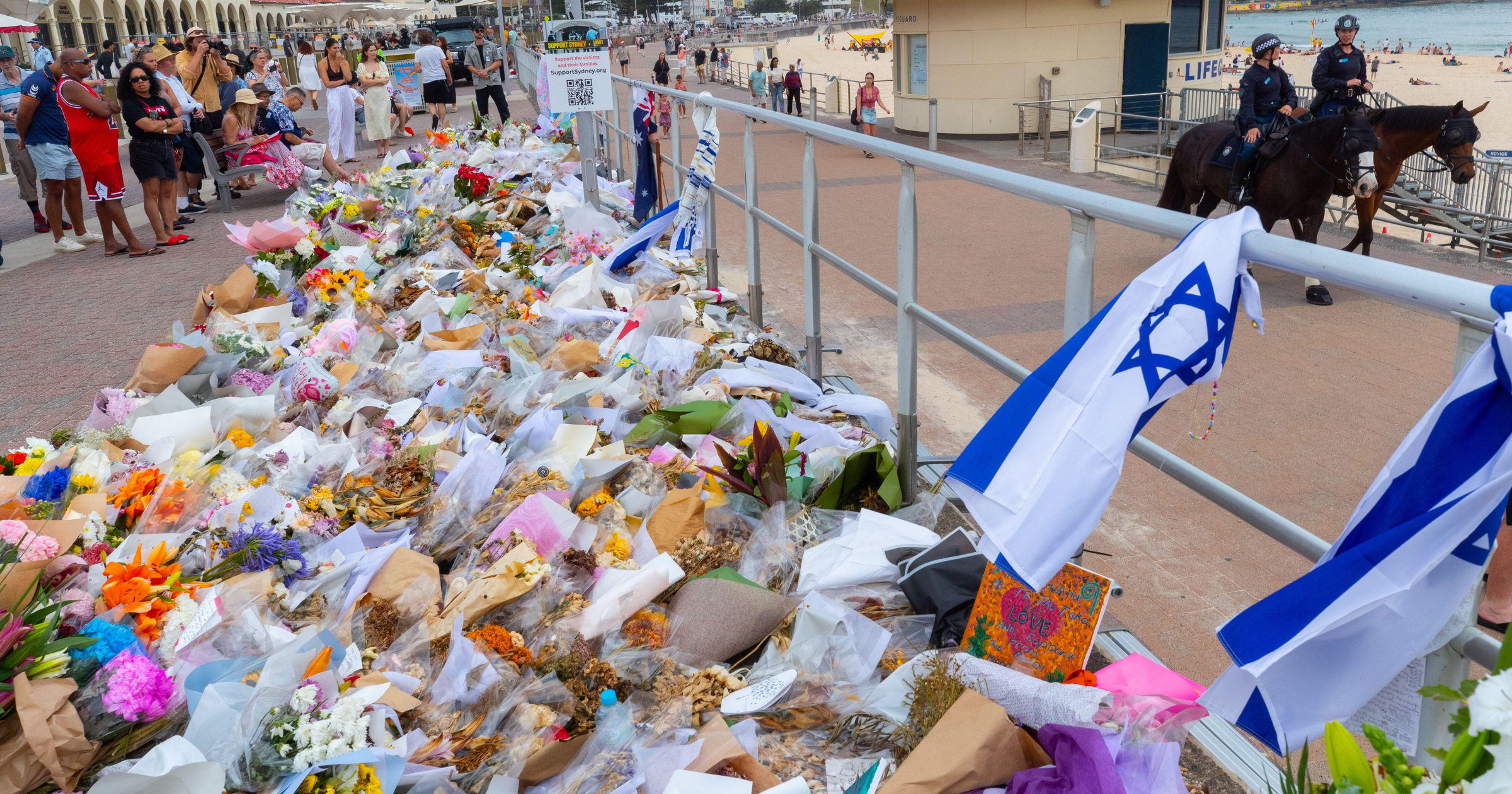
For prominent television journalist Erin Molan, the violence was not an abstract horror unfolding on a screen. She lives with her 7-year-old daughter half a mile from Bondi Beach. When the gunfire erupted, she recalled, she ran to her balcony, heart racing and with her mind filling in the images she could not yet see.
She knew immediately who the attack was meant to terrorize, she said. “If I were to say to you that I was surprised, I’d be lying,” said Molan, who is not Jewish but who has become well-known for her support of Israel since October 7. “This is the culmination of a buildup of so much hate and so much weakness.”
Australia sits geographically removed from most of the world, and that distance, along with its peaceful, laid-back style of living, have a special appeal. For decades, the nation famed for its koalas and kangaroos was known, like the United States, as a “goldene medina,” or golden state, according to Jeremy Leibler, president of the Zionist Federation of Australia.
The country is home to roughly 100,000 Jews, most living in Sydney or Melbourne and most either Holocaust survivors or descendants of survivors. In fact, Australia has the highest concentration of Holocaust survivors per capita outside of Israel.
Lively and cosmopolitan Sydney, along Australia’s eastern coast, has pockets of Jewish areas in the neighborhoods of Bondi, Dover Heights, Rose Bay, Vaucluse and Bellevue Hill. The community, most of whom are descendants of Hungarian Jewish immigrants and survivors, is somewhat dispersed.
Melbourne is more close-knit and largely made up of descendants of Polish Jewish immigrants, Holocaust survivors and newer arrivals from South Africa and the former Soviet Union. Most Jews live in the suburban neighborhoods of Caulfield and St. Kilda East, where numerous kosher bakeries, cafes and restaurants line Carlisle Street, the main drag, and dozens of synagogues and Chabad houses are located nearby.
Both communities are deeply Zionist and philanthropic. Australia’s Gandel Foundation contributed millions of dollars to establish the two-year-old Gandel Rehabilitation Center at Hadassah Hospital Mount Scopus in Jerusalem. And in the aftermath of the Bondi attack, Hadassah Australia worked closely with Hadassah International and the Hadassah Medical Organization to offer trauma care.
“At times like this, compassion, connection and care matter more than ever,” explained Dorit Jaffe, CEO of Hadassah Australia. “Hadassah’s response reflects our enduring commitment to stand alongside our community, not only in words, but through meaningful action and shared strength.”
Even before the trauma of Bondi, the Jews’ relationship with their fellow Australians had grown strained.
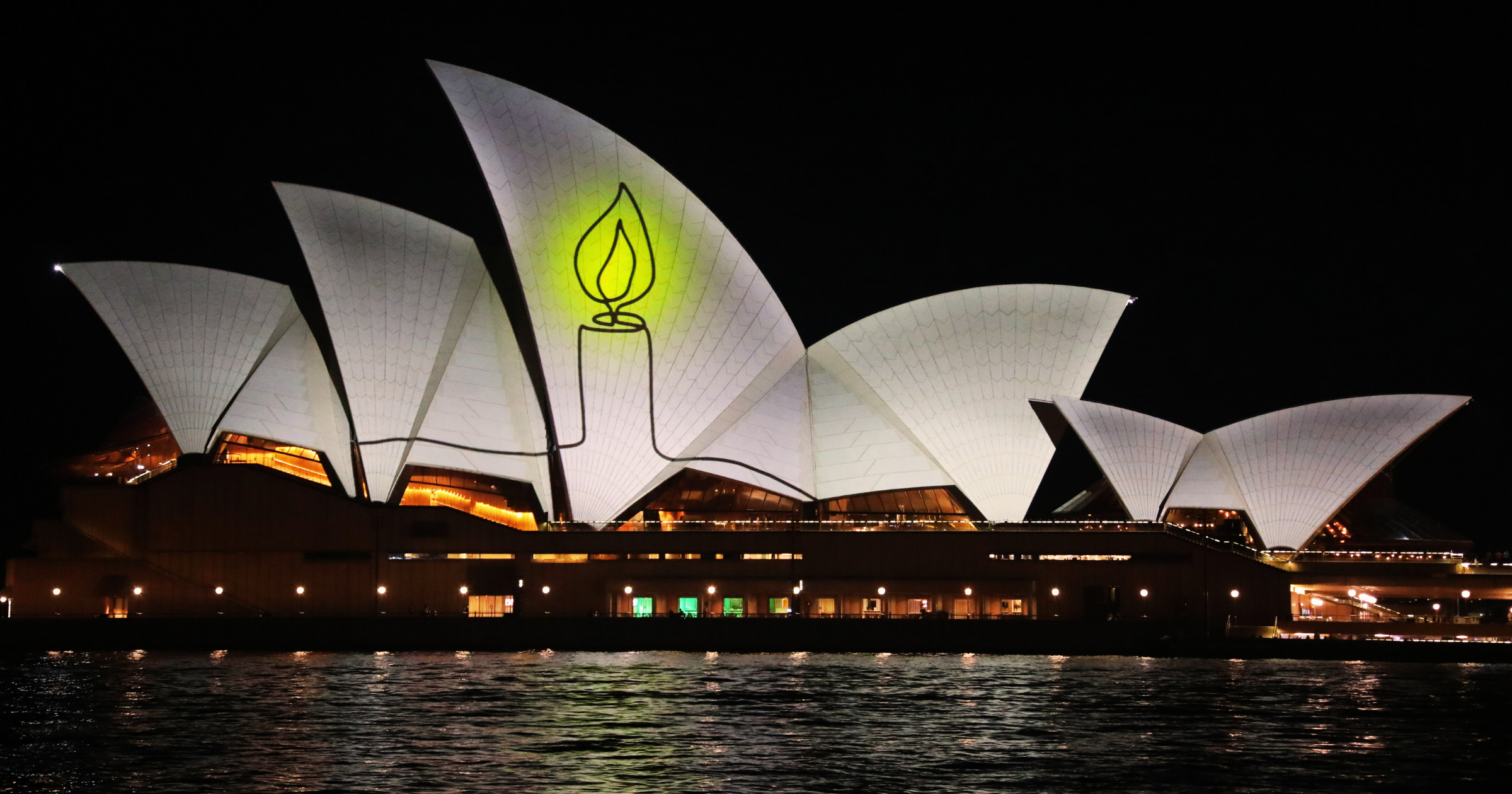
Two days after the Hamas massacre in 2023, hundreds of people joined a pro-Palestinian rally outside the iconic Sydney Opera House, which had been lit blue and white in solidarity with Israel, with attendees shouting slogans such as “F— the Jews” and “shame Israel.”
That protest quickly snowballed into hundreds of others over more than two years of war, leaving many Jews with the feeling that something ugly was seeping into their daily lives.
“Now we have got to this point where blood has been spilled, where Jewish leaders have been begging and demanding action from the government and not receiving it,” Burnie said, “and warning all the authorities that it was only a matter of time until that violent rhetoric moved into actual acts of violence.”
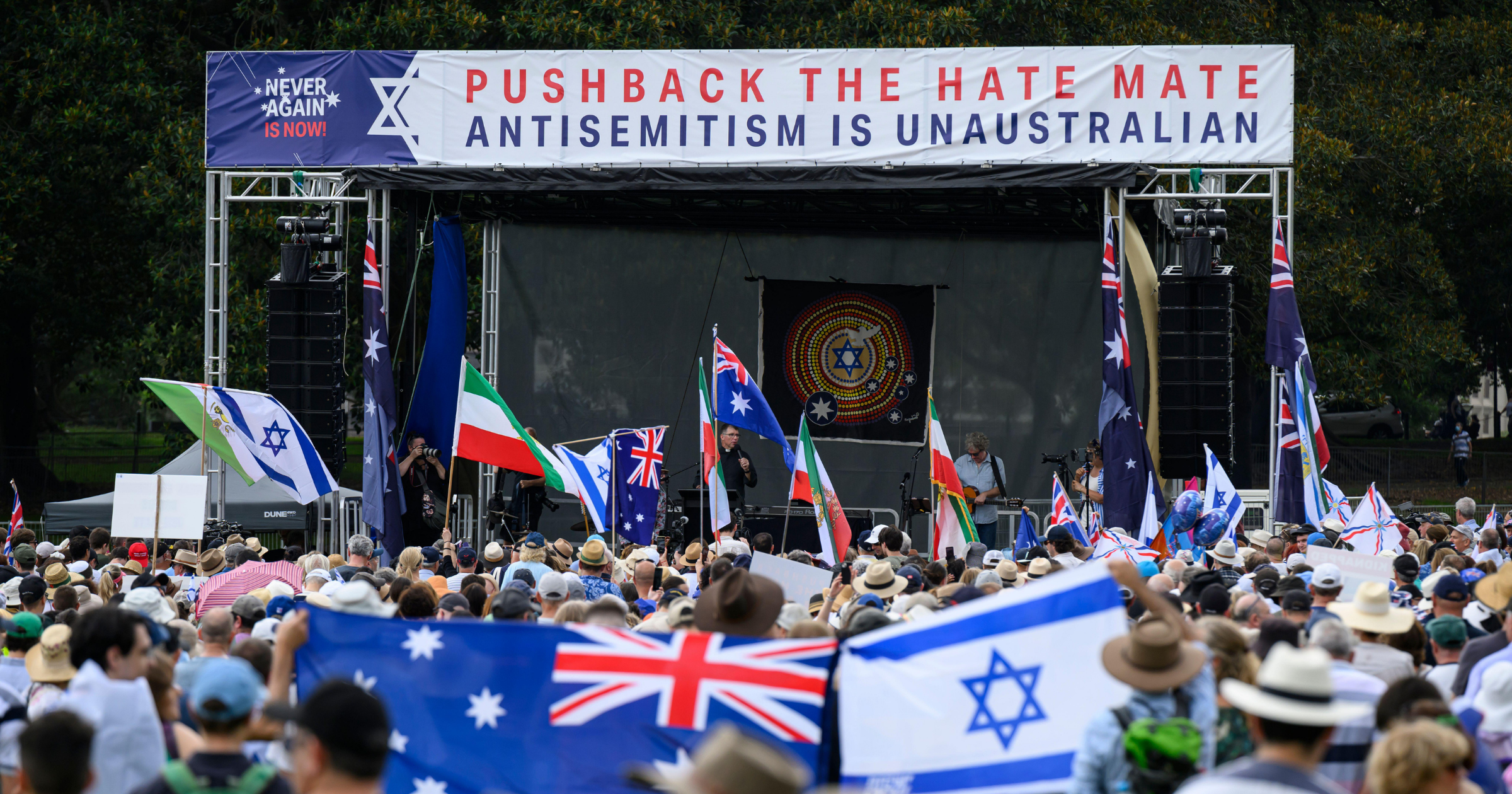
In the aftermath of the Bondi attack, the government, under center-left Labor Party Prime Minister Anthony Albanese, has begun the process of crafting new legislation aimed at better addressing hate speech and antisemitism.
Most Australian Jews historically have voted for Labor; however, as antisemitism and anti-Zionism have intensified, an increasing number have begun supporting the center-right Liberal Party. A poll conducted on social media in April 2025 by The Australian Jewish News found that more than 80 percent of the country’s Jews supported the Liberal Party, while 12 percent backed Labor. However, the poll likely reflects a highly engaged segment of the Jewish community, one deeply disappointed in Albanese’s response to the Gaza war.
In one example, in July 2025, the prime minister issued a statement alleging that “the situation in Gaza has gone beyond the world’s worst fears” and that it is “in the grip of a humanitarian catastrophe. Israel’s denial of aid and the killing of civilians, including children, seeking access to water and food cannot be defended or ignored.” Then, in September, Albanese’s government recognized a Palestinian state.
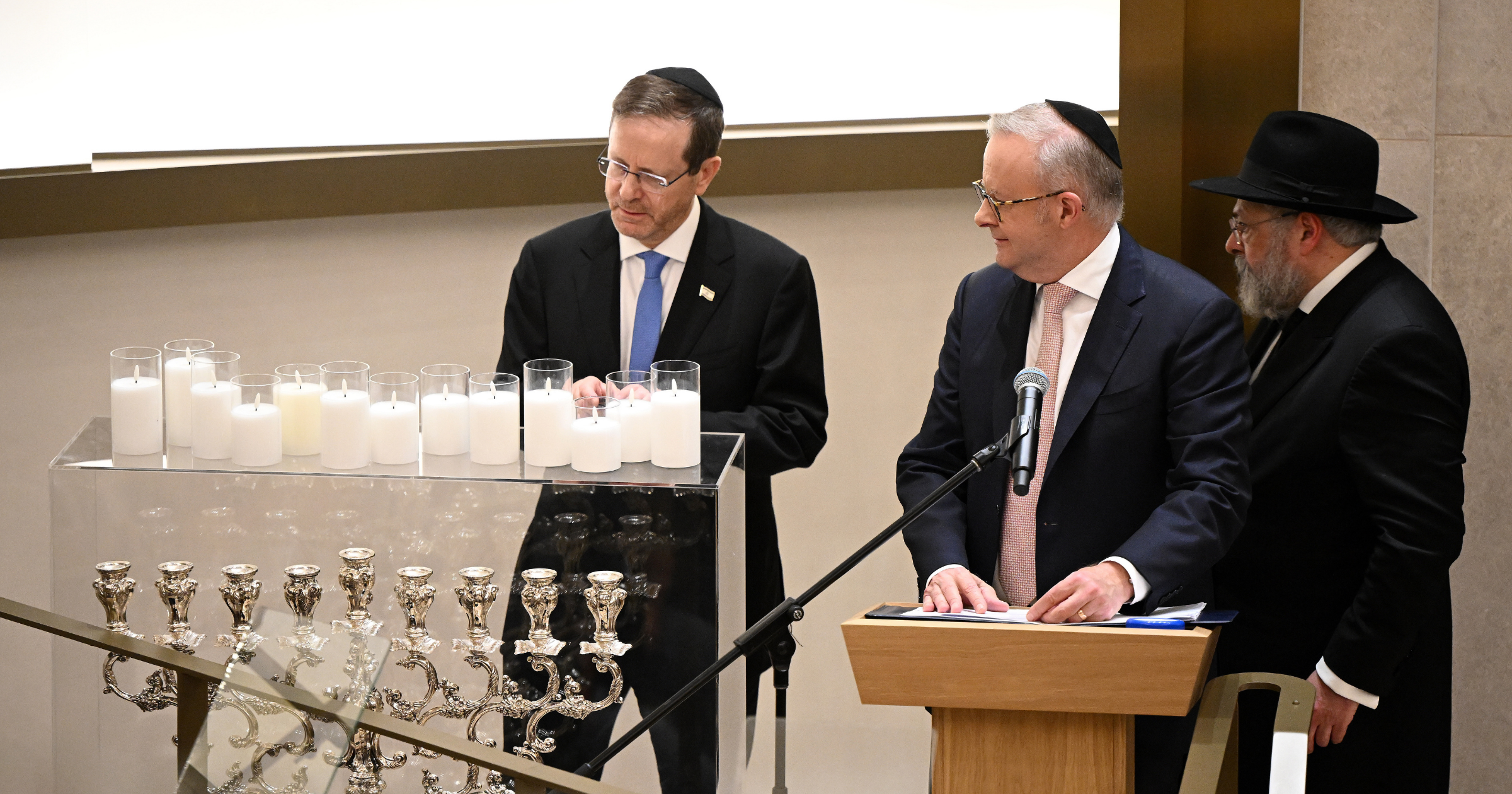
Despite Israeli President Isaac Herzog’s state visit to Australia in February, which was intended as a show of support for the local Jewish community and was met with organized, at times violent, anti-Israel protests around the country, a number of notable Israelis have been barred from entering the country since the Hamas attacks. Critics say the bans are aimed at appeasing Australia’s roughly 800,000 Muslims following complaints about perceived bias in the visa-approval process after several extremist Islamic preachers were denied entry.
Albanese’s government sought to demonstrate that the policy was nondiscriminatory by barring some outspoken pro-Israel figures deemed “far-right” by authorities, including Israeli American activist Hillel Fuld and former Israeli Minister of Justice Ayelet Shaked.
A recent report by the Executive Council of Australian Jewry documented 1,654 anti-Jewish incidents across the country between October 1, 2024, and September 30, 2025. There were some 2,062 incidents recorded the previous year. In the decade before the Hamas attacks, Australia recorded an average of 342 such incidents a year.
In February 2024, a private WhatsApp group of 600 Australian Jewish creative artists was infiltrated by anti-Israel activists, who then published a transcript from the group as well as contact details of its members. After the leak, group members faced threats and workplace harassment, prompting the Australian government to strengthen its privacy laws on doxxing.
Three months later, the Melbourne office of Josh Burns, a Jewish member of Parliament, was vandalized. Its windows were smashed, fires set and the walls defaced with slogans such as “Zionism is fascism.” A 17-year-old boy was ultimately charged in the incident that caused more than $100,000 worth of damage.
In October and November 2024, several Jewish-owned businesses were attacked. The front door of Lewis’ Continental Kitchen, a kosher deli near Bondi Beach, was torched. Graffiti of an inverted red triangle, a symbol used by Hamas terrorists to mark Israeli military targets and by some extremists to mark Jewish targets, appeared on the window of the popular Avner’s bakery in Sydney.
After the Bondi attack, the same bakery posted its own message in its shop window, stating that it was closing due to “two years of almost ceaseless antisemitic harassment, vandalism and intimidation.”
A survey conducted by the National Council of Jewish Women Australia between July and August 2025 found that close to 90 percent of respondents or one of their family members had experienced antisemitism in the previous two years. More than one out of two women said they felt unsafe, and two out of five said they were actively working to cover up their Jewish identity. A striking 19 percent said they had even changed their daily routines due to fears of antisemitic attacks.
But even these shocking statistics do not capture what it feels like to live as a Jew in Australia, as several personal stories suggest.
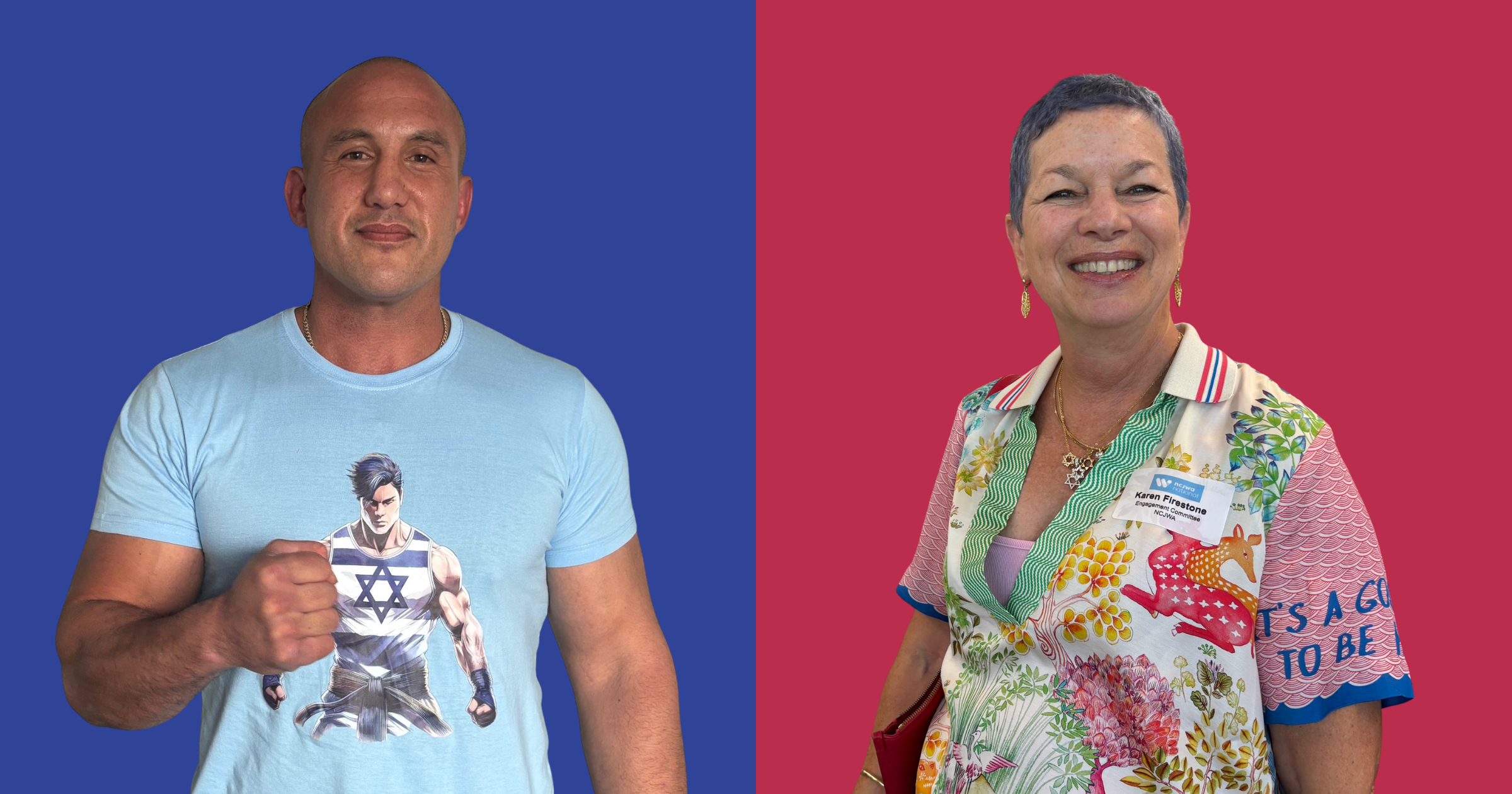
Karen Firestone, a Sydney-based fundraising professional, said that in her previous role as a philanthropy manager at Lifeline Australia, a crisis support hotline, and among her social circle, she slowly realized she was being ostracized.
“I was definitely persona non grata,” Firestone, who is now the director of fundraising and donor relations at Jewish National Fund Australia, recalled following one lunch meeting with colleagues after October 7.
Firestone said one of her close friends accused her of being a “genocidal baby killer” after she visited Israel and showed support for the Jewish state by painting her nails blue and white. She ultimately cut ties with that friend as well as others she once considered close. She said that they viewed her as a “filthy Zionist.”
Leibler, the Zionist federation president, described the practice of shadow-banning in the arts world, with venues calling Jewish artists to say they could no longer host them out of fear of being targeted by pro-Palestinian groups or boycotts.
He added that many anti-Israel artists, whose careers had been built in large part through Jewish philanthropy and whose works hang in Jewish homes and galleries, suddenly turned on their benefactors.
For example, Leibler said the late Marc Besen, who built and supported major institutions such as the Tarra Warra Museum of Art, was called out as a “genocide supporter” by local artists after a photograph of him with Israel’s first prime minister, David Ben-Gurion, surfaced.
The ultimate slur in Australia, Leibler said, is “genocide supporter.”
“That’s the modern-day blood libel,” he said.
Then came the Bondi Beach attack, and the unease that had been simmering exploded into grief, fury and resolve.
Lynda Ben-Menashe, president of the National Council of Jewish Women Australia, said the grief and fury are emerging in different ways. Some people, she explained, want to protest, organize petitions or pursue legal action against the government, police and security services for failing to act and prevent the Bondi massacre. Others are paralyzed by despair.
She admitted that she feels afraid. “I’m out there in the media. I’m on the radio five to six times a day. At the moment, I don’t have any personal security, and I’m actually a bit scared,” she said. “I don’t really want to be outside, in full view and open space. But on the other hand, I’m not going to be cowed. I’m not going to stay home.
“There’s a very strong tension between the need not to be cowed,” she added, and the pragmatic view that she shouldn’t walk from a rally to her car alone, “or drive to my house and possibly be followed. It only takes one person.”
Before Bondi, she said, she was not worried, although, like most community leaders, she had already taken precautions, such as de-listing her home address on public records.
Non-Jewish Zionists like Molan, the broadcast journalist, are issuing their own warnings. In a Zoom interview, she said that while the violence may begin with Jews, it does not end there.
“If you think because you aren’t Jewish, you are safe from this hate, then you are deluded,” she said.
Even as fears rise, many in the community refuse to hide. One of them is Gul Pohatu, known locally as the Hebrew Hammer. A former mixed martial arts fighter and now a trainer, Pohatu walks through public spaces wearing a T-shirt emblazoned with the image of a black-belt bodybuilder with a large Star of David on his chest.
“The more they push back,” Pohatu said, “the more I want to push forward. Why should we hide? Why should I be afraid of who I am?”
Others choose quieter acts of solidarity.
A young Jewish man named Asher, who asked that his last name not be published, described deliberately choosing to eat at the Melbourne outpost of the celebrated Israeli restaurant chain Miznon one December afternoon. He was visiting the city—his home is in Sydney—and decided to show his support after the restaurant was targeted by anti-Israel activists last summer.
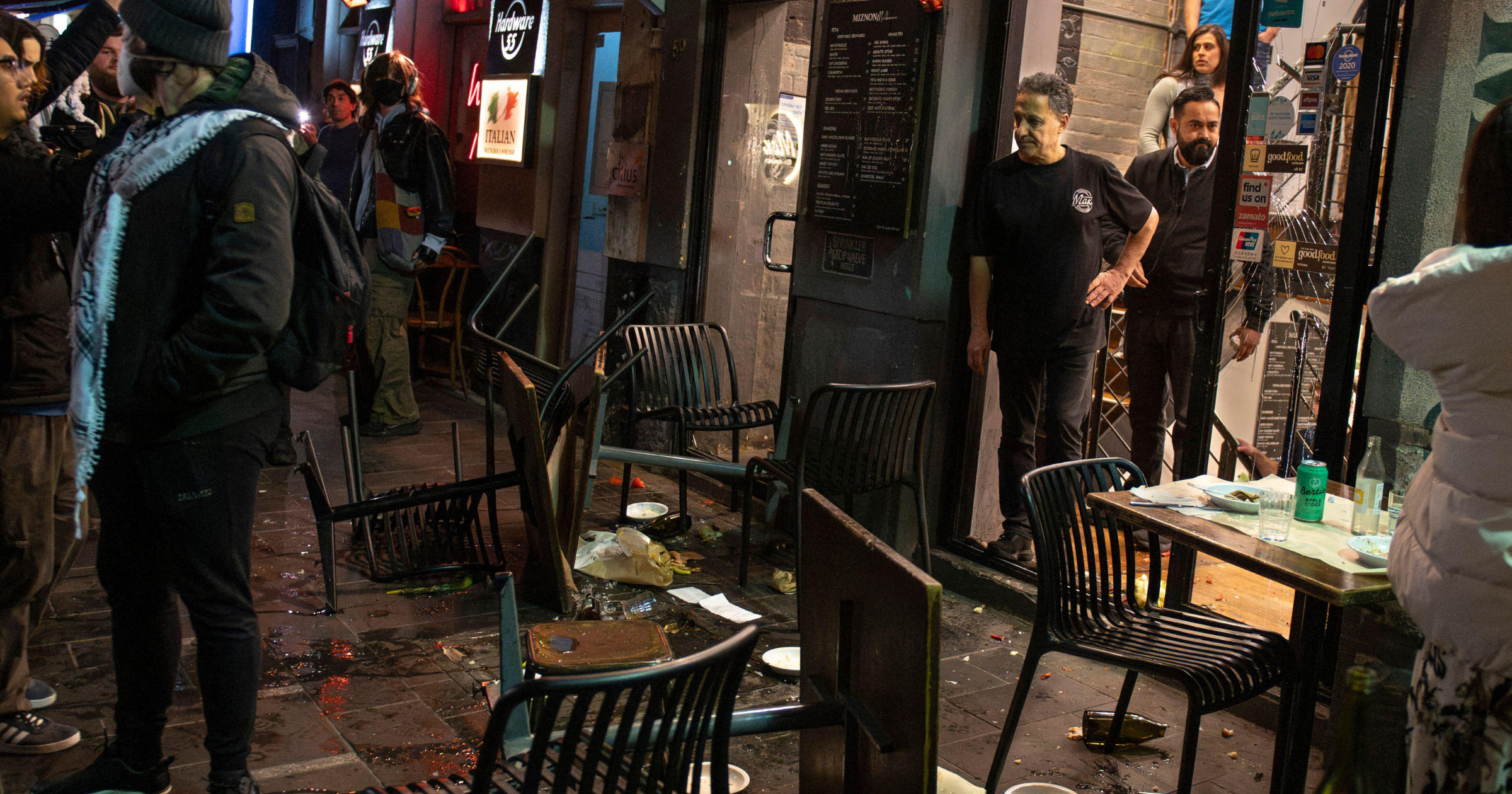
“I wanted to make sure that the people here and the owners and the staff know that good people are around, and people want to dine here,” he said. “I wanted to show solidarity and send a message that we should not be bullied or intimidated.”
Firestone, the fundraising director at JNF Australia, described a crystallizing moment for her. One morning shortly after the start of the war, she found a large piece of plywood near the trash bins outside her building, defaced with the words “F— Israel.” She covered the graffiti with fresh paint, replacing it with the words “Love Israel” and adding a large Jewish star. She then propped the sign up so it could be seen clearly by any passersby.
And inside the community, people are not only organizing; they are returning.
Rabbi Daniel Rabin, spiritual leader of the Caulfield Shule in Melbourne, said there has been a significant increase in community involvement. More people are attending services, participating in Jewish events and seeking connection with their Jewish peers.
“Even if they’re not religious, they feel like a part of their identity is being attacked,” Rabin said, reflecting a similar trend in the United States. “When you feel attacked, you want to be closer to those who support you and around like-minded people.”
Lee Kofman, the co-editor of the Ruptured anthology, said that many female writers and artists were targeted on social media and suffered professional consequences, losing jobs, work opportunities, friendships and reputations. In response, many are creating new work connected to their faith and identity, in what Kofman describes as a renaissance of Jewish art.
Australian Jewish artist Nina Sanadze said she plans to turn the floral tributes laid at the Bondi attack site into an installation at the Sydney Jewish Museum. Sanadze told The Art Newspaper that she has been drying the flowers under whirring ceiling fans and experimenting with setting petals in clear resin.
Still, one question hangs over Australian Jewish life: Stay and fight, or leave? Burnie, of the Australia Israel and Jewish Affairs Council, offered a historical framework. In Germany, he noted, persecution did not begin with the genocide of the Jewish people. It unfolded over years, starting with discrimination after Adolf Hitler was appointed chancellor in 1933.
“There is a big question mark as to whether or not things actually indeed get worse for Australian Jews,” Burnie said following the Hanukkah shooting at Bondi. “But at least we have a place to go in Israel, and that should be some positive reminder for us.“
Leibler noted that there has been an increase in aliyah files opened since October 7, and he expects that some of those files will turn into flights following the Bondi attack.
In 2023, approximately 102 Australians and New Zealanders made aliyah, according to the South African Zionist Federation in Israel, which also assists Australians. The following year, Israel’s Ministry of Immigration and Absorption reported that some 180 Jews immigrated from Australia alone.
Others are determined to stay.
“We’re part of Australia,” said Nirit Eylon, who moved to Melbourne from Israel 20 years ago and works in the health-tech industry. After October 7, she launched a grassroots movement called United with Israel Australia NZ, through which Australians could support the Hostages and Missing Families Forum.
“I don’t think that we have to run,” she said. “I think that it’s about time that this government takes action and does what it needs to do.”
Rabin, rabbi of the Caulfield Shule, said he hears similar reports from several members of his congregation. “The Jewish community in particular is a very strong community,” he said. “I don’t think we’re going to go down without trying.”
Leibler echoed that resolve.
“We are a very strong, passionate, resilient, informed Jewish community,” he said. “We have a role to play, and I can tell you that we intend to play it out.”
Maayan Hoffman is executive editor of ILTV News and a correspondent for The Media Line and Ynet News.
 Facebook
 Instagram
 Twitter
Leave a Reply