



Hadassah
Health + Medicine


Hadassah Steps Up for Reproductive Rights
Hadassah is very concerned about protecting women’s reproductive rights, both as a major part of women’s health care and as a value in and of itself, according to Elizabeth Cullen, Hadassah’s director of government relations.
“We believe women should have choices and autonomy,” she said, noting that Hadassah, The Women’s Zionist Organization of America, has a number of policy statements to that effect. In 2024, for example, Hadassah adopted a statement that says: “Hadassah remains committed to advocating at every level of government to support access, resources and funding for the whole spectrum of reproductive health services—including fertility treatment, maternal and postpartum care, contraception and abortion—as critical components of women’s health care that must be protected.”
In recognition of National Infertility Awareness Week (April 19 to 25, 2026), Hadassah and the Tzedek Association, a global justice organization, coauthored a letter signed by 15 Jewish organizations urging Congress to support the bipartisan HOPE with Fertility Services Act. The bill would expand access to infertility diagnosis and treatment and to fertility-preservation services.
Hadassah chapters across the United States have stepped up advocacy and education efforts since the 2022 reversal of Roe v. Wade, Cullen said.
Members are testifying before Congress and meeting with state lawmakers in support of reproductive rights. They sponsor panel discussions and other educational outreach at synagogues and Jewish institutions, often in cooperation with women’s groups such as the National Council of Jewish Women and the League of Women Voters, she said.
Sometimes their actions yield success. One such case occurred in the runup to the November 2024 elections, when voters in half a dozen states, including Maryland, considered ballot initiatives that would enshrine abortion rights in their state constitutions.
Greater Baltimore Hadassah built partnerships in support of the Right to Reproductive Freedom Amendment, according to Greater Baltimore’s advocacy vice president, Harriet Rubinson. The constitutional amendment, which was approved by 76 percent of voters, added new language that protects “the ability to make and effectuate decisions to prevent, continue or end one’s own pregnancy.”
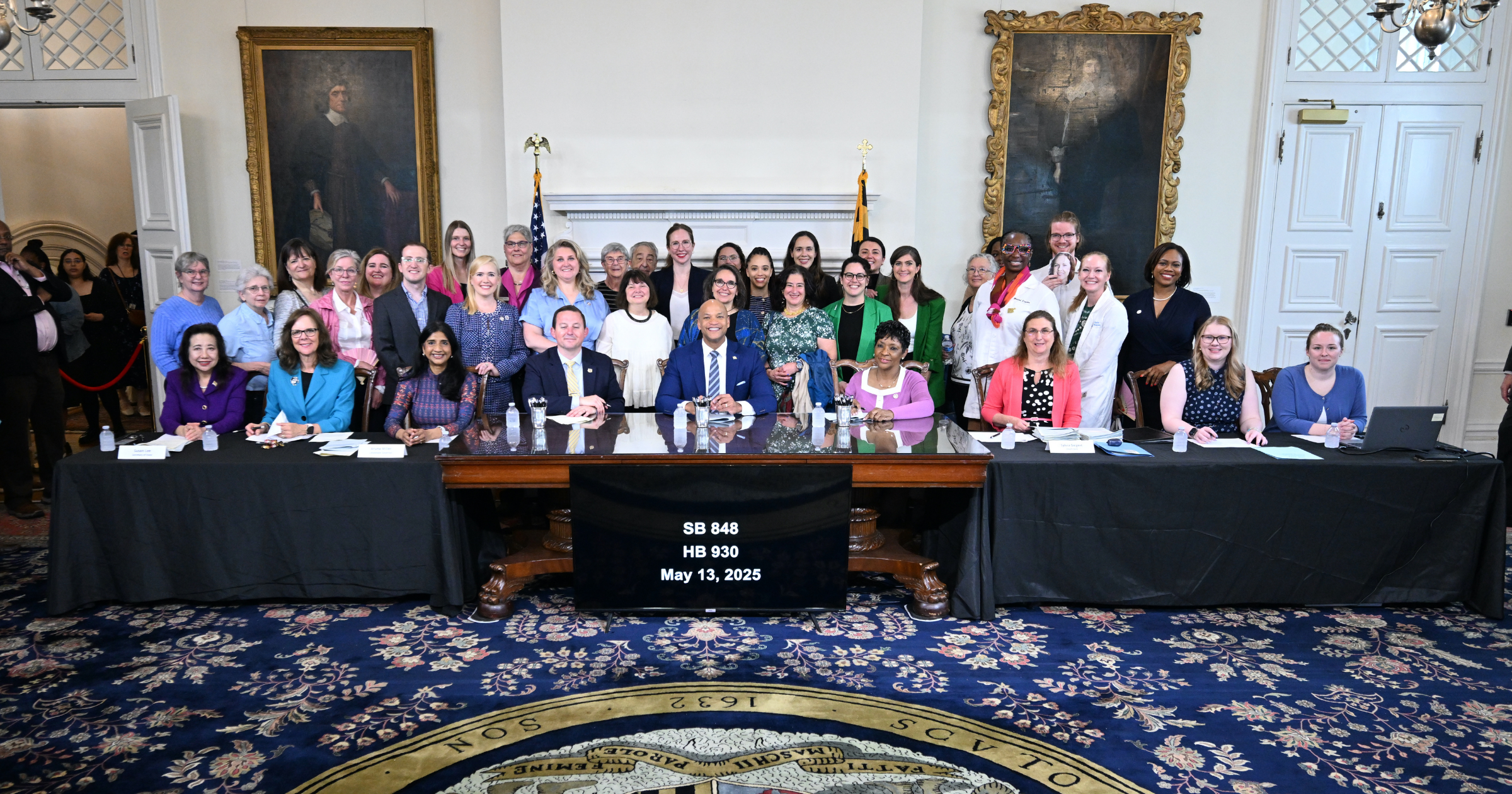
The Maryland legislature also passed a bill last year that established the country’s first state-administered abortion fund, for which local Hadassah groups also actively lobbied. Rubinson said she was proud to stand with the state’s governor, Wes Moore, in May 2025 when he signed that bill into law, ensuring not only that abortion remains legal in the state, but that more women have financial access to it.
In some states, even Hadassah members’ best efforts fell short—for now, activists maintain.
Hadassah chapters in Florida worked hard in 2024 to drum up voter support for an amendment that would have enshrined the right to abortion in the state’s constitution, similar to what passed in Maryland. It needed 60 percent of the vote but received 57.3 percent. As a result, Florida’s six-week limit on abortion remains in place.
“The disappointment was palpable,” said Lin Pomerantz of Jacksonville Beach, who is Hadassah’s regional coordinator for Florida Central as well as chair of the National Grassroots Advocacy Team.
“You know, we marched in the ’70s for this, and now our daughters and granddaughters have less reproductive rights than we did,” said Ellen Siegman, vice president of Florida Central’s advocacy team and president of the Lylah Pinellas Chapter. “I grew up with Roe v. Wade being the law of the land. Who ever thought that [one day] it wouldn’t be in effect?”
Plans are already underway for renewed efforts to get out the vote in 2026, when they hope a similar amendment will be back on the ballot, Pomerantz said, and “Let’s Talk” advocacy events are planned throughout the year in Florida and nationwide.
“You know, you get up, you brush yourself off and you keep going,” Pomerantz said.
Sue Fishkoff is a former editor of J. The Jewish News of Northern California and the author of The Rebbe’s Army: Inside the World of Chabad-Lubavitch and Kosher Nation: Why More and More of America’s Food Answers to a Higher Authority.
 Facebook
 Instagram
 Twitter
Leave a Reply