



Books
Health + Medicine


How I Reluctantly Found Purpose as a Cancer Mentor
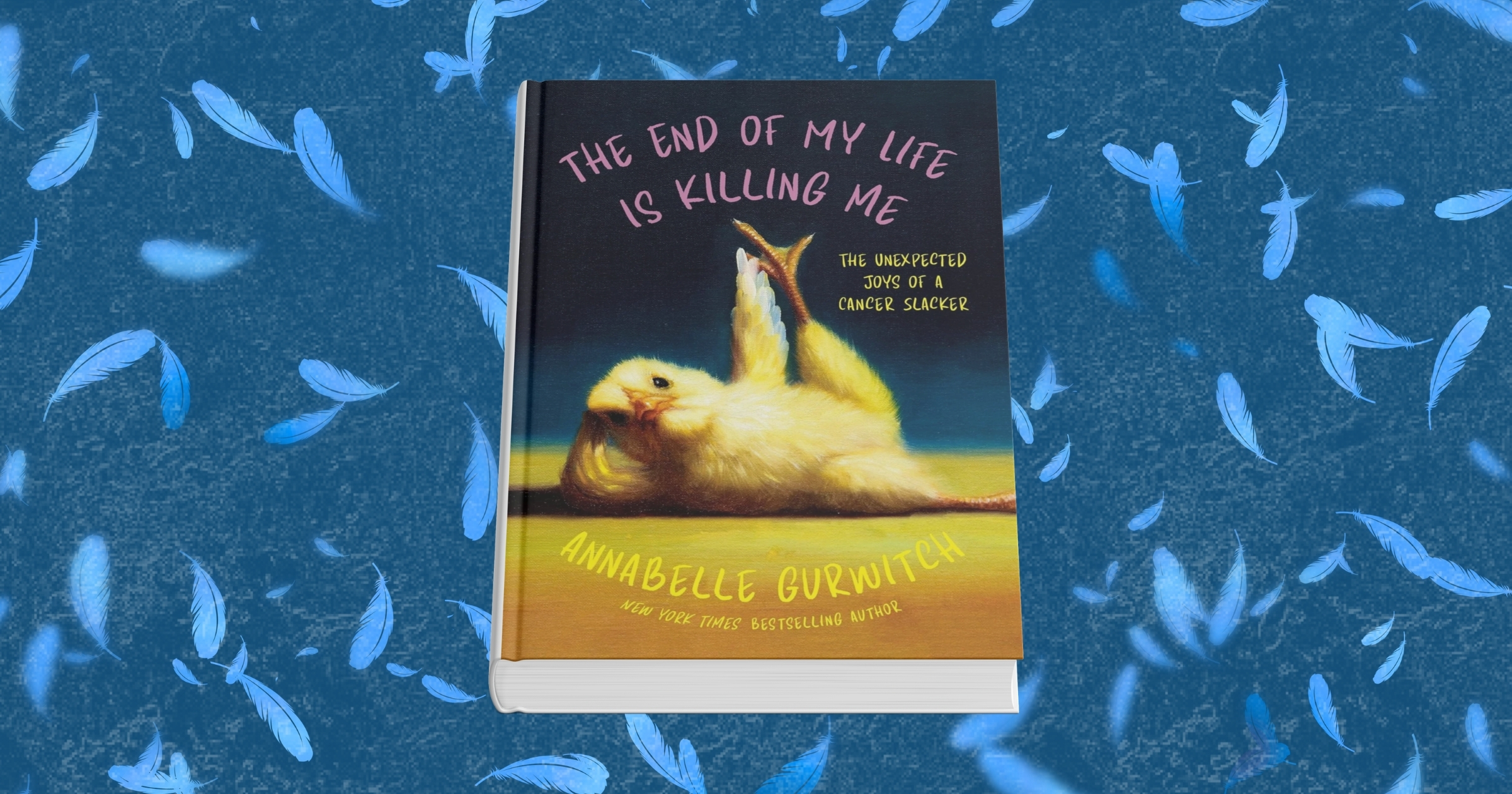
I wasn’t support-group averse, but angels? I first heard about Imerman Angels, a cancer support community that matches mentors and mentees with the same conditions, in fall 2020. I’d received a diagnosis of stage 4 lung cancer. That I had been asymptomatic, knew no one who had the disease that I could turn to for advice, and that this happened during Covid, only added to my shock and sense of isolation.
But the angel name seemed unsettling. My Reform Judaism background hadn’t included the concept of personal interactions with angels. And, as a nonbeliever, that’s the last thing I was looking for. The organization’s logo was a pair of wings. That seemed ill-advised. “Getting your wings” is a phrase I’ve always understood as a common euphemism for what the medical establishment refers to as a “poor outcome”—otherwise known as death.
Still, desperate for camaraderie, I filled out the application. A few months later, an email introducing me to my angel, Hardye Moel (pronounced “hardy mole”), landed in my inbox. Angels, wings and now I was being paired with a small, furry mammal? Was Hardye Moel really a jokey nom de cancer about being a tough little critter?
Hardye followed up with an email encouraging me to get in touch.
An internet search yielded a photograph of a dapper gentleman fox-trotting with a petite blond woman. He had a distinct bushy mustache. I’d requested to be matched with a female. Wasn’t it enough that I’d asked for help from a stranger?
It was another eight months before I managed to put preconceived notions aside and finally responded to my angel.
Hardye, it turned out, was the female fox-trotter. During our first call, I learned that she was Chicago-based, had children, grandchildren, a wide circle of devoted friends and an adoring spouse. Like me, she was Jewish and a nonbeliever. And she was a practicing psychotherapist. She affirmed my allergy to the flaccid ubiquity of “thoughts and prayers.” Maybe there was a God after all! Mr. Moel was her third and favorite husband, and adopting his surname was such a ridiculous proposition that she couldn’t resist. At 73, she’d been living with lung cancer for four years. She was tiny—under five feet tall—but a dynamo.
Hardye and I were walking a privileged but precarious path, both of us taking the same “miracle drug,” a targeted therapy that turns off the gene driving the cancer’s growth and allows this deadly disease to be managed like a chronic condition. The miraculousness, however, was tempered by the thudding reality that the therapy would eventually loses its effectiveness, timeline unknown. After which, patients switch to one of a number of innovative treatments or to traditional chemotherapy, all of which have more toxic side effects and don’t offer a cure. This wily disease required close monitoring through CT scans every three months.
In the days leading up to these appointments, I was racked by “scanxiety.” My well-meaning friends and family forwarded oppressively upbeat TikToks featuring cancer survivors climbing Mount Everest or called me, only to burst into tears at the sound of my voice.
I needed someone to talk to without triggering emotional distress—mine and theirs. Miraculously, Imerman Angels had manifested my perfect match.
Neither Homer’s blissfully oblivious Lotus Eater nor a nihilist, she was the perfect scanxiety companion. Hardye, my fellow traveler, remained on speakerphone during the hour-long drives to the hospital.
With Hardye on speed dial, interactions with friends and family became less pressurized.
During winter 2022, Hardye had a bad bout of Covid and other more obtuse ailments associated with her cancer treatment. We had a lag in communication, and when she missed a scan-day call, I fretted over her health. Her medication had stopped working and she had begun chemotherapy. She worried about how I’d take the news. When Hardye finally did reach out, she texted a picture of herself smiling during a chemo infusion, giving the camera a thumbs up. “The only good thing about today was my hair,” she texted, her blond bob as indefatigable as her spirit.
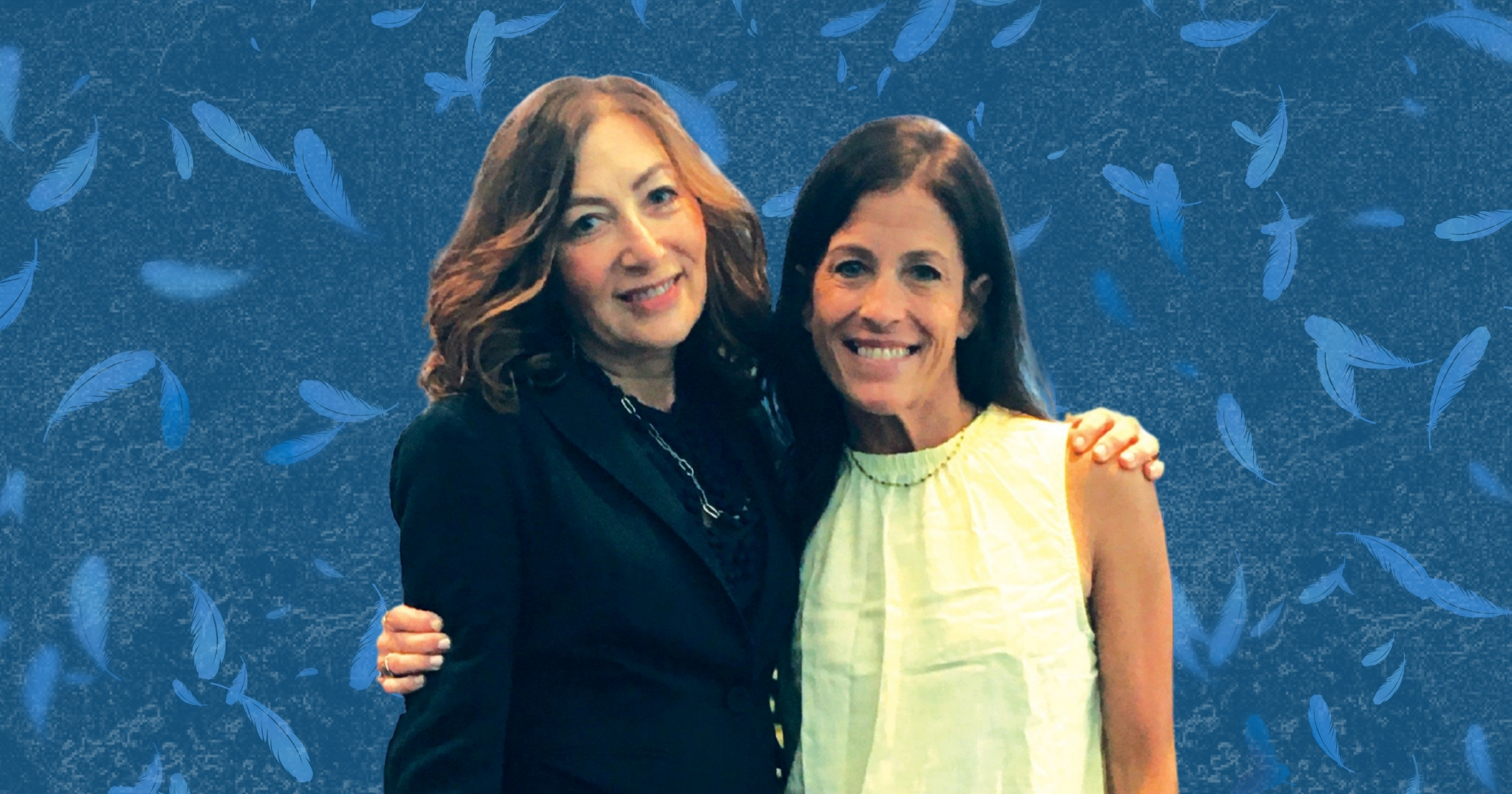
I assumed she was rallying until an email arrived a few weeks later. “Your angel fell apart,” she wrote. The chemo had ravaged her body. She was exhausted and had prioritized quality time with her loved ones—no more treatment, only palliative care.
By now, we’d traded book recommendations, talked politics, shared stories about our children, and we were signing off every exchange with heart emojis and “love yous.”
Hardye didn’t want to confide her own concerns. Instead, she urged me to pursue joy, patient advocacy, return to writing and travel.
When a month passed without word from her, I emailed to check in.
Nada. So, I breathed a sigh of relief when I saw her name in my inbox a few days later.
“This is Don, Hardye’s husband,” it said. “Sadly, Hardye passed away at home last Thursday. I know she enjoyed knowing and talking with you.”
A subsequent email let me know there had been a memorial. I wasn’t invited—I hadn’t expected to be. Her life was richly populated, and we were…. What were we?
How do you mourn someone you’ve never met in person, but who has played an essential role in your survival? Hardye had modeled living with gusto and demonstrated determination and dignity in her dying. She’d uniquely embodied my most deeply held Jewish value: the highest form of tzedakah is to give anonymously. Hardye was a beloved and widely respected member of her community, but she’d selflessly stepped into this role with no expectation of a thank you or public recognition. No “angel of the year” plaques are awarded.
I spent a week sitting shiva for her but I couldn’t shake my grief. I’d have to follow her lead, except hopefully not the death part.
If thoughts and prayers have been requested, then I won’t be a good match,” I wrote on my application to be an Imerman Angel, “but if you’ve got someone who would like support, and reassurance that everything doesn’t happen for a reason, I’m ready for my wings.”
I had been angeling a few months with my assigned mentee when I was contacted by Angel Central. Would I be open to taking on an additional match? Did that mean that Hardye had numerous assignments? Did I want to know the answer to that question?
I will never know how many people Hardye ministered to, because instead of querying Mr. Moel or Angel Central, I added that second mentee, and another, and a few more.
Angel upper management reminds us in the Angel Rules of Engagement that “a match might last for a lifetime or be as fleeting as a phone call,” and that has proven to be the case. The proximity to loss is a given.
What role are angels supposed to play in our lives, anyway? In my Sunday school classes in the 1970s, we didn’t learn about angels, but my friends and I tuned into Charlie’s Angels every Wednesday night religiously. My grandmother would want me to remind you that the role of Bosley, their boss, was played by a Jewish actor, David Doyle, but what made the biggest impression on me was that, except for Doyle, who was balding, all the stars had great hair.
Hardye set the bar high on all accounts, and she did it while rocking that golden halo.
Annabelle Gurwitch is a New York Times best-selling author and a two-time finalist for the Thurber Prize for American Humor Writing. This essay is adapted from The End of My Life Is Killing Me: The Unexpected Joys of a Cancer Slacker, published by Zibby Publishing. Copyright © 2026 by Annabelle Gurwitch.
 Facebook
 Instagram
 Twitter

Leave a Reply