



Arts


Zibby Owens and The Braid Stage ‘On Being Jewish Now’
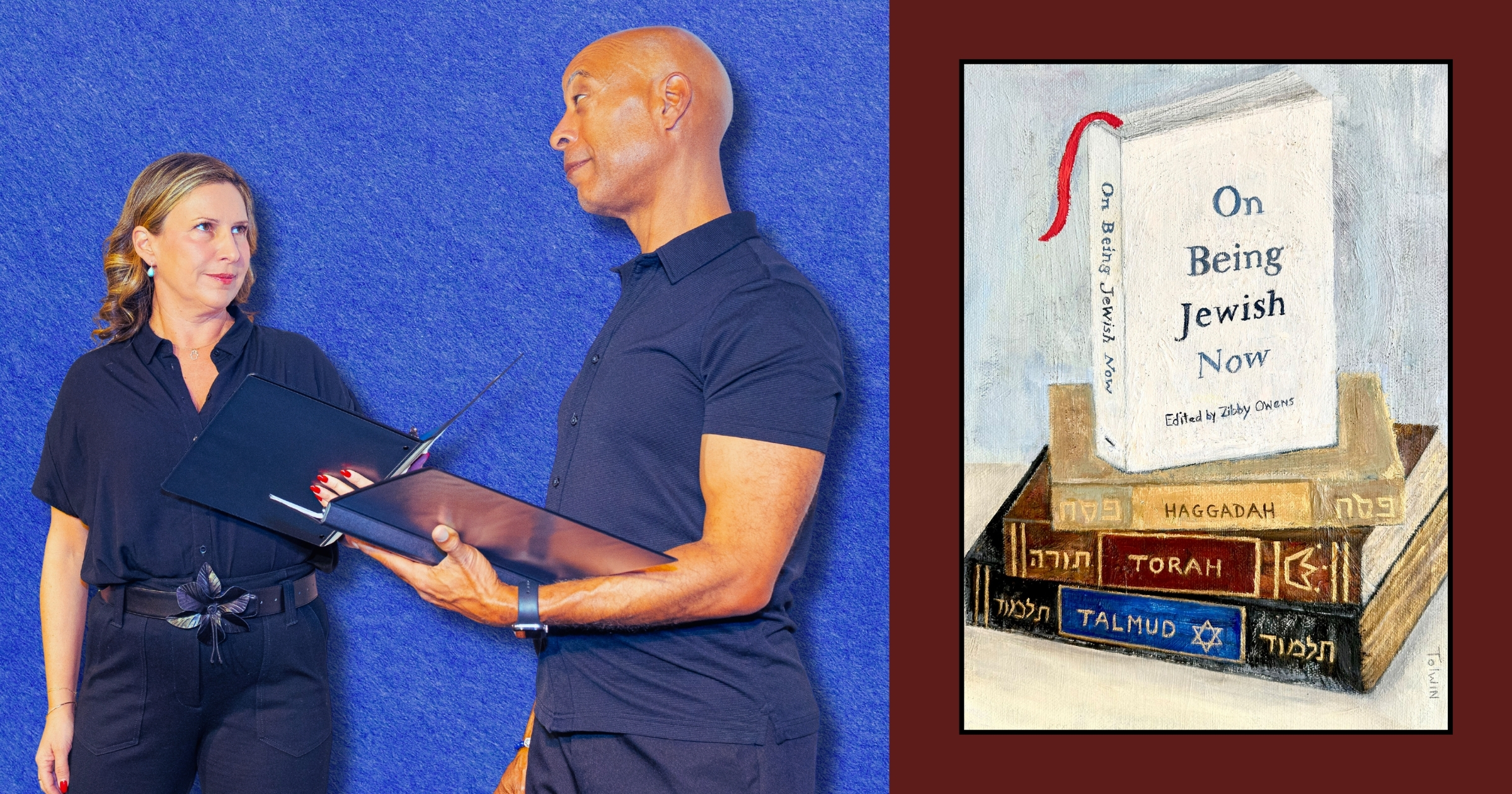
When author and publisher Zibby Owens started collecting first-person Jewish stories after the October 7, 2023, Hamas massacre and subsequent explosion of global antisemitism, she had no idea how resonant others would find the tales—or how necessary.
The resulting essay collection, On Being Jewish Now, which Owens edited, has spent nearly 30 weeks on the USA Today bestseller list since coming out in fall 2024 in multiple formats. Meanwhile, her companion Substack, also titled “On Being Jewish Now,” continues to reach thousands more; the lineup of new weekly essays has grown increasingly global since its inception, reflecting the expanding reach of post-October 7 Jewish reflection.
Now audiences will have the opportunity to share the experience of these contemporary Jewish perspectives through the staging of On Being Jewish Now. The production debuted in late March at The Braid, an 18-year-old Jewish theater in Santa Monica, in Los Angeles County, and will run through late April. It will also be shown live on Zoom on April 16 and April 19, and the producers are preparing for a national tour.
“People are really hungry for connection right now,” said Owens, describing the overwhelming response she’s witnessed over the almost two years she spent touring the country to promote the book. During her travels, she also championed other titles and authors associated with her boutique publishing house, Zibby Publishing, and her award-winning podcast, Totally Booked With Zibby. “Despite the fear and, sometimes, the political divisions, the instinct to gather is above all else.”
As wonderful as good books are, performances are unique in offering that shared, real-time connection. “When you are in a room full of other human beings, there’s a collective magic that happens,” Susan Morgenstern, the play’s director at The Braid, said. “The beauty of having a great actor bring you into the story with them is to help people connect to it in a different way.”
From the 75 essays in Owens’ anthology, The Braid adapted 14 into onstage vignettes, performed as spoken-word pieces by a multigender, multiethnic cast of four actors. With zero props and actors dressed in black reading from binders, the result, Morgenstern said, is an experience that puts the focus on the words.
“I’m not me, as the actor, telling the story that I’ve been given,” Ronda Spinak, co-founder and artistic director of The Braid, said of each performer. “I’m breaking the fourth wall as the writer, looking right into the eyes of the audience…and telling the story.”
The stories in the production include the writer Joanna Rakoff’s exploration of an excavated, long-hidden synagogue in pre-inquisition Spain, as well one by Rabbi Sharon Brous—a founder of the progressive Los Angeles synagogue IKAR—recounting an uneasy boat trip where passengers interrogated fellow travelers to find out if they were Jews.
And more than one middle-aged parent will likely relate to a vignette, written by actor Mark Feuerstein, about a man taking a spin on the dance floor—literally, by breakdancing—at his twins’ b’nei mitzvah.
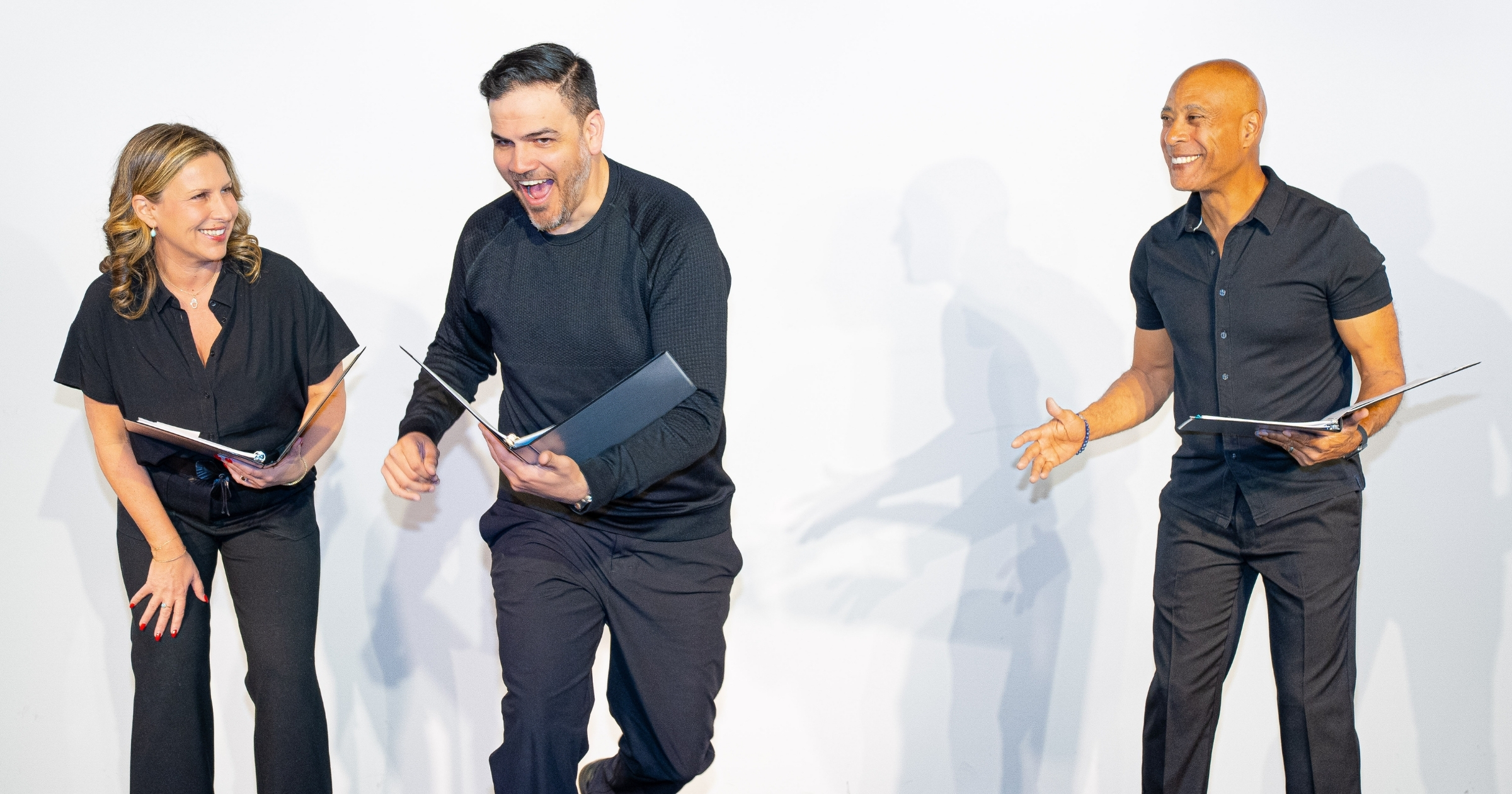
Reading Owens’ anthology On Being Jewish, Spinak knew immediately that the stories would translate not only for the stage, but also for The Braid’s specific audience. She founded the theater in 2008, staging salon-style performances in private homes throughout Los Angeles County. The Braid has been the area’s only dedicated Jewish theater facility since 2014 and has retained its original streamlined, salon-style format, producing an average of three new shows a year on themes like forgiveness, Jews of color or antisemitism.
“We created this format as a unique art form—the intersection of storytelling and theater—to tell true Jewish stories, usually first-person narratives,” Spinak noted. She and her team mine happenings in their local communities and scour publications to find “authentic Jewish stories” that showcase “our contemporary lived experience, reflecting what Jewish life is like in America today.”
On Being Jewish Now was therefore a natural fit, and Owens said she was delighted when Spinak reached out.
“We’ve spent a lot of time in conversation, but they really run the show,” Owens said, noting that the finished product came together organically, “I completely trust them…. [They] got to the heart of what the stories were about.”
The Braid team selected the featured essays, setting them to original music commissioned through Morning Moon Productions, the company helmed by Owen’s husband, Kyle Owens. All performances feature post-show conversations with contributing writers.
After a series of performances at both The Braid’s Santa Monica theater and event spaces around greater Los Angeles and in Northern California—from art galleries to synagogues—Owens said plans are in the works to bring On Being Jewish Now to venues around the country.
Nearly two years after the collection took shape, Owens is struck by how resonant its theme remains. She said she recently added an essay to her Substack by a woman in Israel with three small children who was running back and forth to a bomb shelter. A week later, Owens ran the account of an American Jewish woman’s heartbreaking decision to leave the family’s adopted hometown in Italy amid rising antisemitism, especially at her son’s school.
Owens had felt frustrated at her powerlessness to “move the needle” against rising antisemitism, she said, but realized that sharing personal stories with fellow authors who were experiencing Jew-hatred as the new normal “made me feel better, less alone. It helped get me through a challenging time. I thought if I could magnify that concept, then I could help other people, the way I felt I’d been helped.”
She also felt a responsibility to use her platform—including tens of thousands of followers on Instagram and other social media platforms—to elevate Jewish voices. “Even though we all have different experiences as Jewish people,” she said, “if everybody else gets to know what we’re like on an emotional level, not a political one, it could counteract some of what at the time felt like newfound, and unfounded, hatred or discrimination.”
The Braid’s first shows all sold out, confirming both Owens and Spinak’s conviction that Jewish audiences are craving opportunities to explore the moment collectively. “I think there’s a real hunger for being in community,” Spinak said, “and for celebrating how each of us is feeling Jewish right now.”
Hilary Danailova writes about travel, culture, politics and lifestyle.
 Facebook
 Instagram
 Twitter
Leave a Reply