




Books


Hannah Senesh, the Woman Who Became Zionist Legend
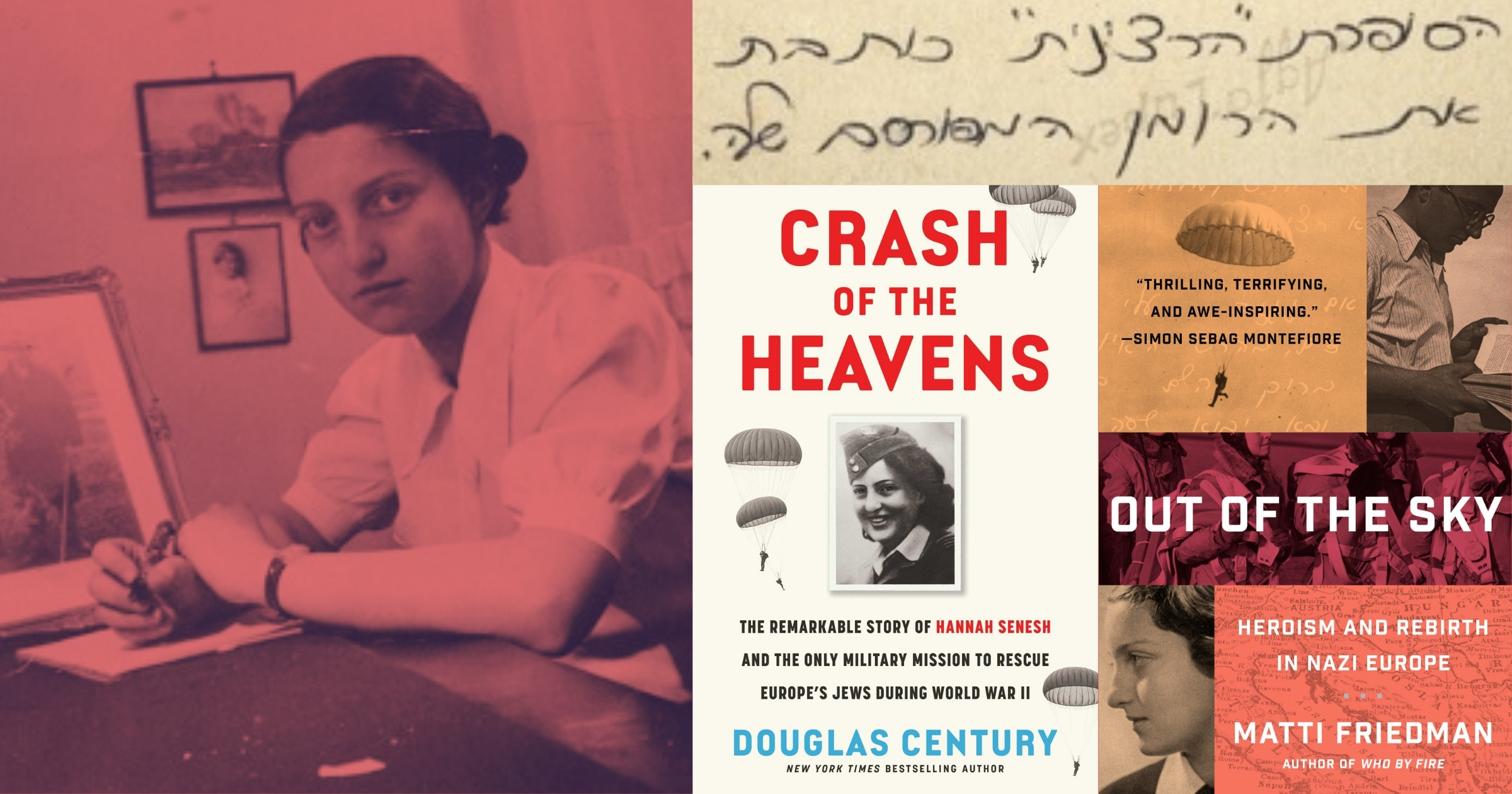
The dramatic and heart-rending tales of pre-state heroes like Hannah Senesh—who, with a group of fellow kibbutzniks dropped into Nazi-controlled Eastern Europe in the latter days of World War II in the hope of rescuing Jews from slaughter—seem more mythical than the adventures of real-life individuals. Senesh’s elegiac poem, “Eli, Eli,” is sung during somber ceremonies for Yom Hashoah, Holocaust Remembrance Day, but few today know or appreciate the impact of her military mission or the character and bravery of the paratroopers—many of whom the Nazis murdered—or the details of their wildly improbable expeditions.
Even in academic and scholarly circles, the mission and its legacy are highly contested. Did they accomplish their ostensible goals of saving lives? Were Senesh and the other young paratroopers tools of cynical Yishuv leaders in Tel Aviv? Is the pure and innocent Zionism of these young men and women a thing of the past, buried under decades of history, multiple Middle East wars and political failures?
These questions are addressed in not one but two new books by distinguished authors—Crash of the Heavens: The Remarkable Story of Hannah Senesh and the Only Military Mission to Rescue Europe’s Jews During World War II by Douglas Century (Avid Reader Press) and Out of the Sky: Heroism and Rebirth in Nazi Europe by Matti Friedman (Spiegel & Grau). Spoiler alert: They draw different conclusions to some of the above questions.
Hadassah Magazine Presents: Journalist Matti Friedman on Hannah Senesh, Israeli Resilience and Jewish Pride.
Join us on Thursday, April 23 at 7 PM ET as Hadassah Magazine Executive Editor Lisa Hostein speaks with Matti Friedman about his new book, Out of the Sky: Heroism and Rebirth in Nazi Europe, on Hannah Senesh and the mission to rescue Jews during World War II. Special giveaway alert! Anyone who registers to attend this event will be automatically entered to win a free copy of Out of the Sky. See terms and conditions
While there is inevitable overlap between the two volumes, they differ in perspective, style and even in specifics. Century’s approach to the story is hard-edged, chronologically arranged and consciously cinematic in its sweep, befitting the author and Canadian Jewish journalist whose past subjects have included Russian Jewish mobsters, Latin American drug dealers and Depression-era Jewish boxers. Friedman, an Israeli journalist and writer whose most recent book detailed the singer-songwriter Leonard Cohen’s quixotic Yom Kippur War visit to Israel, weaves in first-person interjections and reflects on his life as an Israeli citizen with twin army-aged sons.
The chronicled events begin during World War II. Young, idealistic pioneers from Eastern Europe are attempting to build a Jewish nation on the stony plateaus and swampy fields of British Mandate Palestine. Yet word is reaching even these isolated kibbutzim that the Jews of Europe are being slaughtered en masse. The Jewish Agency, the Yishuv’s de facto government, decides to fight the Nazis as if there is no Mandate and to fight the Mandate as if there is no war. Despite initial British reluctance to arm the Yishuv’s residents, 30,000 Palestinian Jews serve in the British armed forces, fighting Germans during the war.
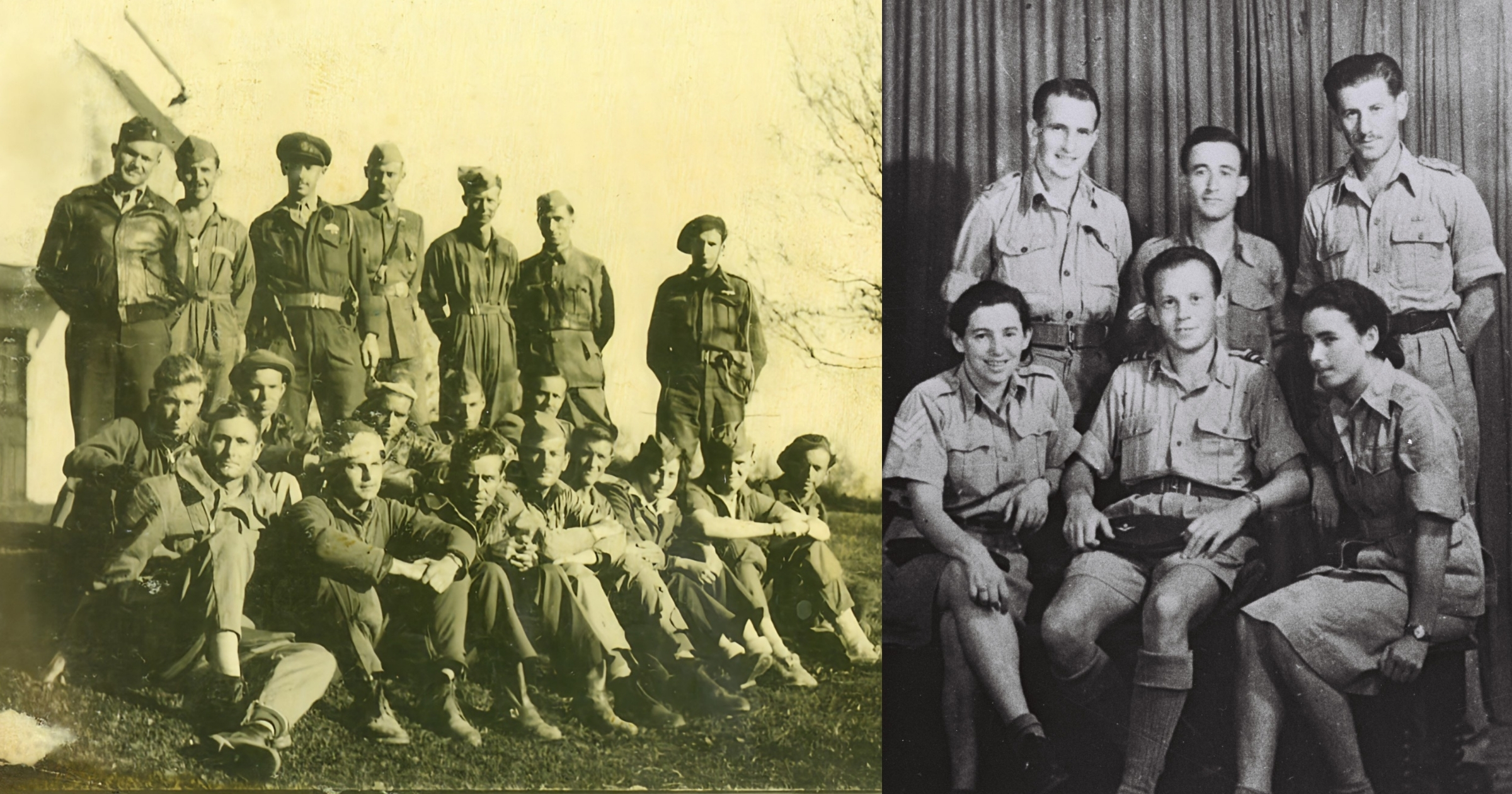
Out of this mass will emerge a tiny unit of “special forces” soldiers, selected for their knowledge of Eastern European languages and cultures. They are trained as paratroopers, hand-to-hand fighters, forgers and undercover agents, first by the Haganah’s elite Palmach commandos and then by the British. The Brits want them to aid partisan groups and rescue Allied servicemen captured behind enemy lines. The Yishuv wants the fighters to save as many Jews as possible and get them to Mandate Palestine. Of an initial 250 volunteers, 32 paratrooper make the final cut and parachuted into the former Czechoslovakia, Romania, Hungary and other locales (another five were also sent to Europe, but snuck in through other means).
Century’s book, a National Jewish Book Award finalist, alternates between a widescreen view of the war, giving context to the details of political developments, and zoom-ins on the protagonists’ exploits. Details such as the types of rifles Hungarian police carry, the currencies and gold the paratroopers are given for bribes, and harrowing descriptions of suicides, torture and death after capture set up scenes that crackle with suspense and drama. But the book is not all gore and gear. Century pauses frequently to quote the eloquent letters, memoirs, diaries and poetry of Senesh and her companions, including those of the two other female paratroopers, Haviva Reik, who went to Czechoslovakia, and Surika Braverman, sent to Romania. Braverman survived the mission, fought in the War of Independence and went on to establish the Israel Defense Forces’ Women’s Corp.
Both authors state up front the dialogue and scenes they offer grew out of first-person accounts, official documents and memoirs. But Friedman, whose book is a Natan Notable Books winner, writes that Out of the Sky is also “a true account of my journey into their story” and offers details of his trips to the cities, forests and camps where the paratroopers lived, fought and died. He also wonders whether he has the right to “rescue them from myth and amnesia only to fit their story to my selfish specifications.”
Both Century and Friedman have a strong grasp of their material. Friedman subjects himself to a parachute jump in the Judean Desert to capture the fear and thrill the kibbutzniks felt. Their skill with Hebrew source material gave tantalizing insights into their characters. In a lengthy afterword, Century suggests that Senesh’s misspelling of the Hebrew word olam—she used the Hebrew letter aleph instead of an ayin—in “Eli, Eli” humanized the mythical poet, the “impossibly perfect, the virginal martyr, the woman warrior devoid of fear, the sacrificial lamb whose death had sanctified the people of Zion—such a charming, everyday imperfection made me smile.”
Friedman boldly re-translates Senesh’s “Ashrei Hagafrur,” widely known in English as “Blessed Is the Match.” He said a better reading of “ashrei” is “happy,” as it comes from the same Hebrew root as osher, which means “happiness.” He writes that using “blessed” “gives the poem a stilted tone that Hannah doesn’t intend. She isn’t distributing blessings but commenting on the state of mind of people like her, who are willing to die for a cause.”
One incident connected to Senesh’s capture appearing in both books varies in its telling. Friedman has her and a compatriot hiding in deep brush as a Hungarian Jewish partisan they were working with—Peter Kallós—shoots himself in the head when confronted by a police officer: “They flatten themselves and pray not to be seen, but when they lift their heads, they find themselves facing twenty muzzles.”
In Century’s book, Senesh is already under arrest when the suicide occurs.
“As she arrived at the gendarmerie station house, all hope left Hannah…. Nearby on a table was the sprawled-out corpse of Kallós, unrecognizable, missing a huge chunk of his cranium.”
As I trust each writer, this variation suggests to me that mysteries still surround Senesh. While each writer sought to reclaim her from myth, her true story and character may never be known.
If you decide to read about Senesh and her companions and their riveting, heartbreaking and inspiring adventures, I recommend you read both volumes.
Alan D. Abbey is a journalist and book reviewer in Jerusalem. His current project is an alternate history novel set in First Century CE Roman Judaea.
 Facebook
 Instagram
 Twitter

Leave a Reply