



Being Jewish
Commentary


The Fight for Jewish Feminism Continues
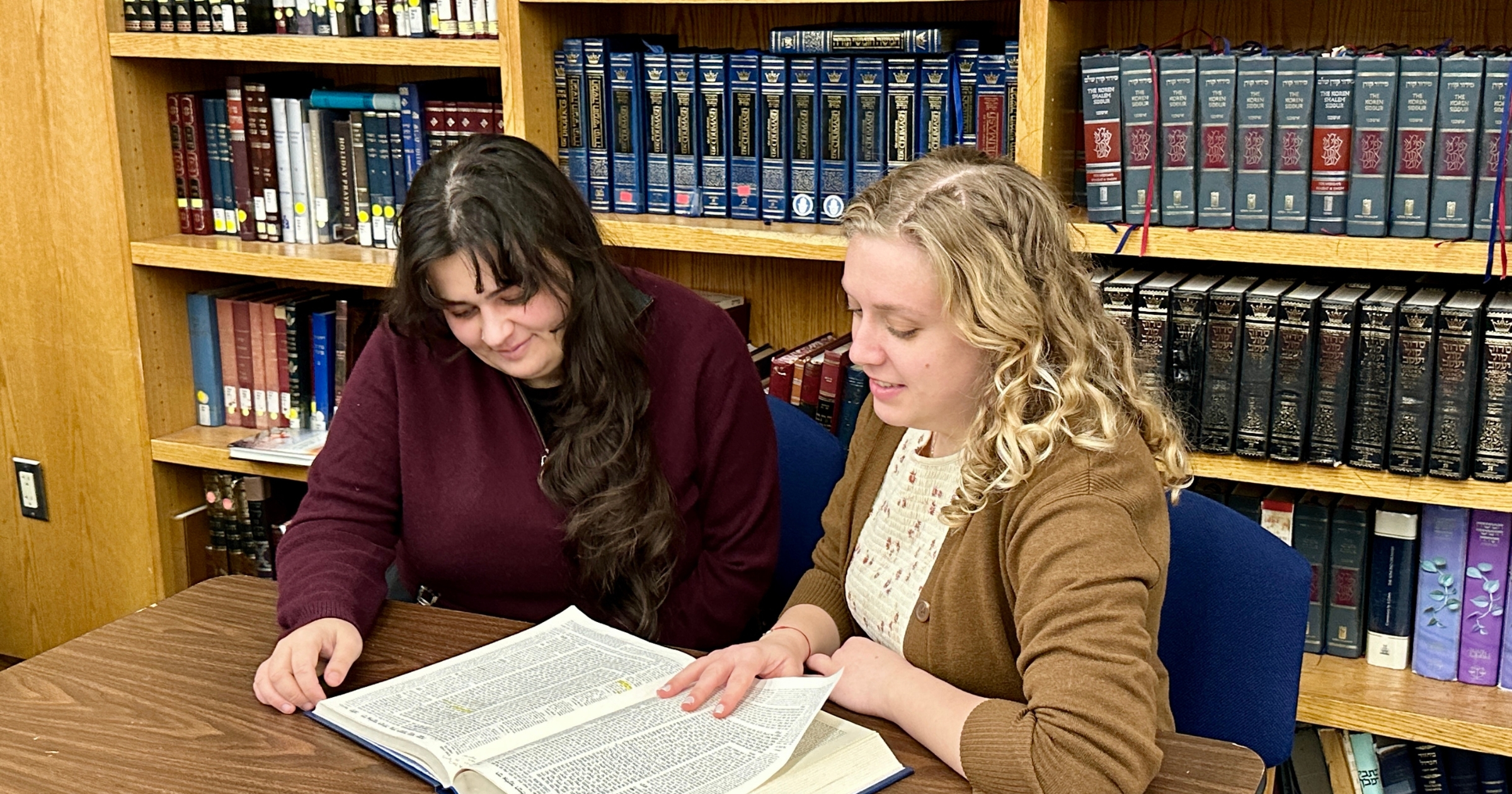
Like so many Jewish women, I grew up watching my mother’s exclusion from our Orthodox synagogue and wanted equality for myself. My mother was far too reticent to challenge the status quo, but thankfully, my father, Rabbi Abraham Joshua Heschel, supported me.
He arranged my bat mitzvah on a Shabbat morning in a Conservative synagogue, an aliyah to mark my 16th birthday in a Reconstructionist synagogue and even suggested that I become a rabbi—something at the time I thought was impossible. He said to me, “Things are changing.” For him, women could gain important roles in American Jewish religious life within the rubrics of halacha.
Indeed, leading American Orthodox feminist Blu Greenberg predicted in the mid-1980s that Orthodox women would become rabbis in her lifetime, famously saying, “Where there’s a rabbinic will, there’s a halachic way.”
Liberal denominations in America have ordained women since the 1970s. The 21st century has seen Orthodox women become spiritual leaders in congregations, and New York City’s pioneering Yeshivat
Maharat, the first institution to ordain Orthodox women as clergy, graduated its 100th student last year. These feminist achievements are among the most significant contributions of American Jews to the evolution of Jewish practice.
As a young graduate student at the University of Pennsylvania in the 1980s, I edited a book of essays, On Being a Jewish Feminist. My goal was not another book on women and Judaism, but on feminist views of Judaism. Mine was a feminist generation that found doors open to professional schools and graduate programs, including those in Jewish studies.
Not that it wasn’t difficult. In my student days, I was often the only woman, or one of just a few, in seminars. Many of us experienced harassment and exclusion from male professors and students. In seminars devoted to rabbinic and medieval Hebrew texts, which often included erotic imagery and legal discussions about gender, being the only woman in the room could be especially uncomfortable. Too often, our questions and insights were dismissed.
Yet the changes since then have been extraordinary. Today, most American Jews grow up in communities in which women are rabbis and cantors. The many opportunities available for women to study Talmud are amazing to me. There are now prominent female professors in the fields of Bible, Talmud, philosophy and Kabbalah.
Despite these changes, more needs to be done. In researching our recent book, The Woman Question in Jewish Studies, Sarah Imhoff, chair of Indiana University’s religious studies department, and I discovered how much has changed—and how much has not.
We interviewed dozens of women and nonbinary people about their experiences in the past few decades. What emerged was a troubling pattern of exclusion and harassment. One of the stories told to us was about a male dean of a Jewish institution who handed a woman her doctoral diploma—and simultaneously kissed her and stuck his tongue in her mouth. Another woman described a senior male scholar who placed his hand on her knee and said he would give her a postdoctoral fellowship if she went to bed with him.
Mostly, we were told about patronizing comments from colleagues and being excluded from conferences, books and journals. A remarkable number of women told us they received the message from senior scholars that they couldn’t possibly be taken seriously as scholars.
The data we included backs this up: Women make up about half of Jewish studies scholars and constitute 60 percent of the Ph.D. pool at top-tier universities in the United States, yet they account for only 40 percent of tenured or tenure-track faculty at these schools.
Part of the challenge may lie in hiring decisions: There are Jewish men, who, for observance reasons, might not want a woman as a doctoral advisor in Jewish studies. Universities may feel pressure to accommodate men rather than hire women.
Despite these barriers, female scholars are transforming the field. Their research is reconstructing the history of women’s lives from a Jewish textual tradition that is almost entirely male-authored. In the process, a longstanding assumption is being challenged—that “gender” is a synonym for women, as if male is not a gender as well.
Issues around sexism extend beyond academia. Misogyny and machismo culture are on the rise in the United States, often expressed alongside crude, even violent, antisemitism and racism. In this climate, feminism is not just a women’s issue, it is also a matter of Jewish safety and well-being.
Jewish identities encompass a wide range of cultural backgrounds, political views, family histories and lived experiences. The Jewish community includes people of color as well as a range of sexual orientations and gender identities that mirror the recognition in the Talmud of human diversity.
Too often we assume that because we have female and nonbinary rabbis and scholars, gender inequality in Judaism has been resolved. Yet too many Jews still seem to think that the voice of authority can only be male. Much has been accomplished, but the work of creating a more inclusive Jewish world must continue.
Susannah Heschel is the Eli M. Black Distinguished Professor of Jewish Studies at Dartmouth College.
 Facebook
 Instagram
 Twitter

Leave a Reply