



American View


Compromise and Hard Choices for Jews in America
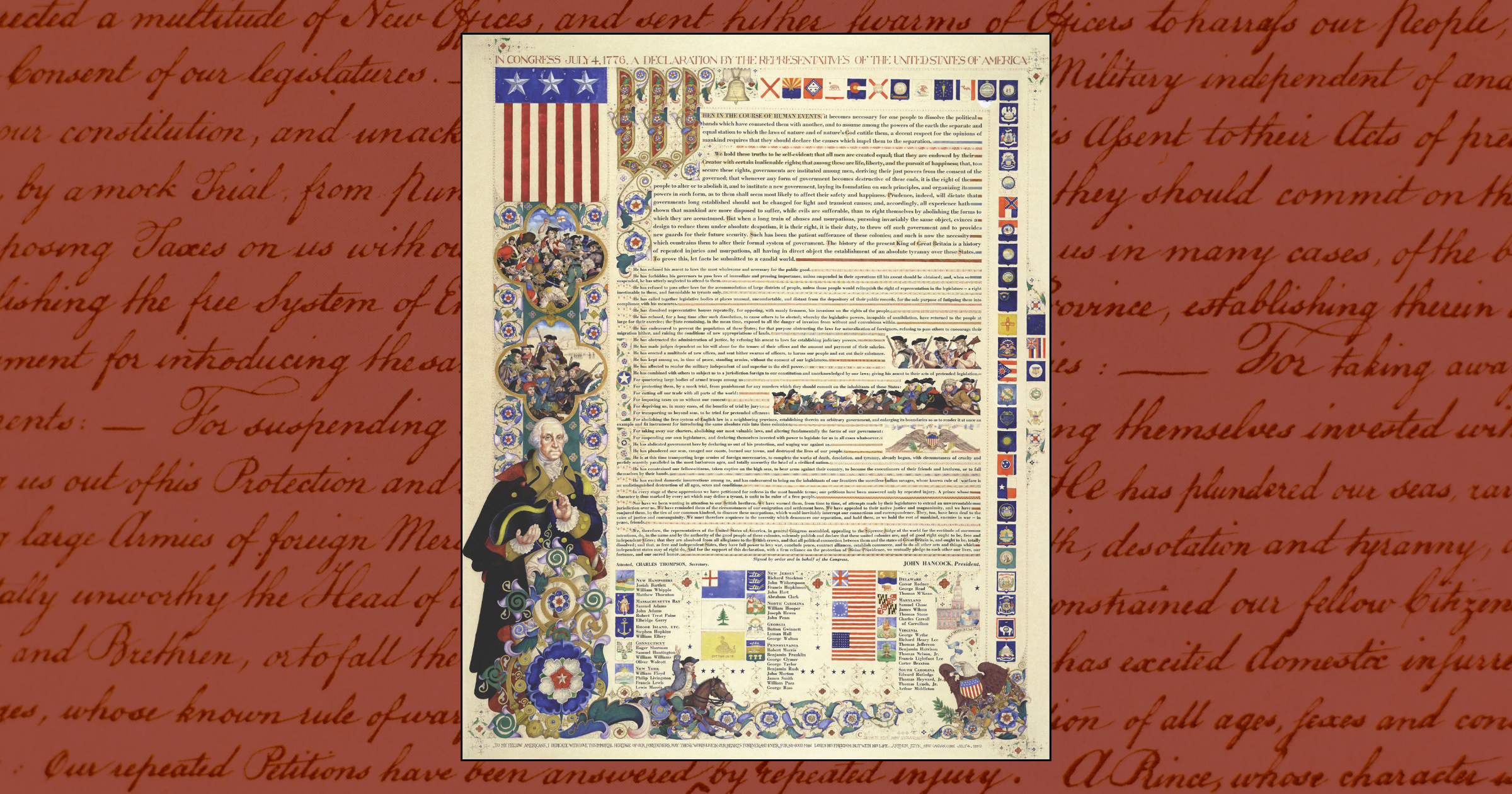
On July 4, 1776, the Declaration of Independence proclaimed: “We hold these truths to be self-evident, that all men are created equal, that they are endowed by their Creator with certain unalienable Rights, that among these are Life, Liberty and the pursuit of Happiness.” Now, 250 years later, at a moment when many American Jews feel antisemitism impinging on these rights, what does history tell us about what has it meant for Jews—never more than a tiny minority—to claim America’s promises as their own?
From the nation’s founding to the present, American Jews have encountered what could be called an ambivalent embrace from a country that offered extraordinary political and economic opportunities. At the same time, American society repeatedly signaled, sometimes subtly and sometimes overtly, that full belonging would come at a cost, including the reshaping or diluting of Jewish identity.
In response, Jews have navigated this tension in different ways—adapting, limiting or abandoning Jewish practice; advocating for equality; and, sometimes, reclaiming what earlier generations had set aside. Their experiences reveal not a simple story of acceptance, but an ongoing negotiation over what it means to be both fully American and fully Jewish.
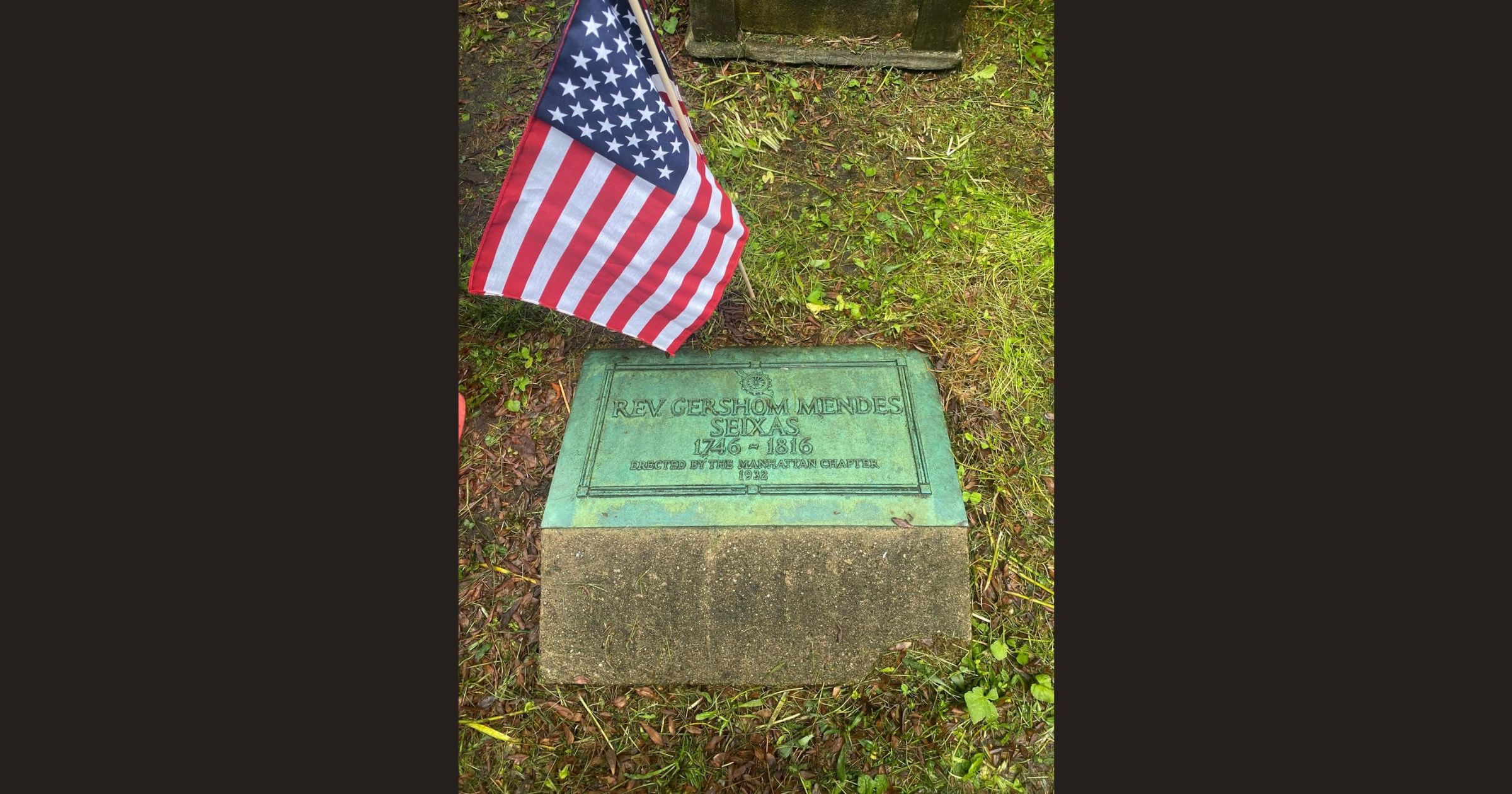
One of the first American Jews to navigate this tension was Gershom Mendes Seixas, the longtime leader of the nation’s first congregation, New York’s Congregation Shearith Israel, which, in his day, worshiped in what was called the Mill Street Synagogue.
A year after the Revolutionary War broke out between Britain and her American colonies, the patriots’ cause looked so dire that the Second Continental Congress fixed May 17, 1776, as a day of fasting and prayer. Congress asked “Christians of all denominations” to beseech God through the “mediation of Jesus Christ” to persuade King George III to seek peace. If he refused, they implored God to lead the Continental Army to victory.
Overlooking the call’s Christological tone, Seixas, the hazzan who had grown up in the Mill Street Synagogue, urged his congregants to join their Christian neighbors in fasting and worship, and he even composed a special Hebrew prayer for the day.
Seixas responded once again when, on March 4, 1789, following the ratification of the Constitution and the first American elections, President George Washington appealed to the nation for a day of gratitude to celebrate the new government. With no more than 3,000 Jews living in the United States at the time, Seixas reminded his congregants of their obligations under this “best of constitutions.” He exhorted them to live up to their destiny as a “kingdom of priests and a holy nation,” a phrase from Exodus 19:6, and to display exemplary citizenship for all.
He championed a constitutional framework that expanded Jewish rights, even as religious tests for office in many states made clear that equality remained incomplete. Of the new states’ constitutions, 11 of the 13—all but New York and Virginia—mandated religious tests for holding office.
Delaware required an oath professing faith in “God the Father, and in Jesus Christ, His only Son.” Maryland starkly declared: “No Jew can hold any position of Trust.” In Philadelphia, Seixas, having fled New York when the British occupied the city, had become hazzan of Congregation Mikveh Israel. Joined by men from the synagogue whose military service in the war, they asserted, had earned them full equality, Seixas objected that Pennsylvania was requiring office holders to acknowledge “the Old and New Testament.”
In 1790, after the United States Constitution’s Article VI stipulated that “no religious test” was required to hold federal public office, Pennsylvania dropped its state test. In Maryland, the battle over the “Jew Bill,” as it was called, lasted until 1826. In New Hampshire, only Protestants could hold high public office until 1877.
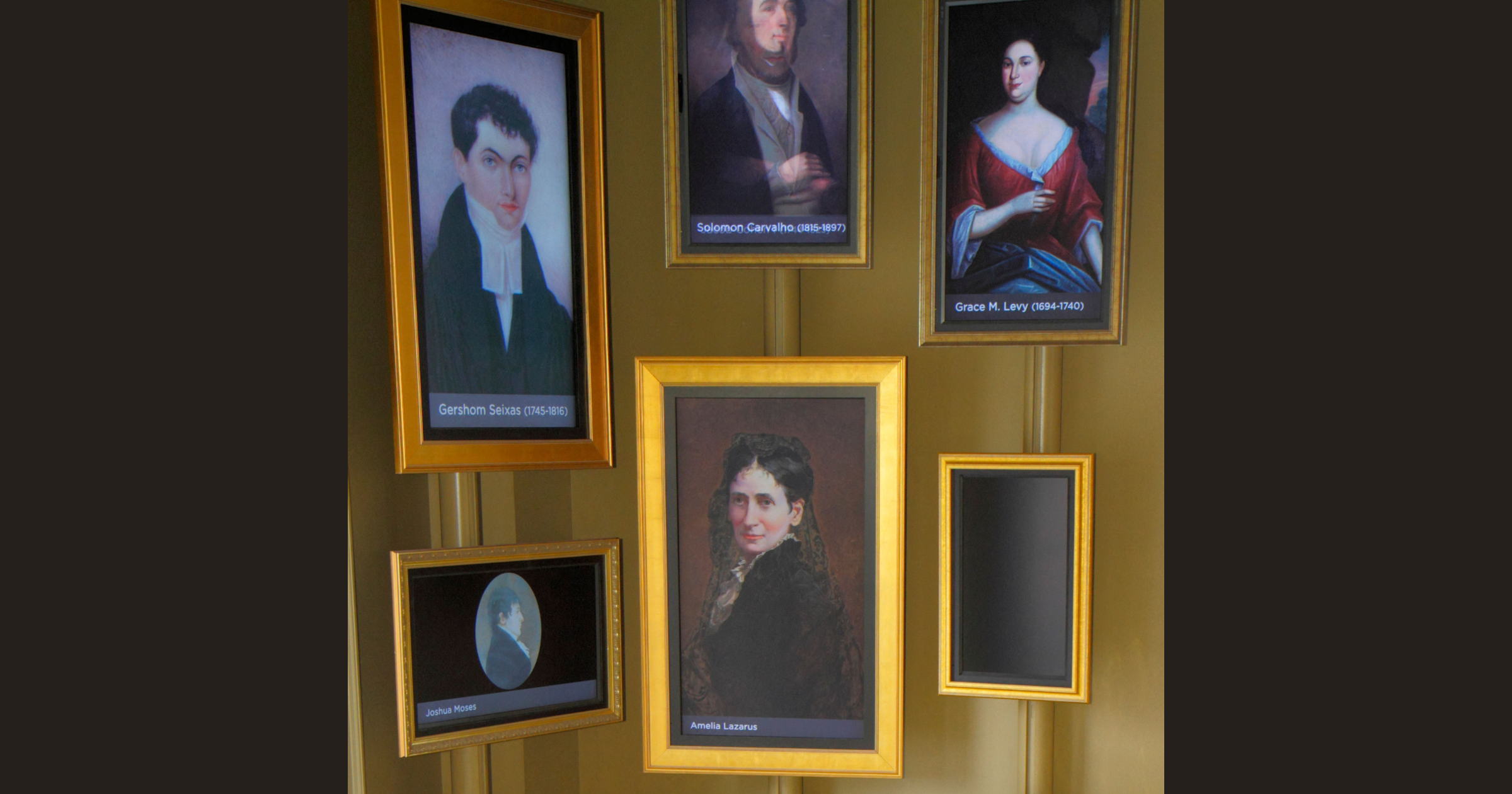
If Seixas’s experience shows how Jews participated in the civic life of the fledgling republic, even with restrictions, the story of Rivka and Hayyim Samuel illustrates the subtler pressures shaping how Jews lived within it.
By 1790, the young couple, with toddler Schoene in tow, had sailed from Germany across the Atlantic and settled in Petersburg, Va. There, Rivka became Rebecca. Hayyim became Hyman. Schoene became Jane, and the Samuels called their American-born son, Sammy. Their journey to becoming Americans started with changing their names. But in the letters sent home, written in Yiddish, they remained Rivka and Hayyim.
These changes enabled entry into a society that offered economic opportunity. Rebecca proudly described in a letter to her mother her husband’s success as a watchmaker and silversmith. In Virginia, no laws restricted the kinds of work Jews could do, whereas in Germany, centuries of excluding Jews from crafts guilds still barred them from the lucrative business of selling silver.
Yet the opportunities in Virginia came with costs. In Petersburg, the small Jewish population of about a dozen people lacked even the basic infrastructure of Jewish life—no synagogue, Jewish cemetery or Torah. A dishonest shochet passed off treyf meat as kosher. Only her husband closed his store on the Sabbath.
Even as she sought to reassure her parents back in Germany that her family tried to “live as Jews as much as we can,” Rebecca shared her fear that if they remained in Petersburg, her children would become like gentiles. Ultimately, the family abandoned its thriving business in Petersburg and left, heading first to Richmond, whose small Jewish community had established a synagogue in 1789, and later for the larger Jewish community of Charleston, S.C.
Their experience underscores a central dynamic of the ambivalent embrace: America afforded unprecedented opportunity and mobility, but sustaining Jewish identity often required difficult choices, trade-offs and, at times, relocation.
In 1836, almost 50 years later, Jacob Lemann left Germany and landed in New Orleans, where his family experienced their own tensions. The fortunes the Lemann generations made in business and the law confirm that they, too, found America a land of mostly unfettered economic opportunity. In 1922, Monte Lemann, Jacob’s grandson, formed a law practice with J. Blanc Monroe. But the partners could never lunch together because Monroe dined at a club that did not welcome Jews. In those years, newspaper ads, whether advertising for secretaries or salesmen, often announced “Christians only” should apply.
The Lemann family stayed in New Orleans, joined Temple Sinai, the city’s first Reform congregation established in 1870, but paid a price. In his new book, Returning: A Search for Home Across Three Centuries, Jacob’s great-great grandson Nicholas Lemann describes growing up in a family that never denied they were Jews because everyone knew they were. Instead, he writes, they embraced a form of Judaism mostly denuded of particularity, calculated to erase “any friction between it and the Gentile world.”
He believed his parents considered being Jewish as “inconsequential” as a person’s hair color. Nevertheless, they knew that for gentiles, their Jewishness was not inconsequential. Their elegant home held two libraries. In one, they welcomed the public. In the other, they stored their large collection of Jewish books. Looking back on his youth, Lemann wonders in the book: “Why did being Jewish, and the deeply embedded tensions between that and living comfortably in the wider world, keep presenting itself, unbidden and unexpected?”
Lemann’s Returning is replete with many examples of prejudice and discrimination his family faced across the generations, despite their financial success. No matter how much they tried to fit in, no matter how much Lemann’s Harvard Jewish classmates in the late 1960s believed that acceptance in this university—which in the 1920s was among the first to institute a Jewish quota—had become “complete and permanent,” he ultimately concluded that the Jewish question rested on the “unending resistance of non-Jews” to Jewish people.

At the same time, even Nicholas Lemann’s forbearers stood up for Jews. In spring 1939, just months after Kristallnacht, Monte Lemann, Nicholas’s grandfather, headed to Washington to support a bill in Congress to permit 20,000 German refugee children to immigrate to America outside of the restrictive quota laws. Despite the opposition of Louisiana’s legislators, he pleaded for Congress to open America’s golden doors to these desperate children. In isolationist America, the bill had so little support that it never even came up for a vote.
The Lemann strategy differed from the Samuels’ struggle to sustain Jewish life where almost none existed. Still, the compromise the Lemanns made reflected a comparable negotiation with American norms—one that traded depth of practice for easier belonging.
Generations later, early in this century, Nicholas Lemann, living in New York City, discovered a type of Jewish life he had never known before. Harkening closer to the kind of Jewish involvement that his great-great-grandfather knew than the one his parents lived, Lemann joined a community that sprang up among the families of his children’s Jewish day school. He began observing Shabbat, holidays and life-cycle events.
Lemann seemed to have struck the perfect balance. Then, three weeks after the horror of October 7, 2023, as a series of antisemitic incidents erupted on Columbia University’s New York City campus, its president established a task force on antisemitism. She named Lemann, a member of the faculty for more than two decades and former dean of its journalism school, one of its co-chairs.
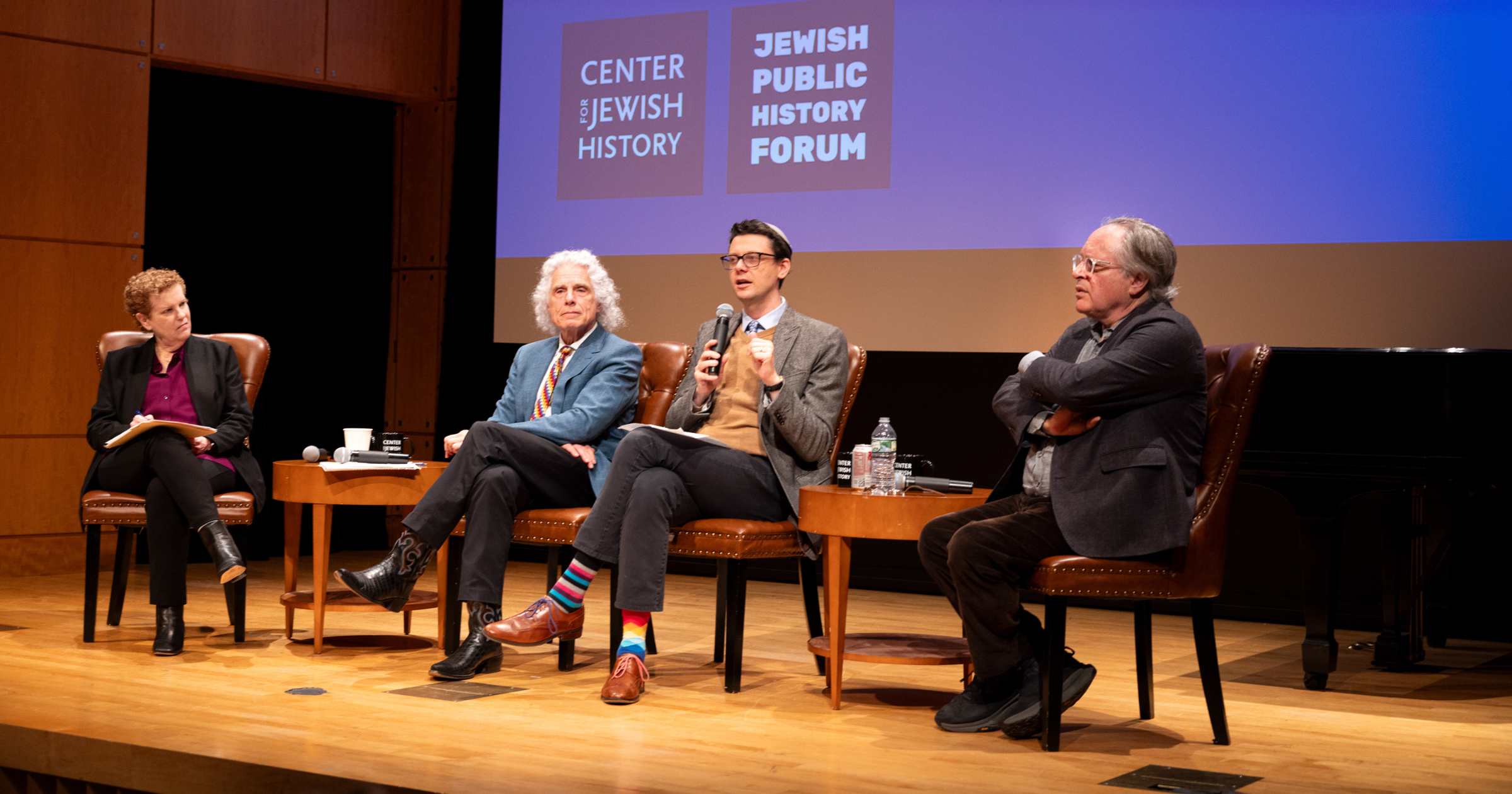
In Returning, he calls the task force the “most overtly and publicly Jewish thing” he had ever done. In May 2025, when I joined Lemann for a conversation at New York City’s Center for Jewish History, he spoke with deep emotion about the costs of that appointment. He said it had led to the shattering of long-standing relationships as colleagues proclaimed that there is “no connection between Israel and being Jewish”; that, of course, they don’t hate Jews, they “just hate Israel and Zionism.”
In his book, Lemann writes that the Hamas attack had awakened “every ancient fear…about the violent mob that is always lurking nearby.” Meeting with Jews and Israelis on Columbia’s campus for the four reports the task force issued, he heard about kippot snatched off heads, clubs refusing to admit students unless they denounced Israel and entire academic disciplines demanding political anti-Zionist conformity that made it not just uncomfortable for Jews to study these subjects, but often impossible.
This “all felt oddly familiar,” he reflected in Returning, a throwback to earlier eras when Jews were excluded from many spaces in American life, like the club that would not serve his grandfather lunch.
The experiences of Gershom Seixas, Rebecca and Hyman Samuel and the generations of the Lemann family reflect the broader story of American Jewry—one marked by opportunities and freedoms unimaginable in the Old World but also by rejection and episodes of exclusion. Unquestionably, myriad Jewish immigrants learned to their sorrow that America’s streets were not paved with gold but rather with sweat and tears.
Yet, many of their children fulfilled their dreams thanks to the nation’s free public schools and, even in some cities like New York, free public colleges. Most importantly, America’s Jews knew that they lived in a country that was an ocean away from the Inquisition, pogroms and the Holocaust.
Still Jews understood, even if in recent decades they forgot, that American acceptance has always been conditional. Sometimes Jews were fully welcomed: As a member of New York’s clergy, Gershom Seixas attended George Washington’s inauguration at Federal Hall on April 30, 1789. Sometimes they were not: As a member of the Louisiana Bar, Monte Lemann was excluded from his partner’s club.
Today, with the alarming rise in antisemitism, we are more aware than we have been in a very long time of this ambivalent embrace. Jews may captain industries and rise to some of the highest offices in the land. But these accomplishments cannot assuage the anxieties over roadblocks that bar Jews from living fully American lives and fully Jewish lives. Perhaps we can draw from the past, knowing that our predecessors navigated the ambivalent embrace of their times, as we face ours in this moment and into the future.
Pamela S. Nadell holds the Patrick Clendenen Chair in Women’s and Gender History at American University. Her latest book, Antisemitism, an American Tradition, won the National Jewish Book Award in American Jewish Studies.
 Facebook
 Instagram
 Twitter

[…] Read the full article here: Hadassah Magazine – Compromise and Hard Choices for Jews in America […]