



Books
Non-fiction


REVIEW: ‘Always Carry Salt’
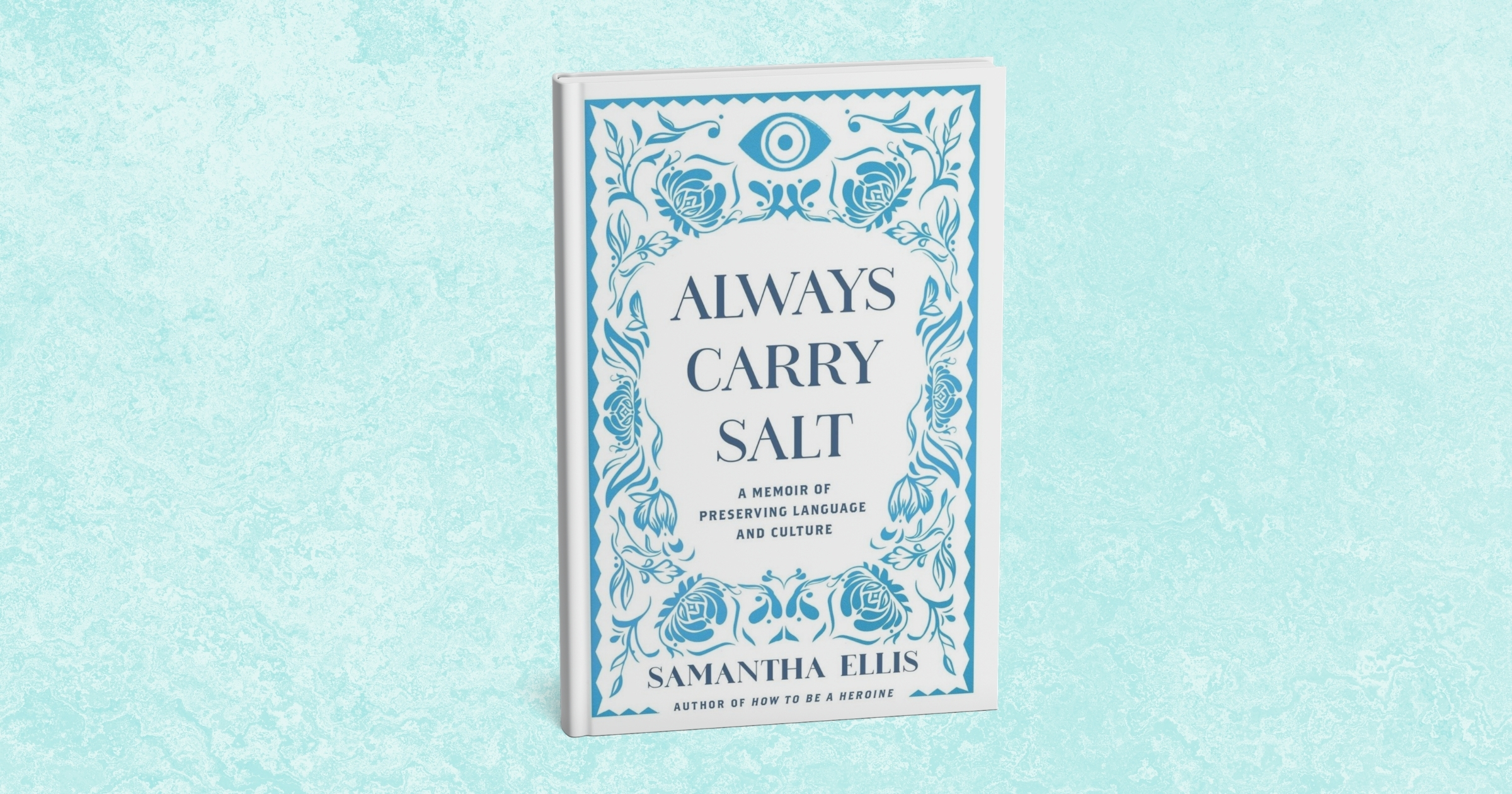
A startling encounter at a playground with her 2-year-old son set London-based writer Samantha Ellis on a quest to explore and write about the language of her heritage—Judeo-Iraqi Arabic. She describes the encounter in her book, Always Carry Salt (Pegasus Books).
“Why not send him to a school for your language?” she recalls a mom at the playground asking. “I can’t,” Ellis replies. “My language is dead.” Or, more accurately, she thinks, it is dying. Suddenly, she writes, “It felt as if a flood was coming. I needed, urgently, to build an ark.”
Ellis weaves the ark metaphor throughout her brilliant, heartfelt meditation on the rarely acknowledged language of the 150,000 Jews who lived in Iraq before virulent anti-Zionism forced most of them to seek refuge in Israel in 1951. They were allowed to leave with only one suitcase per person. Her grandfather, a physician, refused to leave until 1970, but the family was arrested in the middle of that attempted escape and had to return to Baghdad. He was later incarcerated for three months. Through the intervention of a patient, the family eventually was able to flee to London, where Ellis was born.
Ellis, an author, playwright and journalist, internalized this generational trauma side-by-side with her mother’s stories, cooking and the noisy, “mouth-filling” sounds of the Judeo-Iraqi Arabic that suffused her family’s home. The floodgates open as she wonders almost desperately how she will pass on the vivid familiarity of idioms like “yethrem basal all ras efadi!” (“You’re chopping onions on my heart!), said when someone is upset, or if she will remind her son to “always carry salt” as a talisman against the evil eye.
How can she balance keeping Judeo-Iraqi Arabic alive without transmitting the trauma of displacement?
Ellis searches for the words, stories and images she will carry into her proverbial ark. Her global travels traverse centuries. She hops seamlessly from the British Museum and the Oxford School of Rare Jewish Languages to the banks of the Tigris River and the corners of her own imagination. History, philology, etymology, biography, literature, cuisine (yes, there are a few recipes in the book) and anecdotes both poignant and amusing merge into a profoundly intimate saga that is simultaneously far-reaching in scope.
In her quest to dig deep, Ellis cites selections from a vast bibliography of memoirs, novels and histories, even unearthing surprising books like Arabic Elements in Palestinian Yiddish (as in British Mandate Palestine).
Ultimately, she learns from the biblical Noah to focus on what she can keep rather than what she has lost, forging a path forward between past and present.
Rahel Musleah shares her own Baghdadi-Indian heritage in her Explore Jewish India tours, explore jewishindia.com.
 Facebook
 Instagram
 Twitter

Leave a Reply