



Books
Non-fiction


REVIEW: ‘Place Envy’
When I am interviewed about my memoir, Asylum (Mandel Vilar Press), I am often asked about not solving the book’s central mystery. My answer is that while the book blends speculation and fact, it ultimately uncovers a profound truth about my father’s legacy.
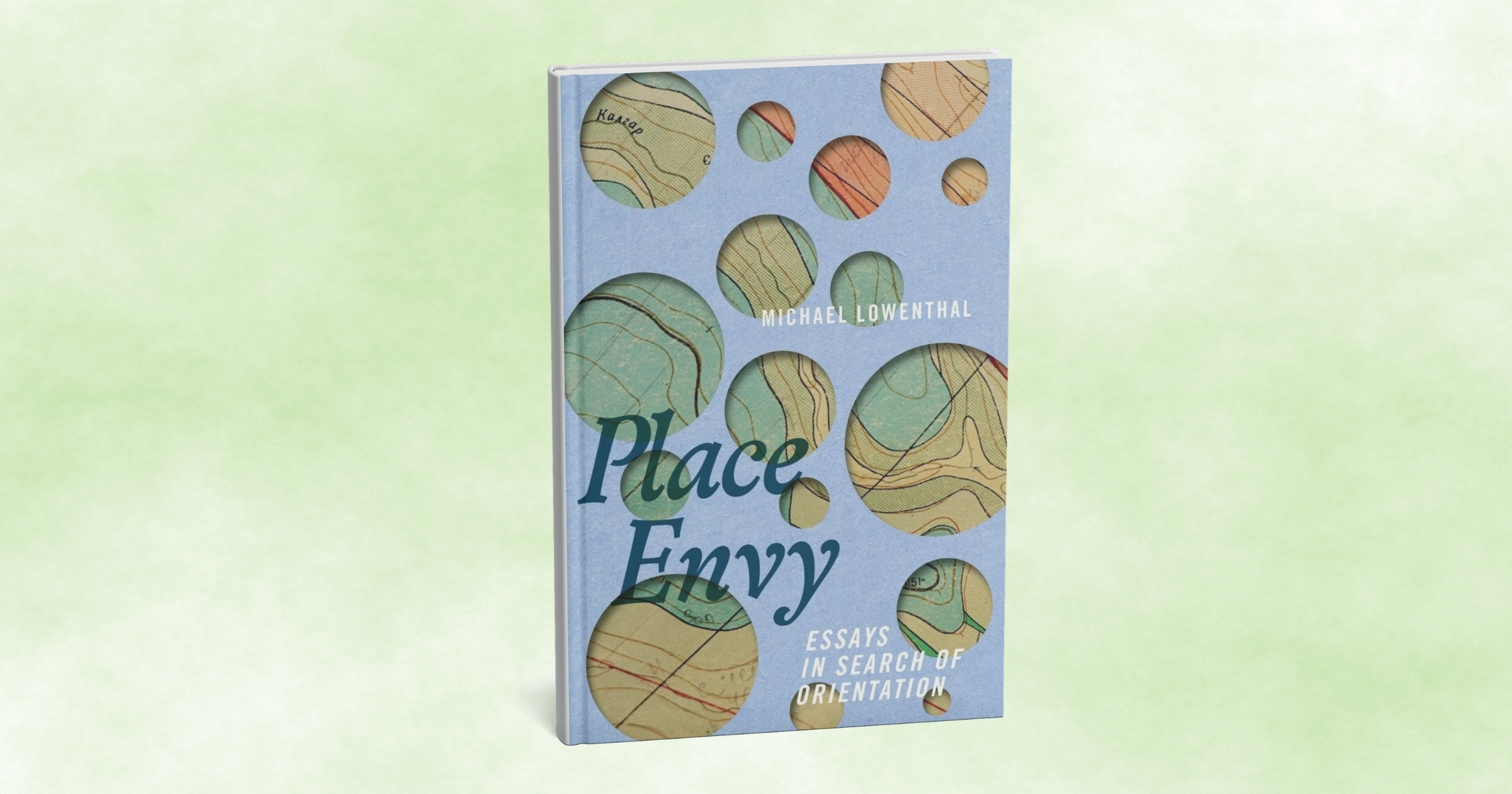
That same tension between fact and truth lies at the heart of Michael Lowenthal’s Place Envy (Mad Creek Books), his first book-length foray into literary nonfiction after writing five novels. The illuminating memoir-in-essays demonstrates that a fact needn’t be confirmed—in Lowenthal’s case, seeking ancestors who, like himself, were gay—to reveal a deeper truth.
In 12 essays, Lowenthal describes his experiences over the years in Germany, Brazil, China and the United States. He explores his overlapping identities as a gay man, a third-generation Holocaust survivor and a writer grappling with how literary nonfiction can bring truths to the surface with a touch of creativity. He also connects with far-flung members of his family as well as gains a chosen family.
Among his peripatetic travels, Lowenthal spends a winter during college with an Amish family on their farm in Pennsylvania Dutch Country, which he describes as his “rumpspringa in reverse.” In anticipation of baptism and formal acceptance into the Amish church, rumpspringa is a time when Amish young adults leave their cloistered world for a year without parental supervision.
As an undergraduate at Dartmouth, Lowenthal plays the trumpet with a musical genius and a mystic. Later, he goes on a gay cruise to the Mexican Riviera where his blind cabinmate asks to touch him, claiming he wants to get a sense of what Lowenthal looks like. In a sensitive, thoughtfully written essay called “Unmolested,” Lowenthal returns to his old summer camp to address what can and cannot happen between adults and teenagers. He bravely addresses boundaries and the occasional lack of them at an all-boys camp.
But the beating heart of the book is a trip Lowenthal takes with his family to the small town in Germany where his paternal grandparents lived before immigrating to the United States in 1939. The two related essays bookend Place Envy. In the long opening essay, “Out of Nowhere,” Lowenthal writes about discovering the existence of his Uncle Peter, who died in Bergen-Belsen in 1945. His research determines that Peter was his grandfather’s son from a first marriage. “I was staggered. Who was this uncle who’d turned up out of nowhere? A forebear who, just as he appeared, also perished.”
Lowenthal “ached” to learn more about Peter. As a teenager, he latched on to his uncle “as a possible connection, dreaming of the links we might share.” His preoccupation led to writing an essay in his 20s called “Kaddish for Peter,” which appeared in 1995 in an anthology, Wrestling with the Angel: Faith and Religion in the Lives of Gay Men.
The last essay of Place Envy, “Put Your House in Order,” is part detective story, part genealogy scavenger hunt. Visiting the Jewish cemetery in his grandparents’ German hometown, he notices the graves of two young men—Moses Moos, a distant cousin, and Rudolf Mändle. The two men died a day apart in 1862 and were interred next to each other. This fact sends Lowenthal looking for the answers in the town archives.
Lowenthal convincingly argues that Moos and Mändle were not only best friends but also romantically involved. Mändle’s death likely sent Moos into a spiral of heavy grief that led him to die by suicide the evening after Mändle was buried. Here, Lowenthal summons the speculative aspects of creative nonfiction, which he deploys with respect, integrity and credibility.
In Place Envy, Lowenthal is not simply writing about escapades and adventures. The trips he takes are quests to find out what it means to be a Jewish gay man and a descendant of survivors as well as analyze the roles his families play in his life.
By the end, his pondering leads him to question his mortality. Lingering by himself at Moos and Mändle’s graves, Lowenthal, who is childless, wonders who will visit his grave or remember him. These essays will serve as the legacy that answers his question.
Judy Bolton-Fasman is the author of Asylum: A Memoir of Family Secrets.
 Facebook
 Instagram
 Twitter

[…] ⚣ REVIEW: ‘Place Envy’ – Place Envy, novelist Michael Lowenthal’s first collection of essays, traces his search for a […]