



Being Jewish


What Jewish College Students Can Learn From Refuseniks
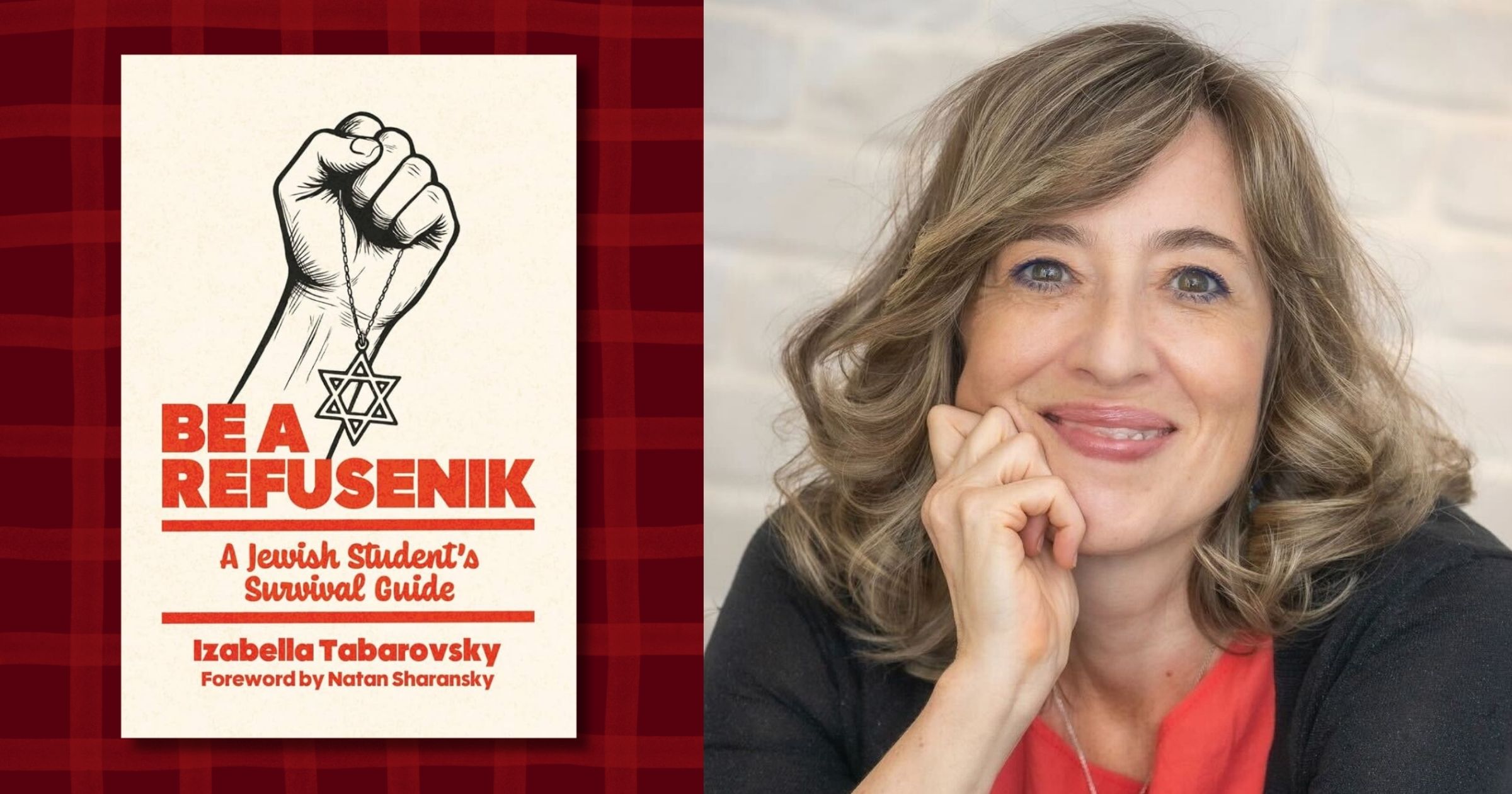
As an expert on the history of antisemitism and anti-Zionism in the Soviet Union, Izabella Tabarovsky uses that expertise to understand the current anti-Israel narrative. She makes the case that “the language equating Zionism with racism, imperialism, settler colonialism and apartheid was crafted in the USSR.”
The 56-year-old Novosibirsk native emigrated to the United States from Russia with her family in 1989. She lived in Colorado until making aliyah in 2020 and currently resides in Jerusalem. The scholar and writer frequently travels to the United States in her capacity as senior fellow at the research-based think tank Z3 Institute for Jewish Priorities and a fellow at the Woodrow Wilson International Center for Scholars.
Tabarovsky’s first book, Be A Refusenik: A Jewish Student’s Survival Guide (Wicked Son), shares the stories of Soviet refuseniks and contemporary American Jewish college student activists, drawing on the former’s tactics to offer guidance to young Jews navigating university. This interview has been edited for brevity and clarity.
What’s the connection between the antisemitic and anti-Zionist slogans we hear on college campuses and elsewhere and the language used by Soviet propagandists?
During the Cold War, particularly after 1967, the Soviets took Zionism and equated it with racism, Nazism, fascism, imperialism and genocide. They transmitted these ideas to the global left and to the post-colonial third world, making them palatable to all these groups they were trying to influence. They also financed left-wing groups. What we see today is a mirror image of that. It’s highly idiosyncratic language. You don’t simply reinvent something like that in another part of the globe.
Why 1967?
The Six-Day War. The problem the Soviets faced was, how is it that such a small country could defeat the Arab states that they had financed, trained, sponsored and armed? That really set off massive alarms in Moscow and a feeling that they must fight Zionism all around the globe.
We’re seeing a resurgence of anti-Zionist rhetoric today, particularly on college campuses, as well as the Jewish reaction to it, which is the focus of your book.
In both cases, there is a fear that Israel might be annihilated but ultimately, there is also pride. The surge in antisemitism and anti-Zionism produces a greater desire to understand your Jewish identity. In America, there is also a realization that maybe Jews don’t belong in American society, that antisemitism hasn’t disappeared.
Did you experience that antisemitism firsthand growing up in the Soviet Union?
All the time. In the late 1980s, I wanted to study at a university in Moscow. There were exams you had to take in order to get in. I was at the top of the list based on my scores, but when they put out the list of people who were accepted, I wasn’t on the list. There were people who told me right away they don’t take Jews at the university. That was the final thing that made my family emigrate.
Your book pairs stories of famous refuseniks with those of contemporary Jewish student campus activists. Is there a pairing you find most inspirational?
I think each is instructive, but one I find myself returning to again and again is the refusenik protagonist in the first chapter, “Reclaim Your Zionism.” Boris Kochubiyevsky publicly claimed his Jewish identity in his 1968 essay “Why I Am a Zionist.” After attending a commemoration of the Nazi massacre at Babi Yar, where 33,771 Kyiv Jews had been shot to death over two days, he protested the Soviet authorities’ failure to acknowledge the Jewish identity of the victims and was later arrested. I pair his story with the story of Elisha “Lishi” Baker, who was one of the authors of a letter by Jewish students at Columbia University in response to the campus protests there.
What do the refuseniks and the college students you profile have in common?
They were young, and they were not planning to fight antisemitism. They just wanted to live their lives. And then they experienced what I have described as the burning bush moment, when they could pass that burning bush and continue with whatever they were doing, but they chose instead to hear the message and fight.
You articulate the lessons you want people to take from the book in the names of your chapter titles. How would you sum them up?
Courage. Resilience. Defiance. These are the words I would choose.
Avi Dresner is a journalist, documentarian, screenwriter and executive director of the film Black Jewish Reconciliation: (Re)Building The Bridge.
 Facebook
 Instagram
 Twitter
Leave a Reply