



Arts


New Exhibit Explores the Jewish History of American Democracy
Twenty-three Jewish refugees fleeing the Inquisition in Recife, Brazil, arrived in what is now Manhattan in 1654. Although the United States wouldn’t exist for more than a century, this fledgling community began participating in civic life almost immediately.
That enduring commitment to what would become the United States is the core of “All We Have Standing Between Us: 250 Years of Jews and American Democracy,” an exhibition by the American Jewish Historical Society at the Center for Jewish History in Manhattan, presented with Yeshiva University Museum.
On view through December 31, the exhibition’s 75 artifacts from throughout Jewish American history invite visitors to consider how Jews have participated in the nation’s defining debates and helped shape its democratic ideals, from labor rights and voting access to immigration and religious freedom.
“With an eye toward bringing the past from 1776 to the present day, the exhibit shows how Jews have debated the great issues of the day using the spirit of the Revolution to advocate for rights,” Dr. Gavriel Rosenfeld, president of the Center for Jewish History, said.
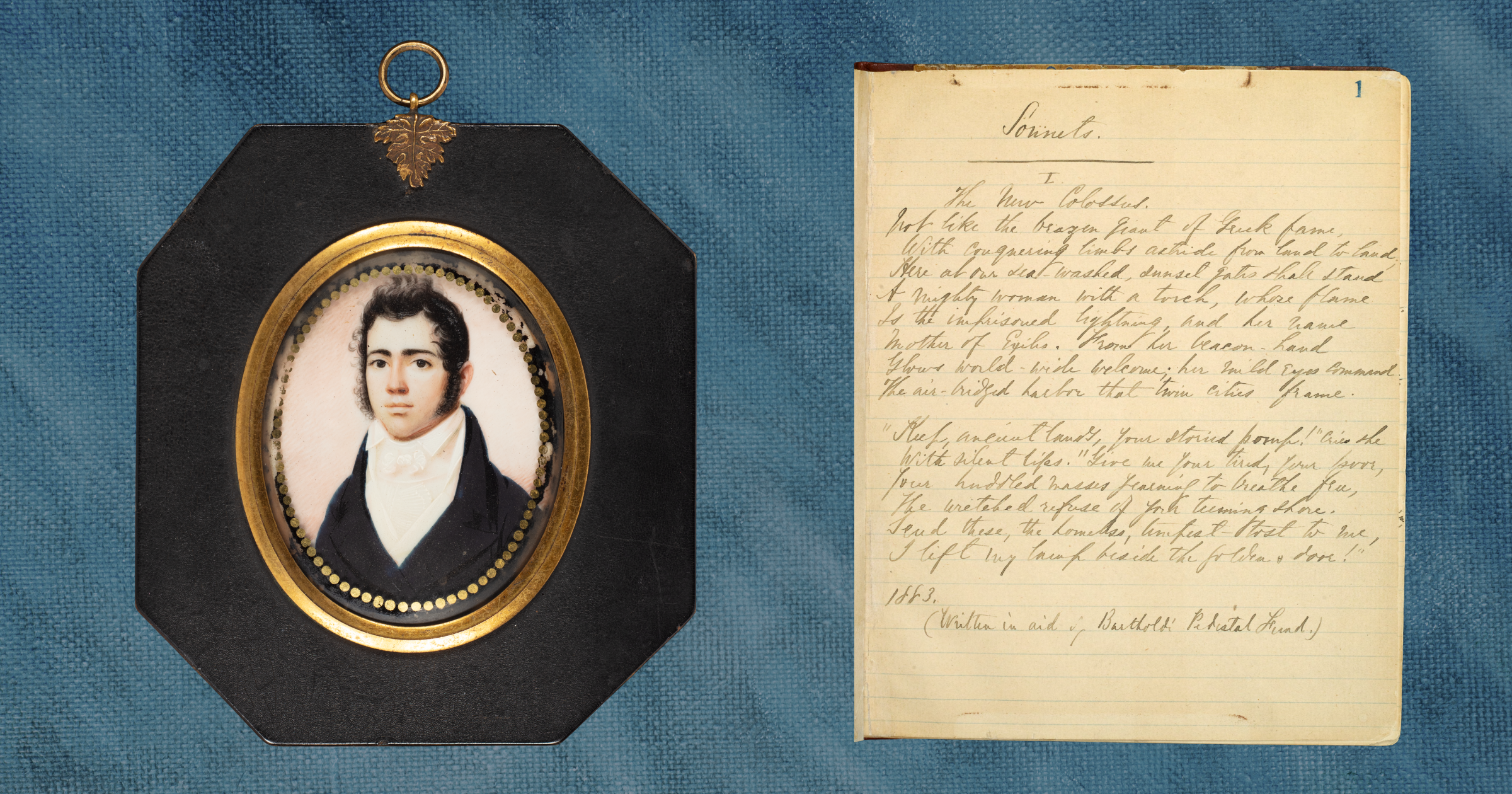
Among the highlights are Thomas Jefferson’s 1818 letter to Jewish diplomat and journalist Mordecai Manuel Noah that affirms religious pluralism and an interactive display featuring Emma Lazarus’s handwritten poetry. That display includes “The New Colossus”—the poem written on a plaque affixed to the inside of the pedestal of the Statue of Liberty—invites conversations about immigration.
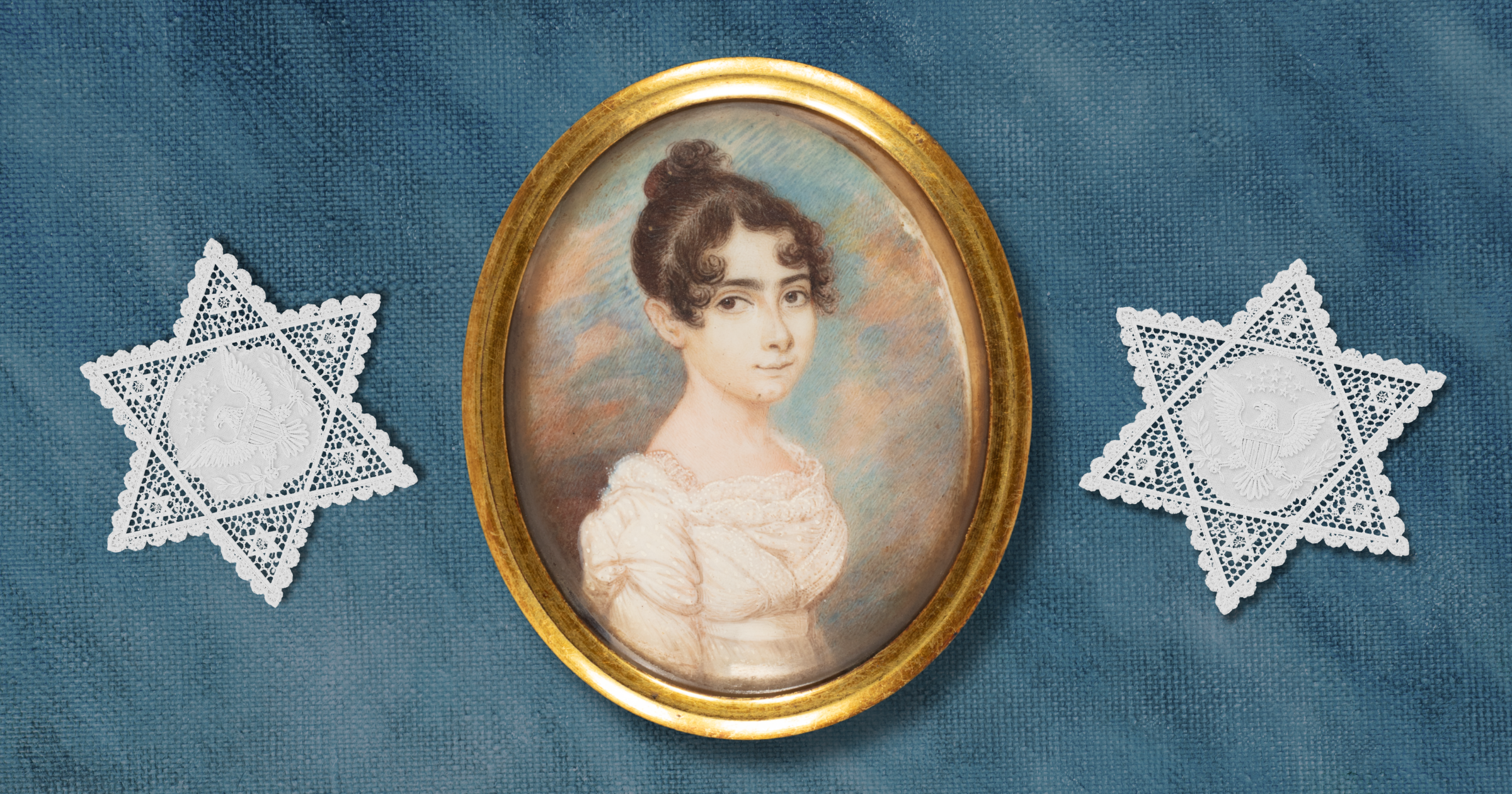
Then there are the luminescent miniature portraits of Sarah Brandon Moses and her brother Isaac Lopez Brandon—siblings born in Barbados to an enslaved Black mother and a wealthy Jewish father—that prompt conversations about Jews and race.
Throughout, the exhibition embraces controversy and refuses to simplify history.
“Together, the artifacts show multiple perspectives and highlight issues that are very much at the forefront today,” Gemma Birnbaum, executive director of the American Jewish Historical Society, said.
Those different perspectives date back to the Revolutionary era: As a teenager, Rebecca Hendricks, from a prominent New York Loyalist family, neatly embroidered Psalm 78, regarded as pro-monarchy, on a cloth sampler. That needlework hangs in the exhibition near a prayer for peace composed by Patriot cantor Gershom Mendes Seixas of Shearith Israel.
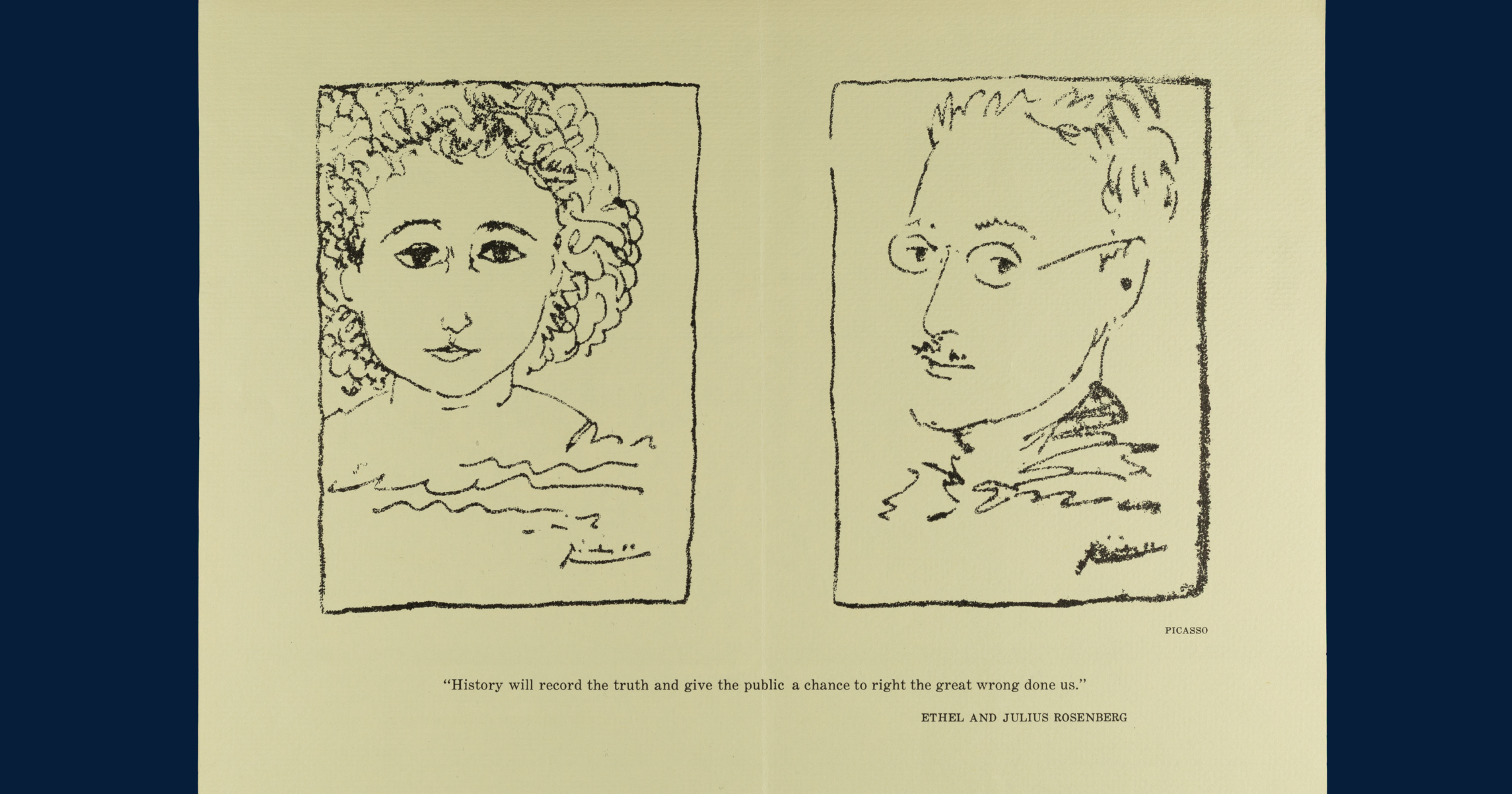
The exhibition also examines more recent flashpoints. Pablo Picasso’s lithograph, “À la mémoire de Julius et Ethel Rosenberg, 19 juin 1953,” protests the couple’s execution for conspiring to pass atomic secrets to the Soviet Union. Displayed nearby is an Anti-Defamation League article arguing against the claims that antisemitism fueled the Rosenberg trial and conviction.
The exhibition takes its title from a recorded 1962 comment by Supreme Court Justice Felix Frankfurter: “Fragile as reason is and limited as law is as the institutionalized medium of reason, that’s all we have standing between us and the tyranny of mere will and the cruelty of unbridled, undisciplined feelings.”
Ultimately, the exhibition suggests that democracy thrives through vigorous debate and a willingness to argue, sometimes vociferously, conducted within the rule of law.
Cathryn J. Prince, a freelance journalist, is the author of For the Love of Labor: The Life of Pauline Newman.
 Facebook
 Instagram
 Twitter

Faith Goldman says
Good Morning – I am Faith Goldman here in LA and want to take you on a walk down memory lane. My Mom Sara Greenberg Cohen Beckerman was the 1st President of Hadassah at the United Jewish Center in Danbury, Ct. During her term of office, they wrote, networked, got ads, etc. and produced a fabulous cookbook. I have the book but not the cover. Are there any archives from that era anywhere? Those in the almost 200 page book are no longer living.When I was visiting the Hadassah Hospital in 1999, I brought the book with me. I was given the privilege of spending the day in the Physical Therapy Dept. and observed a now blind soldier learning coping skills to ready him for his return to active duty.