



Being Jewish
Feature


Turning My Daughter’s Memory Into a Jewish Legacy
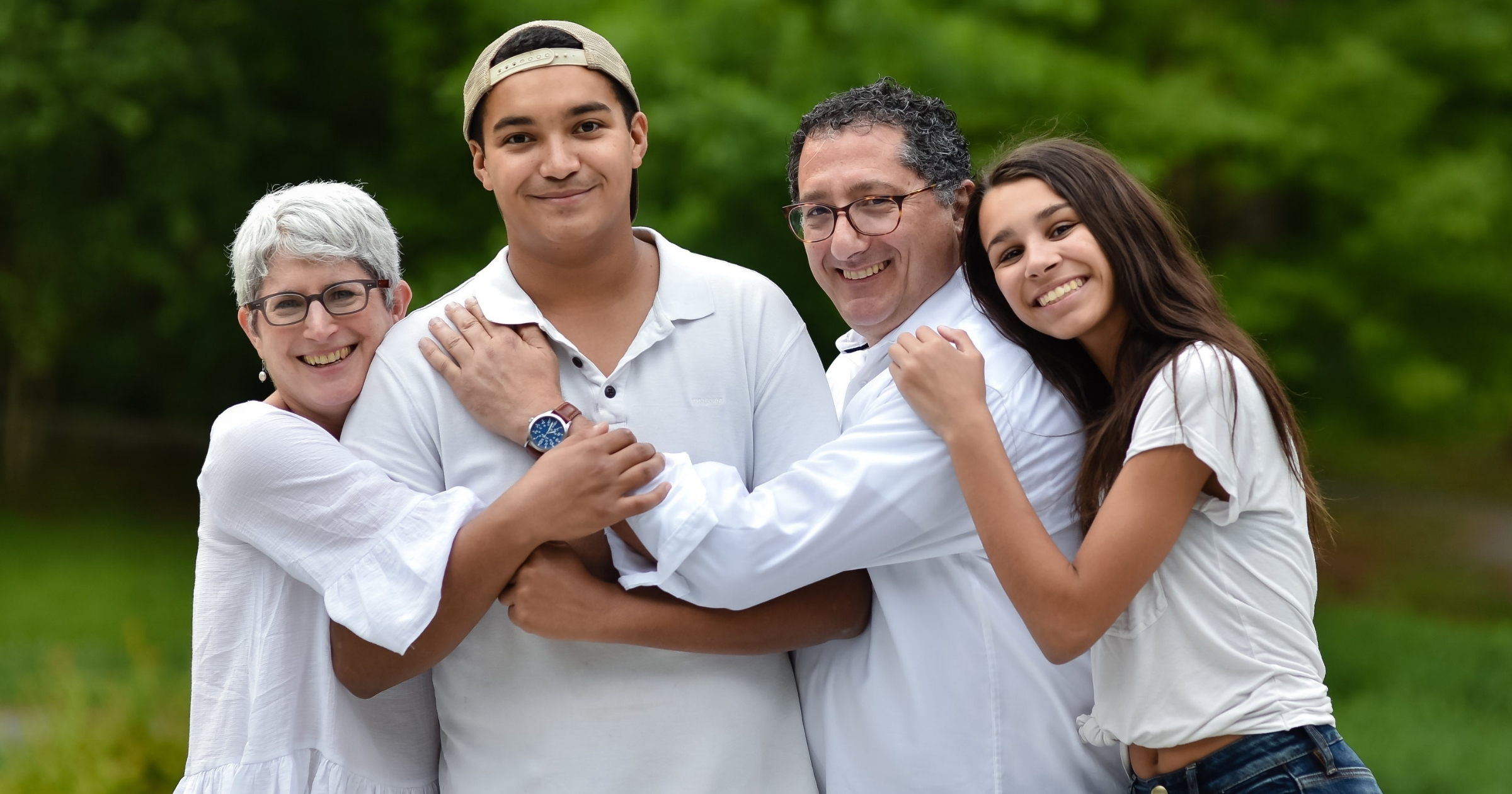
Most of us experience a “before” and “after” in our lives: before marriage and after kids, before retirement and after the death of our parents. For many of us, October 7, 2023, is now a date of demarcation. For me, the entire year of 2023 brought a series of harsh new realities. It was the most painful year of my life, pitted by grief and loss.
My personal dance with death began in February with the passing of my beloved 86-year-old father, Richard Derby. It intensified with the horrific, barbaric loss of more than 1,200 young people at the Nova music festival and elsewhere in southern Israel in October, and the fear of what awaited the hostages in Gaza.
Then, along with my compassionate Atlanta Jewish community, I mourned when Rose Lubin, an Atlanta-born Israel Defense Forces lone soldier, was killed in a terror attack while on duty one month after the Hamas attacks.
The crushing final blow for my family was the unexpected death of our 20-year-old daughter, Ashira, in December. The end of the aveilut, the 11 months of official mourning for my father, and of the shloshim, or 30 days of mourning for Ashira, occurred within seven days in early 2024. Ashira’s 21st birthday followed a week later.
The grief has affected Barry, my husband, and me differently and at different times, as it has our son, Matan. But in the depths of our sadness, Barry and I have found a purpose tied to our beloved daughter and to a circle of other bereaved Jewish parents.
My family’s October 7 story began with a phone conversation I had with my son, a former lone soldier who no longer served due to an injury, just days prior. Matan, who was 24 at the time, mentioned there was going to be a music festival near his town of Ofakim, in the Gaza envelope. I suggested that he go, but he wasn’t interested.
Instead, on that fateful day, Matan was holed up in his apartment safe room. Shrapnel from Hamas rockets crashed onto his roof, gunshots and screams echoed from nearby streets, and he sharpened a knife, vowing not to go down without a fight. Miraculously, Hamas terrorists were stopped a quarter mile from his building.
Later that day, Matan jumped into his car and sped to Jerusalem, recording a shocking video of gunshot-riddled vehicles and buildings as he left Ofakim. After spending a few weeks driving friends to their reserve bases, attending funerals and purchasing gear for friends in the IDF, Matan volunteered to join a unit guarding a settlement near Hebron.
Rose Lubin also jumped into action on October 7. Off duty that Shabbat, she quickly dressed in her uniform and joined fellow soldiers in successfully thwarting a Hamas attack against Kibbutz Sa’ad, where she was staying in the Gaza envelope. Tragically, one month later, Rose was killed during a terror attack while on duty near Herod’s Gate in Jerusalem. She was 20.
Ashira and Rose had been friends in early elementary school. I was the mother of a former lone soldier. This death hit especially close to home.
On December 6, I attended a large public memorial for Rose to mark the end of her shloshim. Ashira sent me a sweet text message with her heartfelt condolences for Rose’s parents, and I commiserated with the mothers and fathers of Ashira and Rose’s classmates as we huddled together.
A day later, Ashira went to a music festival in Miami with friends from Florida State University, where she was a junior. Early the next morning, I received a call from my daughter’s number. It was a stranger informing me that Ashira was in an ambulance on her way to the hospital. A few hours later, her friend called to say she was in the ICU.
Hearing that Ashira was likely dehydrated and needed fluids and that she’d drunk too much water and needed electrolytes, I flew down, expecting her to wake up and share the homemade challah I had packed and to snuggle in her favorite blanket.
But reality hit quickly. When I arrived, she was on a ventilator with her eyes taped shut. A blur of different doctors told me she had strep throat and a fever, her sodium level had gotten dangerously low, and she had the drug MDMA in her system. A perfect storm of imperfect information, until tests confirmed she was irrevocably “brain dead,” and the details no longer mattered.
On December 11, we removed Ashira from life support; burial took place three days later. Matan now had to face his sister’s funeral, and many of the attendees of Rose’s memorial had another loss to mourn. Barry and I had to make decisions and experience what no parent ever imagines.
In the time since Ashira’s passing, many more young Jewish lives have been lost to war, suicide, overdose, undetected heart conditions, fatal asthma attacks and more. I envision a multitude of vaporous souls bobbing and floating, like unintentionally relinquished balloons, up to shamayim, the heavens, representing these lost young lives.
Barry and I attend a monthly support group for bereaved Jewish parents. Our numbers are increasing. Rachel Goldberg-Polin, mother of slain Israeli American hostage Hersh Goldberg-Polin, has become our metaphorical spokeswoman, today’s quintessential Jewish mother who is full of wisdom she would gladly have chosen to live without.
Am Yisrael is a nation of grieving parents, grandparents and siblings, yet Israel is rated one of the happiest countries in the world. We are a paradoxical people. We are resilient survivors, the people who proudly joke on holidays, “They tried to kill us, we won, let’s eat!”
In October 2025, Barry and I traveled to the memorial at the Nova site. We saw the faces of the gorgeous young people who had gone to party and perished instead. We read quotes from their families: “…a generous heart, love for everyone and compassion”; “Generosity was integral to her life…enormous smile and joyful spirit.”
We read quotes from the deceased: “Life is what you make it!”; “….keep your light bright and shining. You never know for just how many people you might be a lighthouse…”; “Dream as if you will live forever. Live as if it’s your last day.”
Any of them could have been our child. “We will dance again,” the rallying cry of the Tribe of Nova survivors’ movement, recalls Ashira’s life. She was resilient, joyful, a beautiful and vibrant dancer. She died after attending a music festival.
In Ashira’s merit, I created a nonprofit organization called Nashira, “we will sing” in Hebrew. Our mission is to expand Ashira’s positive impact and change the culture of middle and high school girls to one of optimism, strong friendships, mutual support, gratitude and compassion. Through high school support groups, book donations to elementary school girls, bat mitzvah projects and more, we promote an abundance mindset: We are stronger together and there are plenty of resources for everyone to share.
We struggle with our faith and shake our fists at God. But ultimately, He always redeems us. Ashira’s death was so unexpected and so entwined in my mind with the events of October 7 that I have to believe her positivity, joy and friendship were needed with those other young souls in shamayim.
We are told we are granted the gift of prophecy when naming our children. Ashira’s name comes from the song the women sang while joyously dancing with tambourines after the splitting of the Red Sea. I pray that my daughter is gathered in an enormous circle with Rose and the souls of their beautiful peers, dancing in anticipation of our ultimate redemption, when Am Yisrael will gather once again, reunited with our loved ones.
Please let it be soon.
Debbie Derby is a retired commercial interior designer and community leader and volunteer in Atlanta. She recently founded Nashira, Girls Rising Together, an organization that promotes strong connections among middle and high school girls.
 Facebook
 Instagram
 Twitter

Eric Fier says
This was poignant, powerful, painful, and magnificent. The imagery of Ashira greeting all the other beautiful souls in Shamayim is penetrating and riveting.
Jane says
Debbie, my heart still breaks reading this and learning even more details about Matan’s experience, as week as your and Barry’s. You have turned grief into action and are helping many people. God bless your bright neshumah. Jane
Jane says
*as well as