




Health + Medicine


We Need to Talk About Gut Health
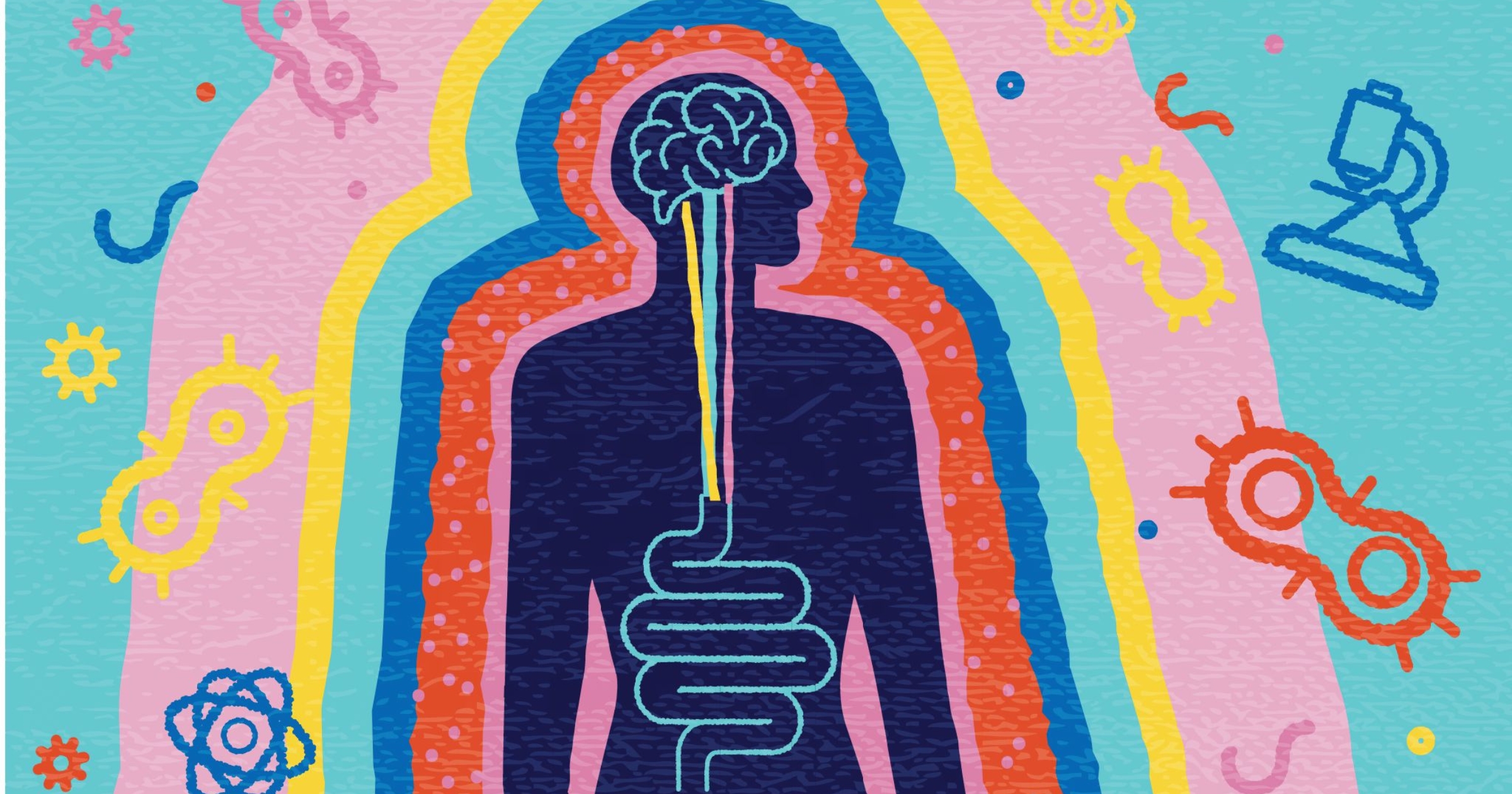
Few people talk frankly about our culture’s final taboo: the bowel. Never mind analyzing stool habits; even an escaped digestive gurgle makes people blush. We think of the intestines as abject and debased, but they are as crucial as our other body parts, and the tissues that create our farts, burps and gaseous cramps deserve the same TLC as any other major organ system.
It’s high time for a Bowel Movement Movement!
But this isn’t all a joke. The incidence of bowel conditions is skyrocketing.
Four of the most common conditions that impact the small and large intestines (the bowel) are irritable bowel syndrome (IBS), diverticulitis, inflammatory bowel disease (IBD) and celiac disease. Fifteen percent of Americans—mostly women—are diagnosed with IBS, and this figure likely underestimates the condition’s prevalence. That’s over 40 million people with abdominal pain, bloating, diarrhea and constipation.
Half of all Americans develop diverticulosis—pouches in the wall of the colon—by age 60, which can lead to diverticulitis, which is inflammation or infection of those pouches. Over two million have been diagnosed with celiac disease, an autoimmune reaction to eating gluten that damages the small intestine’s lining.
Three million suffer from IBD, which is chronic inflammation of the gastrointestinal tract. IBD mainly encompasses ulcerative colitis and Crohn’s disease, and its occurrence is steeply on the rise. According to the National Institutes of Health, from 2006 to 2021, IBD prevalence increased 46 percent, and people of Ashkenazi Jewish descent carry especially high risk.
My personal IBD journey began in New York City in December 1989. My suburban Canadian family rarely traveled, but this was the Big Trip. My first time in the city. My parents’ friend, an Amway salesman turned nudist turned travel agent, got us an athlete discount. In Times Square, the hotel clerk was a bit surprised that my Jewish family of four with battered old suitcases was booked as a European soccer team, but hey, this was before the internet.
Oh, the sounds and smells of Manhattan! The cheap scrambled eggs and bagels and chestnuts and TKTS discount Broadway ticket booth! This seventh-grader was entirely smitten.
And then the apex: The moment I stood on the Statue of Liberty’s crown, sipping the hot chocolate my parents bought me to combat the cold, gazing in awe at the dazzling metropolis. Suddenly, the magical feeling of freedom and potential was swapped for a pungent nausea.
“I don’t feel so good,” I told my mother, dropping my Styrofoam cup.
“So eat!” She was like 10 Jewish mothers rolled into one.
The “health salad” of cottage cheese and cantaloupe that my mother stuffed into me at the nearest diner was not the answer. I got so sick—repeated vomiting, a high fever, diarrhea—and wondered how so much could come out of me, barely four foot ten, and that was in my Doc Martens.
Dad, a practicing doctor, parked me in the Sheraton hotel bed and managed my illness.
On New Year’s Eve, I was so sick I couldn’t even make it to the hotel room window to watch the ball drop and the dawn of 1990—a new decade, a new me, and a very sick me at that. For days, I couldn’t keep anything down. I noticed blood on the toilet paper when I went to the bathroom. Irritation, I assumed, from all the wiping. My father miraculously found us airplane tickets to go home early.
Back in Montreal, I was mostly better. Dad figured I’d just had a very bad stomach flu. I continued with seventh grade as usual. I’d been trying to ignore it, but the truth was that since the New York City trip, I’d had residual bowel irritation, frequent bloating and cramps, and even some blood on the toilet paper. But then again, I was turning 13, and every girl who was any girl was suffering from cramps and bleeding, so I pretended my issues were like theirs, and tried to bond over Advil.
Things deteriorated over the next few months. I became constipated. I used creams for soreness and tried a laxative to soften my stools. This led to diarrhea. And more diarrhea. I became so ill that I was running to the bathroom more than 10 times a day. Eventually, one day in Jewish history class, I was overcome by the fishy breath of my teacher—appropriately named Mr. Pike—and I fainted.
After that, my symptoms only got worse. A young gastroenterologist, Dr. Konig, conducted my very first colonoscopy, for which we chilled the prep like a fine wine. This revealed colonic inflammation. I was diagnosed with “some form of colitis.”
Later, surgery confirmed that it was ulcerative colitis.
What causes bowel disease? Many people, as I did, tend to blame themselves—their actions (drinking hot chocolate) or their stress levels.
I come from a family of Holocaust survivors; it often feels like worry literally saved my genetic line. Bubbie Zelda had sniffed out the danger and, in 1939, soon after the Nazis occupied Warsaw, understood while waiting in food ration lines and hearing her neighbors give out information about who was Jewish that it was time to run, now. Her parents and sisters, who stayed behind, were killed. This trauma trickled down through our bloodline. That’s how we all learned to live: on alert for our lives.
When I developed gastrointestinal problems, it was easy to wonder whether all that inherited anxiety had finally caught up with me. But the reality is more complicated. IBS, IBD, celiac disease and diverticulitis have different origins and prognoses, but the lived experience is often similar, with overlapping symptoms, complications and day-to-day worries.
Let’s start with ulcerative colitis, generally diagnosed between the ages of 15 and 30. The cause of ulcerative
colitis is unknown, but it likely involves a number of risk factors. Most doctors agree that it is related to an overactive immune response in which the body mistakenly identifies food, beneficial bacteria in your gut (your microbiome) and/or its own colon cells as invaders and attacks itself. Or, your immune system tries to fight off an invading virus or bacteria but simultaneously attacks the cells of the digestive tract.
There are over 160 faulty genes that may make you susceptible. If you inherit any of these mutations, then your symptoms might be triggered by, among other possibilities, antibiotics, nonsteroidal anti-inflammatory drugs, smoking or, yes, stress.
Ulcerative colitis occurs more frequently in urban and industrialized areas. If you have a close relative with ulcerative colitis, that raises your risk of getting it: Up to 20 percent of sufferers have a close relative with IBD.
A combo of genetics and a funky immune system likely lead to Crohn’s disease as well, possibly along with changes in your microbiome. In Crohn’s, swelling and irritation usually occur deep in the tissue, in all the layers of the intestinal wall, and can happen anywhere in the GI tract but most commonly manifest in the small bowel and the upper part of the colon; the disease usually affects distinct areas of the tract.
Diet and stress can aggravate Crohn’s but don’t cause it. More than 200 genes are associated with the disease, but researchers aren’t sure what role they play. Most people are diagnosed before age 35.
Unlike IBD, celiac disease has a known immune system trigger: Your body treats gluten like a foreign invader and attacks it. Over time, the attacks damage the intestinal tissue. In other words, when someone with celiac disease eats gluten, their body attacks the gluten and itself.
You are not born with celiac disease; it’s something you develop. No one knows exactly why, but increased hygiene and antibiotic use as well as childhood viruses where gluten gets caught up in the infection may be factors. Celiac disease is most common in people of Northern European descent, and if your parent has it, you have a 10 percent chance of developing it, too. About 97 percent of people with celiac disease have a recognizable gene mutation (though not everyone with those mutations develops celiac disease).
IBS is a milder condition than the other gut diseases and has a variety of different cause. It’s often considered to be a neurogastrointestinal disorder, where there’s a disfunction in the relationship between the brain and gut, hindering their coordination. This might result in dysmotility, unusual muscle contractions in the intestines or hypersensitive nerves in the GI tract that cause a person to feel more discomfort when gas passes through. IBS sometimes develops after a person has a stomach infection, which suggests it might be the result of overgrowth of bacteria or viruses in the gut.
IBS occurs more frequently in people under 50, in people with a family history of IBS and in those who experience anxiety, depression, trauma and other mental health issues.
In contrast, diverticulitis is more likely to occur in people over 50. It happens when diverticula, pockets in the walls of the colon that form over time, become inflamed. We’re not entirely sure why these pockets form, but constipation places pressure on the colon wall and can lead to straining, which can make the weak areas of the colon wall bulge out. The inflammation is likely caused by bacteria or tissue damage. Risk factors include obesity, smoking, a low-fiber diet, heavy alcohol consumption, lack of exercise, low vitamin D levels and certain medications.
Genetics, glitchy systems, colonic aggravation, the bacterial underworld of the kishkes, a processed Western menu, medications—there are likely a whole host of factors that lead to bowel disease.
We need to talk about our bowels without shame. Information and guidance improve people’s lives, while honest accounts of disease inspire others to be honest with themselves. We may not know exactly what causes a specific bowel sickness, but we do know that when you have symptoms, you should get them checked out. What do you do when your toilet paper is streaked with blood? When you just can’t stay out of the bathroom? You see a doctor.
Judy’s Questions to Ask Your Doctor
At your first appointment:
- What do you think are the options for what could be wrong with me?
- How will we confirm a more specific diagnosis?
- What are the risks of the diagnostic procedures?
After you receive your test results and diagnosis:
- How will we manage this disease? What is the long-term prognosis?
What are the risks of the medications you recommend? Can I expect to feel any side effects? - Are there any non-medical therapies that you recommend?
- What should I eat? Drink? Not eat? Not drink?
- Please lay out the next steps, in order.
- When should I call you? What symptoms should I look out for that might indicate that things are getting worse?
Judy Batalion is a New York Times best-selling author of award-winning nonfiction and fiction. Her essays have appeared in The New York Times, The Washington Post, Vogue and more. She lives in New York City with her husband and three children. Save the Date: Batalion will appear at a special in-person Hadassah Magazine Presents podcast recording on January 21 at the Weitzman National Museum of American Jewish History in Philadelphia.
Adapted from The Girl’s Guide to Guts by Chloe Melas and Judy Batalion. Copyright © 2026 by Chloe Melas and Judith Batalion. All rights reserved. No part of this excerpt may be reproduced or reprinted without permission in writing from the publisher.
 Facebook
 Instagram
 Twitter


Leave a Reply