




Being Jewish


Interfaith Comedy Finds the Humor in Religion
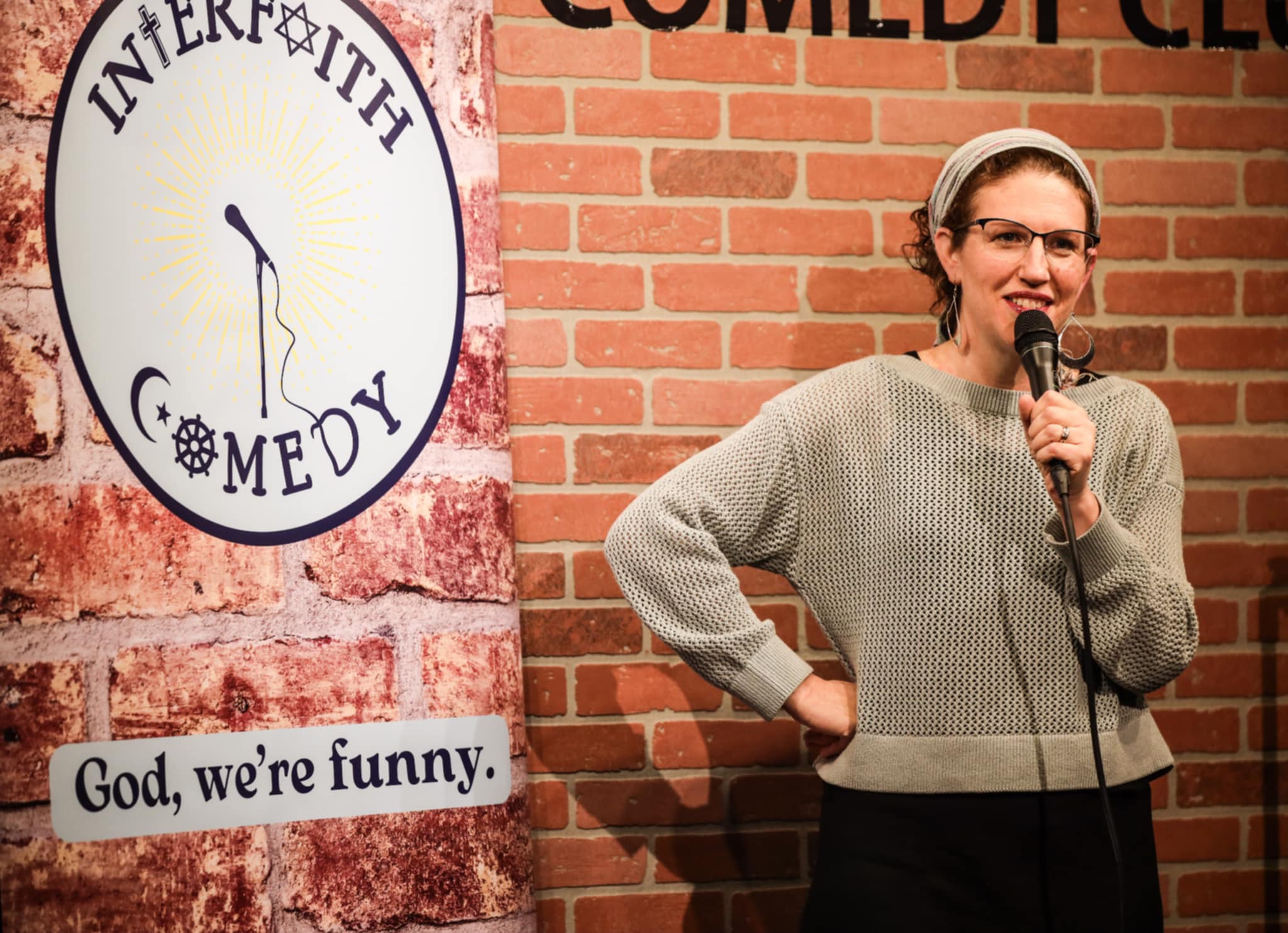
The Maryland-based Interfaith Comedy has two rules for its performers: focus at least half your set on your own religion and don’t mock anyone else’s faith.
Carmiya Weinraub created the troupe in 2022, not long after she began doing standup. “When I turned 40, I set myself a goal of getting onstage twice,” she said, completing that goal within a month. “I didn’t want to stop.”
In fall 2021, Weinraub was in a lineup with Yasmin Elhady, a Muslim comic who wears a hijab—which Elhady addresses as soon as she gets to the microphone.
“Within seconds, I had the thought, ‘My Jews need to see her,’ ” Weinraub recalled. As a modern Orthodox woman who wears a head covering, Weinraub said she “understands the stereotypes that develop around other groups. Here was this person who quickly melted those from her audience.”
A month later, Weinraub saw Muslim comic Shahryar Rizvi discuss prejudice in America.
Interfaith Comedy’s first show was held in 2022 at Weinraub’s synagogue, Kehilat Pardes in Rockville, Md. It has since staged almost 50 performances, mostly on the East Coast, with four to six comics from a rotation of about 20, including Elhady and Rizvi, with Weinraub emceeing and performing. Shows, held in Jewish community centers, mosques and churches, among other venues, end with the comics joining the audience for a discussion.
One show this year featured a Muslim, Mormon, lapsed Catholic, Hindu, humanist and two comics who grew up in Black churches.
Weinraub concedes that her shows “have an element of preaching to the choir,” acknowledging that most in the audience already hold open-minded views of the “other.” But, she adds, “there aren’t a tremendous number of spaces where comedians can talk about religion.”
Weinraub has a bit about whether Jews have a blessing for accidentally eating something that isn’t kosher. “Yes,” she tells the audience, there’s a blessing. “Any four-letter word will do.”
Sofia Javed, a Muslim comic now in Chicago, joined the group when she was living in Washington, D.C. She took Weinraub’s invitation as an opportunity to develop more material about her experience as the daughter of Pakistani immigrants. She riffs about her “childhood traumas” like sitting in the school cafeteria during a Ramadan fast and watching others get excited about their pizza bagels.
“The more specific you get about your own stories,” Javed said about the universality of comedy, “the more relatable they become.”
Debra Rubin is an editor and writer based in Maryland.
 Facebook
 Instagram
 Twitter


Leave a Reply