



Food


Meet World Central Kitchen’s Woman in Israel
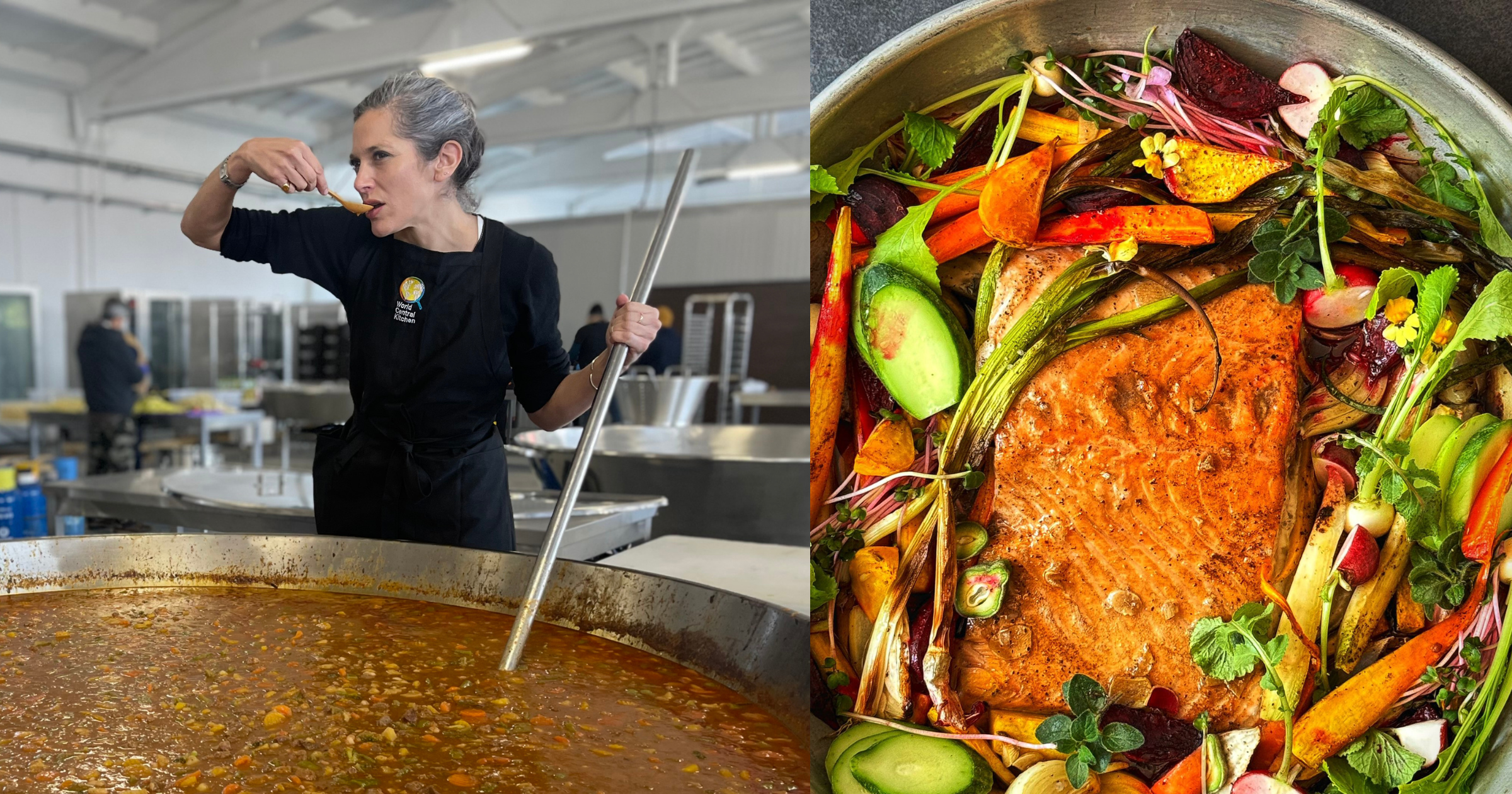
“Asking me to tell you what I do is hard because I have the career of five different people.” That’s what Ruthie Rousso told me recently over tea and cookies at a cafe near her home in Tel Aviv, not far from Rabin Square, where she lives with her husband and two teenage daughters. A multi-hyphenate food-world powerhouse, Rousso can claim chef, journalist, professor, television personality and cookbook author among her many accomplishments.
Since the devastating Hamas terror attacks of October 7, 2023, the 48-year-old Israeli has added another title to her resume: food humanitarian. As the first representative for food-aid organization World Central Kitchen (WCK) in Israel, she’s been on the front lines of making sure Israelis in crisis have the sustenance they need.
Since its founding in 2010 by Spanish American celebrity chef José Andrés, WCK has provided more than 500 million meals in crisis zones around the world by performing quick assessments of the needs after a disaster; partnering with local restaurants, food trucks, caterers and community chefs; and organizing distribution. (WCK has served more than 145 million meals in Gaza, and Andrés has been critical of the Israel Defense Forces for the unintentional deaths of seven WCK workers in April 2024, for which the IDF apologized.)
Rousso, who studied at the French Culinary Institute in New York City and the University of Slow Food in Italy, first teamed up with WCK after Russia’s invasion of Ukraine in 2021. After she saw footage of hundreds of thousands of Ukrainian refugees amassed on the Polish border, she headed straight to the airport, chef’s knife and apron in hand.
“I had no idea where I was going,” said Rousso, who flew to Lvov and found a driver to take her to one of the many field kitchens. She eventually joined a facility run by WCK, an experience that made her “realize just how fragile food safety is.”
In the wake of the Hamas attacks, Rousso leveraged a lifetime of connections in the food world—in addition to her own bona fides, her mother is Nira Rousso, a legendary food figure in Israel—to get WCK up and running. Within weeks, Rousso and WCK were partnering with Israeli restaurants and businesses.
“Food is always a window to other needs,” said Rousso, who is sharing the following vegetable-centric salmon recipe in honor of Tu B’Shevat, the Jewish new year for trees and agricultural holiday that begins this year on February 1. “We brought a meal, and then we found out about the prescription they needed filled or the lightbulb they needed changed.” Meals were made for all Israeli citizens regardless of race, religion or ethnicity; the nearly 100 percent Muslim village of Tamra in the lower Galilee, particularly hard-hit by Hezbollah rockets, received thousands of meals.
Partnering with WCK to provide, to date, more than two million mostly kosher meals also allowed restaurants and other food businesses—many of which had been shuttered since the attacks—to earn vital income.
“Ruthie is a seismograph for humanity,” said Assaf Doktor, a principal in the Haachim restaurant group, which became WCK’s largest partner. “She’s so sensitive on the one hand, but strong as a bulldozer, able to move mountains to reach out and find people in need.”
For Rousso, one of her most meaningful roles was providing food for the hostages returning from captivity in Gaza, beginning with the first release in November 2023. WCK delivered three meals a day to the five hospitals treating the hostages.
“Many hostages ignored doctor’s orders, and even their first night out of captivity ate our schnitzel, mashed potatoes and pasta. These are moments I will never forget,” said Rousso, who worked with a hand-selected group of volunteers to customize meals according to kashrut requirements and dietary needs. They continued feeding hostages upon their release as well as their families until October 2025, when the last living captives were freed.
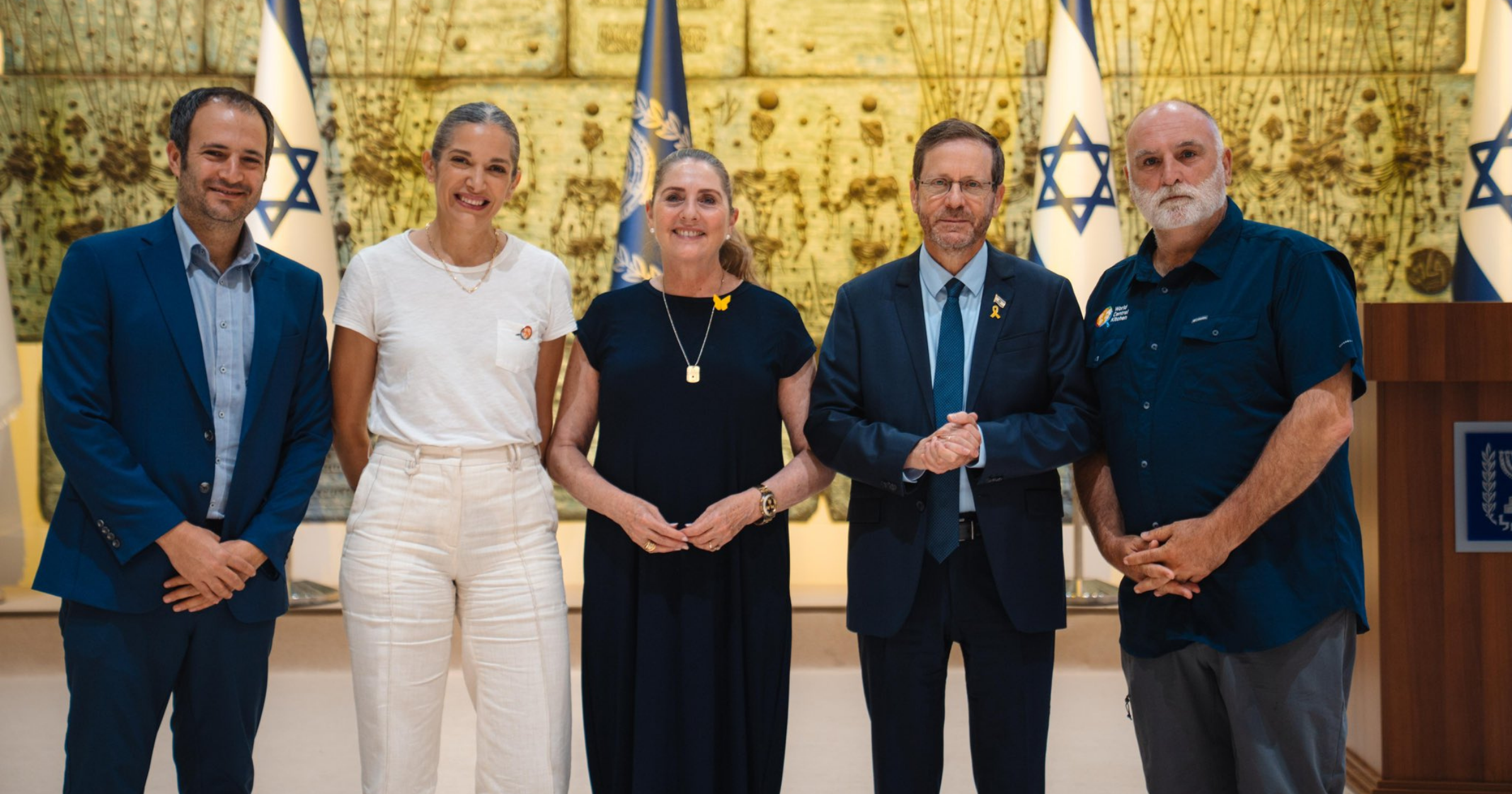
In August 2025, during WCK founder Andrés’ trip to the region, Rousso arranged meetings between him and Israeli President Isaac Herzog as well as with hostage family members.
“Ruthie became my sister over the past few years,” Andrés said by phone from Las Vegas, where he has multiple restaurants. “Seeing the way she brought together a group of such diverse people politically, religiously and otherwise made me admire her even more. She is a person of hope, and we need more like her, especially in these days.”
With her role at WCK taking less time now that a tentative ceasefire is in place and fewer meals need to be prepared, Rousso has returned to writing her popular weekend food column in the Yedioth Ahronoth newspaper and lecturing on food innovation at Reichman University in Herzliya. She also had the opportunity in November to travel to Jordan to meet her Gazan WCK counterparts.
“I think we were all concerned” about the meeting, Rousso said. “We all come with our prejudices. But when I sat with them, we all just saw each other’s humanity. Food is always a unifier, a way to say you’re not alone.”
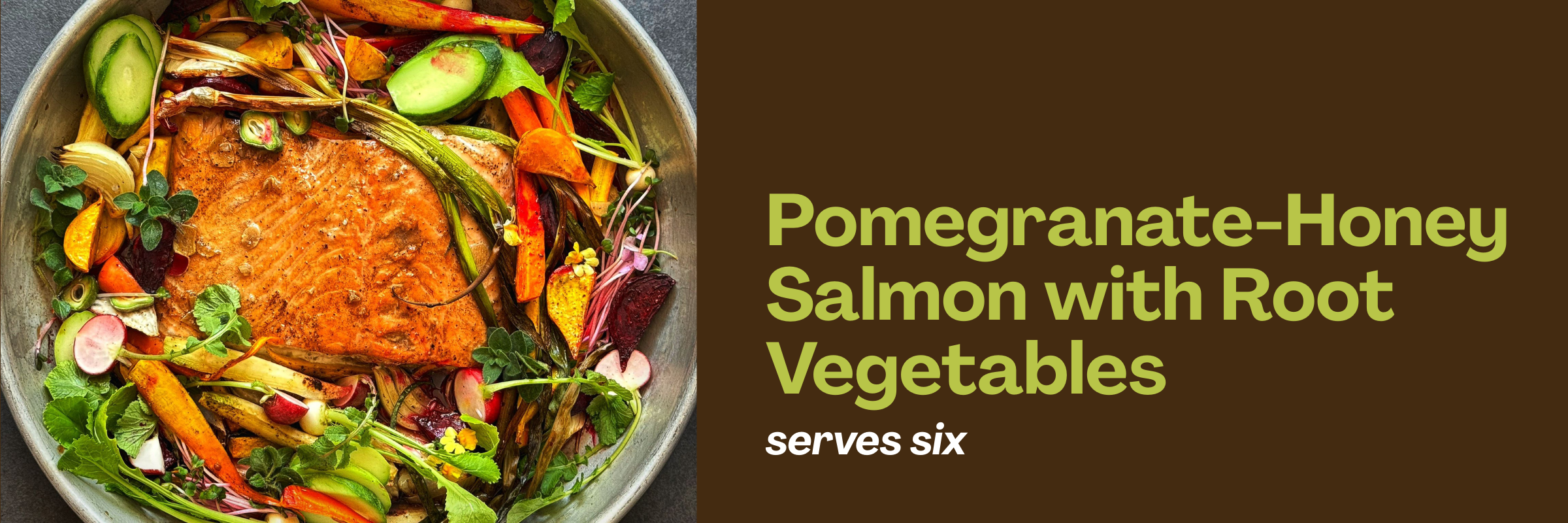
Ingredients
- 1/2 cup pomegranate molasses
- 1/4 cup honey or silan
- 2 small garlic cloves, peeled and thinly sliced
- Salt and freshly ground black pepper, to taste
- 3 small beets, peeled
- 2 pound, skin-on salmon fillet
- 3 carrots, peeled
- 2 red onions, peeled and cut into 6 wedges each
- Crushed dried chili (optional)
- 5 small radishes, sliced
- Fresh lemon slices
- 1 head of endive or lettuce, leaves only
- 2 small cucumbers, cut into thick slices
- 8 sliced raw Brussels sprouts
- 1/2 cup fresh herbs, such as parsley, cilantro, mint or dill
- Olive oil
Directions
1. Preheat the oven to 400°. In a bowl, combine the pomegranate molasses with the honey (or silan) and garlic. Season with salt and pepper to taste.
2. Halve the beets, then cut each half into 4 wedges. Halve the carrots, then cut each half lengthwise into 6 sticks. Place beets, carrots and onion in a large bowl and toss with half the pomegranate-honey mixture.
3. Center the salmon, skin side down, on a large rimmed baking sheet. Pat dry with a paper towel and brush generously with the pomegranate-honey mixture (reserve 2 to 3 tablespoons). Scatter the beets, carrot and onion around the salmon. Season with salt, pepper and chili, if using.
4. Roast for 15 minutes, then brush the remaining pomegranate-honey mixture over the salmon. Turn off the oven and leave salmon inside for an additional 10 minutes.
5. To serve, leave the salmon on the baking sheet or gently transfer to a serving dish. Just before serving, garnish with radish, lettuce, cucumbers, Brussels sprouts, lemon and herbs. Drizzle with olive oil and salt and serve warm or at room temperature.
Adeena Sussman lives in Tel Aviv. Her new cookbook, Zariz: 100 Easy, Breezy, Tel Aviv-y Recipes, will be published in April and is available for preorder. She is also the author of the New York Times best-selling Shabbat: Recipes and Rituals from My Kitchen to Yours and Sababa: Fresh, Sunny Flavors from My Israeli Kitchen.
 Facebook
 Instagram
 Twitter
Laurie says
Thank you – as I have wondered “what can I do”, I am inspired by people who do and have done. Thank you for sharing!!