



Books


REVIEW: ‘A Different Spirit’
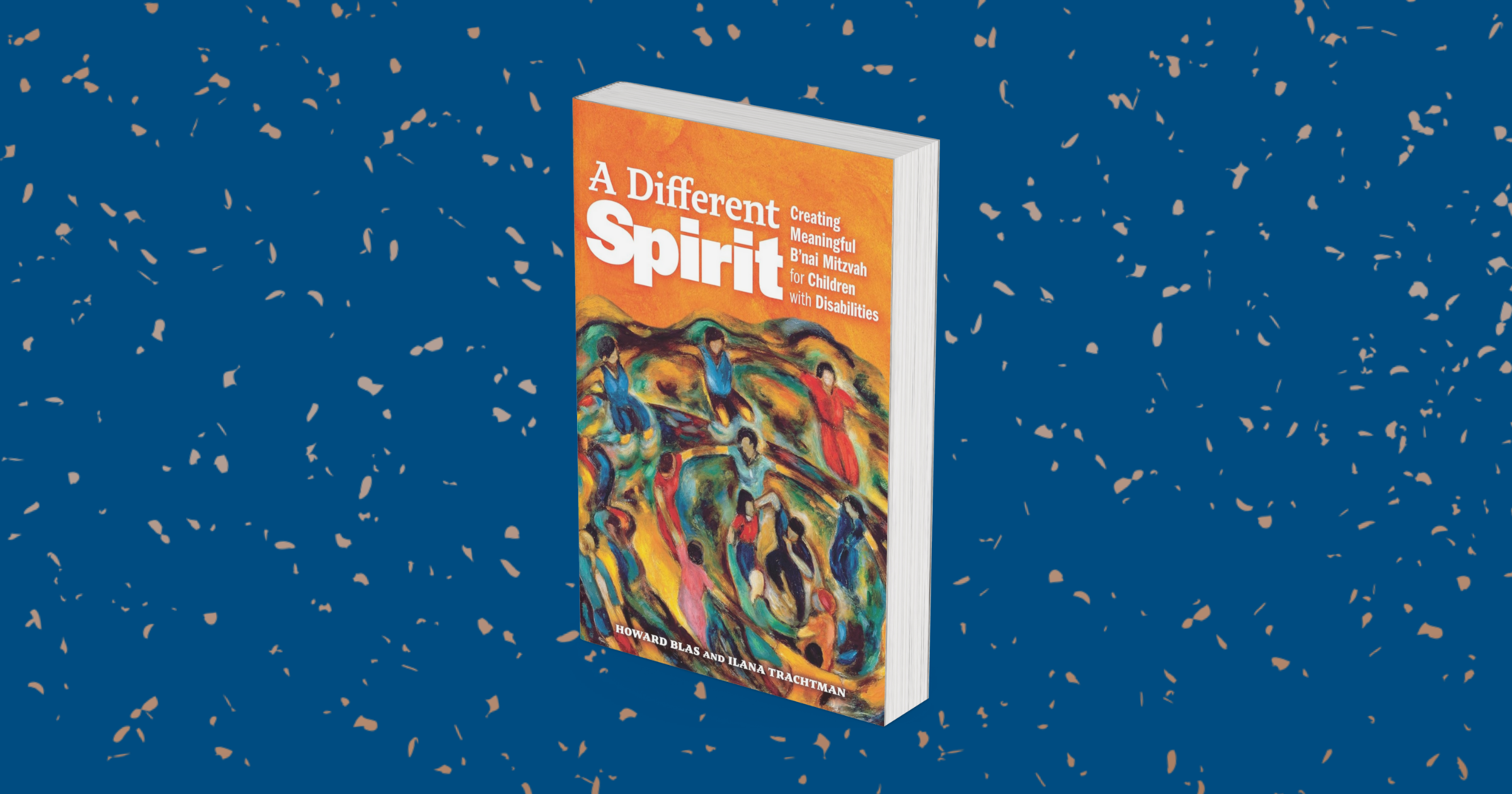
A Different Spirit: Creating Meaningful B’nai Mitzvah for Children with Disabilities
Edited by Howard Blas and Ilana Trachtman (Behrman House)
A much-needed and beautifully presented resource—set for release in February, which is Jewish Disability Awareness, Acceptance, and Inclusion Month—A Different Spirit collects essays by rabbis, educators, parents, psychologists and people with disabilities. The experts share their insights, offering essential perspectives on inclusive b’nai mitzvah.
As noted in one essay, according to the United States Centers for Disease Control and Prevention, more than 20 percent of the population has some sort of disability, a category that includes autism; blindness and deafness; mobility issues; and learning and mental health challenges. While the 1990 Americans with Disabilities Act (ADA) ensured the civil rights and support of people with disabilities in education and community life, its protections largely did not extend to faith-based communities.
The collection’s contributors—Rabbanit Aliza Sperling, who developed a braille system for reading the Torah cantillations; and Rebecca Redner, education specialist at Gateways: Access to Jewish Education in Boston, among many others—highlight the urgent need for disability inclusion in synagogues, Hebrew schools and other Jewish spaces.
As Pamela Rae Schuller, a comedian and disability advocate with Tourette syndrome, recalls in her essay, one year after celebrating her bat mitzvah in synagogue, she and her family were asked to leave that synagogue as her vocal and motor tics were deemed disruptive. She felt incredibly angry at the rejection, and it took many years before she could say that she “loves Judaism and lives it in a way that feels authentic.” Today, she tells her story through comedy and consults with synagogues on personalized approaches to all b’nai mitzvah students. She urges congregations to adopt a “yes, and” approach to those coming of age: “Yes that his Bar Mitzvah may look different, AND let’s get creative.”
In another essay, Redner, along with Arlene Remz, former executive director of Gateways, suggests ways to advance meaningful participation for non-speaking students. They explain how assistive communication devices, new software and other tools can support these learners.
David Neufeld, co-dean of learning support at the Jewish Community High School of the Bay, in San Francisco, suggests holding b’nai mitzvahs at summer camp, when informality, flexibility, specially designed readings and prayers and a “no-shush policy” can benefit some children. “At camp,” Neufeld writes, “people who don’t fit in anywhere else can find a loving community that accepts them and appreciates them for who they are.”
The contributors offer practical strategies and personal narratives from educational, religious and logistical perspectives—resources that parents, students and congregations will find invaluable.
Editors Howard Blas, a social worker and educator, and Ilana Trachtman, an Emmy Award-winning documentary filmmaker, are pioneers in the world of disability inclusion and bring deep expertise to the subject. In their introduction, the two discuss the book’s purpose and reflect individually on their involvement. Trachtman explains how she was “catapulted” into the world of disability rights and faith inclusion after her film Praying with Lior was released in 2008. The film profiles a boy with Down syndrome, highlighting his deep spiritual gifts as he approaches his bar mitzvah.
Blas has worked for more than 40 years in disabilities inclusion in the Ramah camping movement and has prepared young people with a wide range of abilities for b’nai mitzvah. He writes that he started getting calls from synagogues in the late 1980s and soon “developed a reputation as the go-to person for b’nai mitzvah for children with disabilities and unique situations.” He emphasizes that the service and learning process are “not one-size-fits-all.” Both Blas and Trachtman underline the courage that it takes for a child with disabilities—and their family—to face “the public milestone of b’nai mitzvah.”
The essays collected here offer the knowledge and strategies to make b’nai mitzvah a positive, meaningful experience that honors each child’s unique gifts and, in doing so, uplifts the entire community.
Sandee Brawarsky is a longtime columnist in the Jewish book world as well as an award-winning journalist, editor and author of several books, most recently of 212 Views of Central Park: Experiencing New York City’s Jewel From Every Angle.
 Facebook
 Instagram
 Twitter
Leave a Reply