



Food


A Behind-the-Scenes Look at Adeena Sussman’s ‘Zariz’
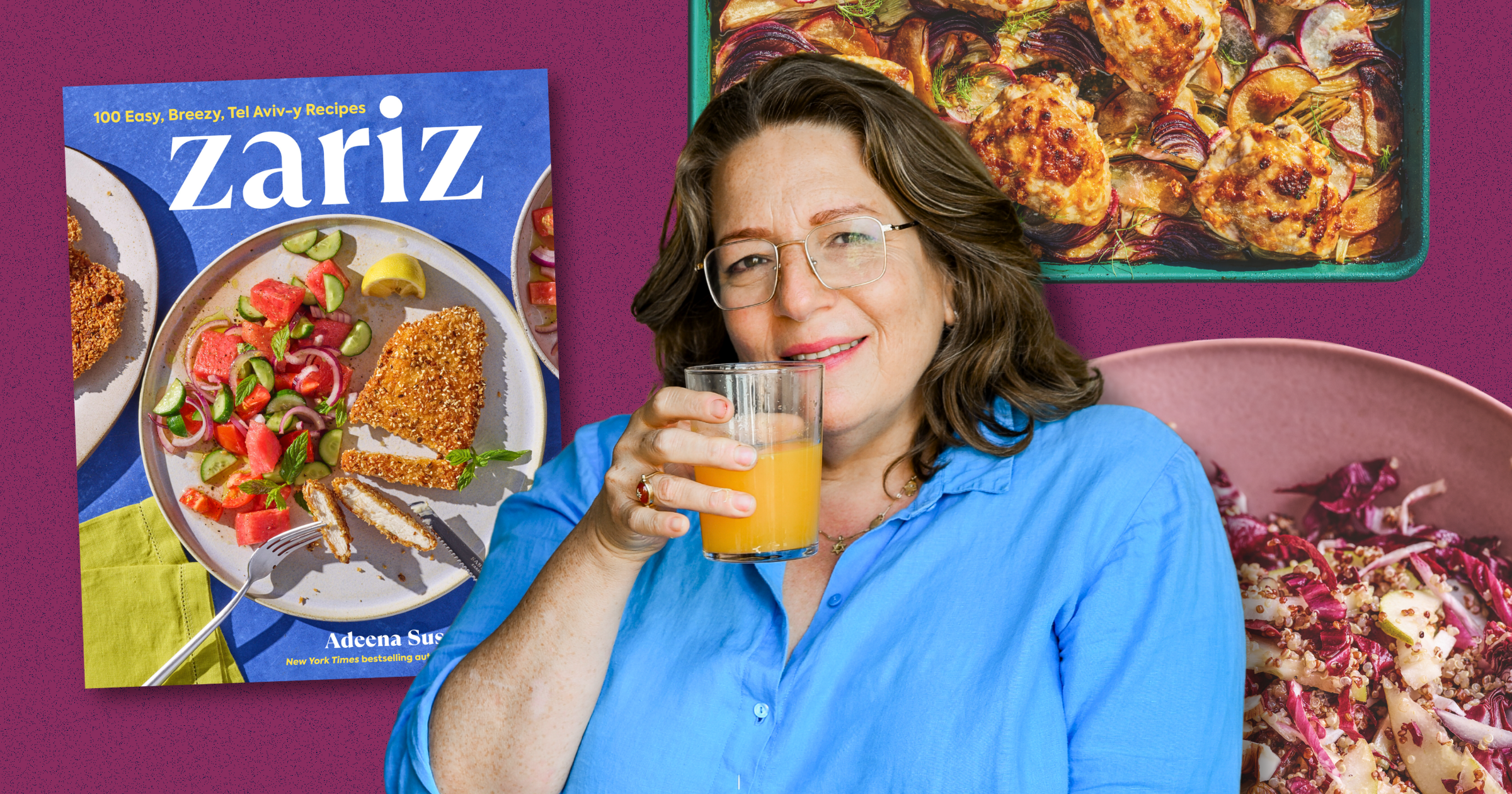
Each one of my cookbooks is a world unto itself, a food-centric memoir of my kitchen life, created during the particular time in which it was written. They are shaped as much by what I was cooking as by what I was holding—emotionally and intellectually—in that moment.
That’s certainly the case with my newest cookbook, Zariz: 100 Easy, Breezy, Tel Aviv-y Recipes, which was written in the shadow of the Hamas attacks of October 7, 2023, and reflects both a spiritual and practical need to streamline cooking as the world felt like it was unraveling around me.
Some people write in journals; I putter around in the kitchen. Others assemble photo albums; I create and memorialize new recipes on paper. If all goes to plan, I’m not only creating a delicious dish, but also an indelible memory—one that can be revisited, remade and shared.
My first cookbook, Sababa, which came out in 2019, was the story of my integration into Israeli culture through the lens of food. I was a new immigrant who had moved from New York City to Israel for love—I met my husband, Jay, on a blind date in 2014, then married him in Tel Aviv in 2017—and then fell in love once again, this time with the edible culture here.
I knew I wanted to write about this multifaceted cuisine through my unique lens as an insider/outsider in Israel’s culinary culture, but I ended up also writing toward something less concrete: a sense of belonging, a way of naming and claiming the place I lived as my own. Sababa is a love letter to the foodways I discovered in Tel Aviv’s Carmel Market, which I’m fortunate to live near. What I didn’t yet know was that the book would open a conversation with readers that would accompany me for the better part of a decade—and through two more books.
If Sababa was anchored in place, my next cookbook, Shabbat, which came out in 2023, was anchored in time—or really, a day of the week. With a few years of Israeli life under my belt, I set out to explore the Venn diagram of my Jewish, Israeli and culinary identities. I found my subject in the Jewish Sabbath and spent nearly two years learning from people about the dishes that had sustained them and their families for generations, along with the stories behind them.
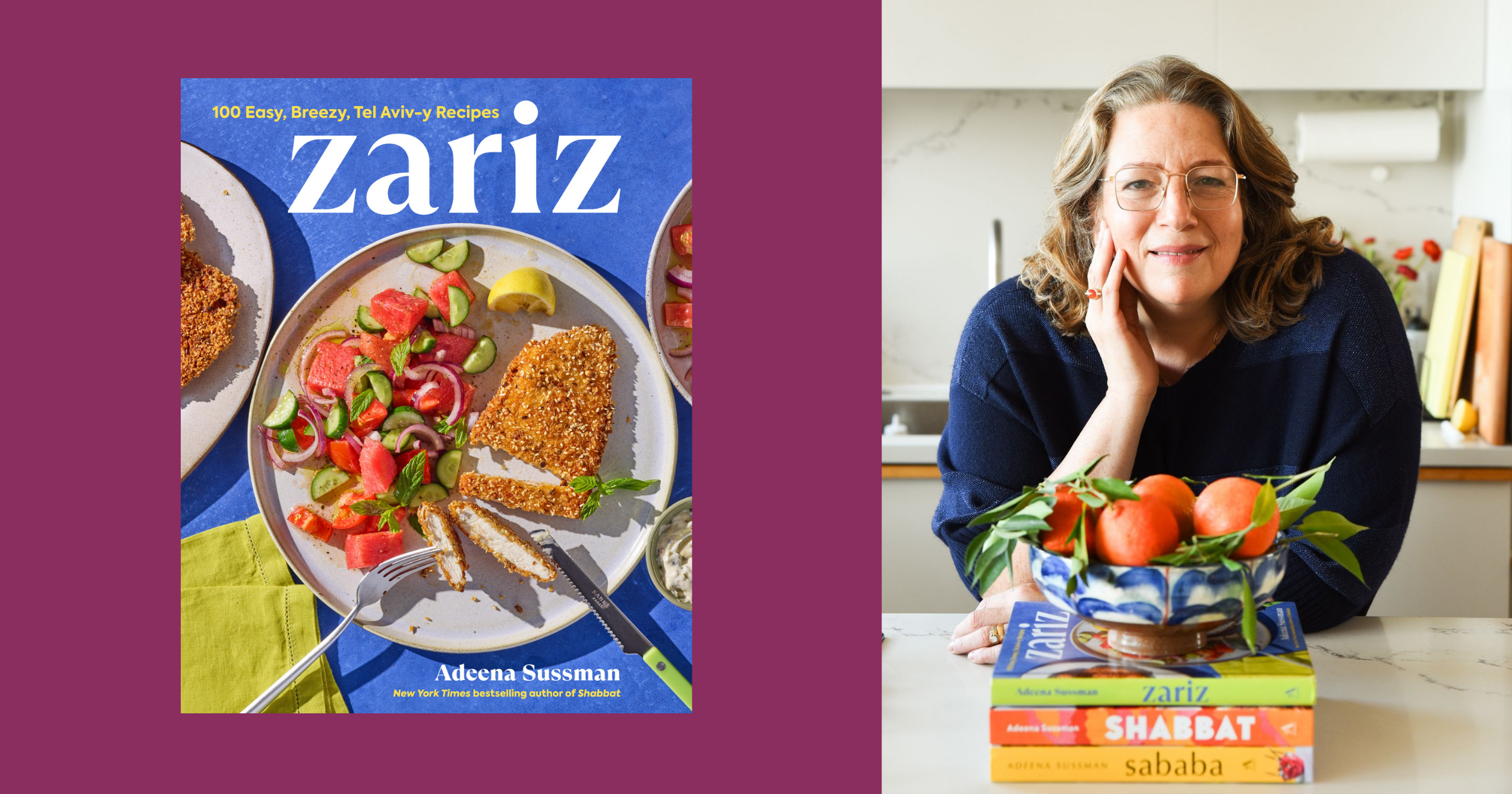
Back in the summer of 2023, before Shabbat was even released, I wanted to nail down my next project, so I’d have something concrete to work on when I returned from promoting that book. I sold my publisher on what became Zariz: a timesaving cookbook—zariz is Hebrew for quick or speedy—with Israeli-inspired recipes intended to ease people into what I was calling “simple cooking for complicated times.”
I had no idea, of course, how complicated the times would become.
While still on the road for Shabbat, I woke up in New York City on October 7 to the news of the Hamas attacks. I spent the next month and a half finishing the tour, appearing at events that became something like group therapy sessions. By the time I returned to Israel at the end of November 2023, with the hostage crisis and war in full bloom, my kitchen knives had gone untouched for nearly three months, and my body and brain were equally worn out.
And yet, I was expected to develop the 100 brand-new recipes that would fill Zariz’s pages.
I had promised that no recipe would contain more than a “bat mitzvah’s worth”—meaning 12 or fewer—ingredients, not including olive oil, lemon, salt and pepper. I had also set a goal that every recipe would fit on a single cookbook page, with minimal mess and few pots and pans. Now I had to deliver.
Thankfully, I’d been practicing for this since I was about 10. Ever since I tinkered with two recipes from my mother Steffi’s copy of The New York Times Cook Book by Craig Claiborne—the Minnesota Fudge Cake and the Chocolate Buttercream Frosting—playing with recipes had been a passion. On long Shabbat afternoons, while my parents and sister napped, I’d pull the book off the shelf and read it, attempting to decipher words I’d never heard and imagine the taste of things my young palate had never seen, much less eaten: caviar, foie gras, Dover sole.
My mother’s cookbook—now one of my most treasured possessions—sparked my interest not only in how to cook a recipe, but also how to adjust it. Next to decades-old smears of dried chocolate and egg yolk are my mother’s handwritten notes, my earliest permission to view recipes not as rigid rules, but as suggestions with guardrails.
Decades later, having developed thousands of recipes, I know the process is anything but linear. As technical as it is—taking meticulous notes, weighing and measuring, tweaking and revising even the tiniest details—it’s equally emotional and lyrical. I usually start with a feeling: a craving, a memory, a mood that might be grounded in comfort, escape or simple nourishment.
What I learned in writing Zariz is that simplifying recipes is far more complicated than one might think. It’s much easier to cook with no limits, with every spice, condiment and kitchen elixir available. In the Zariz model, every ingredient, every technique, every tool must earn its place.
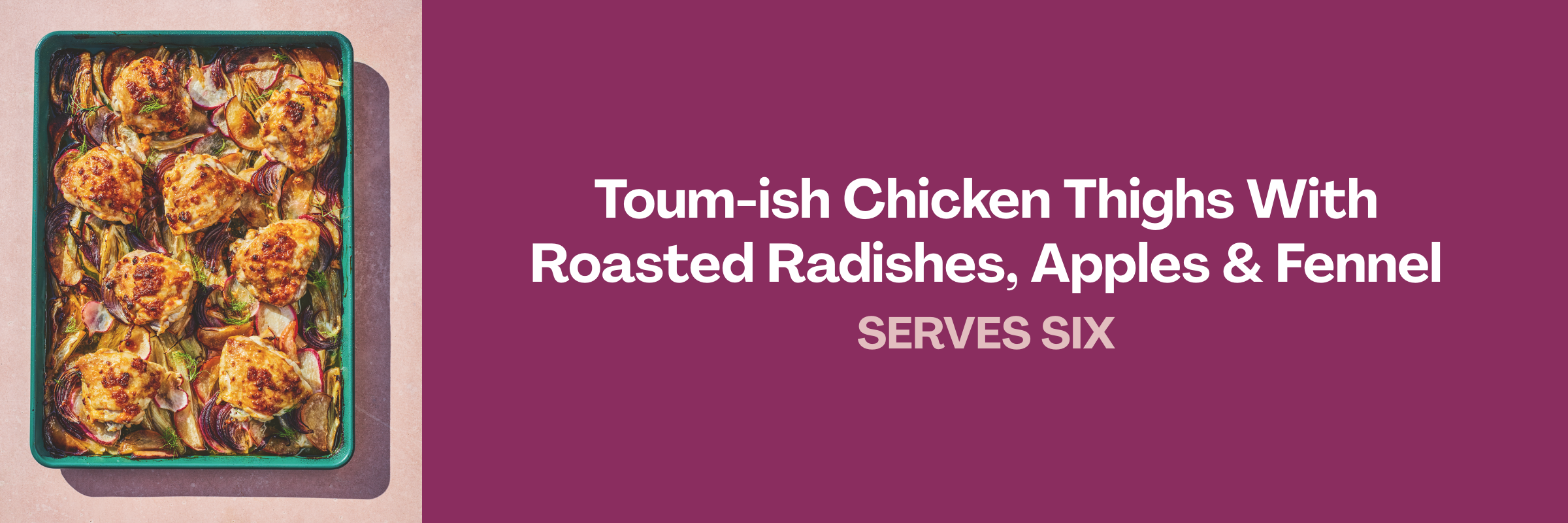
And so I cooked the dishes again and again, sometimes obsessively, thinking through every eventuality so the end user wouldn’t have to. Sometimes that meant whisking a salad dressing directly in its serving bowl, as I did with the cabbage and quinoa salad shared here. Other times it meant reimagining a technique entirely, like basing the Lebanese garlic-and-oil sauce known as toum on store-bought mayonnaise instead of a blender-based emulsion—a shortcut that still delivers maximum flavor, as in the Toum-ish Chicken Thighs With Roasted Radishes, Apples & Fennel I’m also sharing with you.
I always say that some things in cookbooks are subjective. If you don’t like the design, the photographs—heck, even my writing—that’s O.K. But if you try one of my recipes and it fails you, I’ve fallen down on the job. That’s why every recipe is cross-tested by a chorus of home cooks who volunteer their time to make the food better, flagging everything from hard-to-find ingredients to cooking times that need adjusting.
Once the recipes are locked and loaded, it’s time for the most joyful part of the process: the photo shoots. I met photographer Dan Perez and stylist Nurit Kariv in 2017, and we’ve been a creative trio ever since. Together, we bring the recipes to life with ceramics, surfaces, fabrics and glassware that quietly convey my books’ Israeli American DNA, all bathed in the most important ingredient of all: the natural sunlight of Tel Aviv.
As Zariz makes its way into the world, I see how different it is from my other books. Cooking for it carried me through one of the most challenging periods of my life. While grappling with my own grief, I shared the collective anguish of a nation and a people, knowing that hundreds of hostages were languishing—and some dying—in Gaza, including the son of my friends Rachel Goldberg-Polin and Jon Polin.
Navigating a tricky social media universe, where algorithms and loud voices oftentimes target Israeli accounts, also became even more complex during the war. Everything I posted felt loaded with expectation and prone to scrutiny, and it made me want to hide. Instead, I doubled down on my Jewish and American Israeli identity.
In response to this time that demanded more of me, I stripped my cooking down to reveal its essence, finding calm and comfort
in the process.
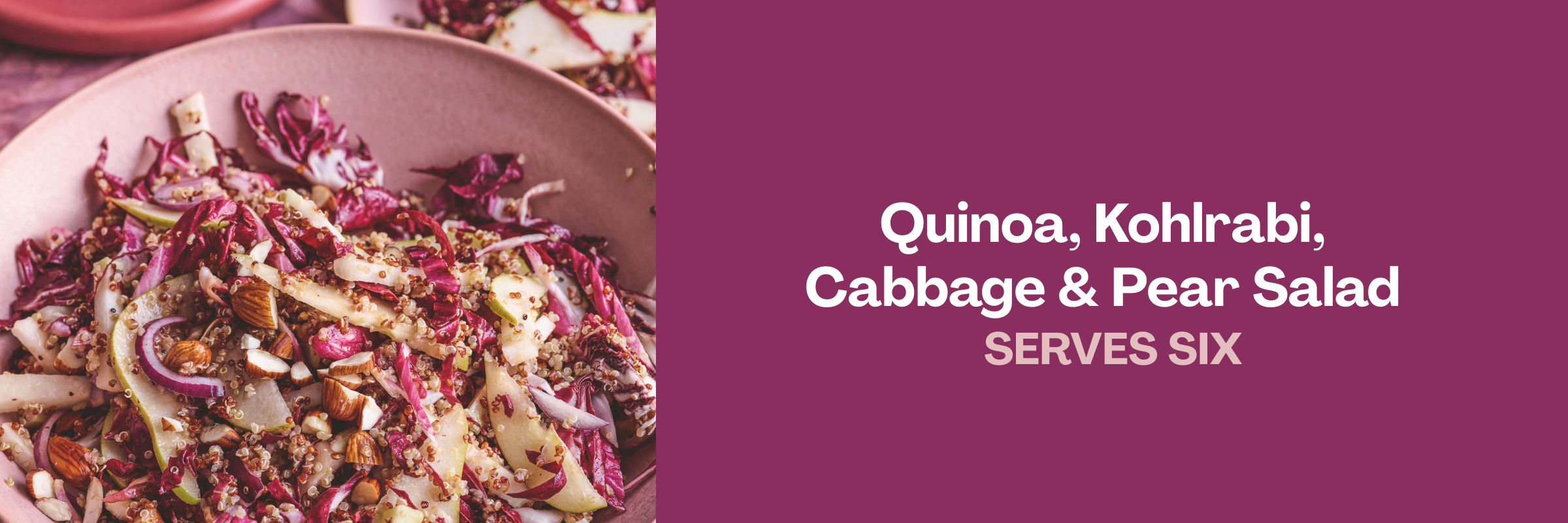
Ingredients
- 1 cup raw almonds
- 1/3 cup plus 1 tablespoon olive oil
- 1 1/4 cups uncooked quinoa, rinsed and drained
- 1 teaspoon kosher salt, plus more to taste
- 2 1/2 cups water
- 3 tablespoons red wine vinegar
- 1 1/2 tablespoons Dijon mustard
- 1 1/2 tablespoons silan (date syrup) or honey
- 1/2 teaspoon freshly ground black pepper, plus more to taste
- 1/4 small (8-ounce) head red cabbage, shredded (4 cups)
- 1 large or 2 small kohlrabi or jicama, peeled and sliced into matchsticks
- 2 medium very firm pears, thinly sliced
- 1/2 small red onion, thinly sliced
Directions
1. Preheat the oven to 350°. Arrange the almonds on a small rimmed baking sheet; toast until fragrant and golden, 10 minutes. Cool and coarsely chop.
2. In a medium wide saucepan with a lid, heat 1 tablespoon of the olive oil over medium heat. Add the quinoa and 1/2 teaspoon of the salt and toast, stirring, 2 to 3 minutes. Add the water, raise the heat to high and bring to a boil. Reduce the heat to low and simmer, covered, until all the water is absorbed and the quinoa is soft, 20 to 25 minutes. Remove from the heat and let stand, covered, for 5 minutes (if the quinoa is still wet, then cook it, uncovered, over medium heat, stirring, to evaporate any extra moisture, 3 to 4 minutes). Transfer to a large rimmed baking sheet and spread in an even layer to cool completely.
3. In a large salad bowl, whisk together the remaining 1/3 cup olive oil, the vinegar, mustard, silan, the remaining 1/2 teaspoon salt and the pepper until creamy. Add the quinoa, almonds, cabbage, kohlrabi, pears and onions and toss to combine. Season with salt and pepper.
Ingredients
- 7 garlic cloves, finely grated or minced
- 1/3 cup mayonnaise (preferably olive oil mayo)
- 2 teaspoons kosher salt, plus more for seasoning
- 1 teaspoon sweet paprika
- 2 medium or 1 very large head fennel (1 pound), halved, cored and thinly sliced, fronds reserved
- 3 large or 6 medium radishes, thinly sliced
- 2 tablespoons olive oil
- 1/2 small red onion, thinly sliced
- 1 medium red apple (such as Pink Lady), halved, cored and thinly sliced
- 1/4 teaspoon freshly ground black pepper, plus more for seasoning
- 8 medium or 6 large bone-in, skin-on chicken thighs (2 1/4 to 2 1/2 pounds)
- Finely grated zest of 1 large lemon
Directions
1. Preheat the oven to 425°. To make the toum, in a small bowl, combine the garlic, mayonnaise, 1 teaspoon of the salt and the paprika. Transfer 3 or 4 tablespoons of the toum to a small bowl and reserve for serving.
2. On a large rimmed baking sheet, arrange the fennel, radishes, apples and onions. Toss with the pepper, the remaining 1 teaspoon salt and the olive oil. Nestle the chicken, skin side down, among the vegetables. Brush each piece with 1 teaspoon of the toum, flip and brush the skin side of each piece with another 1 teaspoon toum, spreading some of it under the skin. Season the tops of the chicken with salt and pepper; roast until the vegetables are softened and browned in parts and the chicken is golden and the juices run clear, 40 to 45 minutes. Garnish with fennel fronds and lemon zest. Serve the chicken with the vegetables and extra toum.
Adeena Sussman lives in Tel Aviv. Her new cookbook, Zariz: 100 Easy, Breezy, Tel Aviv-y Recipes, will be published in April and is available for preorder. She is also the author of the New York Times best-selling Shabbat: Recipes and Rituals from My Kitchen to Yours and Sababa: Fresh, Sunny Flavors from My Israeli Kitchen.
 Facebook
 Instagram
 Twitter
Leave a Reply