



Health + Medicine
Feature


Jewish Women Mobilize For Reproductive Rights
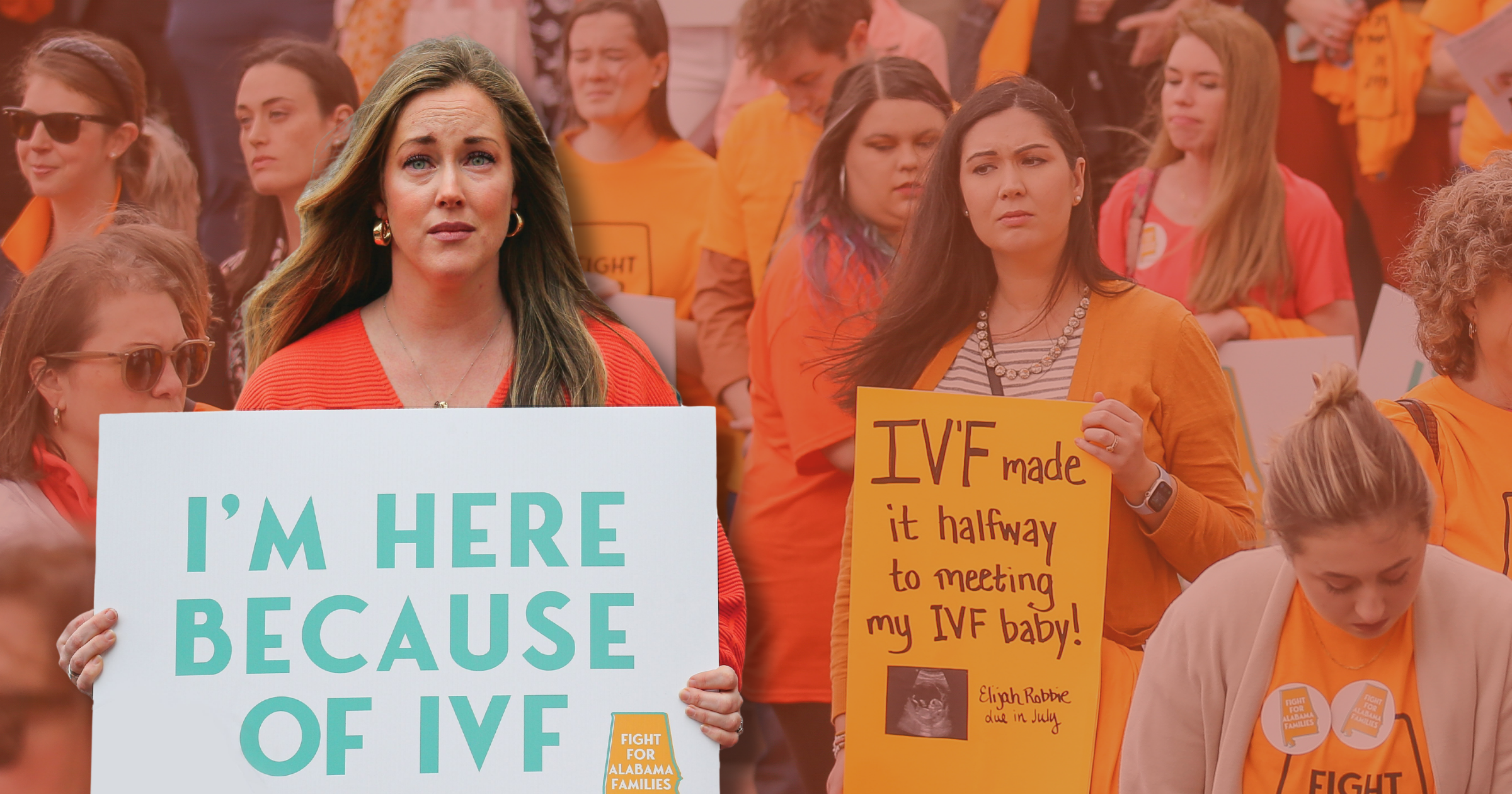
In February 2024, Nikki Mirova of Birmingham, Ala., was about to start her medications for a round of in vitro fertilization treatment when a court ruling effectively put a halt to all IVF in the state.
Alabama has long had one of the strictest abortion bans in the country. The Human Life Protection Act, which passed in 2019, prohibits abortion unless the woman’s life is in danger. Then, in February 2024, the Alabama Supreme Court ruled that embryos, along with fetuses, are “persons” and have the same legal protection as children. This ruling, among a series of legislative efforts dubbed “personhood” laws, is based on the belief that life begins at conception.
Although the 2024 ruling did not mention IVF by name, it sparked fear that legal action could be taken not just against those who provide abortions but against anyone performing IVF. That’s because several steps during the IVF process can result in discarding embryos not selected for implantation. In addition, those not implanted or discarded can be stored, which could lead to future disposal if they are not used.
Medical professionals in Alabama did not know whether, or for what, they could be prosecuted if they went forward with IVF. Immediately, fertility clinics across the state shut down, including the University of Alabama at Birmingham hospital, where Mirova was being treated.
“We heard about it on the news,” Mirova said. “I sent a message in the [patient] portal, asking, ‘Is this real? Is my whole cycle being shut down?’ And they said, ‘Yes.’ ”
The new legal challenges faced by Mirova and others seeking to have a baby through IVF are among the recent consequences of the ongoing battle over reproductive rights in the United States. When the United States Supreme Court in June 2022 overturned Roe v. Wade—the 1973 ruling that had protected abortion nationwide—IVF and contraception as well as women’s reproductive health care in general were affected throughout the country.
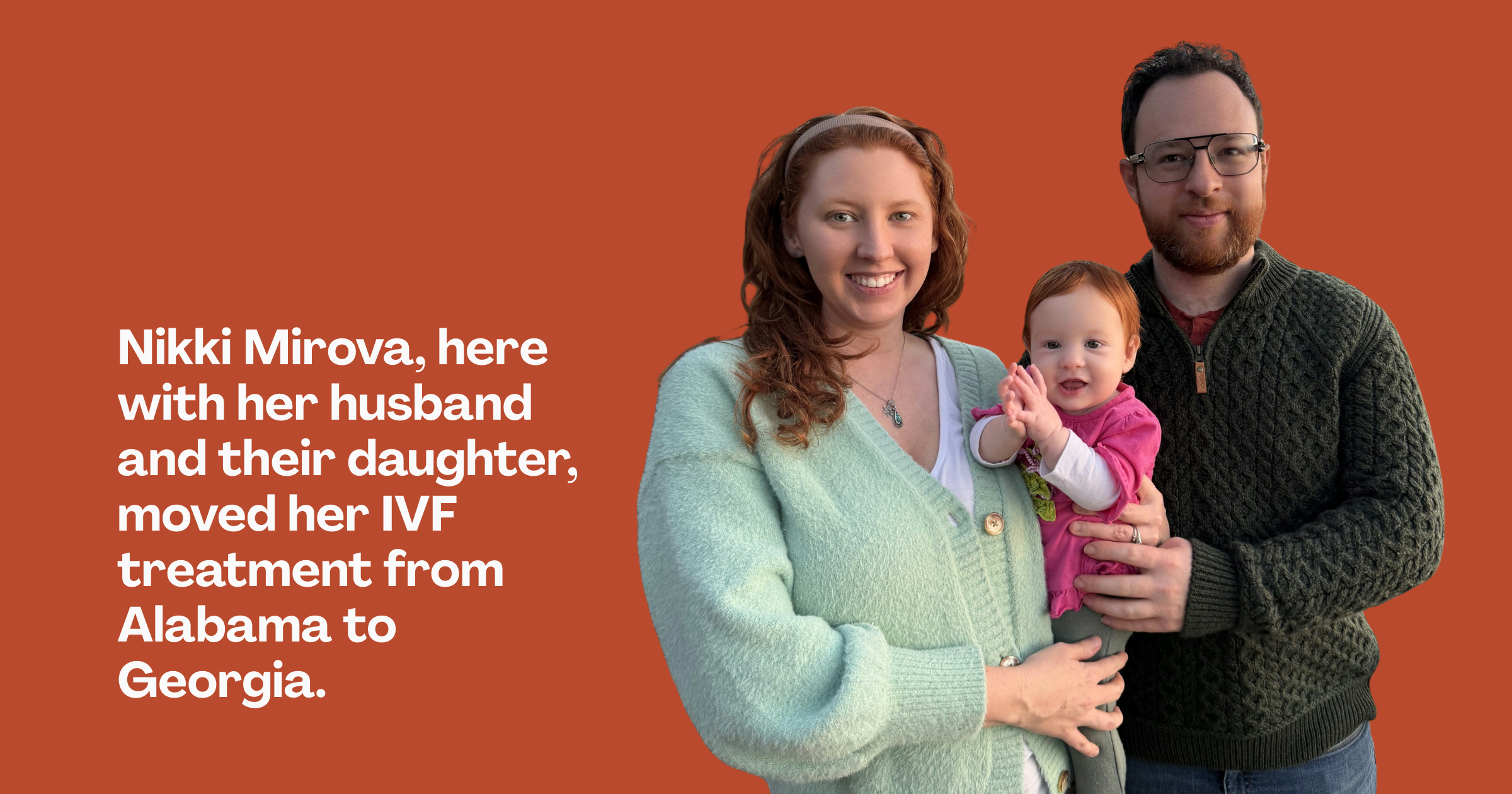
Fortunately for her, Mirova, who is Jewish, was a client of the Jewish Fertility Foundation (JFF), an Atlanta-based organization that supports women during IVF. She and her husband were given a grant that helped pay for them to move her treatment to a clinic in Atlanta, where the IVF laws were looser.
In July 2024, Mirova’s first embryo implant was successful. In March 2025, she gave birth to a healthy baby girl. But the entire experience left the couple shaken. Although Alabama passed an immunity bill in March 2024 that allowed IVF to resume, Mirova moved all her frozen embryos out of Alabama to play it safe, she said.
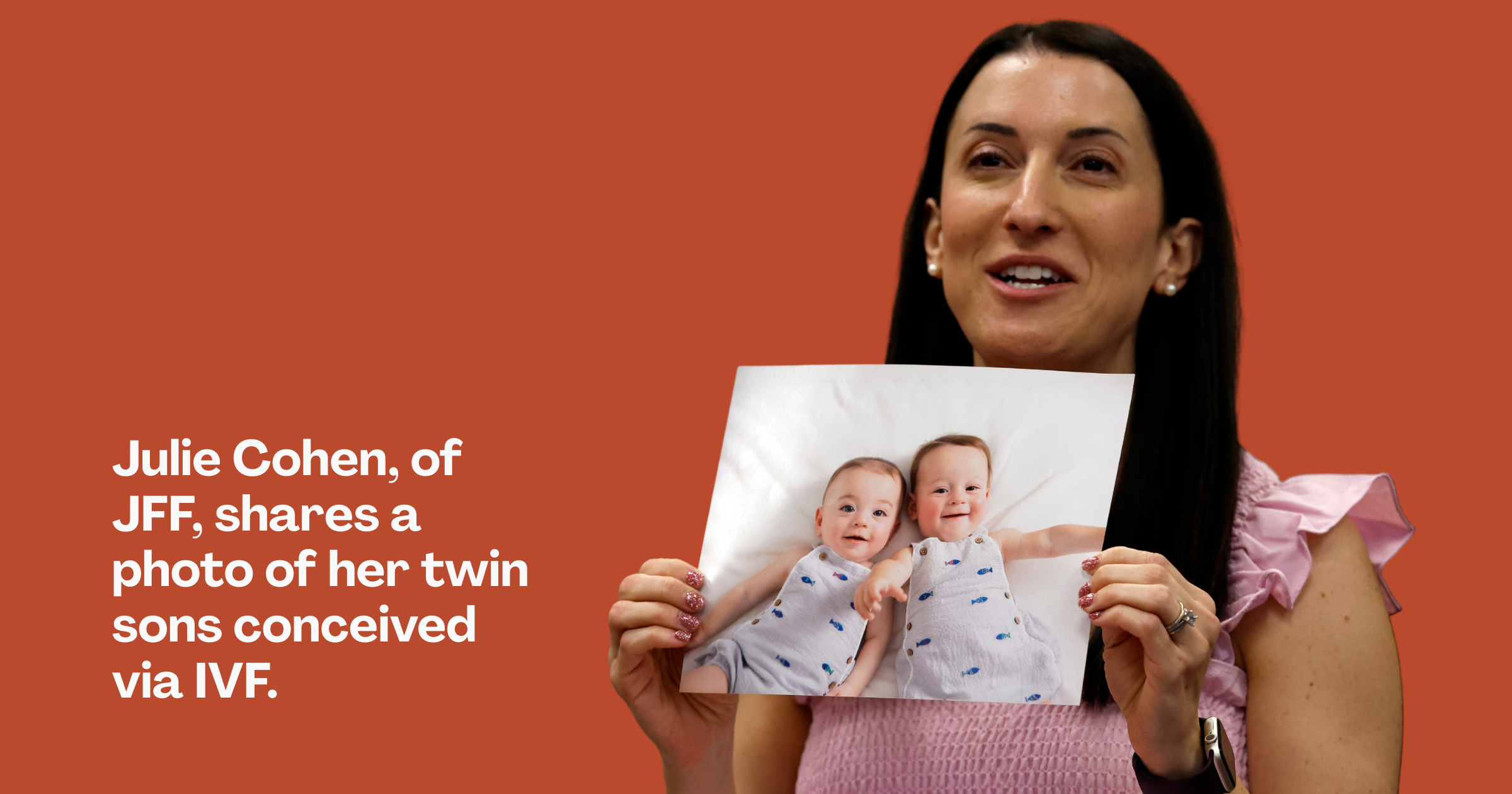
Julie Cohen, the JFF senior manager who also runs the organization’s Alabama and Nevada offices, understands Mirova’s concern.
“Basically, IVF is not safe here, because at any point, there can be a court case that says this immunity bill is unconstitutional, and IVF is going to be shut down, and this time for good,” she said. “A lot of people are asking, ‘Is it safe for me to do my treatment here in Alabama?’ But traveling during treatment is not an option for everyone. It’s expensive. You need somewhere to stay. You need a flexible job so you’re able to go back and forth. Not everybody has that.”
Cohen has personal experience both with IVF and confronting the new legal realities. Already a mother to three sons, she was pregnant again via IVF when Alabama, where she lives, made its “personhood” ruling. A week and a half after the law was passed, she discovered that her fetus had a genetic disorder called limb body wall complex, where the organs had developed outside the body. In virtually every case, the fetus is born dead or dies soon after birth.
“Here I was pregnant with a very wanted baby, and week by week, the more information we got, the clearer it was that she had a 0 percent chance,” Cohen said. She and her husband “made the impossible decision,” she said, to terminate the pregnancy at 17 weeks, which, despite the Alabama law, was deemed legal because “all the doctors agreed there was no possibility of the baby surviving.”
Cohen and her husband want more children, so she still pays to store some embryos at a cost of $1,000 a year or more. But she wonders about women who can’t afford that.
“If you’re not allowed to discard your embryos, who’s going to be paying that bill?” she asked. And, she said, “it used to be that if certain embryos didn’t make it to whatever stage they need to make it, they’d be discarded. But now these clinics are freezing those even if they’re not viable, because they’re nervous about somebody coming after them, so then that takes up freezer space.
“There are just so many questions people have,” she added, “including myself.”
The biggest blow to abortion rights came in the 2022 ruling in Dobbs v. Jackson Women’s Health Organization, with the Supreme Court deciding that there is no federal constitutional right to abortion. This landmark decision overruled both Roe v. Wade and Planned Parenthood of Southeastern Pennsylvania v. Casey, a 1992 case that reaffirmed federal protection of abortion. The 2022 decision gave states full power to regulate or even ban abortions.
Immediately after the Dobbs ruling, states like Alabama that had long sought to restrict or ban abortion began enforcing previously passed abortion laws; other states passed new ones. Currently, 13 states have a total ban on abortion, permitting it only to save the life of the mother. Most of them are in the Southeast, such as Alabama, Arkansas, Tennessee, Louisiana and Mississippi, but others include Texas and Idaho.
Florida, Georgia, South Carolina and Iowa forbid abortion after six weeks, except if the woman’s life or health is in danger, and most other states put some gestational limitations on the procedure. Just eight states and the District of Columbia permit abortion at any stage of pregnancy.
These numbers are volatile, subject to change as state bills are passed or new court decisions come down. In July 2025, President Donald Trump’s “big beautiful bill” added financial pressure to the Dobbs decision. The law includes a provision blocking Medicaid funding for tax-exempt organizations that provide family planning and reproductive services if they provide abortions, and if they received more than $800,000 in Medicaid funds during fiscal year 2023.
The presumed target of the cuts was Planned Parenthood, which is the nation’s largest provider of health care services to low-income women.
The funding cuts, which were challenged largely unsuccessfully in court, led to the further closure of Planned Parenthood centers around the country. According to the organization’s website, 51 of its 600 centers nationwide closed in 2025 following the loss of Medicaid reimbursements and other funding sources. Most of those closures were in 18 states, primarily in the Midwest.
These closures came on top of shutdowns that had already accelerated after the Dobbs decision in 2022. According to Operation Rescue, a prominent anti-abortion organization, 88 abortion facilities closed in 2022 following the overturning of Roe v. Wade. As of March 2024, according to the Guttmacher Institute, a nonprofit dedicated to advancing sexual and reproductive health and rights, there were no clinics providing abortion care in the states with total abortion bans; these states had 63 such clinics in 2020.
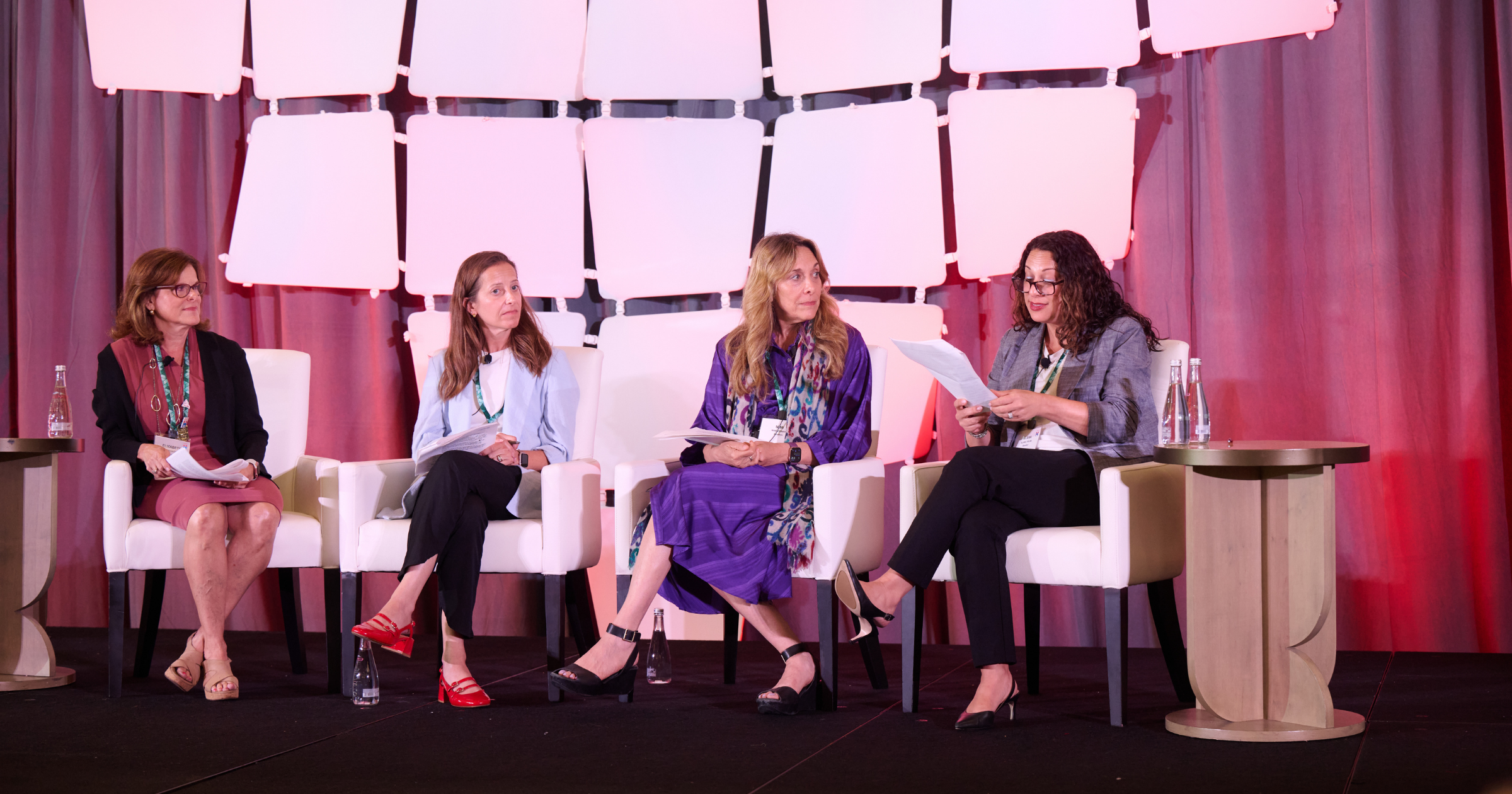
These developments have “affected women’s health in myriad ways, from their overall health to the specific area of reproductive health,” said Elizabeth Cullen, Hadassah’s director of government relations.
Related reading: “Hadassah Steps Up For Women’s Reproductive Rights”
As clinics close, she said, women are also losing access to contraception such as IUDs and birth control pills as well as to cancer screenings and testing for sexually transmitted diseases.
“Those clinics were where many women would get contraception and get it in an affordable way,” she said. “That means women’s reproductive choice even outside of abortion is being taken away.”
Experts estimate that millions of women have already been affected. The 2024 State Scorecard on Women’s Health and Reproductive Care, produced by the Commonwealth Fund—which documents how policy choices and judicial decisions impact women’s access to timely health care—noted that maternal health care “deserts” have emerged across the southern United States in particular. The scorecard reported that alongside abortion bans and shuttered clinics, obstetrician-gynecologists were leaving the southern region due to the restrictions.
Atlanta ob-gyn Dr. Mimi Zieman says it’s literally a matter of life and death. “In states with bans, infant mortality has risen 6 percent, and maternal mortality is twice as high,” she said.
In some cases, women in the middle of miscarriages have died because doctors were reluctant to perform dilation and curettage operations, standard care for first-trimester miscarriages, fearing legal repercussions.
In June 2023, for example, 35-year-old Porsha Ngumezi, who was 11 weeks pregnant, showed up mid-miscarriage, bleeding heavily, at Houston’s Methodist Sugarland Hospital. As ProPublica reported, instead of performing a D&C and emptying her uterus, doctors gave Ngumezi, who had a blood-clotting disorder, two blood transfusions as well as misoprostol, a medical abortion drug. Hours later, she hemorrhaged to death.
Since the Dobbs decision, the number of women traveling out of their home state to seek reproductive health care has skyrocketed. According to the Guttmacher Institute, 155,000 patients sought abortion care in other states in 2024. The share of all abortion patients who traveled out of state for care increased from 9 percent in 2020 to 15 percent in 2024.
As clinics have closed in states with abortion bans, others have opened in less restrictive states to serve this increased demand. One is Meadow Reproductive Health, which opened in 2024 in McLean, Va., a state that permits abortion up to 26 weeks and six days.
Meadow’s chief operating officer, Mike Scheinberg, estimates that about 15 percent of their patients come from out of state, about half of them from Florida, and the rest from other restrictive states, including Georgia, Louisiana, West Virginia and South Carolina.
Meadow is located near a Metro station and close to the two Washington, D.C.-area airports, to make access easier.
The clinic performs surgical abortions up through the 14th week andabortions through medications through the 10th week. As a “patient-centered” clinic, Scheinberg said, they also provide contraception, such as IUDs, and do STD testing—whatever reproductive care a woman requests.
It’s all about access, he said. “Even in states where it’s legal, in certain cases, it’s not accessible,” he explained. “In the far reaches of Virginia, you’re not going to find abortion clinics.”
Scheinberg noted that his clinic’s medical director, Dr. Jessica Rubino, left her job at the Austin Women’s Health Center a year after the Dobbs decision, when Texas enacted a total ban on abortion.
Dr. Rubino told The Guardian newspaper that she “was forced to turn away dozens of patients,” including one experiencing kidney failure.
“I had to tell people there’s nothing I can legally do for you, unless you’re on death’s doorstep,” she was reported saying in that August 2023 article. “The law forced me to be a bad doctor.”
Some Jewish women have tried to fight abortion bans on religious grounds, claiming the “personhood” laws that underpin most state bans are based on a Christian notion of when life begins, whereas Judaism holds that life begins once a baby is born.
A well-known case has been playing out in the courts in Kentucky, where Jessica Kalb, a Jewish woman who has polycystic ovary syndrome (PCOS), is suing to overturn Kentucky’s abortion ban and clarify the legality of IVF.
Kalb, who conceived her one child through IVF years before the Supreme Court overturned Roe, is paying for nine embryos to be kept frozen. In October 2022, after the Dobbs decision, she declined to have one implanted for fear she would run afoul of Kentucky law. Women with PCOS have higher rates of miscarriage, and Kalb feared she would be unable to receive appropriate care in her home state if that happened after implantation.
She and her lawyers are making a freedom of religion argument, asserting that Kentucky’s abortion ban violates Kalb’s Jewish beliefs. “Our case is asking a simple question,” Aaron Kemper, one of Kalb’s attorneys, said in an email. “Does religious freedom in Kentucky apply to Jewish women, too? Or does it only protect the views of the people who wrote the law?”
Mary Ziegler, a law professor at the University of California at Davis and a nationally recognized authority on the law and politics of reproductive health care, is torn over the wisdom of making this religious argument.
On one hand, she said, “In the contemporary United States, people use ‘religious liberty’ as a shibboleth for conservative Christian religious liberty, and that can have unintended consequences for Jewish people.”
On the other hand, she pointed out, Jews and others who have different views about the beginning of life have the right to seek the court’s protection. “And there’s a strategic component to it, absolutely,” she added, “because the Supreme Court has been a lot more open to claims about religious liberty than to other constitutional claims.”
All the various legal and financial restrictions on abortion punish the most vulnerable women, those without the resources to travel to other states or pay out of pocket for care, experts say.
To help such women, in October 2024, Allison Tombros Korman founded the Washington, D.C.-based Red Tent Fund, which raises money in the Jewish community to provide grants to financially strapped women of any background seeking abortions.
It is, Korman said, a very Jewish thing to do. Not only does Judaism permit abortion, even requiring it to save the life of the mother, but Jewish Americans have a long history of fighting for the rights of others and supporting the economically disadvantaged.
Before starting the fund, Korman had been senior operations and strategy director at the DC Abortion Fund. However, after the Hamas attacks on Israel on October 7, 2023, and the resultant war in Gaza, she found herself in a hostile environment in which she said she was forced to choose between her Jewish identity, including her connection to Israel, and her support for reproductive rights.
She created the Red Tent Fund, she said, “so people could give in alignment with their Jewish values and with Jewish teachings that affirm the right to abortion.”
“Jews have been leaders in the abortion movement for a long time,” Korman said, noting that support for choice among Jews is high. The Pew Research Center’s 2023-24 Religious Landscape Study showed 83 percent of American Jews support legal abortion. “If Jews walk away from funding abortions,” she said, those seeking abortions could suffer.
The Red Tent Fund provides grants directly to a dozen clinics operating in 15 states, some with multiple branches. The clinics then offer the money to patients who need it, whether they are local or have traveled from out of state. A typical surgical abortion in the first trimester costs about $800, according to Planned Parenthood. In 2025, Korman’s fund disbursed nearly $530,000 in abortion funding.
The organization doesn’t collect data on patients who receive the grants, but Korman does hear stories from the clinics. She recounted the case of one woman who spent all her money on travel to get to the clinic from a state that banned abortion, and without the funding would not have been able to pay for her procedure. Another woman offered $200 toward her abortion, telling clinic staff that this was her food money for the next two weeks.
“The clinic was able to tell her that it was not necessary for her to go into her food budget,” Korman said. “They dipped into their Red Tent Fund and were able to give her back the $200. These stories are very real, and they are heartbreaking.”
Meadow Reproductive Health in Virginia is one clinic that receives Red Tent funding, for which COO Scheinberg is grateful. “It’s not just about going and just getting your abortion done; it’s about travel, it’s about lodging, it’s about childcare in many cases,” he said. “For many people, this is a big ordeal, and being able to have those resources available is so important.”
The Red Tent Fund only supports surgical procedures, not medication abortions. It’s less risky legally, Korman explained, if the entire abortion procedure is completed in a state where it is legal, which is true with surgery, rather than have the patient begin taking abortion pills in one state and then finish the medication when she’s back home, putting her at risk of prosecution.
Twenty-two states and the District of Columbia have so-called shield laws that protect the privacy of patients and providers, so they are not compelled to turn over records to the attorney general of the patient’s home state. Most of them are along the East and West Coasts, including New York, New Jersey, Pennsylvania and California. But shield laws are not impermeable.
Indeed, last year, a battle over shield law protection erupted between California and Texas in a case that could end up in the Supreme Court. A man in Texas, a state with a total ban on abortion, filed a civil lawsuit in federal court in Texas against a physician in California for allegedly mailing abortion pills to the plaintiff’s girlfriend. California has shield laws protecting health care providers, including those providing telehealth services, which is legal in California. But a law that went into effect in Texas in December 2025 allows private citizens to sue over abortion pills mailed into the state—and explicitly says that shield laws in another state offer no protection.
Activists in the field say that the anti-abortion movement has changed course over the past year. According to a Guttmacher Institute analysis, the emphasis now is to remove the few ways women in states with total and gestational bans were still managing to access care. Opponents are trying to criminalize patients and providers by, for example, attacking medication abortion access and telehealth provisions as well as targeting abortion funds and community networks that help women.
“National and federal developments, such as the relentless attacks on medication abortion using mifepristone, the ‘defunding’ of Planned Parenthood and severe cuts to the Medicaid program, are also reshaping care and access at the state level,” states the institute’s December 2025 State Policy Trend Analysis. “These escalating attacks…have only widened the gap between protective and restrictive states—putting them at odds with each other as protective states attempt to mitigate the harms of abortion bans and preserve access to care through shield laws and other strategies.”
Law professor Mary Ziegler says the battle over reproductive rights isn’t going to end anytime soon.
“The demise of Roe v. Wade wasn’t the end of conflicts about abortion in the United States, not just because people who supported reproductive rights were unhappy, but also because people who opposed reproductive rights weren’t satisfied either,” she said. “The United States has been kind of in a civil war for the past half century, as far as reproduction is concerned, and that’s going to very much continue to be the case.”
Sue Fishkoff is a former editor of J. The Jewish News of Northern California and the author of The Rebbe’s Army: Inside the World of Chabad-Lubavitch and Kosher Nation: Why More and More of America’s Food Answers to a Higher Authority.
 Facebook
 Instagram
 Twitter
Leave a Reply