




Israeli Scene


Amid War in Israel, the Zoo Became a Sanctuary
Volunteering at a zoo in Israel during wartime is a strange experience. When war with Iran raged and missiles arced across the sky, we learned to live by the quiet arithmetic of survival: how long we had to reach shelter, how far we were from a safe room, how quickly we could move if the sirens sounded and how we could keep the animals safe and fed.
On one such day at the Midbarium zoo in Beersheva, I grabbed the key from the locker in the staff room, lined my trash bucket with a heavy plastic bag and headed toward the enclosures I was responsible for. They sit roughly midway between two safe rooms, one near the main entrance and another beside the veterinary offices. If a siren sounded, which one would I choose? I calculated it almost automatically—nine minutes’ warning, leaving the tools where they were, making sure the gate was locked, then a brisk three-minute walk to the offices. It should have been enough.
The animals, for their part, seemed entirely untroubled by geopolitics. A red falcon sat quietly inside her nesting box while the porcupines with whom she shares the enclosure slept in a tight cluster, their quills fanned outward like a defensive crown. Because of the war, we had changed our routine. Instead of feeding the porcupines later in the day, I scattered their food in the morning, large chunks of vegetables and a handful of high-protein larvae, so the work could be finished quickly in case sirens interrupted us.
Inside the horned owl enclosure, I paused and counted the birds. Alexandra was settled beneath the nesting box beside her mate. Bjorn hopped boldly onto my trash bucket and began tugging at the liner with his beak. Hungry, I suspected. All seven owls were present and accounted for.
By late morning, we had almost finished the day’s work. Everyone pitched in to prepare the animals’ food for the next day, and we moved through the kitchen like a quiet assembly line of chopping, sorting and stacking. Outside, the sky was clear and the desert air already warm. That morning, no sirens sounded. The calm felt almost miraculous. Yet I missed the laughter of the schoolchildren who usually filled the paths between the exhibits.
Every action begins with a thought. A line from Lecha Dodi, “last in Creation, first in God’s plan,” had been echoing in my mind when I saw the call for zoo volunteers in spring 2023. I was restless, my freelance writing work nearly gone, my days shrinking into screens and silence.
I had made aliyah to Beersheva from Washington, D.C., in 1991, and over the years had built a career around writing in English. But something in me longed for a more physical kind of service, something rooted in the desert landscape where I had chosen to make my home.
Judaism has always valued compassion for animals. Rebecca drew water not only for Eliezer but for his camels, too (Genesis 24:19). The Torah forbids yoking an ox and a donkey together, recognizing the pain such physical imbalance would cause (Deuteronomy 22:9). Dogs were blessed for holding their tongues during the Exodus (Exodus 11:7).
I called my friend Emily.
“I just saw this great ad to volunteer at the new zoo,” I told her. “You like animals. Do you want to come with me?”
“What kind of work is it?” she asked.
“I’m going to call and find out,” I responded. “But I’m signing you up for an interview, too.”
We agreed that working in a Hebrew-speaking environment would challenge our still-limited Hebrew skills.
When I reached the volunteer coordinator, Carrie, I was surprised to discover she was another English speaker, and I knew her sister.
I asked to work with birds; Emily chose snakes and insects.
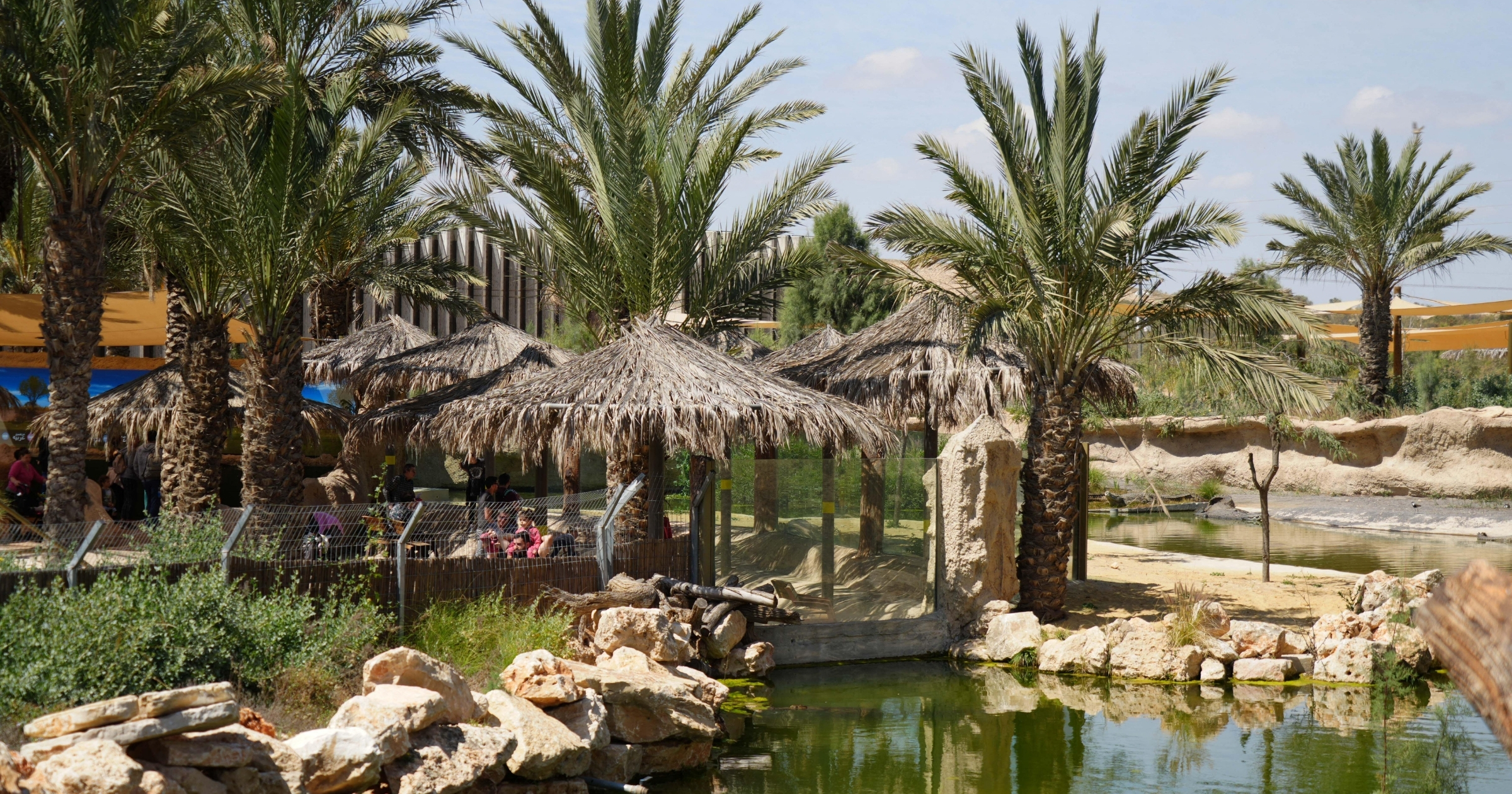
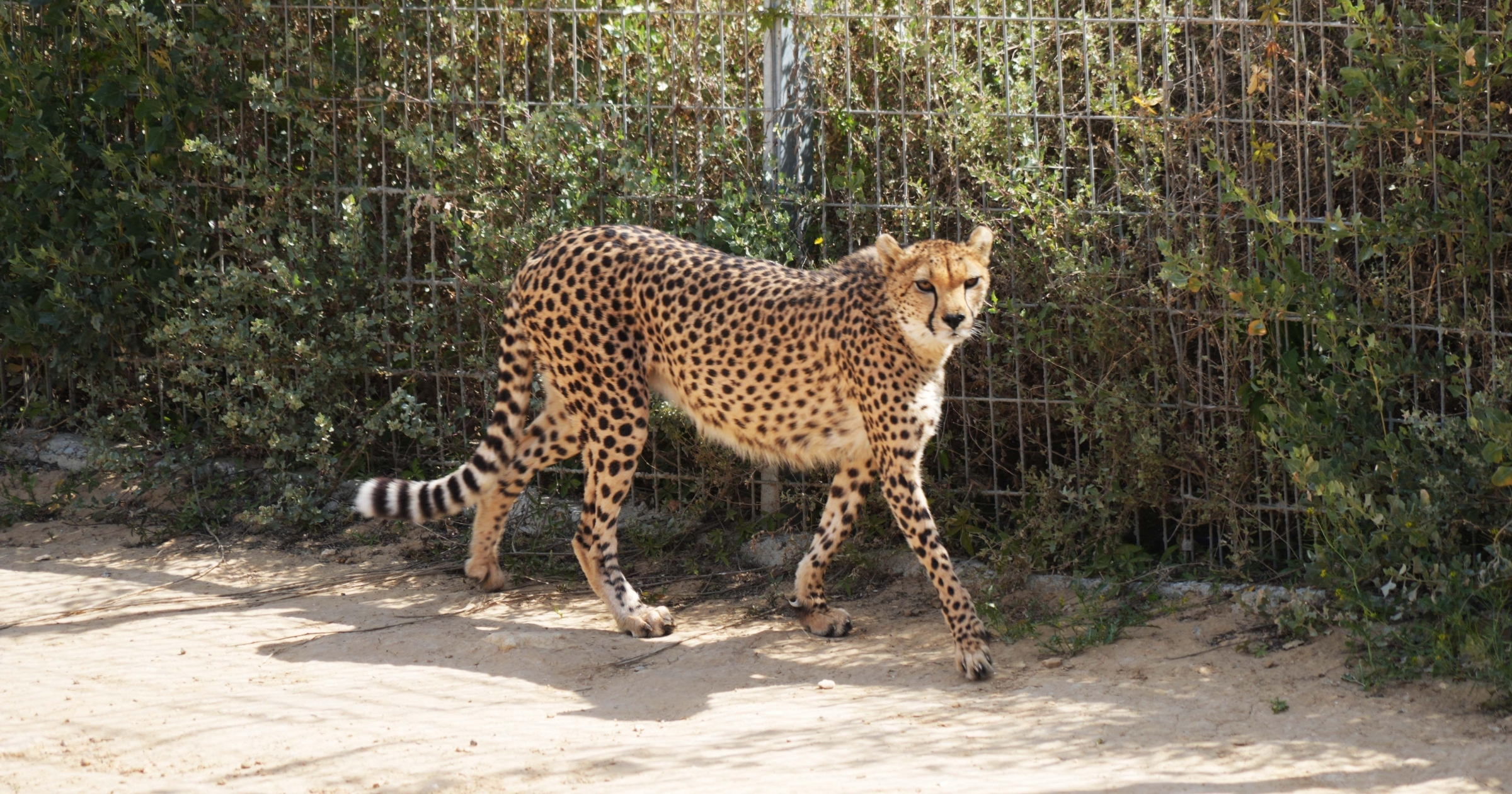
The Midbarium zoo—from midbar, meaning desert—is a wonder of rehabilitation and design. Built across 37 acres in the Negev Desert’s largest city, its manmade canyons mirror the Negev and Arava deserts’ red cliffs. Visitors can test their speed against a cheetah, their agility against leopards, use their strength to pump an elevator to the height of the giraffes, climb walls near the mountain goats or slither through a simulation of desert snakes. The big aviary allows guests to walk among eagles, kites and vultures.
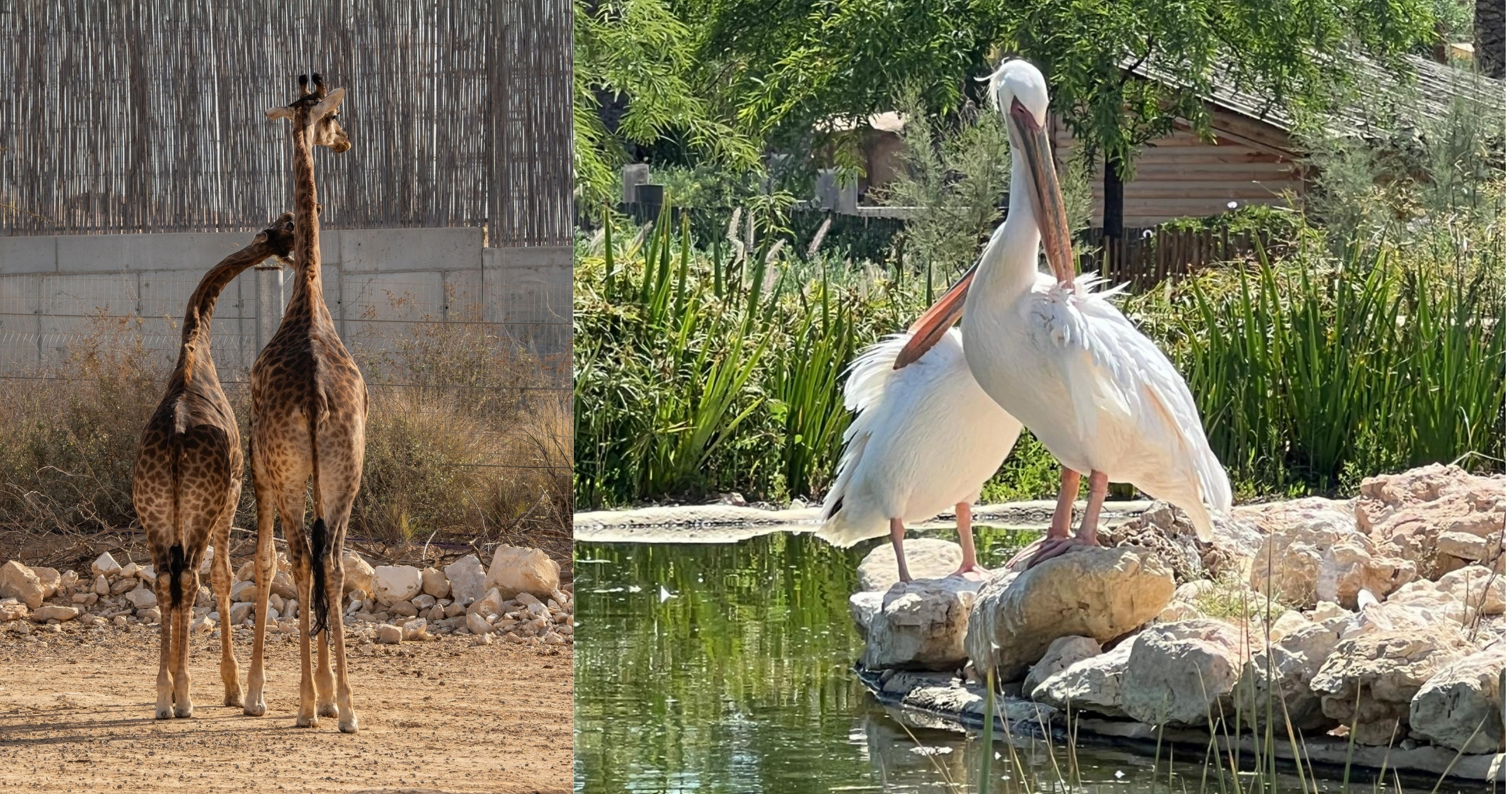
Many of the animals here cannot survive in the wild. Most of the bat population is handicapped. The white lion siblings were born in captivity bearing the strange and rare genetic condition caused by a recessive gene for leucism, their bodies incapable of producing pigmentation. Luna the hyena was a rescue; she had been tied up in a family’s home as a pet.
We volunteers were told we’d earn our official heather-gray zoo shirts once we’d proven reliable. It became a small, shining goal to belong, even here, among creatures of every kind.
The zoo was set to open in September 2023 but building delays pushed it back to October. After Hamas attacked southern Israel on October 7, the zoo postponed its opening to July 2024. In the years that followed, the threat widened beyond rockets from Gaza as Iran’s missiles were able to reach deep into Israel.
My first morning volunteering, back in August 2023 when the Midbarium had yet to open its doors to visitors, a zookeeper named Rivka led me down a narrow path behind an old enclosure, stopping at a tall wire gate. “O.K.,” she said, unlocking the latch with an easy flick of her wrist, “this is where you meet the kos charavot, our tawny desert owls.”
My heart thudded. I could already hear their soft rustles and quick wingbeats inside.
Before pushing the gate open, she turned to me. “Rule number one: In every enclosure you enter, never turn your back on the animals. They’re curious. Bold, sometimes. And always, always lock the gate behind you. We don’t want them to escape.”
I nodded, though my hands trembled a little around the rake I was holding.
We stepped inside, and the owls bobbed their heads, following us with dark, unblinking eyes. Their feathers glowed ocher in the slanted morning sun. One hopped to a low branch, so close I could see each delicate feature.
Beside a feeding platform, a moving, rippling carpet of bright orange attracted my attention.
“Oh.” I leaned closer. “They’re…beautiful.”
“Fire ants,” Rivka said. “And beautiful or not, their bite burns. Watch your ankles.”
As if on cue, one sank its tiny jaw into the back of my neck.
We set to work, the heat thick around us as we raked leaves, owl droppings and the tiny bodies of uneaten chicks into piles.
When we brought out fresh food, one owl ate from Rivka’s gloved hand. We placed the bits of meat on several stone “altars” positioned around the enclosure, careful not to linger.
After we retraced our steps out of the enclosure, I realized I was holding a single ocher feather.
Rivka noticed. “Souvenir?”
“Treasure,” I said.
The bite on my neck throbbed. Sweat trickled down my back. And yet I felt a strange, soaring euphoria, as if the desert itself had welcomed me.
On October 7, 2023, the country was thrown into mourning. Both my sons were called up to reserve duty. Everyone knew someone who had lost someone, including me. My beautiful poet friend, Judih Weinstein Haggai, a resident of Kibbutz Nir Oz, was shot to death along with her husband, Gad Haggai, outside the gates of their kibbutz. Their bodies were held hostage by Hamas terrorists in Gaza until their recovery by Israeli troops in June 2025.
Even the animals bore witness. The zoo hosted animals rescued from burned farms and deserted petting zoos near the border with Gaza. The zoo staff dwindled as workers joined the reserves, and volunteers were suddenly needed for everything.
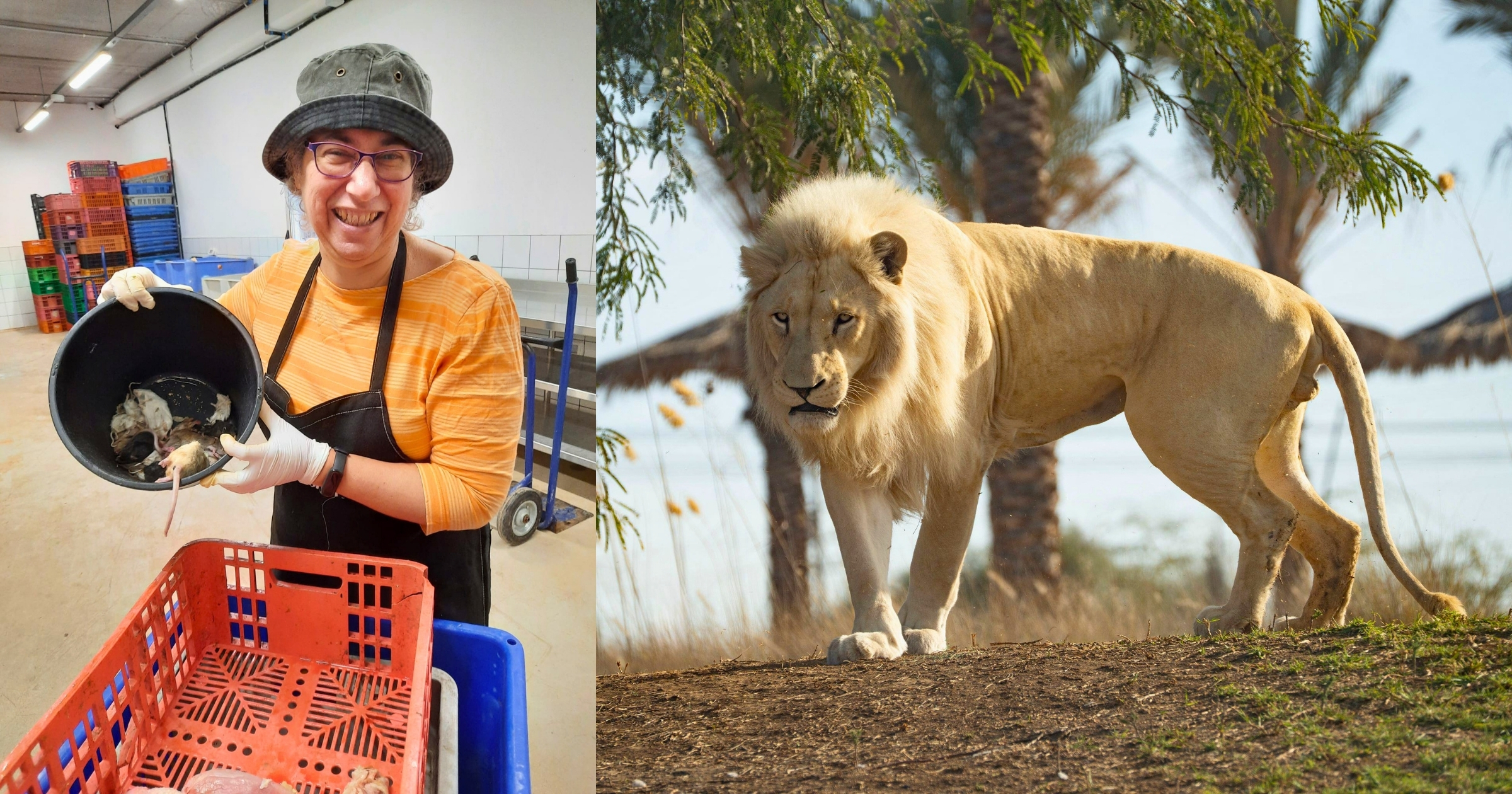
“I hope you’re not squeamish,” said Roni, the kitchen manager, using a sizeable cleaver to cut a furry white rabbit for the cheetah.
That’s how I found myself preparing rats, chopping chickens, scooping defrosted fish and cutting fruit for bats. Emily and I stood side-by-side at the counter, trying to decipher the tattered feeding manual. Which birds were meat eaters? Which ones preferred small fish?
As we worked, we talked about our sons, our prayers, the headlines and the exhaustion that shadowed each day. Sometimes we laughed until tears came.
“Do you think bats appreciate presentation?” Emily asked, holding up a container of chopped fruit.
“Probably more than some people I know,” I said.
Roni snorted. “If the bats start complaining, I quit.”
We all burst out laughing, and for a moment the heaviness eased. Amid uncertainty, the kitchen became a sanctuary. Preparing food was not just labor, it was service.
Roni warned us not to eat the produce that came in daily. Much of it, she explained, had not been tithed, a practice rooted in the Torah’s agricultural laws. In the Temple era, a portion of each harvest was given to priests, Levites and the poor. Untithed produce, called tevel, remains sacred in Israel to this day and is not eaten by most people. Instead, we give it to animals. Even this, I thought, was something holy.
One day, on our way back to the car, we walked the zoo’s lonely paths, the blue sky astonishingly empty of projectiles. The giraffes wandered toward us as if starved for company, their dark almond eyes and feathery lashes wide with quiet curiosity. I found myself rooted to that moment of dust and sun and clicking hooves, when it seemed the zoo held me womb-like in a bright zenith of survival.
Months after we started, Emily and I were given our zoo shirts. I don’t think I’ve ever worn a piece of clothing with more pride.
We’ve used the time since the zoo’s opening in July 2024 to help the animals settle into their new homes, even when periods of war returned.
Moving the flamingos to their new home was a sight to behold. Each bird was caught individually, their long, curved beaks restrained and their spindly legs cushioned above the joint before they were driven to the new enclosure.
Then, one morning, word spread: A giraffe had given birth. Against the backdrop of sirens and sorrow, new life had arrived.
This, I realized, was the quiet miracle—finding resilience not in triumph but in care, in faithfulness, in the smallest acts of routine, knowing that to master the mundane is to live a profound life.
Even amid war with Iran, with sirens sometimes piercing the desert sky, the animals still needed to be fed each morning, gates locked and enclosures cleaned. Life insists on its rhythms, even in times of fear.
I thank God for the creatures in my care and the lessons they teach me about humility, endurance and love. I find peace in service, hope in small beginnings and faith in the promise of renewal.
When I started volunteering, I wanted to fill my days. Now I understand I am filling my soul.
Miriam Green is an award-winning poet and the author of The Lost Kitchen: Reflections and Recipes from an Alzheimer’s Caregiver. Her writing has been published in several literary journals.
 Facebook
 Instagram
 Twitter
Roberta Kern says
LOVED THIS. I have been a docent at The Bronx Zoo in New York for 34 years and still love it. I am also a decent at The Palm Beach Zoo in Florida…beautiful zoo.