




Being Jewish
Feature


How I Went to Jewish Summer Camp on the Cow Plan
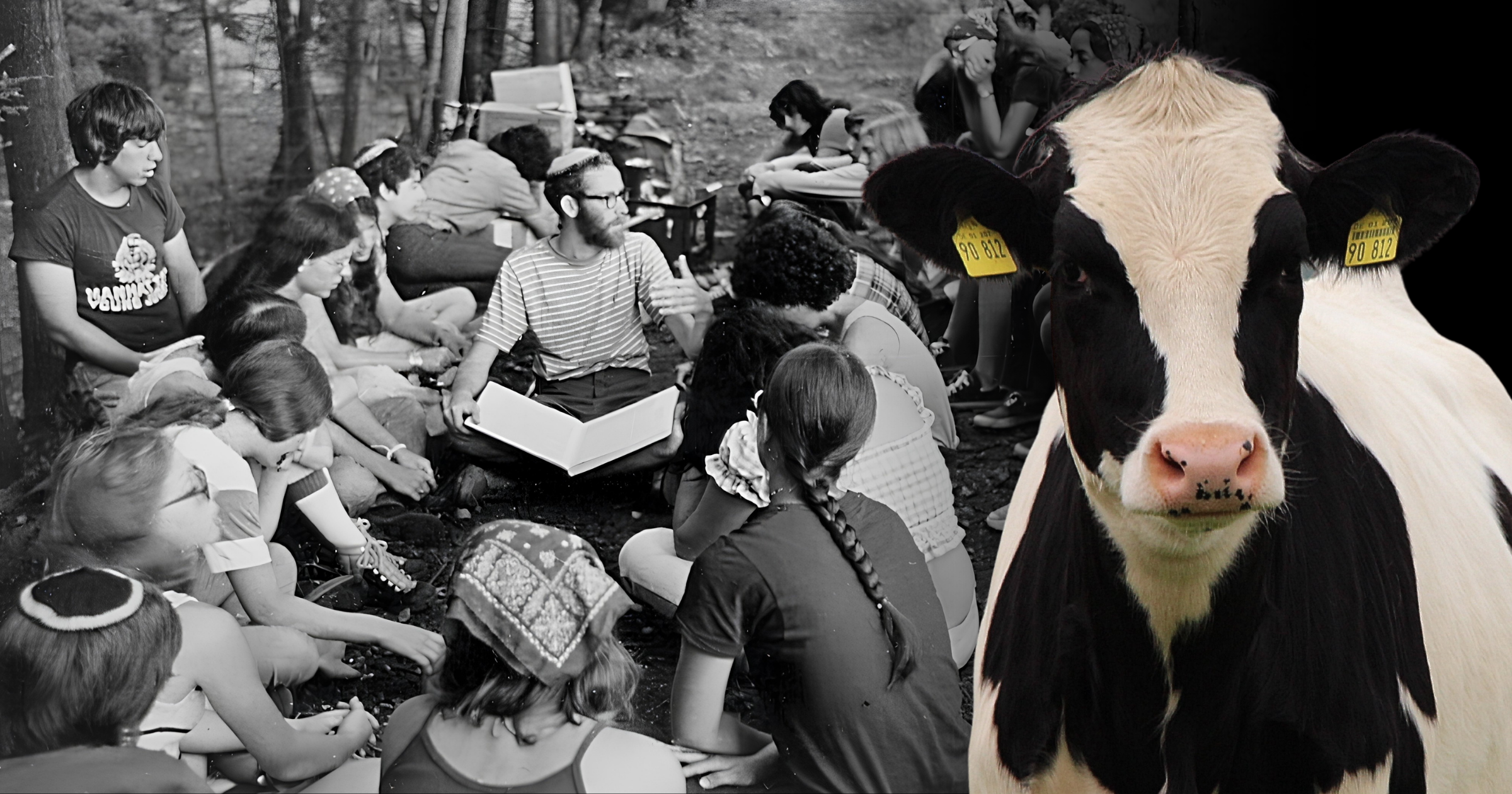
I’m a first-generation American. In the late 1970s, when I was of Jewish summer camp age, my parents had never heard of the concept. In retrospect, it isn’t clear to me that college had been on their radar, either. But summer camp? Feh. They didn’t know from such things and probably wouldn’t have sent my sister and me if they had. Even back when camp was a pittance of what it costs today, my parents would have deemed it a large and unnecessary expense.
And for what? So we could spend the summer outdoors in the fresh air? We lived on a dairy farm, for God’s sake.
My sister, Sue, and I grew up on that dairy farm in Goshen, N.Y., about 65 miles northwest of Manhattan. It wasn’t the standard upbringing for nice Jewish girls. Goshen was fairly antisemitic. Our schoolmates threw pennies at us and called us kikes. Our only connection to Judaism was Friday night dinners and, in the next town over, a dismal Hebrew school we were forced to attend.
Nor did we have any Israel connection. As a teen, I’m not sure I could have found Israel on a map.
We were lucky to be in Goshen at all. In 1934, before some people were worrying about Hitler, my Opa, a dairy farmer in Ulrichstein, Germany, heard from an army buddy who was blunt: It would get worse before it got better—it was time to get the hell out of the country. His parents abandoned the dairy farm, the cows, the house and their bank accounts and set sail for the United States with my father and his sister. They arrived without English or connections, nothing but the proverbial shirts on their backs.
Just before they had left, a German they didn’t know, a non-Jew, had approached Opa with a proposition. Since Opa couldn’t take money out of Germany, this man offered to bring some money and jewelry out for him. When they all got to America, this man would find him and return it, minus a percentage.
Opa figured his chances of ever seeing that money again were slim. But what was the alternative? Germany certainly wasn’t going to give him his money, and most of it was tied up in real estate and cattle, regardless. Opa gave the man some money and bade it farewell. A few weeks after the family arrived in New York, the man appeared and returned their money, just as promised. The legend of this man’s good deed remains, but his name has been lost to time.
With the unexpected cash, Opa bought a small dairy farm in Goshen and began cattle dealing, the same as he had done in Germany. At the time, many of the farmers in New York’s Lower Hudson Valley were German Jews, so not speaking a word of English wasn’t much of an impediment. Thirty years later, when my parents married, they, too, ended up on the farm, peddling cows.
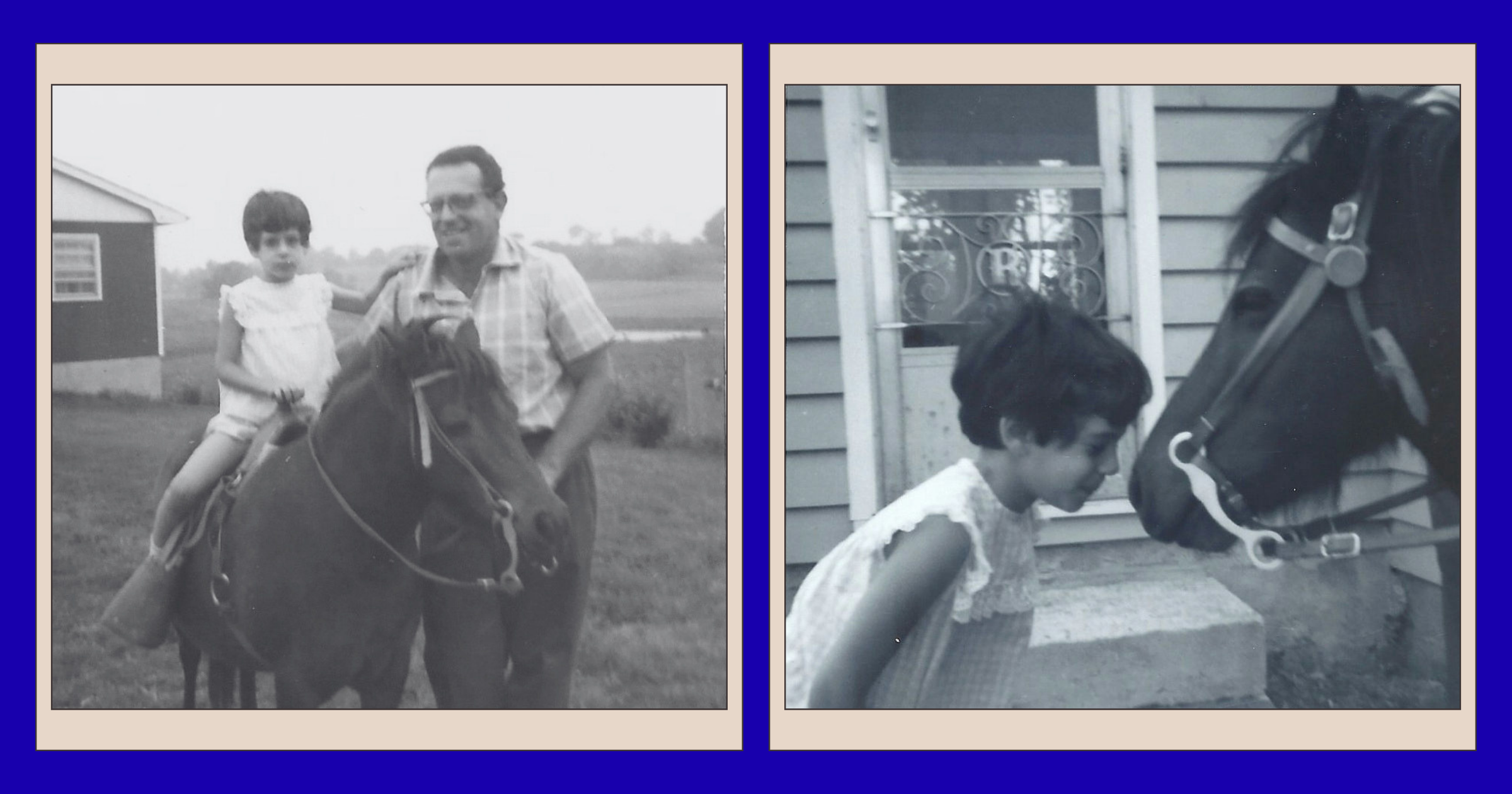
By that point, the Jewish observance they had so meticulously kept in Germany had tarnished a little, but they still kept a modicum of Shabbat and kashrut. But summer camp? Es pas nisht, it’s not fit for a Jew. Had it not been for a fateful phone call, Sue and I would probably have developed no further connection to Judaism and likely would have drifted into some form of secular, cultural Judaism, unfettered by ties to Israel.
Except that one day, in the late 1970s, my father got a call from Mel Reisfield, who ran Camp Tel Yehudah, a Zionist summer camp in Barryville, N.Y. Mel wanted our cows.
Mel explained that he had gotten my father’s name from someone who gave it to someone else, who thought he might be the person to call. Mel wanted to rent two cows from us for the summer.
My father chuckled and told Mel, nicely, that you don’t rent cows. You buy them. Mel explained that he needed the cows because he wanted to create a simulated kibbutz experience at the camp, the flagship overnight teen camp of the Young Judaea movement. He would only need the cows for the summer; after that, he said, he’d have nothing to do with them until the following summer. He just needed two rent-a-cows.
My father thought that was the funniest thing he’d ever heard. For him, working with cows was a job, and not a romantic one. The idea that you’d pay a lot of money for your children to go to camp, to work with cattle—well, it was too absurd. Americans.
Again and again, Mel implored him to rent him some cows. My father kept explaining about how you don’t rent cows, you buy them. Mel talked some more. My father was, despite himself, starting to get interested.
Also, my father, like my Opa, was a cattle dealer. They hated to leave money on the table. My father asked him if it was a Jewish summer camp. Yes, Mel assured him. A Jewish summer camp.
Then my father wanted to know if it was a kosher camp. Yes, yes, it was a kosher camp.
My father thought for a minute. Then he told Mel that he could rent two cows for the summer—if he also took two girls along with them.
And that is how Sue and I, who were 15 and 16 at the time, got to attend Camp Tel Yehudah on the cow plan. Never mind that we didn’t know what to bring to camp. Never mind that everyone else drove up to camp in their sporty little cars. (My sister and I came in the cattle truck.)
“Here are the girls,” my father said to Mel when we arrived, pointing. It was not clear to any of us whether he was pointing at the cows, or at me and my sister.
Despite the potential pitfalls, camp was a magical place. And Tel Yehudah was an inspiring, motivating, mesmerizing experience. During our two summers there, Sue and I learned about Jewish and Israeli history, but not in the stuffy, dry way it had been taught in Hebrew school. We quickly picked up Israeli songs and dances. More than that, we picked up a sense of community and purpose that was seductive. For the first time in maybe forever, we felt like we belonged somewhere.
Luckily, we didn’t see much of the cows those two summers. They stayed in their part of the camp, and we stayed in ours. Summer camp, despite my family’s unorthodox approach, was a defining experience for us.
A few years later, midway through college, I cobbled together money from part-time jobs and went to Israel for a year of ulpan learning on a kibbutz. Israel, like Tel Yehudah, penetrated my essence, my soul. Years later, I made aliyah, as did Sue.
So it was Mel—and of course those cows at Camp Tel Yehudah—who were responsible for a lot of our Jewish identification, all our Zionism and, if indirectly, our families ending up in Israel.
I will be eternally grateful.
Fern Reiss consults on how to write, publish and promote books at fernreiss.com and represents Jewish-interest speakers through jewishspeakersbureau.com.
 Facebook
 Instagram
 Twitter
Ivy Eisenberg says
Wonderful story! Funny and heartwarming!
Jeffrey Holtz says
Mel was our mentor from the very beginning of YJ. There would’ve been no Jewish experience for myself and many others without Mel.
I can say that the summer I spent in MH was one of the greatest Summers of all. Thanks to you and your family and Mel TY is what it is today because of you all. Thank you.
Fanny Z Korman says
Did your dad also rent the goats?
Tel Yehudah is still in our lives, our eldest grandchild can’t wait to get back for her second summer – we are grateful that TY continues to have a significant impact on the lives of Jewish teens and young adults!
Betsy Diamant-Cohen says
Lovely article!!!!!
Bob weiss says
I spent August and part of September at camp tell you in berryville New York in 1954. It was a magical place even before the cows
Jeffrey Holtz says
This story should be told to every camper at TY, every year. This is a classic “MEL” story.
Tammy says
I milked those cows in 1981 (and yes, went to camp with Fern). I had a similar experience with the chickens we also cared for: my two great-uncles, Holocaust survivors, were settled by HIAS in Vineland, NJ, among a community of chicken farmers with their families. Decades later when my parents came on Visiting Day with one of them, he immediately chased and caught the chickens when the rest of us were running around in circles!
Alas, within a few short years TY stopped bringing farm animals to camp each summer as they weren’t well cared for (one summer the cows were painted blue!). But ‘playing’ kibbutz was the capstone to our camp experience and key to our Zionist education.
Irine Schweitzer says
Wow Fern,
Loved this article, loved the story, loved learning about your family and loved thinking of Sue and our years of friendship. May her memory be a blessing!
Julie Sugar says
Oh, this is so wonderful! I laughed and cried, truly. Thank you for sharing the cow plan story with us all.
Dan Karell says
Amazing, heartwarming story. Thank you for sharing it. Camp Tel Yehudah is a magical place and still (circa 2004-2006) creates such a sense of belonging and love of Israel. And I had already been lucky enough to grow up with that.
Leslie Fried Kuperstein says
I spent 9 summers at TY. My MA, in 63, had ducks, and a lot of gardening. Mel was ever preset in my life for years. I was so lucky! (He was even at my wedding, where he commandeered the band.)
I spent most of my life in Jewish education. TY, YJ, and Mel Reisfield set the inspiration, example and direction of my life.
susan alpert says
I was a camper and in time a counselor in that section of Camp Tel Yehuda. I am also the daughter of a dairy farmer and knew how to milk cows. Wonderful story. Great memories. And I didn’t know where the cows came from. Thank you.
Lotte Kaplowitz says
I Grew up on a dairy farm immediately adjacent to the Reiss farm and my father was a competiive catttle dealer with Fred Reiss, Ferm’s father. We also were refugees from Germany who ended up in Goshen. I left after college and many, many years later my daughter, Lori met Fern at Harvard were they both had been accepted. What a wonderful country in which 2 daughters of refugee Jewish farmers can aspire to these educational pinnacles.
Lotte Kaplowitz says
My family owned a dairy farm immediately adjacent to Fern’s parent’s farm and we were also German, Jewish refugees who ended up i Goshen. My father was also a cattle dealer competing with Fern’s father for business. Many, many years later, my daughter, Lori met Fern in their freshman year at Harvard. What a wonderful country that in one generation, 2 Jewish farm girls were accepted into the pinnacle of higher education.
Alon Tal says
A fascinating and adorable chapter in the Tel Yehudah chronicles.
Perhaps the good journalists at Hadassah magazine can continue to uncover the true story behind our Tel Yehudah experiences: where TY found its cooks? Was Reber’s Motel indeed a refuge for former-Nazis? And who was the real Rebecca Quick?
Laura says
This is beautiful! Uplifting, funny, and sweet all at the same time :)