



Books
Fiction


REVIEW: ‘Porcupines’
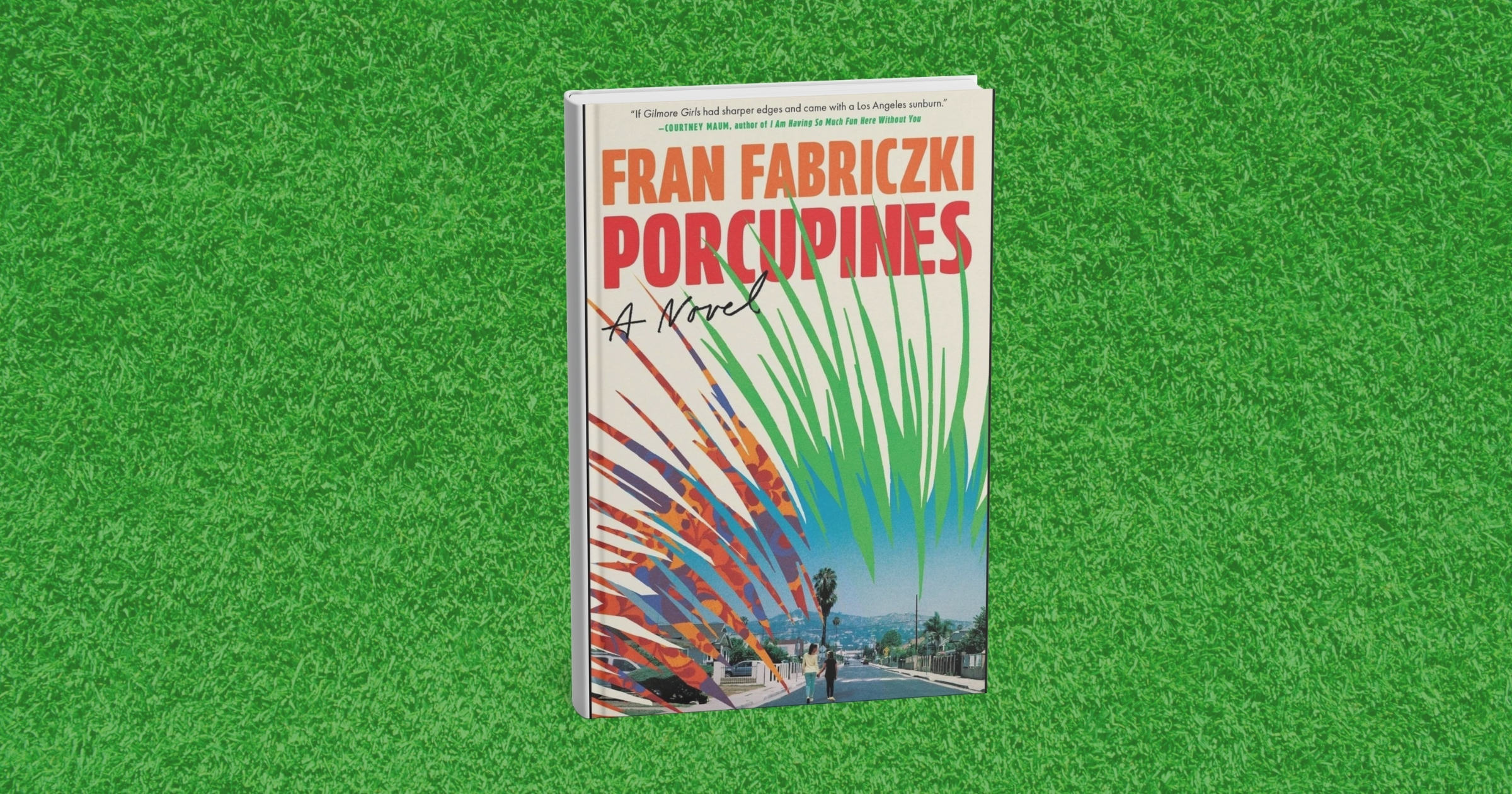
The title of Fran Fabriczki’s debut novel refers to German philosopher Arthur Schopenhauer’s view of human intimacy, commonly referred to as the hedgehog’s dilemma: Hedgehogs huddle together for warmth, but when their quills begin to prickle each other, they beat a hasty retreat. It is a cycle they repeat ad infinitum.
It’s the same for porcupines, explains a Los Angeles rabbi to Sonia Imre, the book’s central character, and no different for homo sapiens:“ ‘Together, apart, together, apart—and so on into infinity. This was mankind’s lot,’ he said.”
While chagrined by this perspective, Sonia can relate to it. She, too, is at once warm and prickly, freewheeling and remote.
Sonia is a Hungarian national who, at 18, arrives in the Golden State to visit her older sister, Rina, a recent adoptee of traditional Judaism married to an Orthodox man. The year is 1989, a pivotal time for Hungary and other Central and Eastern European countries. Communism is on the way out, soon to be replaced by nascent capitalist markets hungry for the West’s commodities. This suits Sonia just fine, as she is imbued with an entrepreneurial spirit.
Life in the States, however, is thornier than Sonia imagined. She doesn’t understand Rina’s embrace of halacha, Jewish law, so much at odds with their family’s completely irreligious background, and her life takes a complicated turn when, while in Los Angeles, she becomes pregnant with Milosh, her daughter.
It is Milosh, or Mila, a bookish and socially awkward little girl, who propels much of the story forward in her quest to learn more about her secretive, skittish mother and the identity of her father.
But it is the backstory of the sisters and their family that demonstrates Fabriczki’s deftness as a writer. She goes back and forth in time, capturing, with great nuance, the discomfiting status of Jews in Central and Eastern Europe post-World War II.
Sonia and Rina’s father, Mr. Imre, has achieved some stature as a mid-level Hungarian diplomat. However, his position always seems contingent on his ability to spout party-line platitudes at the right time and to keep his Jewish identity hidden.
Fabriczki describes how he tenses up “reflexively at the mention of the synagogue” and becomes upset by any comparison to Jewish colleagues in the diplomatic corps, resenting “the association he had worked hard to shed.”
Meanwhile, both Sonia and Rina’s parents refuse to talk about the fate of their own parents during the Holocaust.
While Rina, through her piety, rejects the silence of her parents, Sonia, through her furtiveness, has internalized it. Fabriczki explores the paths forward for the Sonias of the world, who are always beating a hasty retreat, as well as the Rinas.
Sometimes, it’s O.K. to open up, be who you are, to state your case. It’s the only way to avoid remaining a perpetual porcupine.
Robert Nagler Miller writes frequently about the arts, literature and Jewish themes from his home near New York City.
 Facebook
 Instagram
 Twitter

[…] I’ve only just finished Porcupines, by Fran Fabriczki; I’ve also just discovered a review (by Robert Nagler Miller) of the novel for Hadassah […]