



Health + Medicine


Hadassah Birth Rates Skyrocket Amid Wars
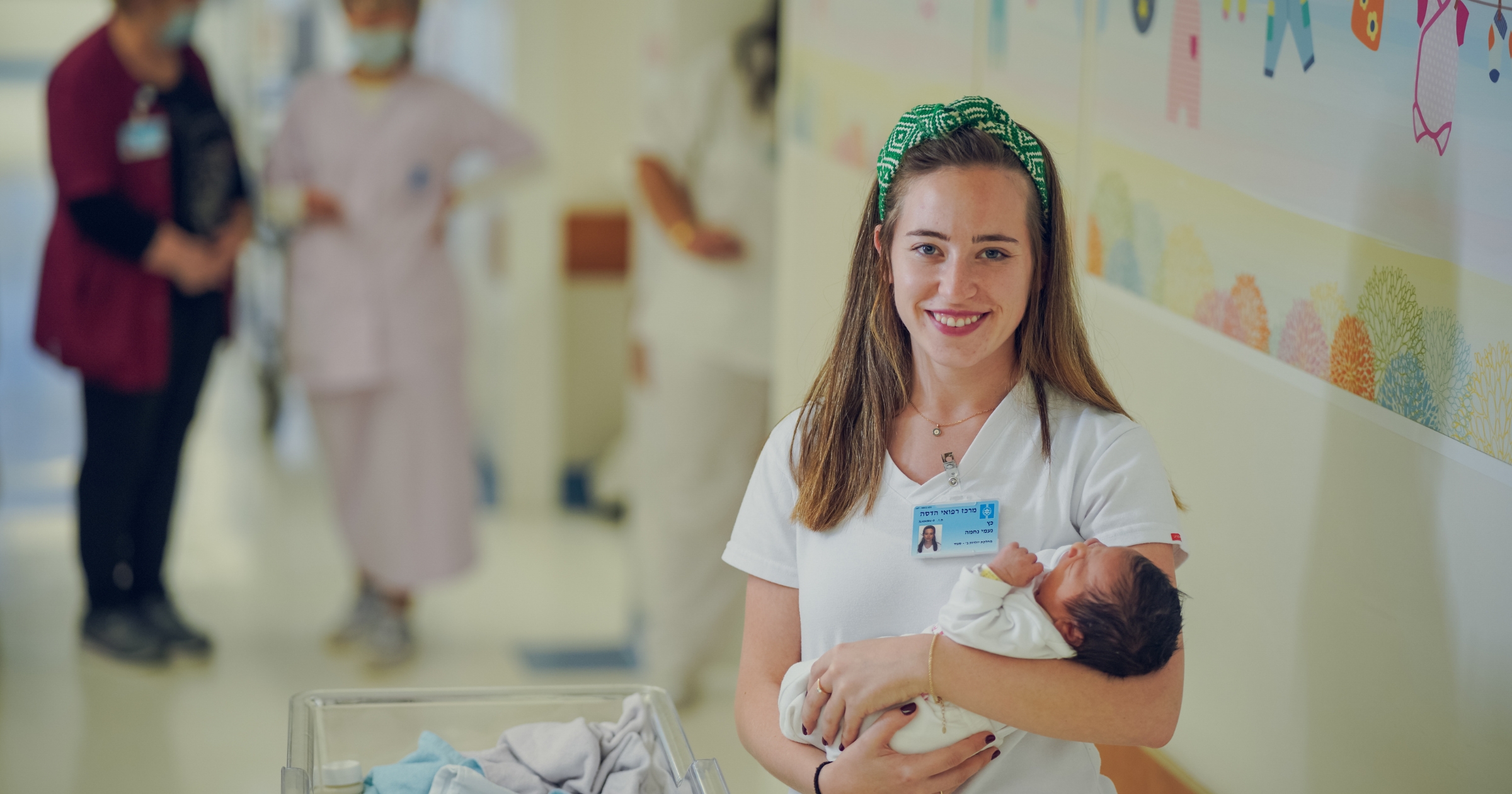
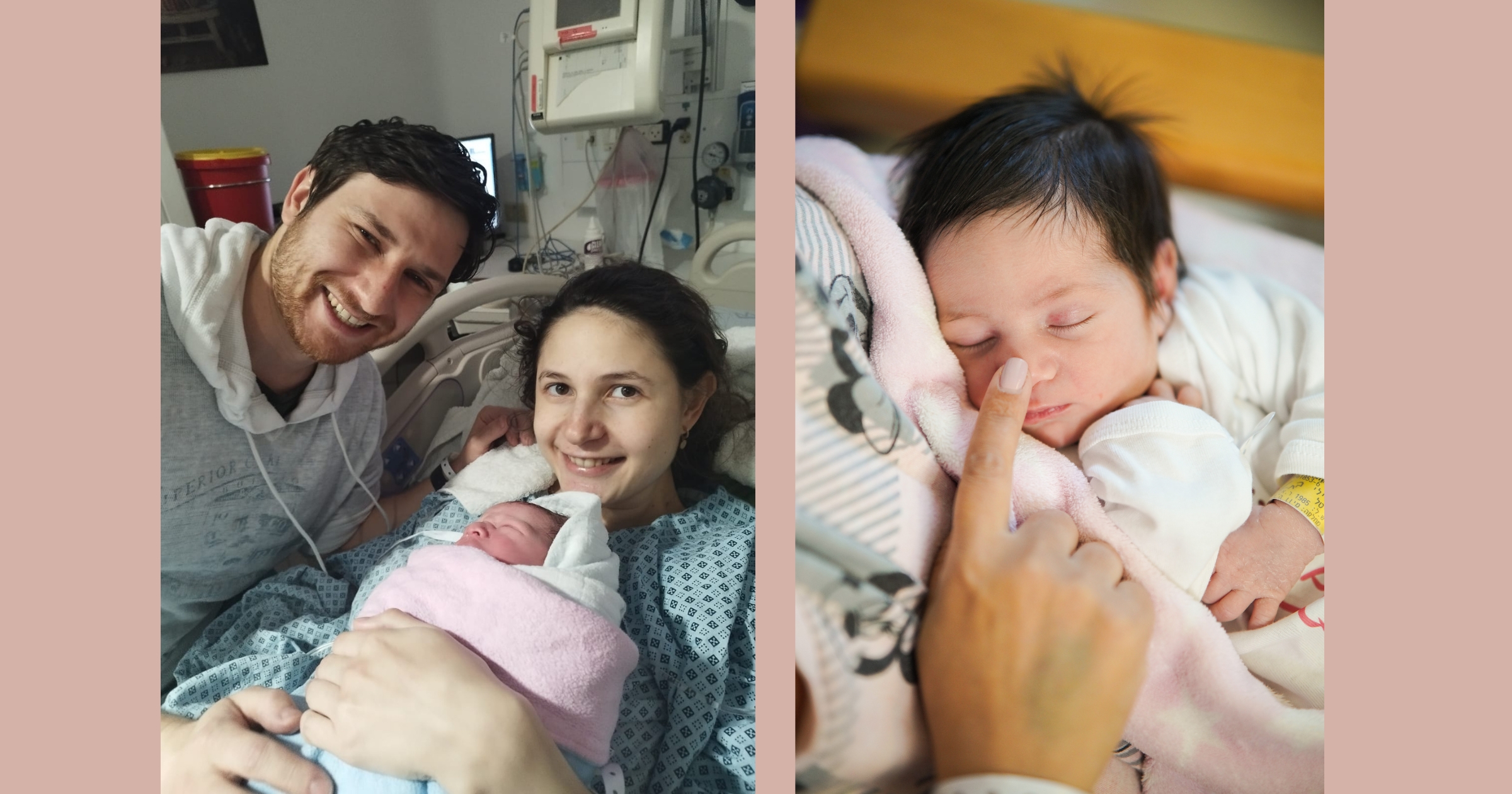
In late October 2023, as his elite Israel Defense Forces unit readied to enter Gaza, a young man received a call from his wife back in Jerusalem. She had carried a complex pregnancy almost to term and woke that morning to discover her water had broken. The young man raced to the hospital. By the time he arrived, dust-streaked and carrying a large bouquet, he had been a father for half an hour.
Their baby was one of over 17,000 born that year across Hadassah’s two campuses, up from 14,000 in 2022—“an increase equivalent to adding a small hospital,” said Dr. David Shveiky, an eighth-generation Jerusalemite who has directed the Division of Obstetrics and Gynecology at the Hadassah Medical Organization for four years. While 2023 was a watershed year for births at Hadassah, that number has risen to around 19,000 per year in both 2024 and 2025.
Amid wars in Gaza and with Iran and regional instability, Israel stands out for its high birth rate. According to the Taub Center for Social Policy Studies in Israel, the country averages 2.89 children per woman, the highest fertility rate in the developed world and double the average of other Organisation for Economic Co-operation and Development countries.
The growth in the number of births at Hadassah can be attributed not only to high birth rates, but also, according to Dr. Shveiky, to the medical center’s professionalism, consistently high standards of care and first-class facilities, all of which attract parents-to-be. “The scale here is large, but the philosophy remains intimate,” he said. “Our primary goal is the health of mother and baby.”
Most of the 19,000 annual births are uncomplicated. The small percentage that poses a risk to mother, baby or both are cared for in HMO’s maternal-fetal medicine units (formerly high-risk pregnancy units), headed at Hadassah Hospital Ein Kerem by Dr. Hadar Rosen and at Hadassah Hospital Mount Scopus by Dr. Lorinne Levitt.
“Caring for months for women with pregnancies complicated by medical conditions, we form close bonds,” Dr. Rosen said. “We most often practice ‘happy medicine.’ We celebrate together when babies arrive healthy despite chronic maternal illness, pregnancy-related complications or multiple gestations.”
One of her patients, a manicurist from Beit Shemesh and already a mother of three, came to the clinic twice weekly throughout a high-risk identical triplet pregnancy, after declining fetal reduction. After a successful birth at 35 weeks, she named one of her babies Hadar, for Dr. Rosen.
Another patient, Wala Khatib, from a village near Jerusalem, has severe kidney and heart disease, and had been on dialysis for nine years before becoming pregnant. Determined to have a child, she spent three months of her high-risk pregnancy as an inpatient at Hadassah Ein Kerem, on dialysis. At one point in her second trimester, she experienced cardiac arrest. Supported by a team of nephrologists, cardiologists and obstetricians, she delivered a healthy baby boy. “Now it is all good, thanks to you all,” she told the team after the birth.
The ob/gyn department at Hadassah Ein Kerem is headed by Dr. Aharon Tevet, and the department at Hadassah Mount Scopus by Dr. Hagai Amsalem. They lead more than 120 physicians—with subspecialties that span maternal-fetal medicine, gynecologic oncology, radiology, urogynecology, neonatology, anesthesiology and fertility—over 180 midwives and 100-plus nurses, genetic counselors, physiotherapists, social workers, psychologists and dietitians.
Women come to HMO from across Israel. They are Jewish and Arab, religious and secular. Many return for subsequent births. One return made national headlines.
In 2001, Ruhama was born at Hadassah Mount Scopus, an only child to a couple in their 40s who had been married for 21 years.
With her heartbeat weakening, she was delivered by C-section at 24 weeks, weighing 1.09 pounds. At birth, she was given a 3 percent chance of survival, yet she went home with her parents after six months in the NICU. Almost two and a half decades later, Ruhama, who asked that her last name not be used, returned to Hadassah Mount Scopus, requesting the same physician who had delivered her. Dr. Simcha Yagel, formerly head of ob/gyn at Hadassah Mount Scopus, came out of retirement to deliver Ruhama’s baby—a baby that was six times his mother’s birthweight.
The Hadassah Mount Scopus department in which Ruhama gave birth—the Rady Mother and Child Center—differed greatly from the one experienced by her mother. The physical environment for childbirth has been redefined by the 8-year-old Rady Center. Its 10 birthing suites combine advanced medical technology with thoughtful design, optimizing the needs of mother, doctor and midwife. Made possible through the support of the Rady Family Foundation, based in San Diego, its emphasis on minimizing unnecessary interventions has resulted in a C-section rate of about 13 percent, notably lower than Israel’s 19 percent national average.
Midwife-led labor and delivery is the norm for uncomplicated births throughout Israel. “I stopped counting long ago how many babies I’ve delivered,” said Aviah Yagel, deputy head midwife at Hadassah Mount Scopus. “It’s easily over a thousand—among them, my sisters-in-law’s, nieces’ and those of many Hadassah colleagues.”
Certain births are etched in her mind. “One was a woman whose first baby was stillborn,” she recounted. “She came to Hadassah a year later to deliver again. When we heard her baby cry, it was redemptive for both of us. Another woman came straight from shiva for her father, still in her torn mourning clothes. It was a long labor, and she wept that she was too tired to go on. ‘Your father’s praying for you,’ I told her. She calmed and found the strength to push her baby into the world.”
Another memorable birth was that of a woman whose baby Yagel had delivered seven years ago and who returned to Hadassah, asking for her. “That earlier delivery had been on Shabbat, and we’d sung Shabbat songs together through her labor,” the midwife recalled. According to Yagel, the woman told her, “Something opened in me when we sang, I knew I could trust you. That’s why I came back.”
Yagel also remembers a stark moment from the early weeks of the post-October 7 war with Hamas. A new father arrived directly from his IDF work identifying the fallen. Burying his face in his newborn daughter, he murmured, “I want to smell life.”
He, like many prospective fathers over the past two and a half years, first saw his unborn baby via long distance. “Women with partners on active duty in Gaza or on Israel’s northern border often ask to transmit their scans by smartphone, so they can share the first glimpses of their child,” Dr. Rosen, head of maternal-fetal medicine unit at Hadassah Ein Kerem, said. “One scan showed the parents of three daughters that they were expecting a son. They were overjoyed, but it was I who gave the mother the hug because the father was watching from Lebanon.”
In March, as Iranian missiles streaked through Israel’s skies, a record 2,100 babies were born at HMO, a surge of 40 percent. “More women than ever chose Hadassah because our labor and delivery rooms are protected, so they didn’t have to give birth in makeshift underground facilities,” Dr. Rosen said.
Hadassah’s already stretched ob/gyn teams worked extra shifts and massive overtime to meet the needs. “You’re continually alert for sirens, but you go to work and do things there that are meaningful,” Dr. Rosen said. “This is my contribution to the war. This, and being a mother to a paratrooper and an infantry soldier.”
“Ob/gyn is medicine’s most beautiful field,” Dr. Shveiky, director of HMO’s ob/gyn division, said. “Whether our patients are healthy couples, couples facing infertility or navigating medical conditions that affect their pregnancy, we’re with them at pivotal moments in their lives and are often able to make a profound difference.”
Wendy Elliman is a British-born science writer who has lived in Israel for more than five decades. She is the author of the new book, The Outsiders Who Built Irish Entertainment: Maurice and Louis Elliman.
 Facebook
 Instagram
 Twitter
Leave a Reply