



The Jewish Traveler
Hadassah


Hadassah Led the Way on Travel to Pre-State Israel
When Henrietta Szold set sail for Europe and Palestine with her mother, Sophie, in 1909, she was part of an emerging trend of American Jewish women traveling to distant lands.
Since the early days of American history, Americans had gone abroad for leisure and education, a trend that accelerated during the antebellum period. After the Civil War, travel overseas became accessible to a growing number of people due to the development of less expensive tourist-class transportation and accommodation and the increasing popularity of the “vacation” as a new concept. A new commercialization of tourism targeted not only the upper class but also the middle class and upwardly mobile working class and sent American travelers along increasingly well-trodden paths of sightseeing.
For American Jews, travel carried far-reaching consequences, including creating closer connections among Jewish communities all over the world. And for Jewish women in particular, spending time abroad endowed them with a sophistication that enhanced their status within the Jewish community as well as within a larger community of women. Since domesticity was traditionally central to them as both women and Jews, travel often challenged their conventional gender roles by expanding their autonomy once they were free from routine domestic duties.
At the same time, travel generally strengthened rather than diminished Jewish identity. Even women who normally rejected ritual observance or resisted social, cultural and economic limitations rooted in their Jewishness discovered that, once overseas, they identified as Jews as never before. They found themselves attending synagogue services, marking Jewish holidays, socializing with other Jews and visiting Jewish sights, sometimes in the face of unsettling encounters with antisemitism.
American Jewish women visited destinations all over the world during the decades between the Civil War and World War II, but Palestine was qualitatively different than other places. Going to Palestine was impossible to separate from their Jewishness, whether they defined that in religious, cultural, national, familial, ethnic or historical terms or, more likely, some combination thereof. For Diaspora Jews, the traditional idea of a homeland exerted a pull on even the most secular and anti-Zionist Jewish travelers, of whom there were many in pre-state days
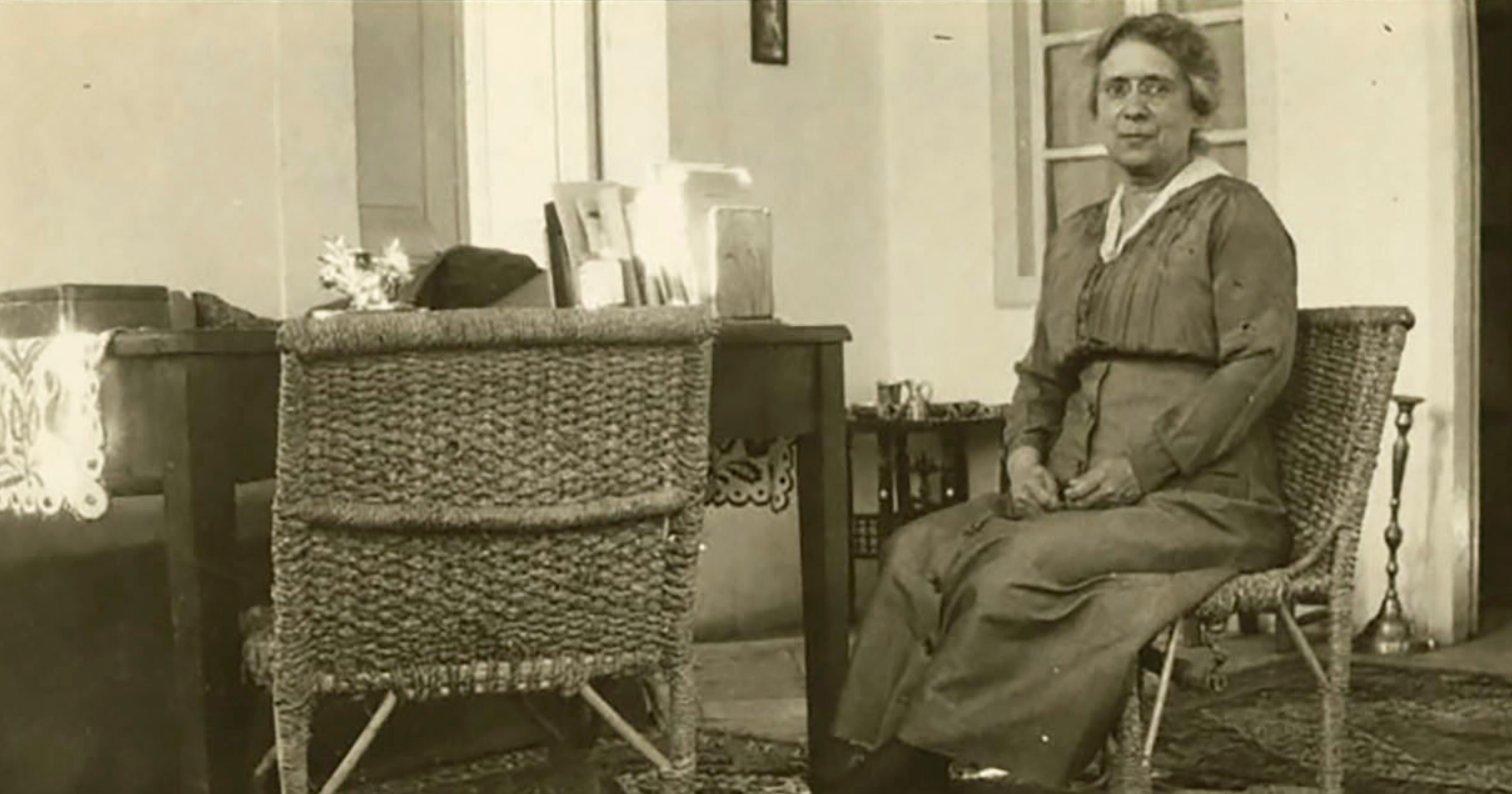
The tourist trade to Palestine expanded greatly after 1900; 18,000 to 20,000 Western travelers went there during the spring of 1914 alone. Infrastructure progress was uneven, however. On Hadassah leader Rose Jacobs’ first visit to Palestine in 1914, she stayed at the Grand New Hotel in Jerusalem, which she described as “neither grand nor new.” She observed that there were no automobiles in the whole country, then part of the Ottoman Empire, and few paved roads, a sign of Ottoman neglect. There was no electricity, and people used imported oil for lights and for cooking.
Once the first world war broke out in 1914, the Ottomans allowed few Americans into Palestine except those with the Red Cross. In 1916, Palestinian Jews appealed to American Jews for financial and medical aid. Hadassah, which had supported public health facilities there since shortly after its 1912 founding, tried to organize medical assistance, but it was impossible to get supplies, much less personnel, into the region.
After the British captured Jerusalem in December 1917, during World War I, they granted Hadassah permission to send help. Hadassah created the American Zionist Medical Unit (AZMU), which departed for Palestine in June 1918. The all-volunteer group of doctors, nurses, dentists, pharmacists and medical officers, led by Alice Seligsberg, arrived in August. By November, they had revitalized hospitals in Jerusalem and Jaffa and opened new ones in Tiberias and Safed, along with a sanatorium in Safed to continue the anti-tuberculosis campaigns carried out by Red Cross workers during the war.
The AZMU expanded modern medical facilities and became the basis for Hadassah’s ongoing medical work with all populations in Palestine.
Tourism picked right back up after the war ended, with 13,556 Western visitors in 1922 and 19,476 in 1924. In the aftermath of the decision at the 1920 San Remo Conference to place Palestine under British mandate and reaffirm the idea of a Jewish homeland, Jewish tourism to Palestine rose sharply. Travel agent Henry Zaro opened dedicated Palestine travel bureaus to arrange monthly trips. He advertised in the Yiddish press that his groups would “travel together safely, comfortably, and cheaply and moreover in good company.”
Train travel across the region, though still slow, improved under British administration. In 1924, it took only three hours to get from Jaffa to Jerusalem and five from Haifa to Jerusalem. Other British Mandatory infrastructure projects, like redeveloping the Haifa port and constructing Tel Aviv beach breakwaters, also enhanced tourist options.
Hadassah’s tourist activities should be seen within this context. Within 10 years of its 1912 founding, the organization had already begun to develop its own infrastructure to support American Jewish women, especially Hadassah members, who traveled to Palestine.
Szold herself, returning to Palestine in 1920 for the first time since her 1909 trip with her mother, observed the need for such a service. She noted that a steady stream of American visitors showed great interest in touring Hadassah’s nursing school, hospitals and clinics. During the autumn of 1922, for instance, Sarah Kussy, the driving force behind the Hadassah chapter in Newark, N.J., organized much of her trip around seeing Hadassah institutions for herself, culminating in attending the Hadassah nursing school graduation. Szold had neither the time nor inclination to personally escort all the visitors, even personal friends like Kussy, so she floated the idea of some sort of Hadassah tourist bureau.
By 1925, Hadassah had hired Anna Raskas, an American who had made aliyah, to take travelers to Hadassah institutions independently of the Zionist Information Bureau, which also offered tourist services.
As in many other areas, Hadassah preferred autonomy. Raskas described her job in a letter to Szold, writing, “During these little tours the essential characteristics of Hadassah work is pointed out, and attention is called to the necessity for aid in effecting the question of plans.”
This dual tourism and fundraising function, Raskas explained, required “the utmost tact and diplomatic psychological approach.”
These efforts paid off. In October 1927, the Hadassah News Letter, a precursor to Hadassah Magazine, listed all the individuals who had recently visited Palestine and been so impressed by Hadassah’s work that they made contributions regardless of their feelings about Zionism.
Through such dispatches, Hadassah members grew to feel personally attached to Palestine. All members with the means, but especially local and national leaders, were strongly encouraged to visit Palestine to see for themselves what their Zionist women’s work was accomplishing there.
Szold wrote approvingly to national board member Rose Herzog in 1932 that “there has been an almost uninterrupted succession of Hadassah leaders visiting here for the last year and a half. The connection between Palestine and America becomes more and more intimate year after year.”
During her 1932 trip to Palestine, Jacobs, then national president, wrote in an open letter to members that “Palestine at the moment makes the impression on one of a happy, busy, improved and growing corner of the world. There is building, there is planting, there is planning…the Jews have taken root here.”
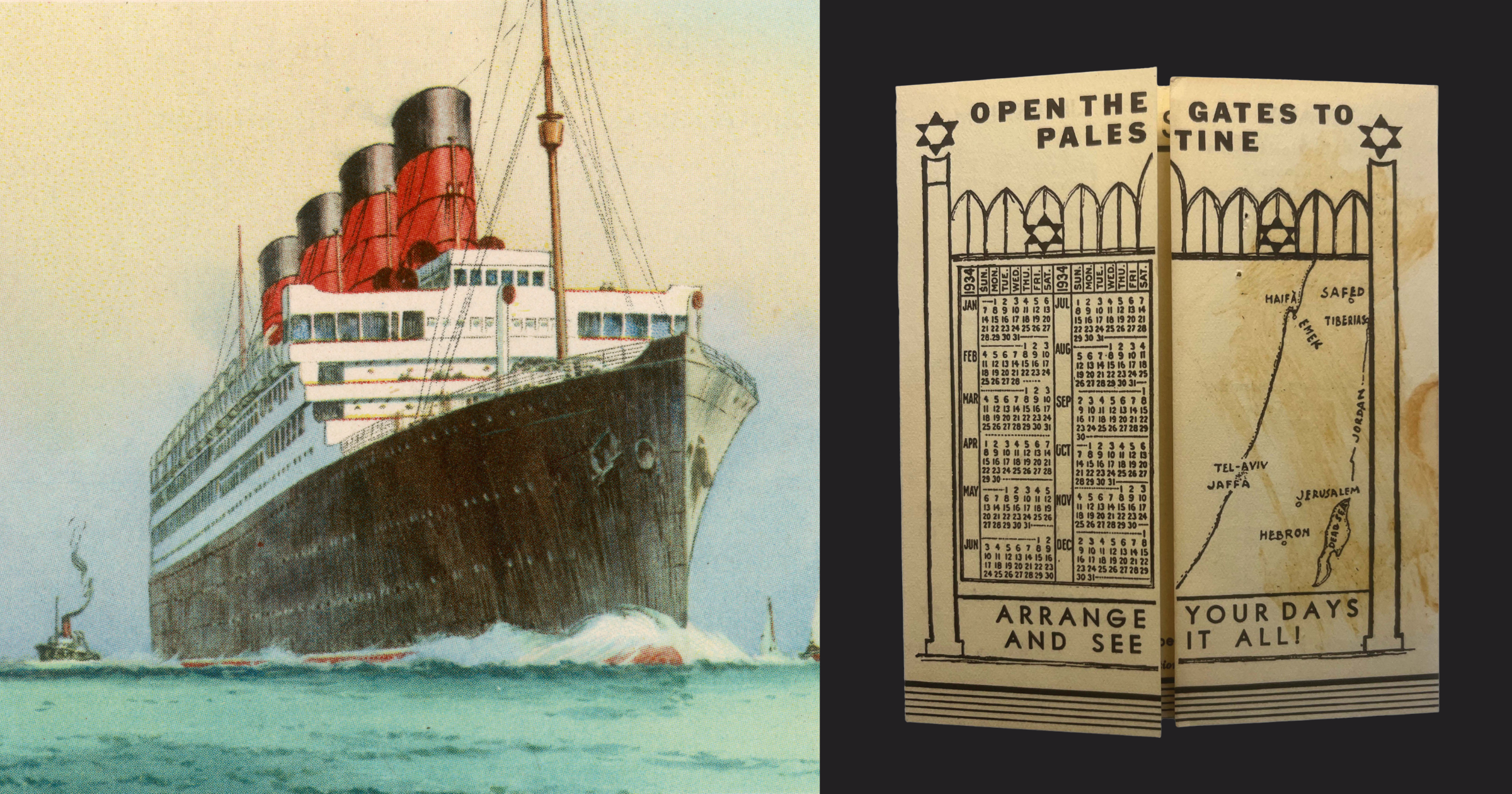
These personal accounts tightened the relationship between Palestine and the Diaspora just as growing numbers of visitors were taking advantage of improvements in tourist infrastructure. By 1929, there were a number of new, reasonably comfortable hotels available for travelers. The November/December 1933 Hadassah News Letter ran a full-page advertisement from the Cunard Line for a tourist-class fare from New York to Haifa. The Cunard Line promised kosher food under rabbinical supervision for its January 31 and March 7 departures, reflecting the religious traditionalism of some Hadassah members, and reminding them that such a journey would be “not merely a pleasure trip but the fulfillment of a sacred duty.”
In response to the ever-growing number of members going to Palestine—and also to make sure its institutions remained de rigueur sights for all American Jewish tourists to visit—Hadassah published pamphlets available in both the United States and Palestine to provide guidance.
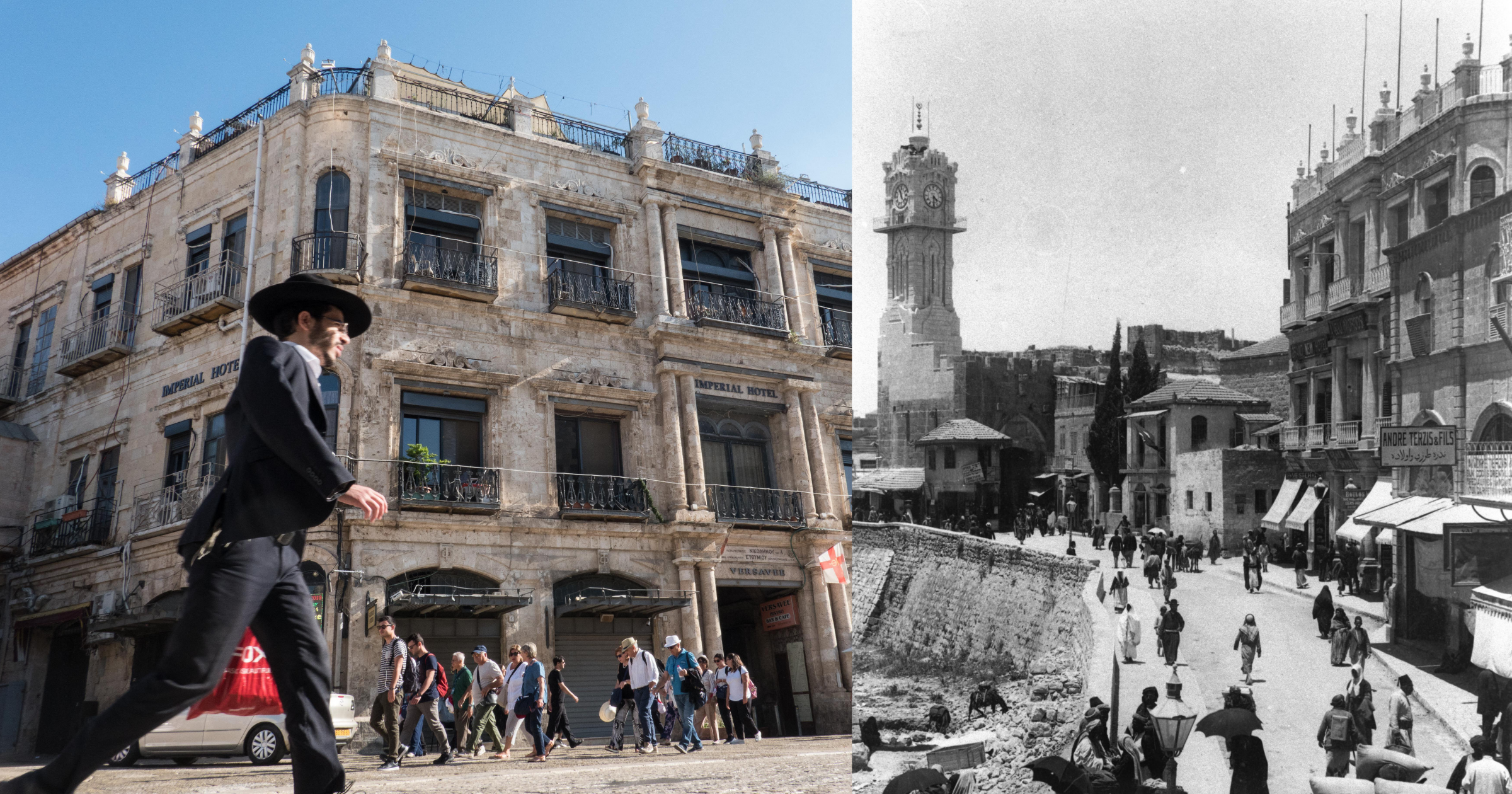
The 1934 brochure, emblazoned with the exhortation “Open the Gates to Palestine…Arrange Your Days and See It All!,” had left and right covers that opened outward. On the left was a 1934 calendar; on the right was a map of Palestine including all the major cities. Inside the pamphlet was a list of Hadassah-supported sights available to tour, including the Straus Health Center in Jerusalem, a playground in Safed, the Hadassah Community Hospital in Haifa, a clinic in Tiberias and the Yemenite Health Welfare in Tel Aviv. The pamphlet also listed contact information for the Hadassah members living in each city who could show visitors around.
On the back cover of the brochure was a list of other suggested tourist attractions, from Hebrew University in Jerusalem to the Rishon LeZion agricultural colony outside Tel Aviv to the Rutenberg Power Station on the Jordan River near Tiberias. While this list included ancient and biblical places of interest like the Western Wall and Mount Carmel, the focus was clearly on modern Zionist sights.
Hadassah was committed, more than most other Jewish or Zionist tourist organizations in Palestine at the time, to education. Hadassah hoped that any tourist under its aegis would learn some Hebrew. Many members studied Hebrew within their chapters at home, and visiting Palestine was encouraged as a means of furthering their language acquisition. On one of her many trips to Palestine, Jacobs took daily Hebrew lessons to improve her fluency.
In addition, reflecting the organization’s commitment from its beginnings to serve Muslims and Christians as well as Jews in its public health work, Hadassah’s tourist committee was determined that visiting members gain an appreciation of Arab culture and history. The March/April 1932 Hadassah News Letter explained, “While concentrating our thoughts upon the Jewish stake in Palestine, we must not lose sight of the fact that in Palestine the preponderating element of the population is Arab and that surrounding Palestine, on all sides, is the great Arab world…. A course in Islamic culture and history ought to find a place in a complete and well-rounded scheme of Zionist study.”
Hadassah’s projects in Palestine were almost all public health and educational programs rather than agricultural settlements. As early as 1921, Alice Seligsberg, who became the second national president of Hadassah that same year, was already describing the impact on American Jewish women who visited Hadassah’s clinics, hospitals and recently opened nursing school. “Travelers returning from the Holy Land,” she reported, “are no longer limited to descriptions of the more or less picturesque decay of ancient glories, to oddities of travel in the Orient, to peculiar types of Moslem, Jew, and Christian, to quaint customs and costumes.” As a result of women’s work in Palestine, she continued, American Jewish visitors could see “much that is modern and western and that points to a renascence of the land.”
When convincing American Jewish women to travel to Palestine and see Hadassah’s work for themselves, Hadassah leaders emphasized the gendered differences between their own work and that of men. As National President Irma Lindheim explained in 1926: “Heretofore in this man run world of ours, men have gone into a country to conquer it [but our] women have said this colonization is unlike any other…. When we went into Palestine Hadassah went in with her hand outstretched, Hadassah went in with a healing, kindly humanitarian spirit and said it did not make any difference if they were Hebrew, Arabic, or Christian.”
Lindheim undoubtedly presented an idealized view, but it was nonetheless indisputable that Hadassah clinics and hospitals had improved the infant and maternal mortality rate of all their patients, an achievement that the American Jewish women who belonged to the organization trumpeted loudly at home. Women were leading the way in Palestine, as in the United States, as agents of scientific social advancement and modernization.
Melissa R. Klapper is a professor of history and the director of women’s & gender studies at Rowan University. She is the author of the National Jewish Book Award winner Ballots, Babies, and Banners of Peace: American Jewish Women’s Activism, 1890-1940, among other titles. This article is adapted from her new book, Jewish Women at Home in the World: Gender, Judaism, and American Identity in the Rise of Mass Tourism (NYU Press).
 Facebook
 Instagram
 Twitter
Leave a Reply