



Arts


When History Sings in Yiddish
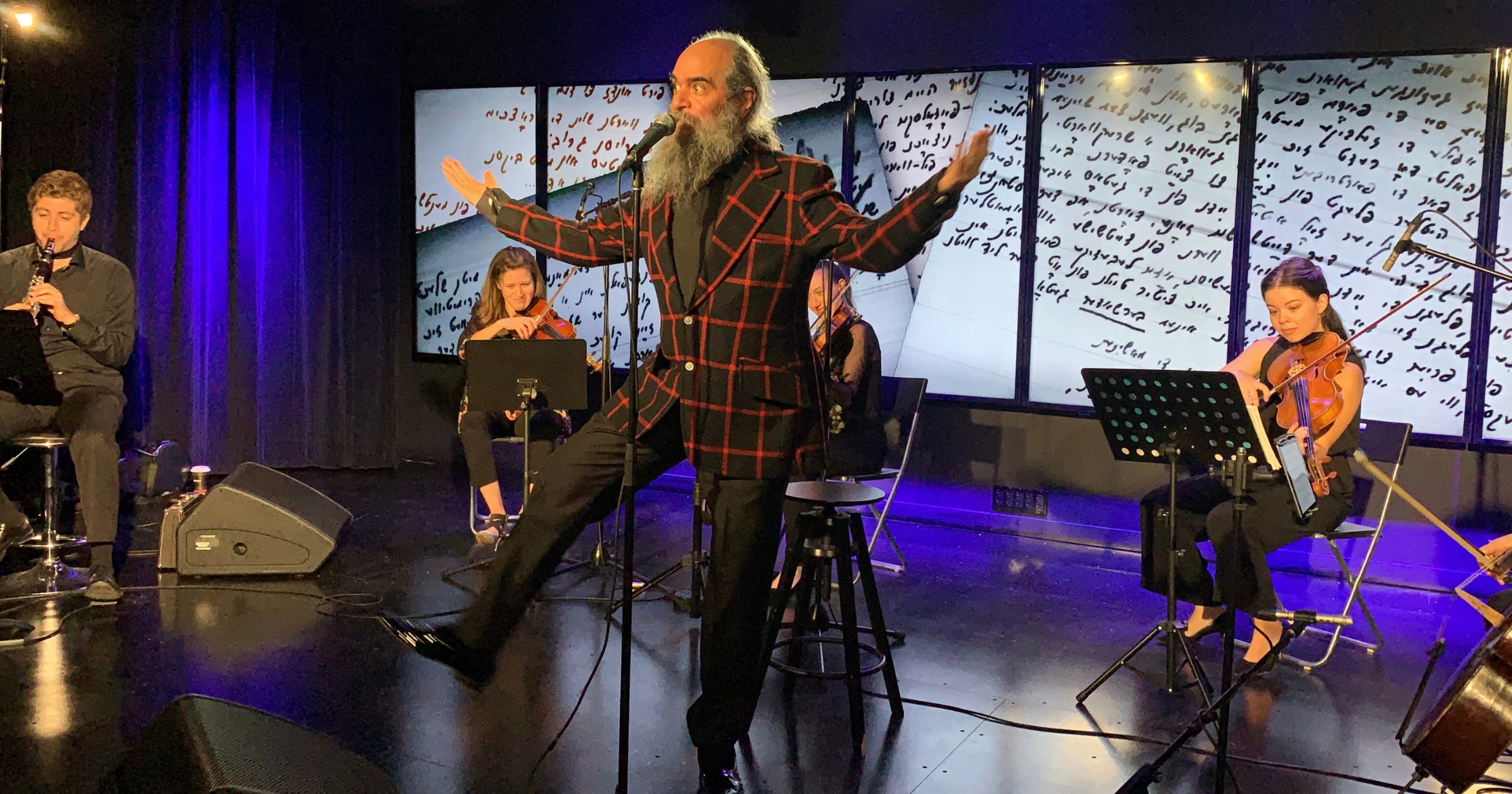
The folk song “a girl from Kyiv” plucks at heartstrings as it evokes stories in the news, carrying the voice of a child orphaned by war who begs “on the streets of Kyiv, where it’s dark and damp.”
The Ukrainian capital is firmly etched on the landscape of our time. But this song is in Yiddish, not Ukrainian, and it takes us not behind today’s headlines but back to the 1940s, shortly after the Red Army liberated Kyiv from the Nazis. The song is from Yiddish Glory, a musical project as unlikely as it is extraordinary.
As World War II drew to a close, a team of ethnomusicologists led by Moisei Beregovsky collected hundreds of songs, “A Girl from Kyiv” among them. Their aim was documenting the wartime Jewish experience in the Soviet Union. But the researchers were swept up in Stalin’s postwar Jewish purge, and the song collection was seized as evidence. Beregovsky was convicted of anti-Soviet activity and sent to Siberia. Though eventually freed, he never saw his research again. He died in 1961, believing it had been destroyed.
In the 1990s, shortly after Ukraine gained independence, Beregovsky’s song collection surfaced, in unmarked boxes, in Kyiv’s Vernadsky National Library of Ukraine. Realizing its importance, a librarian catalogued the collection, but it sat until 2010, when Anna Shternshis, a Moscow-born Canadian scholar of Yiddish, came across it.
What she found was a trove of World War II lyrics written by the people who lived through it—tailors and shoemakers; Red Army soldiers and civilians; young lovers and bereaved parents; victims and survivors of Nazi terror. Shternshis, today director of the Anne Tanenbaum Centre for Jewish Studies at the University of Toronto, initially envisioned using the material in academic settings. But because most of the collection were lyrics, she enlisted singer-songwriter-scholar Psoy Korolenko to create or adapt music for some of the texts.
“I wanted to explore how you write about history with music in it,” Shternshis said. “When we did our first presentation in Toronto in 2014, it was part of a conference on global Yiddish culture in the 1940s.”
At that point, Toronto music producer Dan Rosenberg saw the collected material. “He said, ‘This is much bigger than a lecture or a concert, and you need to do it properly,’” Shternshis recalled. “By ‘properly,’ he meant creating arrangements, recording in a studio with a group of musicians and putting it out into the world.”
With funding from the Social Sciences and Humanities Research Council of Canada, Beregovsky’s project became the studio album Yiddish Glory: The Lost Songs of World War II. Released in 2018 and encompassing 18 songs performed in a range of musical styles, the first album was not only a window into history but also a stunning artistic achievement, leading to international concerts and, ultimately, a Grammy nomination for Best World Music Album.
Now, eight years later, a second installment, Yiddish Glory: The Silenced Songs of World War II, has been released with 15 additional works from Beregovsky’s archive. The first album viewed the war experience more from the Soviet side, including Jewish families and communities who were doing their part in the fight against Hitler, and civilians who found refuge in Kazakhstan, all delivered with doses of despair, bravado and humor. The new album goes deeper into the ghettoes and labor camps in German-occupied Ukraine and the devastated cities after liberation.
Both albums also beat to the rhythm of the Jewish calendar: The first evokes Purim, comparing Hitler to Haman and other antisemitic tyrants from history. The second collection ends with the track “Yom Kippur Without Fascists,” written by a Jewish refugee in Kazakhstan. It celebrates the end of World War II and portrays Hitler as the holy day’s kappores, or sacrificial chicken.
Arguably the biggest difference between the two albums is not content but the world into which they were released. “A lot of the songs have different meanings to us in 2026,” Shternshis said, pointing to “what’s happening in Ukraine, with wars in general, war in the Middle East, women and children at the forefront of violence.”
“Arts and music become central when people live through violence,” she said. “Places where these songs were created are at war again, in cities people recognize from the news.”
“A Girl from Kyiv” is the album track most played on the radio worldwide, she noted. At a time when Kyiv is being bombed, this gives “the song extra relevance.”
Against all odds, Moisei Beregovsky’s work lives, shedding both darkness and light on a world he knew and one he never saw.
Alan M. Tigay is editor emeritus of Hadassah Magazine. He writes about music from around the globe at worldlisteningpost.com.
 Facebook
 Instagram
 Twitter

Leave a Reply