



Being Jewish


Unique Judaica Collection Finds a Permanent Home
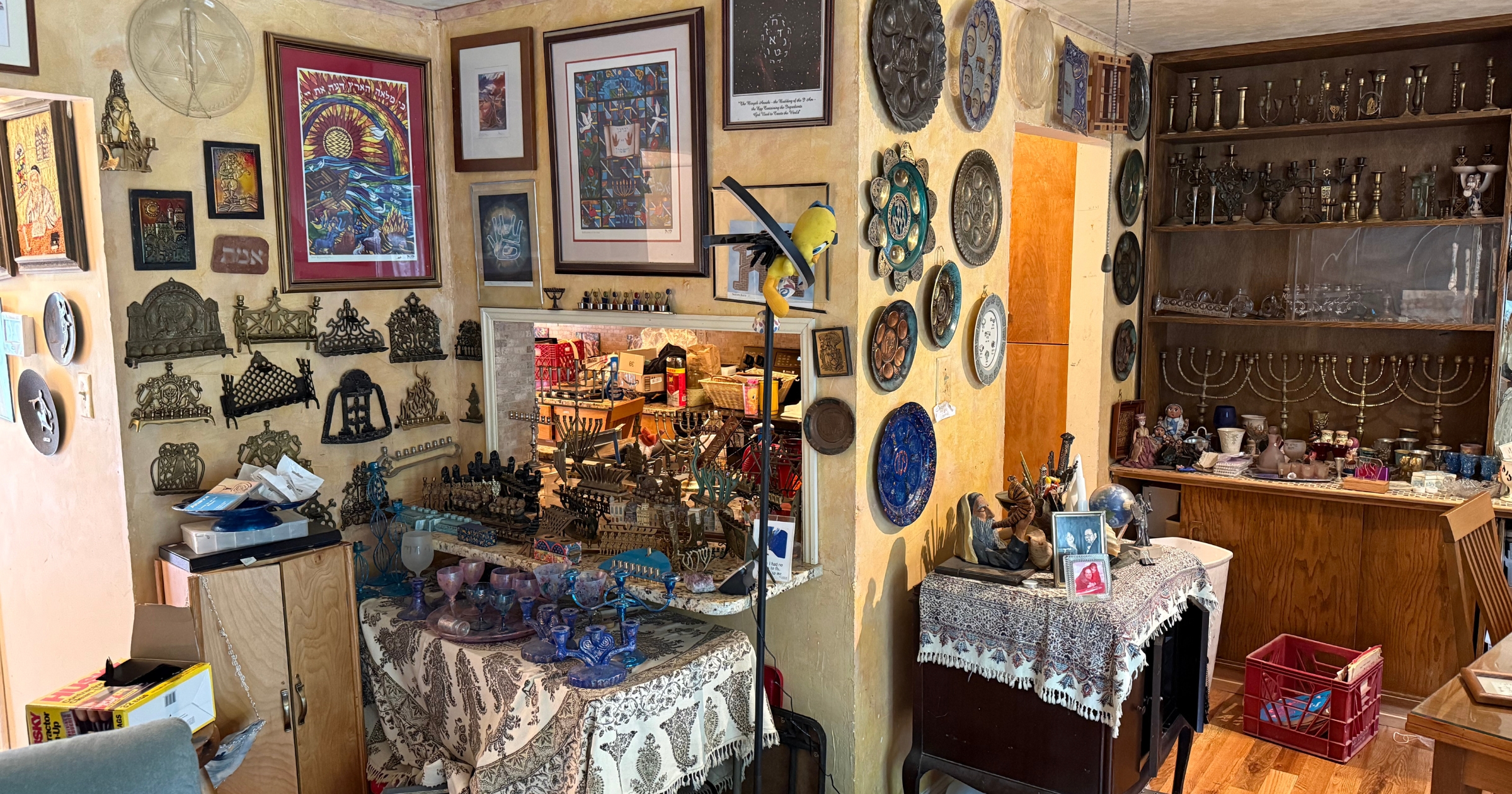
Deborah Brodie believed learning about Judaism should be a hands-on experience. As a teacher who prepared children with special needs for their b’nei mitzvah, she encouraged them to touch and explore the kiddush cups, seder plates, mezuzahs and menorahs that were part of the Judaica collection she put together with her husband, Jay Brill.
“They were so proud of their collection,” Rae Ann Kaylie said of her mother and stepfather’s Judaica. “And she really used it as a vessel to teach kids.”
Over the course of 35 years, the 200-plus items Brodie and Brill collected found a place across shelves and on the walls of a meticulously arranged 700-square-foot room in their Rockville, Md., home that friends dubbed the “Jewseum.”
In February, Brodie and Brill died unexpectedly, only 19 days apart. When going through their possessions, Kaylie, a life member of Hadassah just like her mother, felt unsure about what to do with their Judaica.
On a whim, she reached out to Nick Fox, whose popular Instagram series Millennial Inheritance highlights quirky or unusual items people inherit from their parents and grandparents. In April, Fox posted a reel featuring the Jewseum and put out a call to people or organizations willing to take the collection.
Fox’s 248,000-strong following spread the word, and the reel went viral. The next day, Jonathan Edelman, the collections curator at the Lillian and Albert Small Capital Jewish Museum in Washington, D.C., woke up to an inbox overflowing with alerts about Kaylie’s dilemma.
“I’ve never seen a collection like that in a private home,” Edelman said. “It was floor-to-ceiling Judaica. I was blown away.”
The museum decided to take the collection, but not to place it behind glass. The Judaica pieces now line open shelves and drawers in their Community Action Lab, where visitors may touch, use and learn from them, continuing Brodie’s own practice.
The museum unveiled the Brodie-Brill Judaica Education Collection to the public in July. Edelman noted that the pieces are meaningful not only for students but also for adults with visual impairments, who are able to explore the objects’ grooves and textures through touch.
“They would have no words,” Kaylie said of her mom and stepfather. “This is exactly what they would have wanted for their collection.”
Alexandra Lapkin Schwank is a freelance writer for several Jewish publications. She lives with her family in the Boston area.
 Facebook
 Instagram
 Twitter

Leave a Reply