



Being Jewish
Feature


A New Age of Intentional Jewish Grandparenting
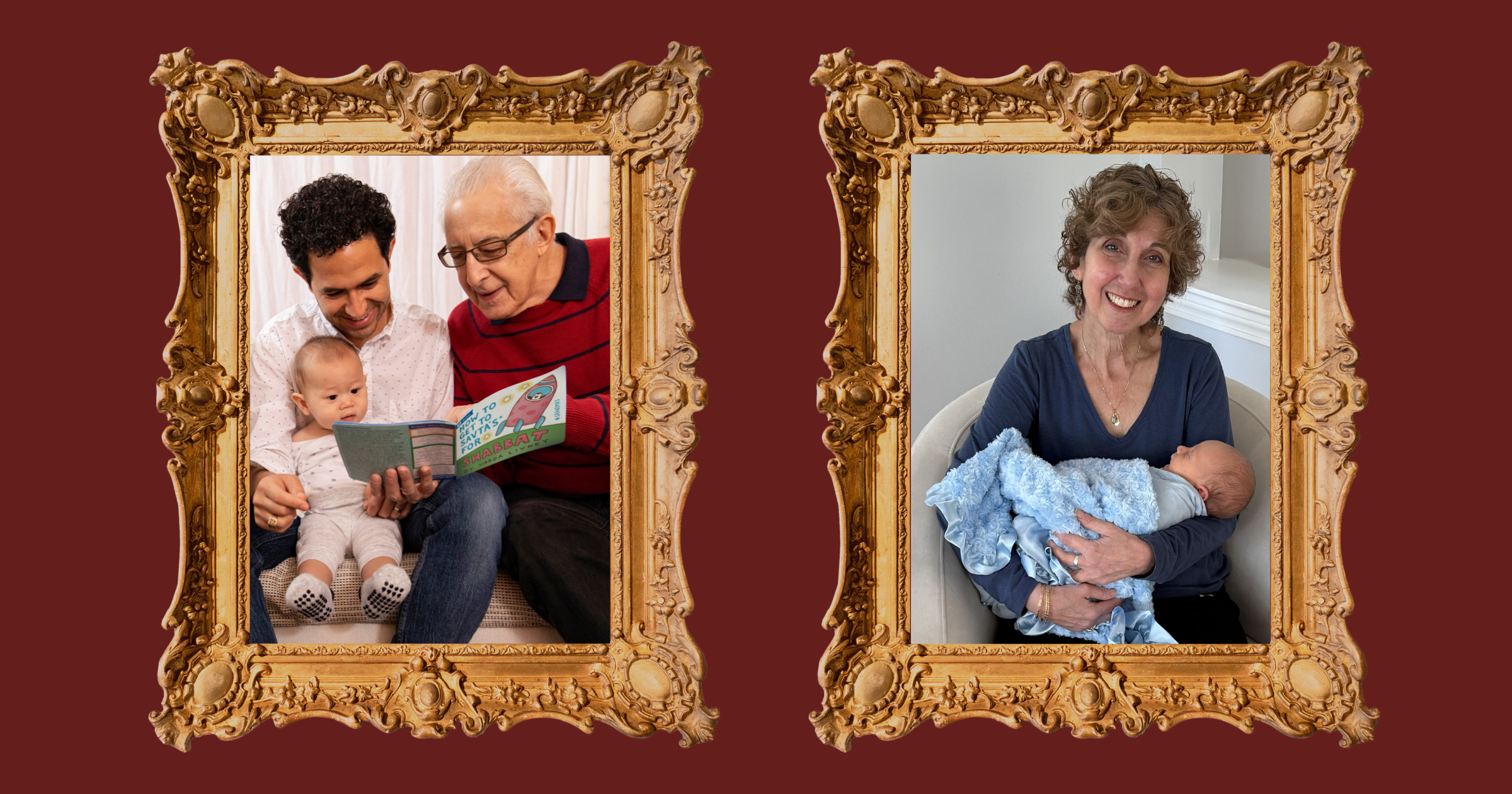
Soon after Audrey Lichter and her husband, Arlen, had downsized to a condo in West Hartford, Conn., their daughter and son-in-law moved from Massachusetts to be near them. With a demanding job and three young children, her daughter and son-in-law had declared they couldn’t manage alone. Despite the financial drawbacks, the Lichters upsized back to a home a block away from their grandkids.
“It wasn’t our plan, but for me it’s the most wonderful thing that they all come to our house by themselves whenever they want,” says Lichter, 71, founding executive director of Chai Mitzvah, which provides materials and programs to strengthen Jewish identity and community. She regularly hosts large family holiday gatherings in her home.
For Rosh Hashanah, she established a tradition of buying all six of her grandchildren (three live in Brooklyn and stay over for the holiday) matching pajamas, a fun way to chart their annual growth. During the summer, she schedules vacations with the extended family on Block Island, R.I., where she and her husband own a second home, as well as at favorite spots in Vermont and Maine.
In a different part of the country, Gerri Patterson, 77, travels every six weeks from her home in Dallas to Orange County, Calif., to see her 5-year-old twin grandchildren, Aaron and Julia. She packs a hard-shell suitcase with 50 pounds of homemade frozen kosher entrees—brisket, orange-glazed chicken, vegetable lasagna and more—scheduling her weeklong visits for times that her daughter Rachel, a pediatric neurologist, is on call. When the twins are in school during the day, she shops, cooks and organizes their drawers with new clothing to replace what they have outgrown.
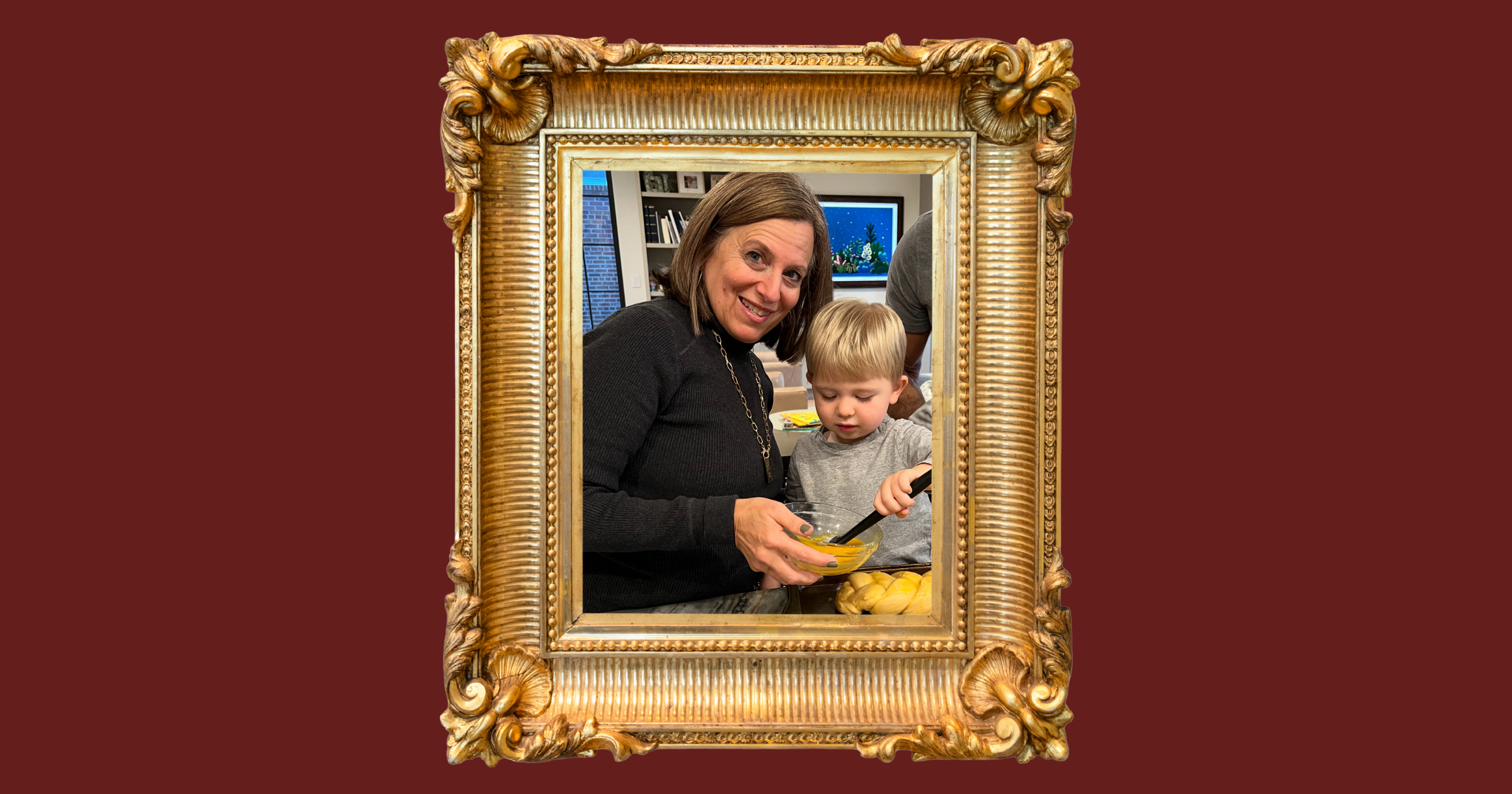
When the kids are home, she bakes challah and other goodies with them, reads Jewish books, cuddles with them as they watch Paw Patrol and shares memories from the years she lived in Israel.
What does Patterson get out of it? “Nachas, with a capital N,” says the Jewish educator and former president of her Conservative synagogue. “At this stage of my life, it’s the most important thing I do, bar none. I’m creating a legacy.”
It’s not just the grandmas. Grandfathers are also actively involved in their grandchildren’s lives. Patterson’s husband, David, an academic who has written 40 books, recently wrote a book on Jewish ethical wills that features a photo on the back cover of him holding Julia. He still teaches full time at the University of Texas at Dallas but accompanies Gerri on visits for birthdays, holidays and whenever his schedule allows, reading, playing and joining in all the activities.
The dedication with which the Lichters and Pattersons approach their roles reflects the new world of intentional Jewish grandparenting. Whether they are Grandma and Grandpa, Gran and Gramps, Savta and Saba, Bubbe and Zayde or a nickname their grandkids have invented, many grandparents are shaping their lives around the lives of their children and grandchildren. Almost all the grandparents interviewed for this article are Hadassah members or Associates.
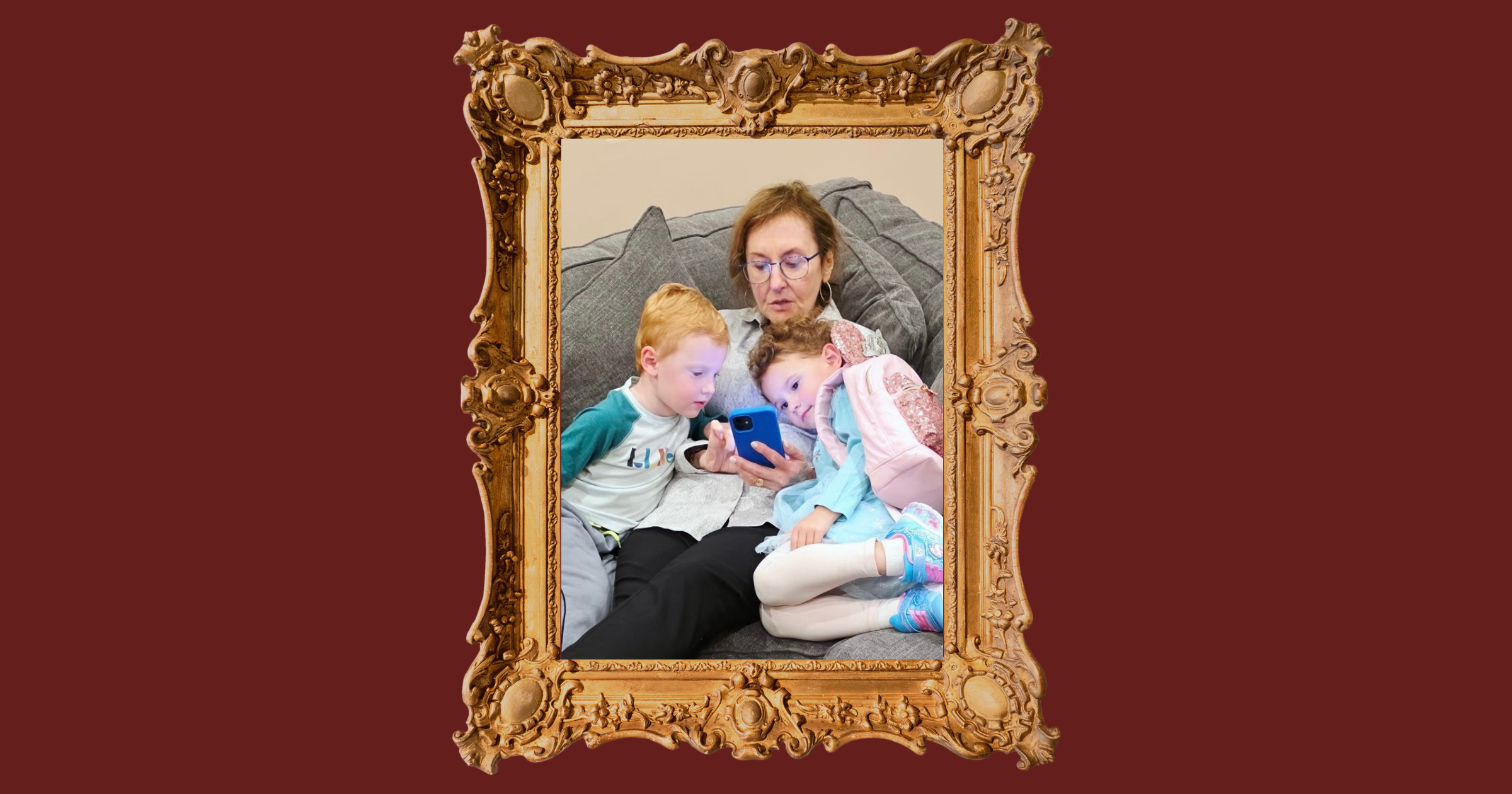
I, too, am now a grandparent, fully in love with three enchanting grandchildren: Maya, 5; Lior, 3; and 7-month-old Ari. My paternal grandparents died before I was born, and my maternal grandparents moved from India to London when I was 2 years old. I can count on one hand how many times I saw them after that. I mourn those losses and pledged that I would do whatever I could in my own role as Nani (Hindi for grandma) to create a close bond, notwithstanding the two-hour drive that separates us.
Early on, my daughter requested that I augment their Jewish education, and I happily help teach them the aleph-bet, count in Hebrew as they go up and down the stairs, sing Hebrew songs and the one Hindi lullaby I know and play games with Hebrew words. I bring back Diwali Barbies, sparkly dresses and toy tuk-tuks (small, three-wheeled motorized taxis) from my trips to India and share stories and traditions from my Baghdadi-Indian Jewish heritage.
The intensive planning and forethought today’s grandparents invest weren’t generally on the radar of their grandparents, even when they lived nearby. One set of Patterson’s grandparents were Romanian immigrants who lived an hour away from her Long Island home. As a child, she visited their grocery store in Inwood, on the northern tip of Manhattan, almost every weekend for a couple of hours.
“My mother planted me behind the counter, and my job was to count the pennies and nickels.”
Her reward was a Hostess cupcake and a cream soda. She has wonderful memories of holidays with them, but they never sat down with her to play games. Intent on being American, they didn’t discuss their childhoods. She now wishes she had recorded their oral histories, as she did with her father.
Trends in grandparenting that have been emerging for decades have intensified in recent years: distance grandparenting; multifaith families; increasing engagement in fostering grandkids’ Jewish identities; and longer lifespans that allow grandparents to stay actively involved. Some come to grandparenting at an older age.
Patterson was 70 when her first grandchild, Jacob, was born. “That’s one of the reasons I do everything that I do with them,” she says. “I treasure each moment, becauseI don’t know how many years I’ll have to build memories.”
“Legacy is not inherited, but given,” notes Debra Weinberg, executive director of the Jewish Grandparents Network (JGN), a national organization founded in 2017 that educates, connects and supports grandparents as essential partners in enriching Jewish life across the generations.
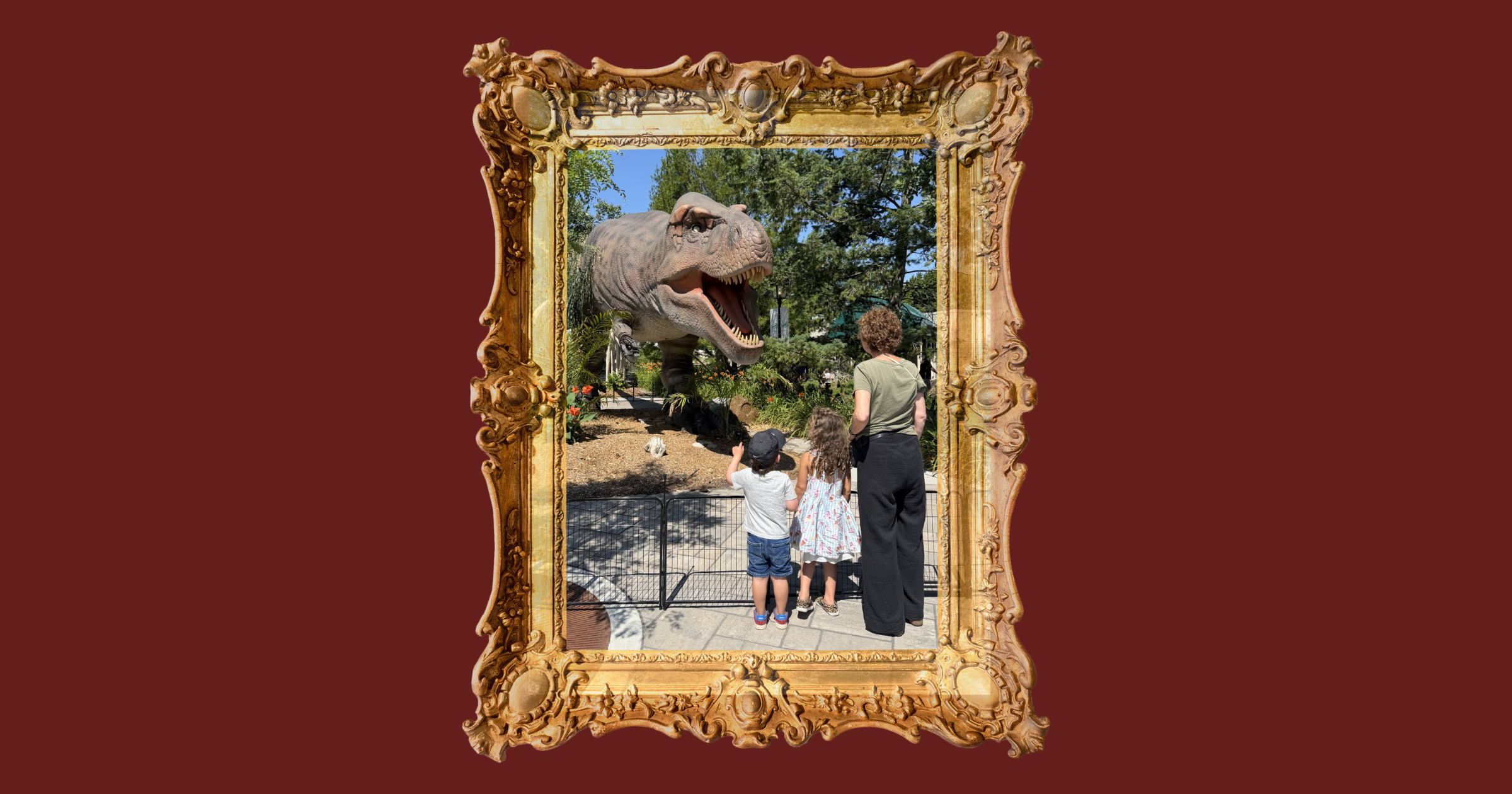
Weinberg, 66, is the grandmother of four with one on the way, and she has held numerous Jewish communal positions, including chair of the Hadassah-Brandeis Institute. She believes the rewards of grandparenting top even the joys of parenting, which can be mixed with the stresses of childrearing. As we talked by phone for a fact check, she was watching her 2- and 4-year-old grandchildren loop round and round in bright-red mini firetrucks at an amusement park, part of her planned activities for a week of “grampcamp” while her daughter and son-in-law were in Europe for a wedding.
A JGN study in 2019 concluded that “Jewish boomers are embracing grandparenting with passion. Like grandparents everywhere, many Jewish grandparents are helping their families to function in today’s complicated world. They provide childcare, transportation, overnight care, and so much more.”
Many grandparents have deep aspirations for their grandchildren to remain Jewish, especially given the growing number of interfaith families in the United States. Weinberg’s son-in-law is Irish Catholic, but the children are being raised Jewish. Her 5-year-old grandson proudly claims he is Irish and Jewish, she says.
“Grandparents sometimes serve as a Jewish anchor when their own children are less engaged,” Weinberg notes, adding that they sometimes pay for b’nei mitzvah, summer camp or Jewish education because their children may not be embracing Jewish identity significantly and/or because the cost of living an active Jewish life is so high. Even if their children are committed Jewishly, it’s often easier for retired grandparents to supplement efforts, connecting with their grandchildren by sharing the joy embedded in rituals like challah-baking.
But Weinberg offers a caveat. “I believe the generations need to communicate openly and frankly so that the grandparent doesn’t feel taken advantage of as an ATM machine,” she says. “Can the adult children offer to help pay for a visit when the grandparent is unable to afford it? Or pick up the tab when the family is eating out?”
JGN’s Facebook page, which engages 18,000 followers, offers a forum for grandparents to share their joys and challenges. Frequent JGN webinars focus on subjects such as holiday celebrations and traveling with grandchildren. Earlier this year, a “learning fest” with numerous workshops drew 700 registrants online. (The session on distance grandparenting was the most popular.) A second learning fest is scheduled for January 2027.
PJ Library, which sends free Jewish children’s books to families who have enrolled, offers resources for grandparents as well. The website includes suggested book lists, holiday guides, story podcasts, recipes and activities. And grandparents can subscribe to receive two free books a year and periodic emails that contain engaging educational ideas.
Regeneration, a new podcast exploring Jewish rituals, traditions and stories, recently featured an episode with Rabbi Shira Stutman. The spiritual leader of the Aspen Jewish Center, Stutman reflected on her mother’s involvement with her children when they were young. “Savta’s the word for grandma, and Saba’s the word for grandpa in Hebrew,” and in her family, she said, “they’re verbs, not nouns.”
She said that her mother and stepfather were so present for their grandchildren that she and her husband, who were always working, would joke that they raised them. “We were so lucky to have that in our family system,” she recalled. “Many of my congregants just don’t have that, especially out here in the Roaring Fork Valley [in the Colorado Rockies], where so many people live far away from their parents.”
Lichter, from West Hartford, explains the difference in thinking among her peers. “Our generation feels much more of a responsibility and even a desire to be available to our children, much more than the previous generation,” she says. When her mother was in her 50s, she moved into an adult community in Florida that didn’t embrace young children. “Her generation felt they had raised their children and now it was their time for a more carefree lifestyle.”
A new JGN initiative, the Community Impact Model, hopes to integrate programming for grandparents into community organizations, beginning with pilot programs in Toronto, Palm Beach, Baltimore, Atlanta, Milwaukee, Washington, D.C. and Marin County, Calif.
The Bender JCC of Greater Washington, one of the pilot communities, opened a Grandparenting Center in 2019 when the donor of its Parenting Center became a grandparent. After the Covid pandemic, the original center launched a “GRAND Series” bringing grandparents, grand-friends and young grandchildren together for five activities each year, from challah-baking and menorah-making to “sleepunders” with crafts and a dance party. This year, the program incorporated memoir-writing and an introduction to ethical wills for the grandparents.
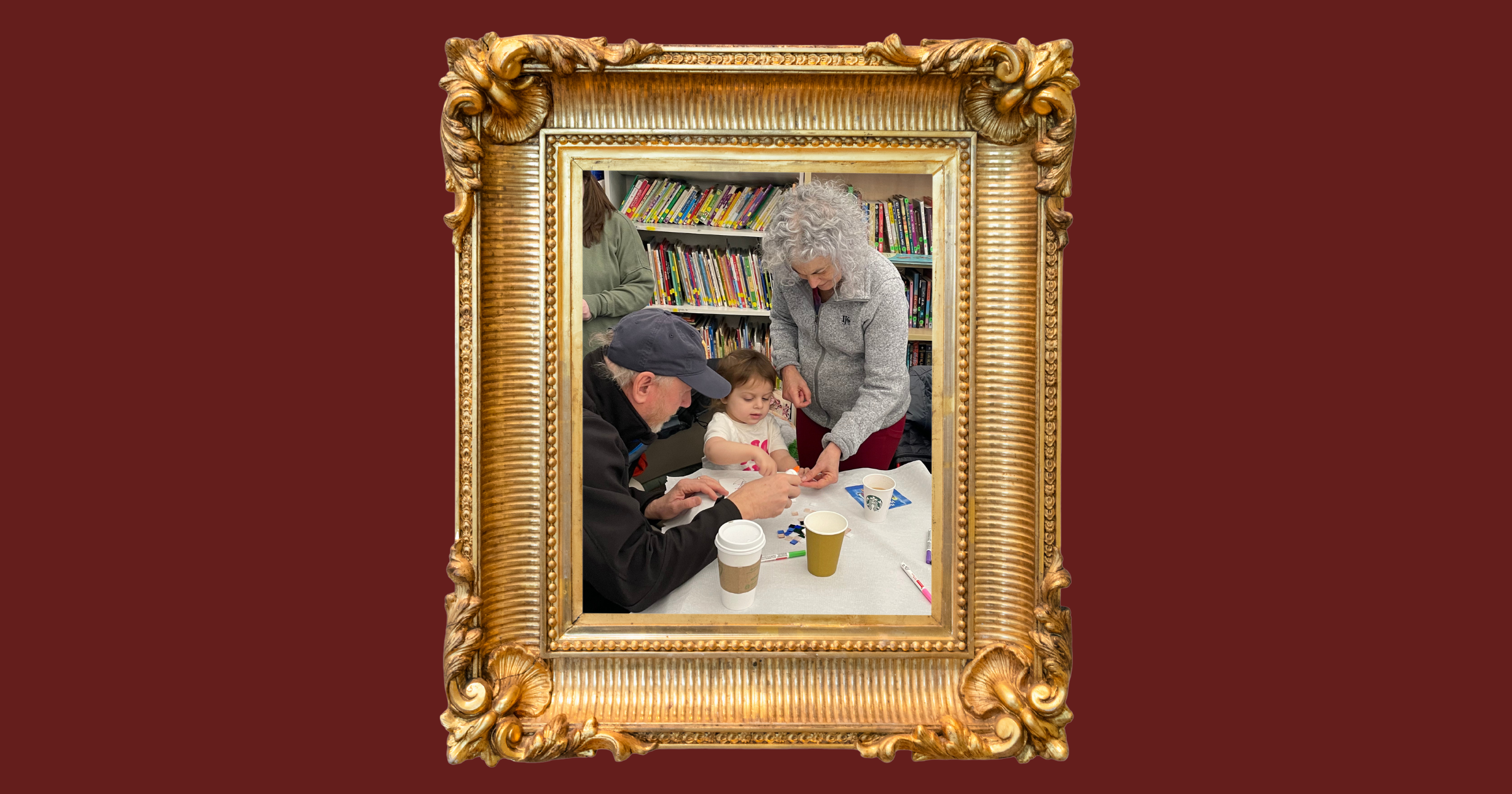
“As families become more geographically dispersed and family structures become more diverse, grandparents are seeking an opportunity for connection, purpose and community,” says Lauren Dworkin, director of community engagement and Jewish life at the Bender JCC.
Madelyn Gould, 75, of Great Neck, N.Y., flies frequently between Alabama, Florida and California to spend time with her six grandchildren, aged 3 to 11. Both she and her husband, Rob, were close to their immigrant, Yiddish-speaking grandparents and were committed to forging a similar connection with their own grandchildren. Gould recalls spending Sundays at her maternal grandparents’ home half a block from Coney Island Beach. Her grandfather, a butcher, and her grandmother, a seamstress, delivered Shabbat meals on Fridays.
Nevertheless, Gould, professor emerita of psychiatric epidemiology at Columbia University, is experiencing a different type of grandparenting. She not only navigates distance grandparenting, but also interfaith family dynamics. Two of her three sons married non-Jewish women but converted their children when they were infants. After 13 years of marriage, one of her daughters-in-law converted this year.
To reinforce her grandchildren’s Jewish identities, Gould purposefully chose to be called Savta. She practices pronouncing the guttural chet and chaf with them, and among the numerous Jewish rituals she shares, she blesses them every Friday night by FaceTime after they light the Shabbat candles. Even the non-Jewish grandmother who lives with the Alabama family asks for the blessing.
For a grandson’s bar mitzvah in May 2027, Gould is writing a “family book” with memories and photos of her parents and grandparents.
“I wanted to create a link between these people who are so real to me and my grandchildren, who don’t know them,” she says. “I grew up as a quintessential Brooklyn Jewish girl in the 1950s and ’60s. There weresix single-spaced pages of Schwartzes—my maiden name—in the Brooklyn phone book. I wanted my grandchildren to understand that Jewish world. It was a very different experience than living in Alabama or Florida or California. My grandparents took passing on Jewish tradition for granted. I can’t take it for granted.”
To mark her 50th anniversary next year, she is planning a family trip to Israel. The trip will support “the continuity of our peoplehood,” Gould says, and her grandchildren’s connection to Israel. She herself visited Israel with her mother for the first time on a Hadassah trip in 2004 and has returned three times since.
Sheryl Olitzky of north Brunswick, N.J., also marked a milestone occasion with a family trip to Israel. Israel has always been a priority for Olitzky, co-founder of the Sisterhood of Salaam Shalom, which was created to strengthen bonds between Muslim and Jewish women. To celebrate her 70th birthday last year, she and her husband took their entire family of 13 to Israel so she could see the country through her grandchildren’s eyes. Both Olitzky’s sons are Conservative rabbis, and the grandkids attend day school, so they are familiar with the challenges facing Israel.
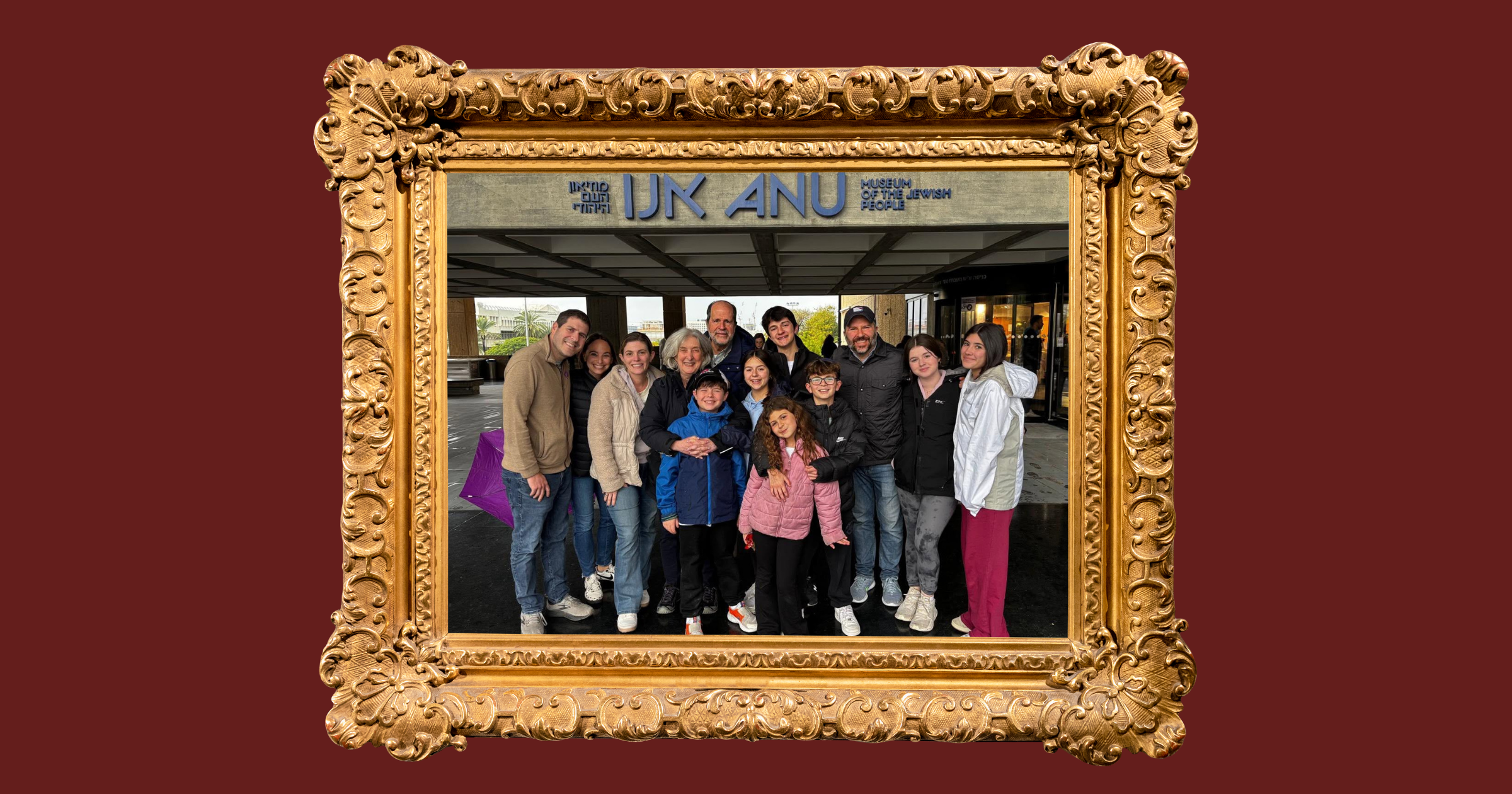
“They know we stand behind Israel, no matter what,” she says. “We may not agree with everything, but Israel is our homeland.”
Olitzky’s seven grandchildren, aged 9 to 17, are split between New Jersey and Minnesota. She and her husband, Kerry, a retired rabbi, converted their attic into a huge space they call the Olitzky Kids’ Clubhouse.
“When they were little, we could see them on the monitor running into each other’s beds and laughing,” she recalls. “That doesn’t happen as much now, because they just stay up all night together.”
She visits the Minneapolis grandchildren once a monthand sees her New Jersey brood every week.
“We will continue to do this until our money runs out,” she says, “or physically we can’t.”
When her father passed away in 2021, Olitzky realized she didn’t have any personal mementos of him. Keen to create a different experience for her children and grandchildren, she taught herself needlepoint and made her first tallit bags for the b’nei mitzvah of her twin grandchildren. Within a few years, she had completed all seven, each with a personal message embroidered inside.
“I want them to remember that I was there at their bar or bat mitzvah, and I’ll be with them every Shabbat and every holiday, whether I’m there in person or not,” she says. On holidays celebrated at her New Jersey home, her memory-making extends to contests to find 250 dreidels on Hanukkah and 45 frogs on Passover hidden around the house.
On Rosh Hashanah, which she and her husband typically spend in Minnesota, they celebrate with a seder that includes wishes for the new year. Olitzky has replaced the traditional fish head with gummy fish to represent the wish that we should be heads and not tails, leaders and not followers. She and the four grandkids cut off the tails from the gummies together. Their reward? They can eat the tails.
Since the Minnesota grandchildren don’t spend Sukkot with them, they take them on a virtual tour not just of their sukkah but of their home, which they festoon with over 50 pumpkins, gourds and harvest decorations.
“The grandkids really get a kick out of all this,” she says. “They claim that it is so cool. That’s what they tell us, anyway.”
Grandparents can provide a unique perspective, Olitzky believes. “My kids are phenomenal parents, but parenting is hard. You’re juggling work. You’re overwhelmed,” she says. “Everything I do with the kids is relaxed. I can give my grandchildren the perspective of seeing with clearer eyes, of being patient and really listening with a set of ears that can hear anything without judgment.”
At the same time, grandparents negotiate boundaries with their own children. Some speak their minds while respecting the parenting choices of their children.
“I am involved in my grandchildren’s lives, but I also take a back seat,” says Parvaneh Khododadian, 80, an Iranian-born grandmother of 12, aged 9 to 28, from Great Neck. “They have their own parents, but I’m looking over them, watching them, seeing what’s happening. We advise them. I don’t know if they accept our advice or not, but we give it.”
For Khododadian, grandparenting is a two-way street. She intentionally makes time to see her family and hosts Friday night dinners for 30 to 35 people every week. Imparting the values of family, Shabbat and respect are her priorities.
“I tell them, ‘My parents and grandparents took care of us. Maybe we will need your help in the future, so be there for us,’ ” she says about her grandchildren. “I’m giving them love so they are able to give us back the love.”
The Khododadians are members of the Conservative synagogue I attend. On frequent Shabbat mornings, it warms my heart to see their 27-year-old granddaughter, Rachel, who preferred not to share her last name, unabashedly resting her head on one of her grandparents’ shoulders.
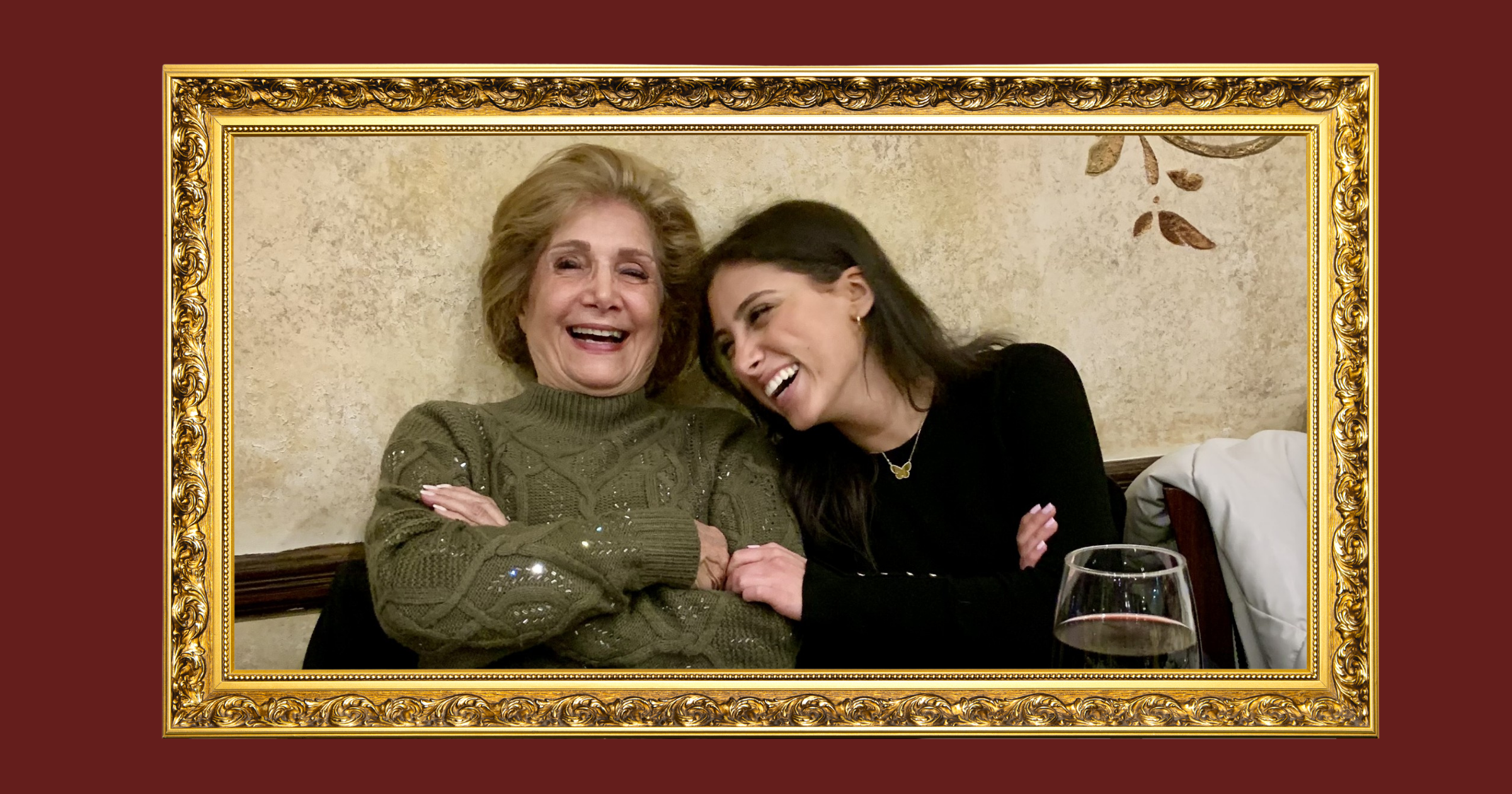
“I go to synagogue every week, but at least once a month, I make it a priority to go with my grandparents,” says Rachel, who lives in Manhattan and is studying for a doctorate in clinical psychology. “It’s become our special time together, just us. At home they are running around to host, or there are a lot of other family members around. They used to bring me to synagogue, and now it’s my choice to go to services with them.”
Her grandmother, Rachel says, is one of her most important role models. Khododadian was the first Jewish female pharmacist in Iran, earning her degree from Tehran University. Though she did not work as a pharmacist after she immigrated to the United States at the age of 21 with her husband and baby (Rachel’s mom), she became an active volunteer in the community and went on to found the Sephardic Heritage Alliance Inc. Senior Program in Great Neck.
“I learn from her leadership, her generosity and philanthropy,” Rachel says. “She leads from the heart. I can only hope to embody a small part of who she is when I’m older.”
“My grandparents and great-grandparents played such an important role in raising me,” she adds. “So much of who I am is because of what they taught me and the love I received from them.”
Many grandparents express deep gratitude for what they perceive as the greatest gift they could ever receive.
“I say Shehecheyanu every morning that I lived to see grandchildren, because my mother never did,” Patterson, from Dallas, says. “Being a grandparent is the crowning moment of my life.”
Rahel Musleah leads Jewish heritage tours to India and runs tours to Vietnam and Cambodia.
 Facebook
 Instagram
 Twitter

Paula Bookbinder says
I don’t have grandchildren and probably never will. Would love to be a surrogate bubbe. I can’t find a program in Los Angeles.