




Health + Medicine
Feature


Hadassah’s Promising New Treatment for Heart Failure
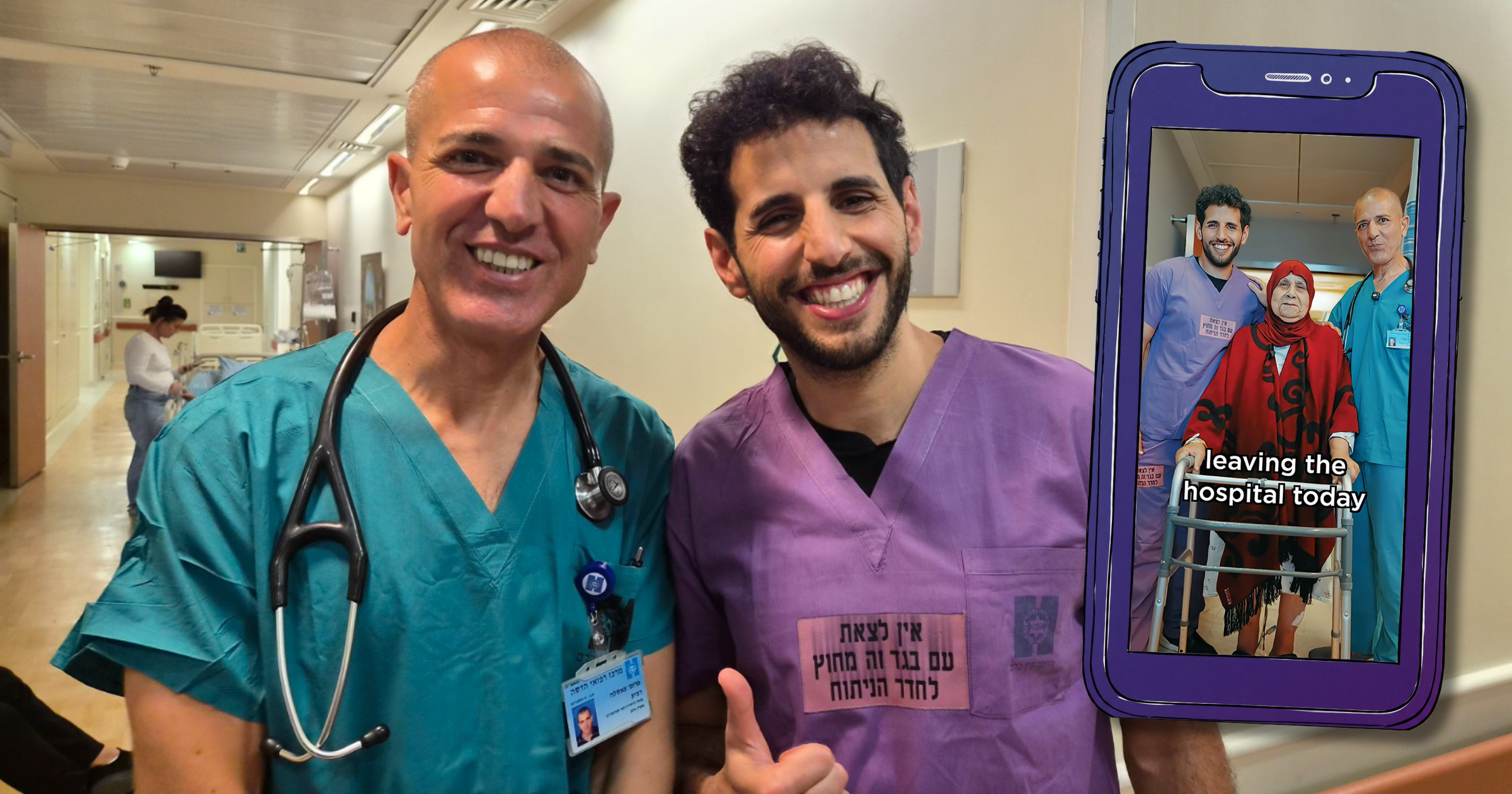
A YouTube tribute viewed more than three million times in its first month marks one of the latest opportunities to highlight the lifesaving work of Hadassah, The Women’s Zionist Organization of America and the Hadassah Medical Organization. Created by Israeli Palestinian vlogger and influencer Nuseir Yassin and posted on July 1, the video celebrates Hadassah’s century-long record of firsts: pioneering Israel’s modern health care system; creating the country’s first medical and nursing schools; and advancing fields ranging from bone marrow, organ and stem-cell transplantation to minimally invasive robotic surgery.
Yassin was born in the Galilee and is a Harvard-educated entrepreneur and media personality. His Nas Daily (nas means “people” in Arabic) YouTube channel has 14 million subscribers, and he has over 22 million followers on Facebook, with millions more across other social media platforms.
“I’ve wanted to make this video for seven years,” he said in the clip. “Thank you, Hadassah, for giving me access. Peace exists in [Hadassah]. Now let’s make it spread everywhere around the world.”
It was HMO’s lifechanging treatment of Yassin’s 74-year-old grandmother, whose name is withheld to protect her privacy, that finally prompted him to share Hadassah’s story. His two-and-a-half-minute video interweaves Hadassah’s history and commitment to serving all who come through its doors—Jewish, Muslim and Christian—with the story of the care that changed his grandmother’s life.
“I was tired all the time,” she said with the help of a translator in a phone interview. “I’d dress in the morning and feel I’d done enough for the day. After lunch I had to nap. By evening, my ankles were swollen. When I lay in bed, I felt I couldn’t get enough air.”
The physician who headed her treatment team was Dr. Rabea Asleh, director of Hadassah’s Heart Failure Unit and its Cardiovascular Research Center. “The patient came to my clinic with worsening heart failure that hadn’t responded adequately to treatment at two hospitals in northern Israel,” said Dr. Asleh, who was born in the same Galilee village as Yassin. “She was breathless, fatigued and anemic, with irregular heart rhythms and an underactive thyroid.”
Dr. Asleh and his team performed a cardiac catheterization, threading flexible tubes through her blood vessels into both sides of her heart to look for blockages and then measure pressures inside her heart and lungs. They discovered she had heart failure with preserved ejection fraction, or HFpEF (pronounced hef-pef), one of the most difficult forms of heart failure to treat.
“Once we understood what was contributing to her heart failure, we could target her therapy,” explained Dr. Asleh, who prescribed medications originally designed for diabetes and now used for obesity to manage her condition—among them, semaglutide and other GLP-1s, found to improve symptoms and reduce hospitalizations in people with obesity and HFpEF.
“I have my life back!” she said. “Instead of thinking, ‘Can I make it to the end of the street?’ I think about where I want to go. I know I still have heart failure, but it no longer dominates every decision I make.”
In people with HFpEF, the heart can still pump blood, but its muscles have become stiff and do not relax sufficiently between beats. As a result, the chambers of the heart cannot fill properly with blood.
“Think of a balloon that’s lost its elasticity and can’t inflate fully,” Dr. Asleh explained. “The blood trying to enter the stiff heart has nowhere to go, so pressure builds up behind it, backing up into the lungs. This reduces the amount of blood the heart can pump around the body during physical activity—even something as simple as carrying home shopping or climbing stairs—causing the breathlessness, fatigue and other disabling symptoms.”
As a woman over 70 with comorbidities such as obesity, diabetes and high blood pressure, Yassin’s grandmother is a typical HFpEF patient. The disorder affects approximately 1.5 percent of the population in Europe, the United States and Israel, and is among the most common forms of heart failure.
“Today’s medicine enables us to manage its symptoms and provide relief,” Dr. Asleh said, “but there’s no treatment that prevents it progressing. But that may soon change.”
For the past four years, Dr. Asleh and fellow researchers at Hadassah have been working on a therapy they believe will offer hope to an estimated 13 million worldwide living with HFpEF. The therapy starts in the gut.
“We noted that 70 to 80 percent of HFpEF patients are obese,” he said. “In many, their obesity is accompanied by chronic inflammation and changes in the heart muscle. We asked whether the body’s metabolism—specifically, the trillions of bacteria, viruses and fungi in our digestive tract known as the gut microbiome—could be playing a role in the development and progression of HFpEF.”
Hadassah On Call, one of Hadassah’s premier podcasts, helps decode today’s top developments in medicine, from new treatments to tips for staying healthy. In each episode, journalist Maayan Hoffman, a third-generation Hadassah member, interviews one of the Hadassah Medical Organization’s top doctors, nurses or medical innovators. Check out a recent special episode recorded at Hadassah’s new studio in New York City. It features an interview with Dr. Abed Khalaileh, director of solid organ transplantation at Hadassah hospitals, who shares stories from HMO’s record-breaking live kidney transplant team. Subscribe and share your comments here or wherever you listen to podcasts
The question made sense, given what scientists already knew about the gut microbiome’s role in influencing inflammation, immune responses and metabolism.
The Hadassah team, including Ph.D. student Yair Rokach from Dr. Asleh’s lab, recipient of the Israel Cardiology Association’s young researcher prize, compared the gut microbiomes of three groups: obese patients with HFpEF, obese individuals without significant health issues and non-obese healthy people. They analyzed blood samples for biological signals linked to HFpEF and used stool samples and genetic sequencing to map the gut microbiome.
What they found was a distinct microbial “signature” in the HFpEF group: a pattern of gut organisms and activity that differed from those in both healthy groups. They presented these findings at the 2024 European Society of Cardiology Congress in London, the world’s largest cardiovascular meeting.
“It was an exciting discovery,” Dr. Asleh said. “It suggested that alterations in the gut microbiome may be connected to the disease process.”
Dr. Asleh and his team are also investigating whether changes in the gut microbiome contribute to the development of HFpEF. To find out, they transferred gut microbes from obese HFpEF patients into mice born without gut bacteria.
When the mice developed features of the disease, the researchers had their evidence. Human microbiota can influence biological processes involved in HFpEF. The crucial finding suggests that the gut microbiome is not merely associated with HFpEF but can actively contribute to the disease process.
The discovery opens the door to an entirely new therapeutic approach: restoring balance to the gut microbiome. Through Hadasit, Hadassah’s technology transfer and innovation company, they are developing a patented treatment to replenish beneficial bacteria and the helpful substances they produce, while reducing the harmful microbial activity associated with HFpEF.
Although gut-based therapies have been explored for other medical conditions, this is among the first attempts to apply microbiome-based treatment to HFpEF. The goal is a clinically available treatment, hopefully within five years.
It is work that gives Dr. Asleh great satisfaction. “It brings together the three aspects of medicine that matter most to me—patient care, research and teaching,” he said. “And advancing it at Hadassah makes it even more meaningful. Hadassah is my home. It’s where the patient is central, and where professionalism, collegiality and friendship are uppermost.”
“I grew up seeing Hadassah as a little dot in the Middle East that’s a center of peace and science,” Nuseir Yassin said in his viral video. “Now you can see it, too.”
Wendy Elliman is a British-born science writer who has lived in Israel for more than five decades. She is the author of the new book, The Outsiders Who Built Irish Entertainment: Maurice and Louis Elliman.
 Facebook
 Instagram
 Twitter

Leave a Reply