




Israeli Scene
News + Politics


Israelis Share Their Concerns Ahead of Election Day
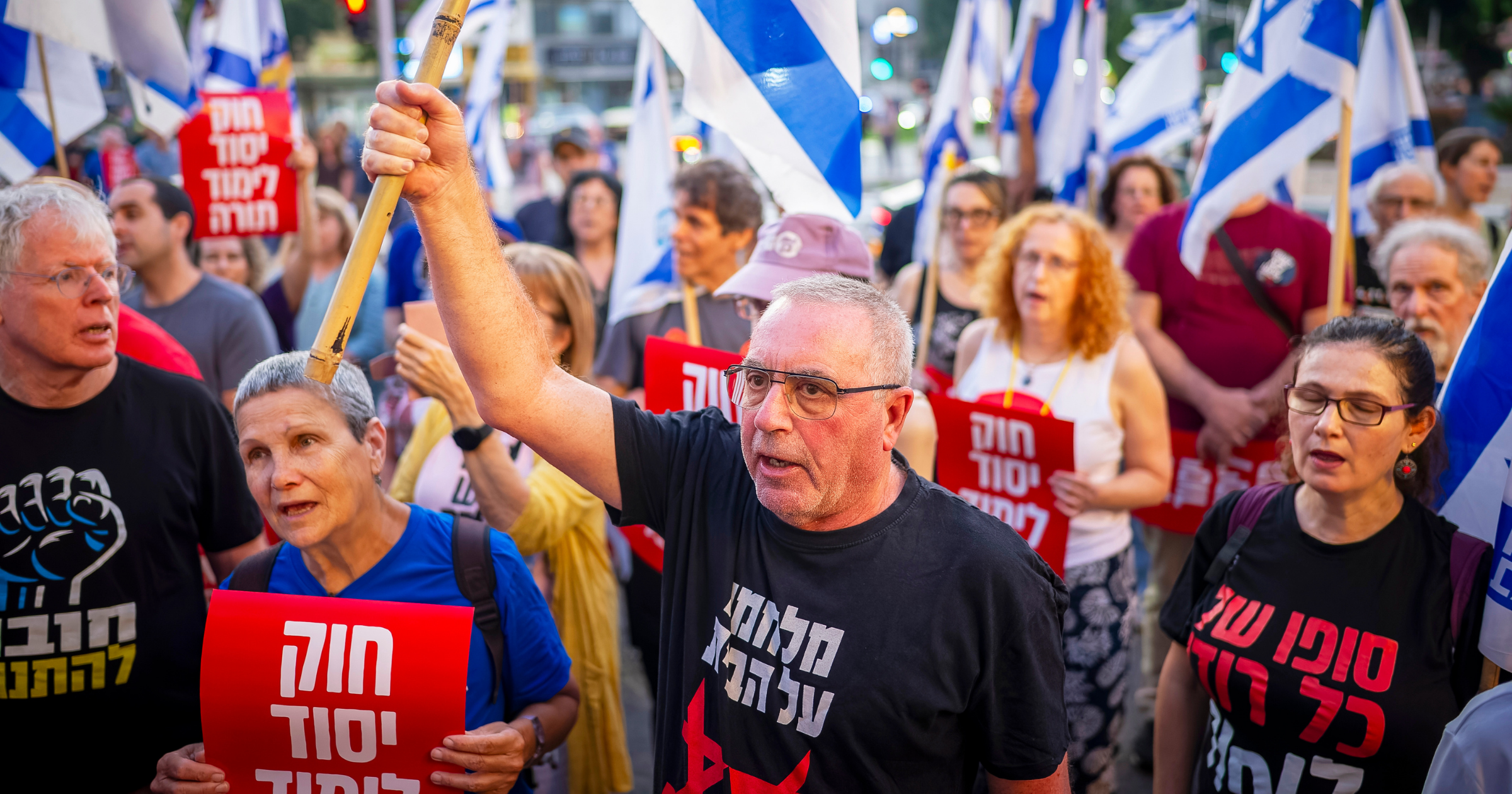
Keren Berler of Kibbutz Shoval, near Israel’s southern border with Gaza, has endured nearly three years of upheaval since the October 7, 2023, Hamas-led massacre devastated communities in the region and turned residents’ lives upside down. Now, as Israel’s first national election since the terror attacks and the ensuing wars in Gaza and with Iran draw near on October 27, Berler, who is in her 40s, said there is only one thing she wants: a change in leadership.
“I think most people in Israel will be happy to see the government change, for new leadership,” she said. “I don’t think it is any secret.”
Prime Minister Benjamin Netanyahu, who has served as Israel’s leader for more than 15 of the past 20 years, is, by most accounts, in a tough race to hold on to his job. Between 2019 and 2022, Israel held three elections before the current government, considered one of the most right-wing and religious coalitions in recent decades, was voted into office.
For this story, Hadassah Magazine reached out to a broad cross section of Israeli voters, seeking the perspectives of young and old, new immigrants and native-born Israelis, observant and secular, and residents of Jerusalem, central Israel, the North and the South.
Across the demographic spectrum, many of those interviewed said that October 27 will be one of the most consequential days on the country’s calendar. It comes three years and 20 days after the deadliest massacre in Israel’s history, a terror attack that did not fundamentally shake Israelis’ core ideologies so much as profoundly change how many view their leaders, their own roles and the roles of their fellow citizens in the State of Israel.
Nevertheless, many of these voters said, the election is not about the war. It is about returning to a sense of normalcy.
Israelis are exhausted by politics. They are looking for a leader they perceive as decent, competent, empathetic and “normal,” according to Ilana Shpaizman, a senior lecturer in the department of political studies at Bar-Ilan University. “People are not looking for ideology,” she said. “They are looking for integrity and someone who is going to manage the government and the country.”
She believes the election is about accountability for the upheaval of the last three years and about change, but not simply a change of government. It is about changing the way Israelis want to live.
Several people expressed a similar sentiment, including 36-year-old Meira Lerner, from Modiin.
“The people in general want to see some kind of change or momentum,” she said, “to reflect everything we have been through over the past few years.”
Mara Schecter put the contest in more dramatic terms. “This election will basically determine whether the State of Israel will continue to exist as we know it,” said the 54-year-old Jerusalemite. “This is the most determining election that we have ever had.”
For many, the election is about finally holding the country’s leadership to account. Even among those who continue to support Netanyahu and his Likud Party, which August polls showed drawing support from 38 percent of voters, nearly everyone interviewed said Israel should have established a national commission of inquiry into the failures surrounding October 7.
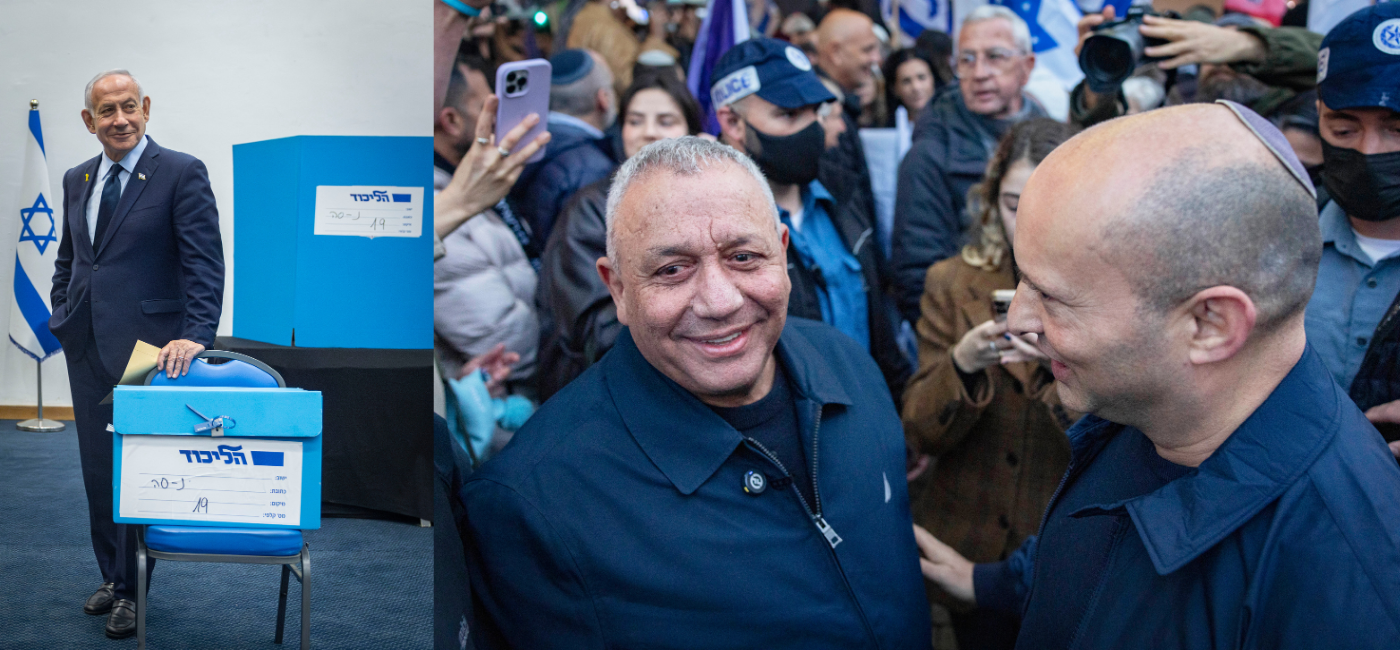
Dan Diker, president of the Jerusalem Center for Security and Foreign Affairs (JCFA), noted that polls show no clear majority for any party or bloc—the religious and politically right-wing parties in the current coalition or the more centrist and left-leaning opposition. This means that coalition negotiations to secure the 61 seats needed to control the 120-seat Knesset after Election Day could prove just as important as the vote itself, as is often the case when Israelis go to the polls.
Israel’s parliamentary system means voters elect parties, not prime ministers, making such negotiations common. The challenge is that the leader tasked by President Isaac Herzog with forming a government must have the political talent to assemble a coalition. That coalition, however, will not necessarily reflect the preferences of a majority of voters.
That uncertainty is one reason some voters, such as Ben Gido, 42, from Misgav Am on the northern border, remain concerned about the outcome. He worries that people will vote for Netanyahu because everyone else is “politically inferior,” or, as first-time voter, new immigrant and actor Diane Neal, 49, said, “He’s a known entity.”
As of August, the main challenger to Netanyahu is Gadi Eisenkot, a former Israel Defense Forces chief of staff and former government minister who lost a son and two nephews serving in Gaza. While he and other well-known candidates offer an alternative to Netanyahu, many voters interviewed said they are viewed as less dynamic than the prime minister, and they haven’t adequately articulated their platforms in the months leading up to the election.
That’s why, Berler said, even in Gaza envelope towns such as Netivot, Ofakim and Sderot, where Likud has traditionally enjoyed strong support, people say they want change but remain unsure how to achieve it. Polls suggest many are still undecided about where to cast their ballots. Berler, among those who want a change, said she is still “thinking about who to choose.”
Netanyahu continues to have his supporters. Ron Malul, 45, from Herzliya, near Tel Aviv, says he proudly watches Channel 14, often referred to as the “Bibi channel,” and believes no one has been a better leader.
But he also said he wants to ensure that whoever is elected will finish the war against Hamas, Hezbollah and Iran and not pander to the Americans or Europeans. When asked whether that candidate was Netanyahu, Malul replied, “I’ll probably vote for him. Why not? It’s not that Bibi is amazing but look at the alternatives. These are people I could not see at the helm.”
Gedaliah Blum, a 47-year-old from the settlement of Eli in the West Bank, questioned the political skills of Eisenkot, Naftali Bennett and Yair Lapid, the Yesh Atid Party leader and head of the opposition who is running jointly with Bennett and also served as prime minister. “They’re in the Little League,” Blum said, “and Bibi is playing in the major league.”
Blum said he understands why people want to hold the prime minister accountable for the tragedy that struck the country and the nearly three years of war that have claimed the lives of almost 900 soldiers. But he argued there is too much “Bibi derangement syndrome” and that many people have unfairly placed the blame on the prime minister.
Like many Israelis interviewed for this article, and many of those appearing on television news programs as the election approaches, Blum said unity and stability are more important than partisan issues.
“I want a leader who could bring people together,” he said, “not trigger people.”
A Jewish People Policy Institute survey published over the summer found that 55 percent of Israelis see internal division as the country’s greatest threat, compared with just 23 percent who identified Iran. The sharpest domestic battles center on the relationship between religion and state. Questions surrounding haredi military service, civil marriage and the role of religion in public life have opened some of the deepest fault lines.
Haredi enlistment is of particular concern to Olga Deutsch, a Serbian immigrant who lives in Petach Tikva, near Tel Aviv.
“As a mother of two boys,” said the 47-year-old Deutsch, “I fail to understand why my boys are almost certainly going to serve in the army, and I will be proud and deathly afraid while they are out there. And there is an entire population that does not have to.”
Over the summer, the Knesset passed legislation that critics say strengthens exemptions from military service for haredi men.
Lerner, from Modiin, who describes herself as Modern Orthodox, supports the practice of some Israelis dedicating themselves to full-time Torah study. But she said the issue has become more heated since October 7 as reservists have been asked to serve more time by the IDF. “We have all seen what the war and constant military service have done to the population,” she said, adding that the broad exemption has become increasingly difficult to accept.
For those on the northern border, which faces active threats from Hezbollah rocket fire, the situation is even more acute.
“We are on the front lines every day, and serving in our army is not something to argue about,” said 40-something Pnina Isenberg from Kibbutz Kfar Szold in the upper Galilee. “It is not something that people should be able to decide if they want to do or not. It is mandatory.”
Gido, from Misgav Am, has also lived under rocket fire and been displaced from his northern home for much of the past three years. While he does not believe any leader can “wave a magic wand” and solve the crises with Hamas, Hezbollah or Iran, he said the election is about stopping what he sees as Israel’s march toward extremism, with religion increasingly shaping government policy at the expense of democratic values.
Schecter, of Jerusalem, shares those concerns and worries they are already driving talented Israelis to leave the country. Data released in August by Tel Aviv University showed that 268,509 Israeli citizens between 2023 and 2025 left Israel for at least three consecutive months—an estimated 50,000 left each of these years for at least a year—a sharp increase from the 183,219 who did so a decade earlier.
“It’s only going to get worse,” Schecter said. “People are not going to want to continue living in a society that’s theocratic, corrupt and funds specific sectors that are not productive to society and don’t value democratic liberal values.”
No one interviewed for this article viewed the settlements or the recent uptick in settler violence as a decisive election issue. Likewise, few said that the broader Israeli-Palestinian conflict remained politically relevant after October 7. Indeed, a Pew Research Center survey published in June 2025 found that only 21 percent of Israeli adults believed Israel and a future Palestinian state could coexist peacefully, the lowest percentage since Pew began asking the question in 2013.
Gido still believes the best long-term solution for Israel is a political peace agreement with the Palestinians, but he said he no longer sees a viable path to achieving one in the near future. Instead, he said, he would rather focus on strengthening coexistence between Jewish and Arab citizens of Israel.
“I think the right path now is one of internal healing rather than internal fighting,” Gido said.
Blum, despite usually sitting on the opposite end of the political spectrum, reached a similar conclusion.
“The Israeli-Palestinian conflict and the two-state solution have become irrelevant,” he said. “The only real option is to build on a model that already works: coexistence between Jews and Arabs within Israel.”
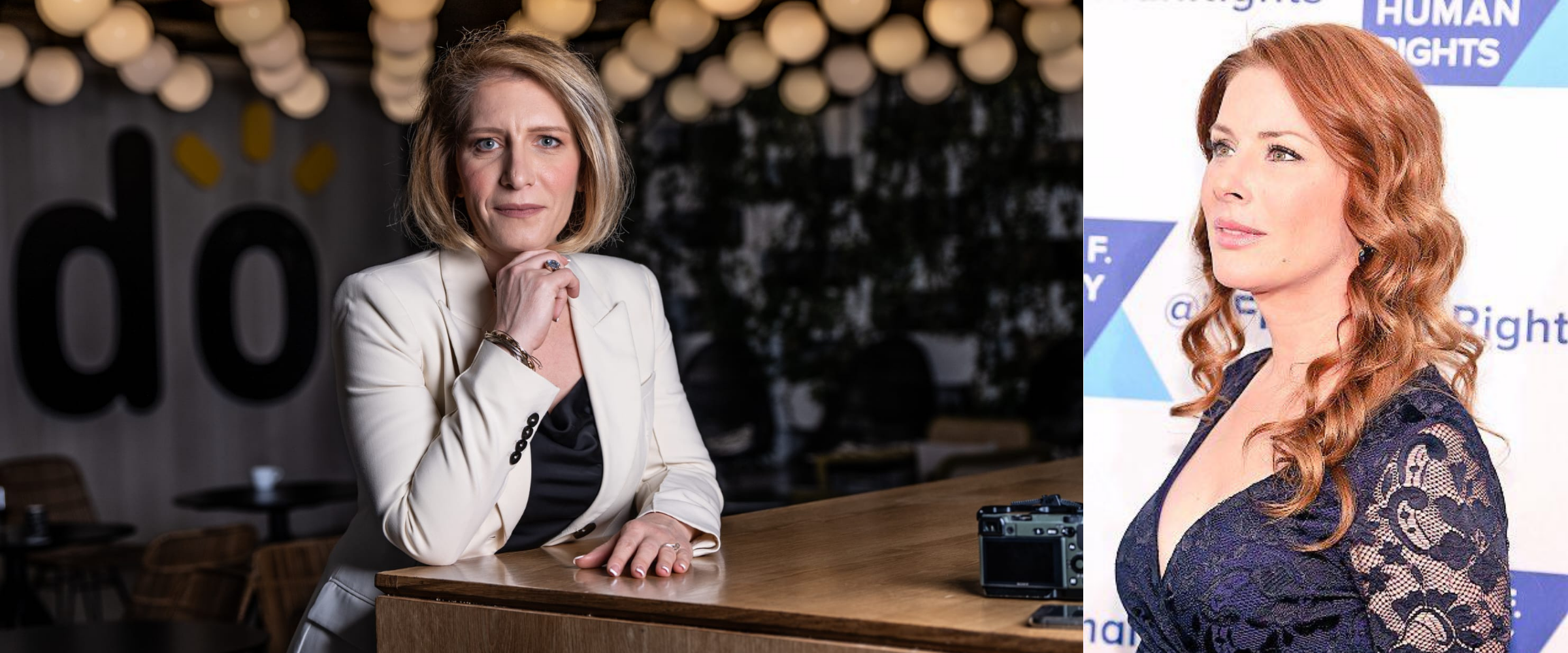
Internationally renowned Arab Israeli journalist Khaled Abu Toameh, who is in his early 60s, said concerns about equality and coexistence among Israel’s Arab citizens have grown acute since October 7. As a result, he believes more Arab Israelis will vote in hopes of bringing about change. Arabs make up 17 percent of the Israeli electorate; in 2022, 53 percent voted in the election.
“There is a feeling among Arabs that October 7 has affected relations between Jews and Arabs inside Israel,” Abu Toameh said. “This is what Hamas wanted. Hamas wanted to push Arabs into clashes with the establishment and Israeli Jewish citizens.”
His prediction is that many Arab voters will support parties they believe can form a unity government.
For younger Israelis, the conversation often shifts away from ideology altogether. After the Covid pandemic and years of war, many are simply trying to make ends meet.
“I want to see people run on living costs,” said Jerusalemite Netanel Churgin, 25, who has served several rounds of duty in Gaza since October 7.
Churgin, whose parents, he said, lean center-left, has previously voted for right-wing parties. While he remains a strong believer in a secure Israel, he said his immediate concern is improving everyday life.
The election also comes amid a period of severe international isolation. According to JCFA’s Diker, therefore, “the stakes are very, very high for Israel and the Jewish people around the world.”
Nevertheless, most interviewees doubted that a new prime minister could quickly rehabilitate Israel’s image abroad.
“The damage that has been done will take a generation to repair,” said Timna Seligman, a single mother in her mid-50s from Jerusalem.
Diane Neal, the first-time voter who recently made aliyah from the United States and might be familiar to American audiences from her role as Assistant District Attorney Casey Novak in Law & Order: Special Victims Unit, said she is excited to have her voice heard. Still, living in Herzliya, she was surprised by how many people told her they were not planning to vote.
Seligman urged Israelis to resist the temptation to stay home on election day, no matter how alienated they feel.
“It is so important for people to vote,” she said, “not only on one issue, but to look across the board at all the issues and all the parts of our society, and work with all of those parts and actually try to create a society that we can believe in.”
Maayan Hoffman is a senior American Israeli journalist and the host of the Hadassah On Call podcast. She is also the author of the forthcoming book, Traumatech Nation.
 Facebook
 Instagram
 Twitter
Leave a Reply