



The Jewish Traveler


A History of Jewish Welcome in Chalkida, Greece
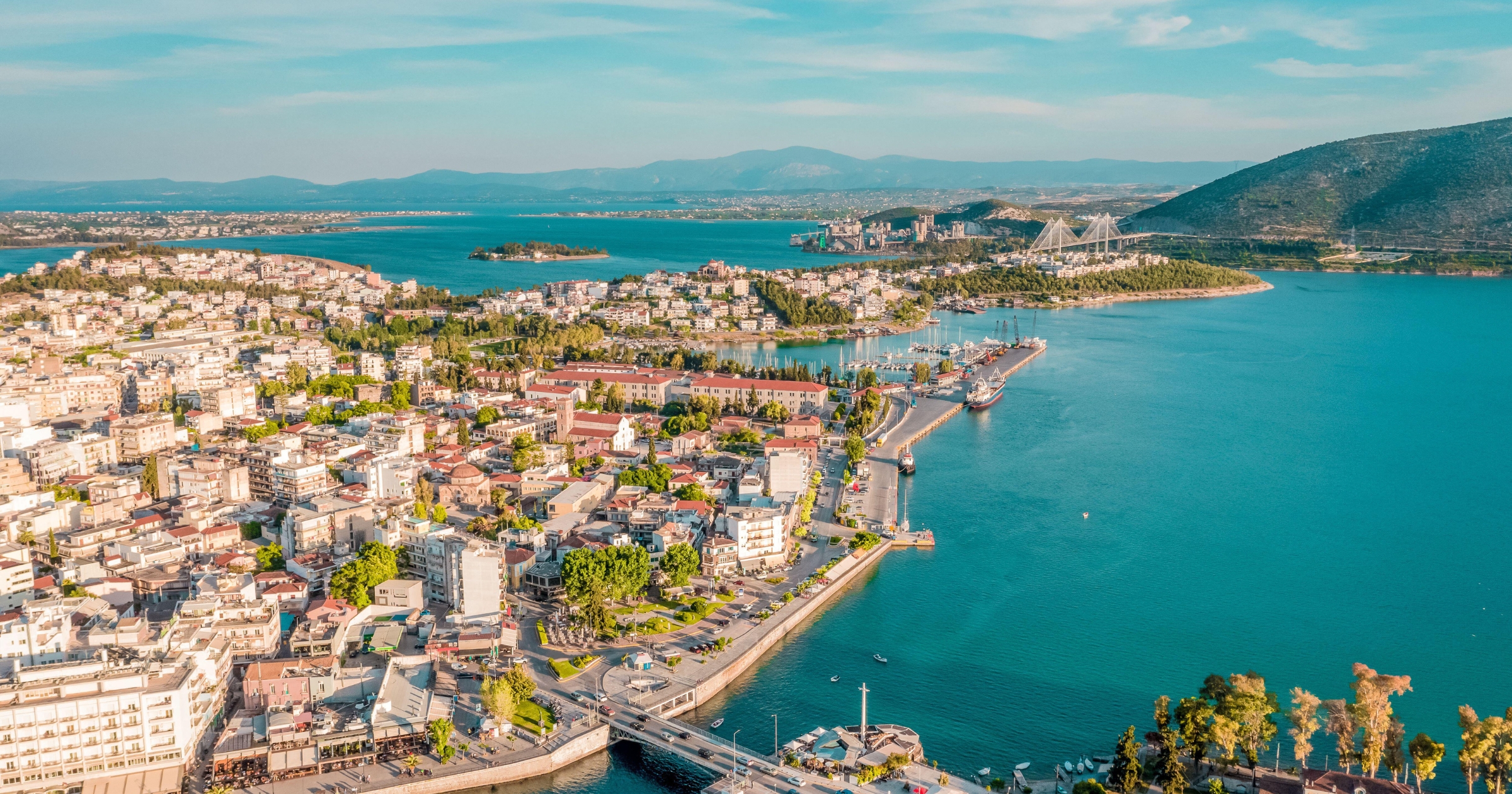
Chalkida bears the honorable distinction of being the Greek city that saved the most of its Jewish residents during the Holocaust. When my husband and I visited last year with our granddaughter, a soldier on furlough from the Israel Defense Forces, every taxi driver we encountered expressed admiration and concern for Israel as well as pride in their city’s history of saving local Jews, who numbered around 325 in the opening days of World War II.
Chalkida is the capital of Evia island, which is separated from the Greek mainland by the Euripus Strait. The city goes by many names: Chalkis, Chalcis, Khalkis and Hal-kida. The “ch” consonant in Greek is pronounced like the Hebrew letter chet. Only an hour by car or train from Athens, Chalkida is popular with urban folk seeking verdant
hiking trails, gentle swimming and picturesque views.
In recent years, it has also become increasingly popular with Israeli tourists because of its proximity via a short flight and a kosher seaside resort, Brown Beach Chalkida.
Wherever one arrives from, all visitors should try to observe the city’s unique tidal features. Several times a day, the water changes its flow of direction at sometimes unpredictable intervals depending on the phase of the moon. This phenomenon has puzzled many a polymath over the millennia, including a well-known fourth-century BCE resident named Aristotle. The city is so closely identified by its “crazy waters” that residents are called trelonerites, Greek for “the people of crazy waters.”
Chalkida’s meandering seaside esplanade, dotted with monuments dedicated to ancients like Aristotle and modern Greek heroes and artists, offers delightful walking, as cormorants fly overhead. Here, too, are the restaurants that have given Chalkida its reputation for excellent fish and seafood—none of them, unfortunately, kosher.
Jews have lived in Chalkida for thousands of years, with some scholars believing it to have the oldest continuously inhabited Jewish community in Europe. By the first century CE, historians Philo and Josephus mentioned its thriving Jewry. In 1159, traveling historian Benjamin of Tudela notes in his travelogue the 200 Jews in the city, mainly silk manufacturers and dyers. Indeed, there is a local claim, not supported by historical evidence, that the city name is derived from the Phoenician word kalchi, the pigment produced by the murex snail and historically used for the blue color tekhelet in Jewish ritual fringes.
The Jewish service rites of Chalkida are Romaniote, which predates the division of diasporic Jews into Ashkenazi and Sephardic. According to Hadassah Medical Organization geneticist Dr. Orly Elpeleg, Romaniote Jews share especially close genetic connections to Ashkenazi Jews.
Today, Chalkida has a population of 64,000, with just 55 Jews. Services take place on Friday nights and holidays in the city’s only synagogue. In the Romaniote tradition, the Torah is read from the back of the sanctuary. Seating in the men’s section is around the sides of the sanctuary, with an upstairs women’s balcony.
During the axis occupation of Greece in 1941, Chalkida was placed under relatively benevolent Italian rule. After the Italian surrender in 1943, the Nazis tried to extend the Final Solution to the island. When they demanded a list of the city’s Jews, the Greek Orthodox prelate Metropolitan Gregory produced a paper with a single name
on it: his own.
Many Chalkida Jews belonged to the Greek National Liberation Front, known as EAM, and assisted community members in finding shelter in remote villages on Mount Dirfi, which towers over Evia’s Aegean coast. Gregory hid the centuries-old Torah scrolls, which survived to be restored to the synagogue’s ark after the war.
Today, the prelate is honored with a plaque in the synagogue and a bust next to the town’s Holocaust memorial. Congregants recite the Yizkor prayers in his memory on Yom Kippur.
After the war, most local Jews moved to Israel, but a small community with historical roots remains. They bring olive oil to the synagogue every Friday night to light a lamp in memory of the 18 Chalkida Jews who did not survive the Holocaust.
Swimming in the Aegean, you might find yourself, as I did, gazing with appreciation at Mount Dirfi, where unnamed righteous gentiles saved their Jewish neighbors. The sight was topped by cumulous mists that looked to me like the sheltering biblical clouds of glory—a manifestation of God’s presence on Earth.
IF YOU GO
The Karababa Fortress is a 17th-century Ottoman-built castle on the continental coast of the Euripus Strait, opposite Chalkida, with a stunning view of the city. Look for three large 12th-century clay jars among the exhibits in the onsite archaeology museum that bear inscriptions indicating they belonged to a Jewish merchant.
Chalkida’s synagogue is housed in a yellow stucco building on Kotsou Street, in the once thriving Jewish quarter. The synagogue burned down in 1846 and was rebuilt by Duchess Sophie de Marbois-Lebrun, a Frenchwoman and Jewish convert born in Philadelphia, where her father served as a representative of France. Six marble pillars support the synagogue’s graceful arched roof. The cypress tree in the courtyard dates back 400 years.
About an hour’s walk from the synagogue and located not on Evia but on the mainland, the Brown Beach Chalkida is one of the many Greek outposts of the Israeli hospitality chain Brown Hotels, which also operates resorts in Cyprus, Croatia and throughout Israel.
The oldest graves in the Jewish Cemetery, which is still in use, date to the 14th century. A number of headstones bear a gabled-roof design, a style that is connected to the kabbalistic Tree of Life.
Just outside the cemetery, The Monument of the Greek Jewish Martyrs and Heroes of the Holocaust features a bronze plaque created by local artists that memorializes the 65,000 Greek Jews murdered in Auschwitz as well as the six million Jews killed in the Holocaust. The monument is flanked by busts of Metropolitan Gregory and local Hellenic army hero Mordechai Frizis, a Jewish officer who was killed in battle in 1940.
Barbara Sofer, an award-winning journalist and author, is Israel director of public relations for Hadassah, The Women’s Zionist Organization of America.
 Facebook
 Instagram
 Twitter


Leave a Reply