




Arts
Theater


Jewish Theater Meets the Moment
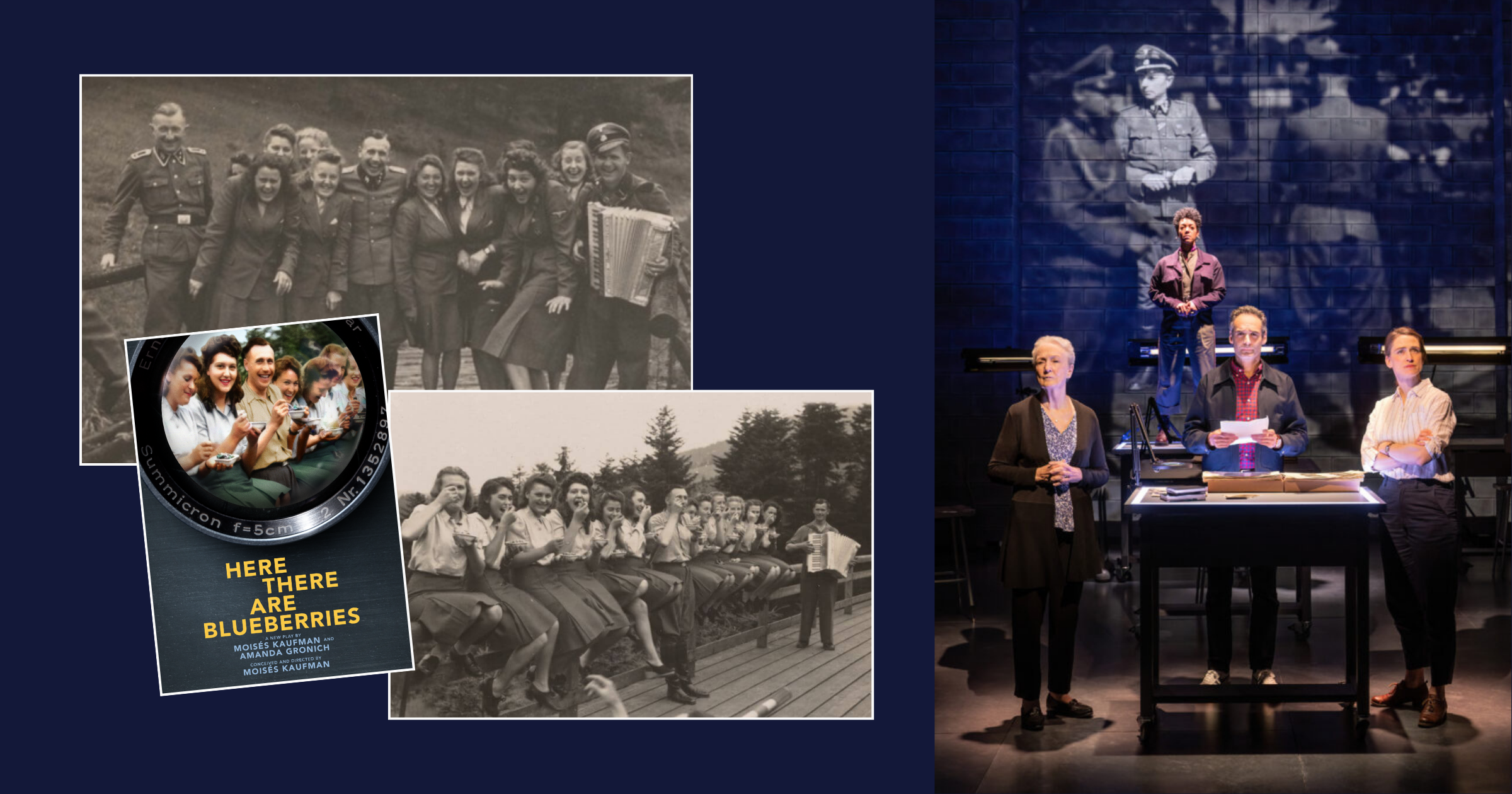
A dozen uniformed women aged 18 to 30 pose in a photo atop a split-rail log bridge at a European chalet near the Auschwitz concentration camp around 1944. They hold spoons and white porcelain bowls brimming with blueberries and cream. A lean, 30-something SS officer perches among them, grinning from ear to ear.
This group shot comes from the SS officer’s personal album, which documents his time as administrative assistant to the head of Auschwitz. The photos of young women and Nazi officers socializing just a few miles from the crematoria are chilling in their display of nonchalant complicity. How the album came to be donated to the United States Holocaust Memorial Museum in Washington, D.C., in 2007 and who and what its pictures depict are at the heart of the compelling documentary-style play Here There Are Blueberries, which is slated for a 10-week run at Broadway’s Barrymore Theatre beginning November 9. The play’s title comes from a caption on the back of one photo. Projections of these historical images dominate the stage, confronting the audience as they watch researchers and curators investigate the album as well as debate how and if the photos should be displayed.
Venezuelan American theater director and filmmaker Moisés Kaufman, a recipient of the National Medal of Arts, co-wrote the play with Emmy-nominated playwright and screenwriter Amanda Gronich. They explained their creative motivation to Hadassah Magazine in this joint statement: “At a moment when authoritarianism is on the rise around the world, these photographs force us to confront what human beings are capable of when given permission. As descendants of Holocaust survivors, we began with our own history, but the play ultimately asks something larger and more urgent: Who are we in these photographs—and what do they reveal about us today?”
Other new and recent productions on Broadway, Off Broadway and in local theaters are asking similar questions about what this moment reveals about our country and the space it makes for Jewish stories. Jewish-themed theater has long tackled difficult questions of history, identity and morality. Newer productions such as Here There Are Blueberries, Giant and Birthright are using the power of live performance to challenge audiences and tap into their empathy.
At the same time, theater artists are grappling with how to tell distinct Jewish stories with universal appeal amid rising anti-Zionism and antisemitism. These tensions were underscored in October when Chicago’s Arts Judaica Jewish theater company decided to drop a planned revival of Naomi Ragen’s play Women’s Minyan, about a haredi woman fleeing an abusive marriage. According to a report in the Jewish Telegraphic Agency, the cancellation was due to the fear of actors, directors and designers of a backlash over working with the Israeli American novelist and playwright, an outspoken right-wing voice.
Here There Are Blueberries premiered at La Jolla Playhouse in San Diego in 2022. A finalist for the 2024 Pulitzer Prize for Drama and winner of the 2025 Lucille Lortel Award for Outstanding Play, it has cross-generational appeal.
Kyle Valentine, at 29, is the Broadway production’s youngest co-producer. “The dark mystery and power of the subject matter drew me in,” he said in an interview. “How did the people in the photos coexist with what was going on at the death camp next door?”
Valentine is not Jewish but believes in the urgency of the show’s subject.
“At a time of so much division,” he said, “we need to bring people together to humanize each other.”
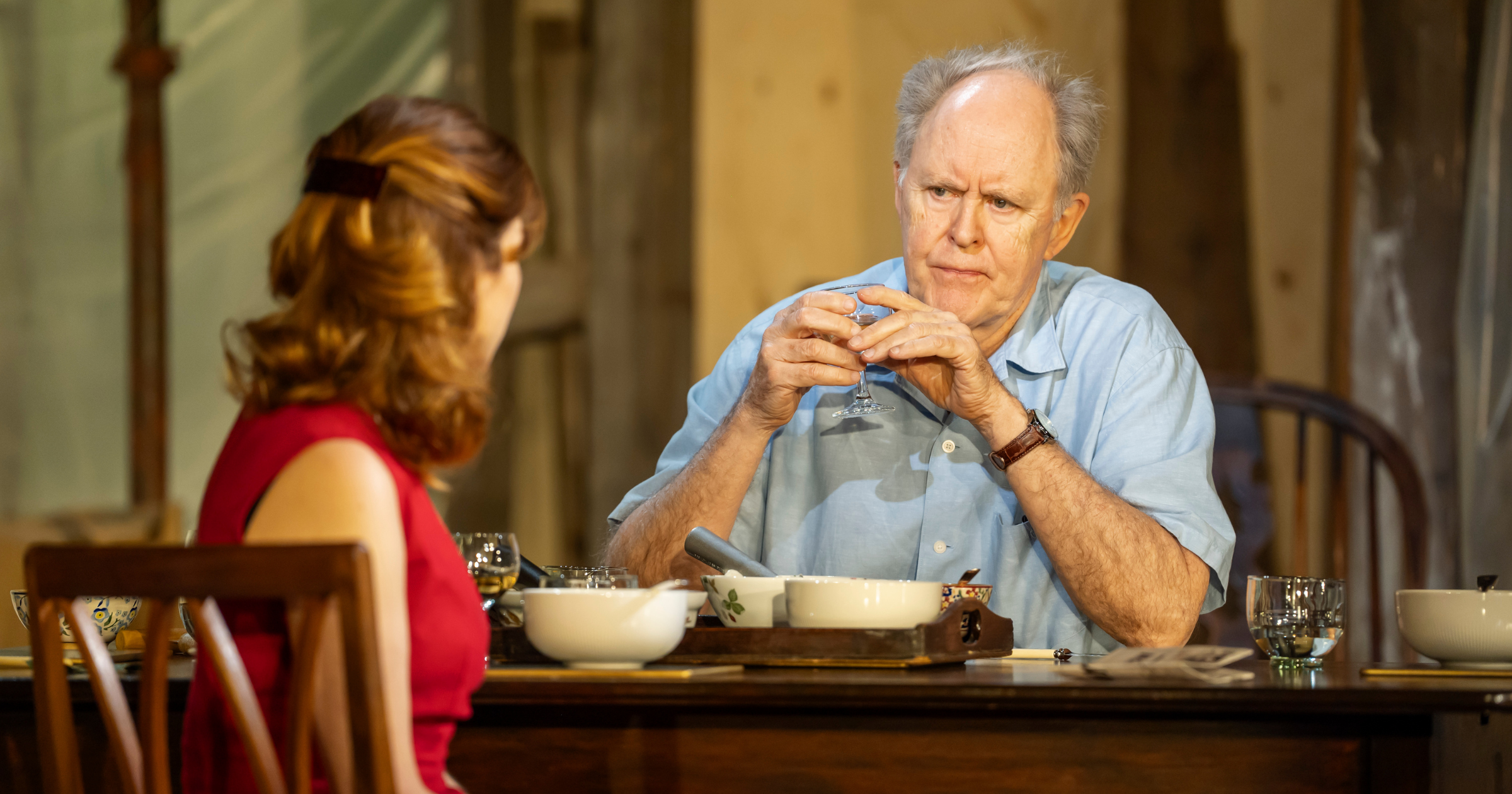
Another play grappling with troubling subject matter—the antisemitism of beloved children’s book author Roald Dahl—became a smash hit on London’s West End in 2025 and on Broadway earlier this year. Giant, by British writer/director Mark Rosenblatt, won three Olivier Awards, including Best New Play and Best Actor, in the United Kingdom and a Tony Award for Best Actor for John Lithgow, who played Dahl in both productions. Both shows have now closed, but a film of the West End production is set to be released in theaters worldwide on November 19.
Other New York-area plays that appear ripped from the headlines include Tony-winning playwright Jonathan Spector’s Birthright, which ran Off Broadway at Manhattan’s MCC Theater this summer.
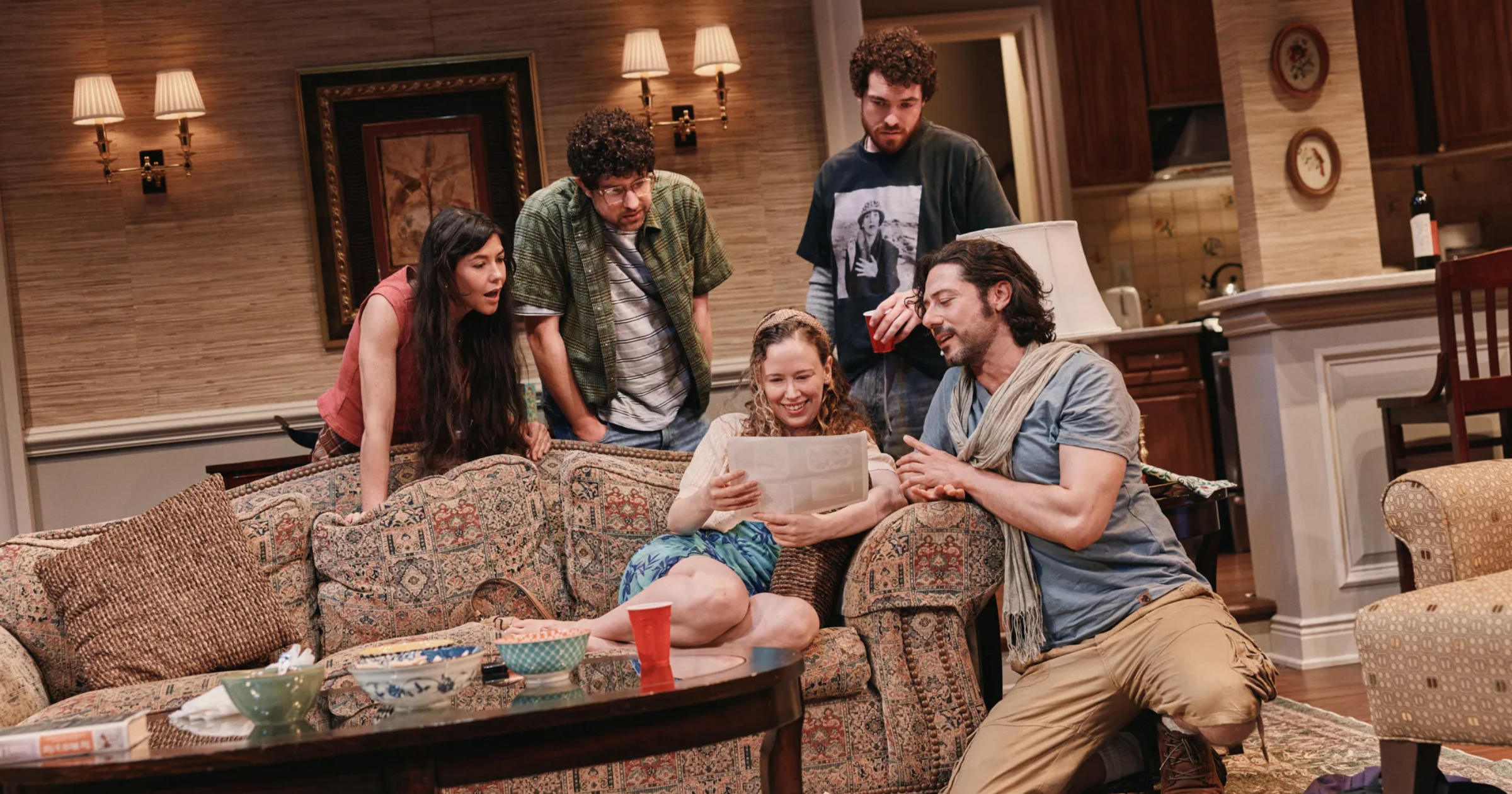
Birthright chronicles six friends who develop a strong bond on a Birthright Israel trip in 2006, their subsequent reunions and changing attitudes toward Israel over 18 years and how post-October 7, 2023, political arguments test their connections. A New York Times critic’s pick, the play has been hailed as capturing the zeitgeist of its generation, while Vanity Fair called it “group therapy for Jewish Americans.” Despite Theater Workers for a Ceasefire calling for a boycott, performances sold out, and the production, which had been scheduled to close in July, extended its run through August.
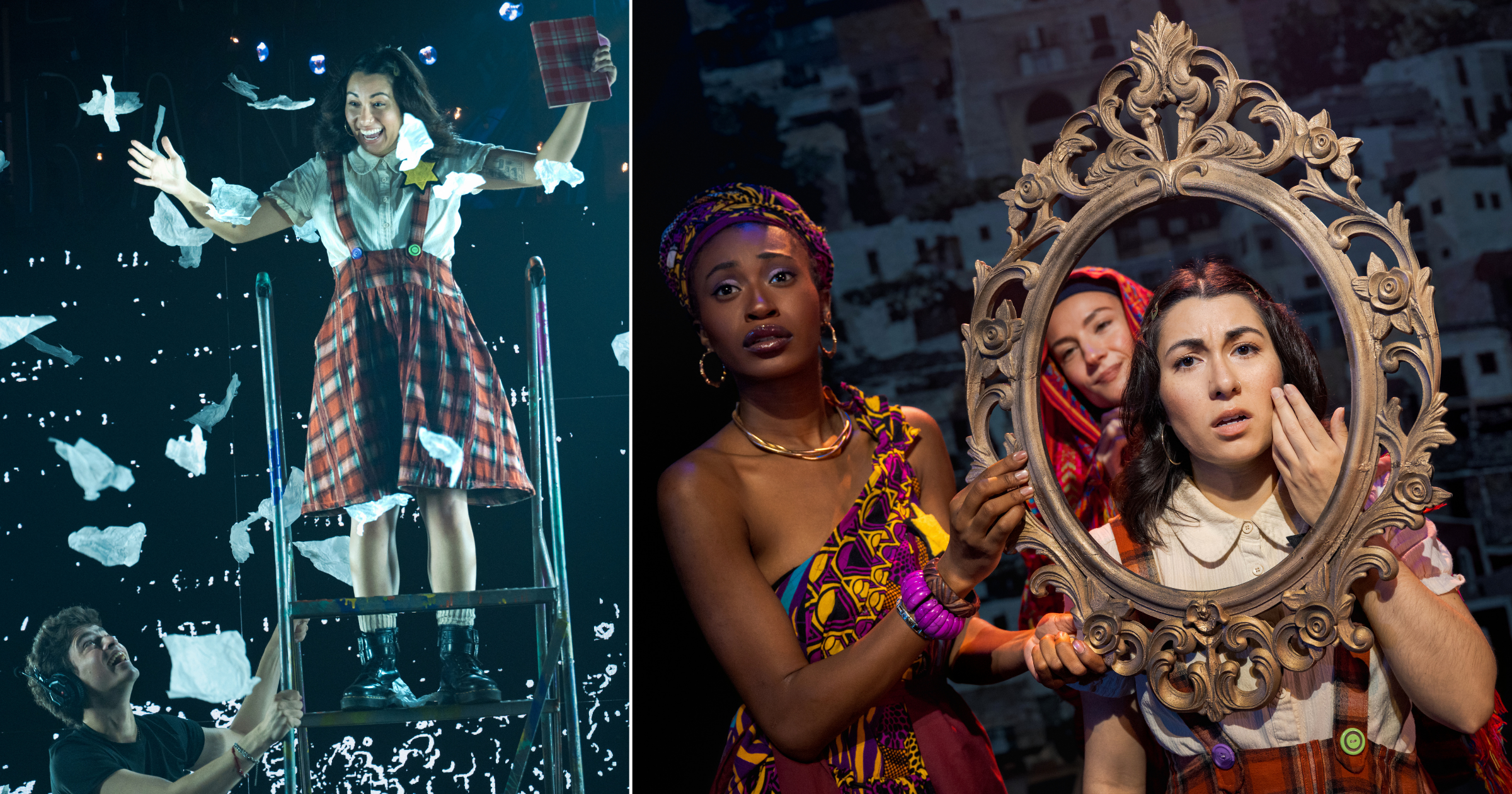
Then there is the provocative, satirical hip-hop musical Slam Frank, currently Off Broadway at the Orpheum Theatre in Manhattan’s East Village through November. With music and lyrics by Andrew Fox and book by Joel Sinensky, both Jewish, Slam Frank features an ultra-progressive theater company mounting an identity-bending version of the story of Anne Frank. Anne, or Anita Franko, is portrayed as a pansexual Latina with a Black mother, a neurodivergent gay father, an ultra-Orthodox Jewish sister and a gender-fluid love interest.
The show-within-a-show, which lampoons performative identity politics as well as modern theater culture, was derived not from news headlines, but from social media. In an interview on Broadway.com, Fox said the play was inspired by a 2022 viral Twitter thread debating the question, “Did Anne Frank ever acknowledge her white privilege?”
Other playwrights and directors are reaching beyond Israel and the Holocaust to capture the diversity of lived Jewish experience. “I’m a playwright who writes plays with very Jewish themes,” said Ali Viterbi. She has numerous regional theater productions under her belt yet still says she has had mixed experiences at local theaters—“some incredible ones, where I felt supported as a Jewish artist, and some not so much.”
RELATED READING: A Playbook for Producing Jewish Theater
Nevertheless, she believes in the importance of producing Jewish theatrical work for general audiences. The World to Come, her play about residents of a Jewish senior living home facing the apocalypse, was produced at the Woolly Mammoth Theatre Company in Washington, D.C., earlier this year. The show, lauded by critics, attracted audience members of all ages and backgrounds.
The busy playwright just workshopped a new play, Linguicide, about the Jewish language of Ladino traced through hundreds of years of Greek history, also in Washington. Viterbi, a new mother, also just wrote a play about Jewish infertility and is in the middle of writing one about a high-risk pregnancy unit.
In Southern California, Israeli American actor, lyricist, playwright and director Omri Schein recently directed a revival of Beau Jest, James Sherman’s 1989 romantic comedy about a Jewish woman who hires an actor to impersonate her invented Jewish doctor boyfriend in an attempt to please her parents, at North Coast Repertory Theatre.
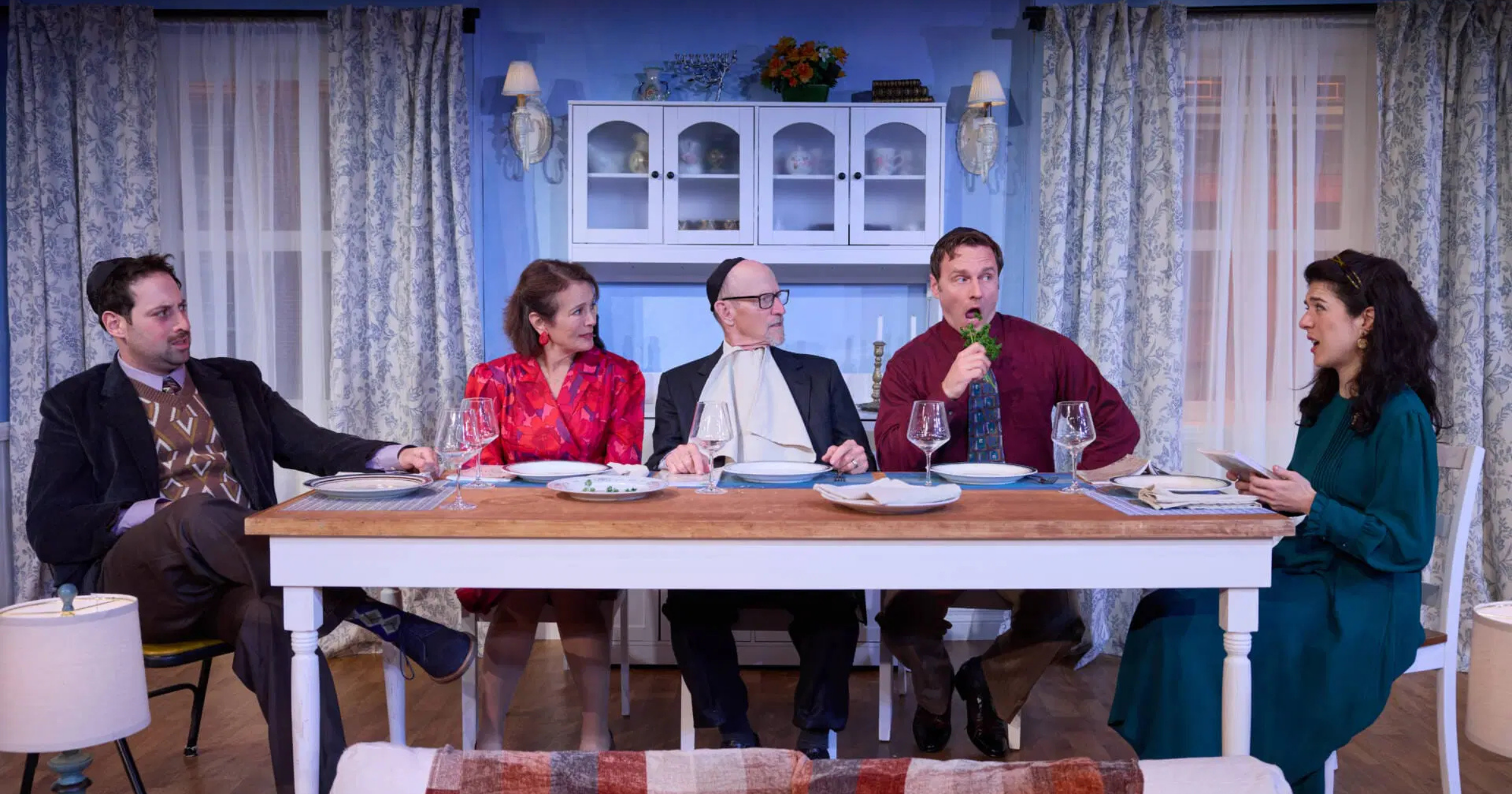
Schein was initially worried that Beau Jest’s appeal would be limited to Jewish audiences. But his fears were unfounded, he said. “Just like Fiddler on the Roof, Beau Jest is immensely universal. A story about family, not wanting to disappoint your parents, worrying for the well-being of our children and, ultimately, love. What is more universal than that?”
Viterbi, who is on the board of the nonprofit Alliance for Jewish Theater, recently produced a guide to presenting Jewish theater. The resource includes reminders that “Jewish plays aren’t just for Jewish audiences” and that “in an era of increasing antisemitism, Jewish representation is more important to theatergoers than ever.” Viterbi herself has found that non-Jewish audiences are excited about her plays, “while Jewish audiences,” she said, “sometimes question whether the work is too Jewish—can it even be relatable to other audiences?”
Sometimes, she added, Jews themselves are uncomfortable with telling Jewish stories loudly and proudly. Despite the discomfort, the boycotts and cancellations, “Jewish art has pushed forward,” she said. “I hope that is a signal to the rest of the country that there is an audience for Jewish work.”
Sharon Rosen Leib is an award-winning journalist. Her work has appeared in multiple outlets, including Variety, NPR, the Forward and Times of Israel. She is currently writing her first book, Hollywood Sol, an intimate look at her great-grandfather’s experience as a pioneering Jewish studio head.
 Facebook
 Instagram
 Twitter


Leave a Reply