





SPONSORED CONTENT: The Importance of Rituals
“We desperately crave ritual.”
As a Jewish milestone event planner, I spend a lot of time working through traditions and rituals. While we may not register it, an object as simple as a birthday cake is a ritual. Gathering to celebrate a birthday, in and of itself, is ritualistic.
I came across a TED Talks Daily podcast episode recently titled “Why You Should Make a Spectacle Out of Life” featuring Lear deBessonet, the theater director and founder of Public Works. In it, she says, “Even a very calm wedding—still, the ritual of it is spectacle. And ritual and spectacle have a lot to do with one another… I think we desperately crave ritual. Even the experience of throwing a dinner party is a bit of a spectacle.”
It is clear to me that we crave ritual. But why? Why do even the most serious non-believers among us incorporate rituals into their events?
What is a ritual?
Let’s start by defining “ritual.” The Cambridge Dictionary defines ritual as “a way of doing something in which the same actions are done in the same way every time.” If we look at events with that definition of “ritual” in mind, we see cornerstone actions done the same way, even when they include personal touches: the exchanging of rings at a wedding, making a wish before blowing out candles on a birthday cake, and switching a tassel from right to left at a graduation ceremony.
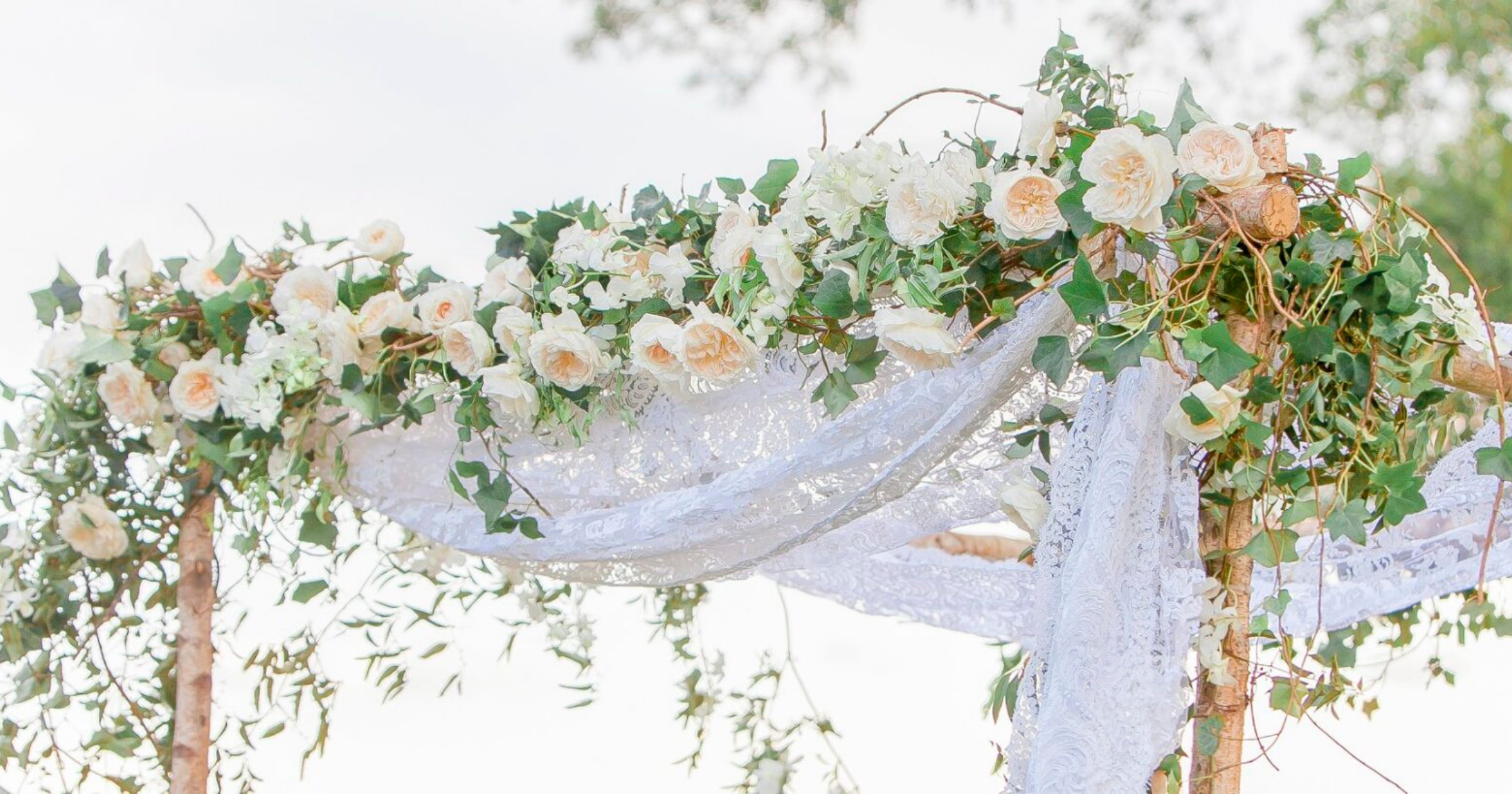
Drawing from my personal experience, we had a blast incorporating Persian Jewish and Ashkenazi Jewish wedding traditions into our wedding. From the Persian Jewish (my) side, there was a petal toss during the cake-cutting ceremony. It is what it sounds like: the guests shower the couple with flower petals as they cut the cake. We also practiced the Ashkenazi Jewish wedding tradition of having our mothers break a plate together before the chuppah.
Why do we incorporate rituals into events?
So why do we do it? One perspective is that people incorporate rituals into their events exclusively to placate family, religious leaders, judgmental communities, or to otherwise meet a societal expectation. While that may be true in some cases and play a role in others, I refuse to subscribe to a singular, uninspired motive. It fails to explain why even the most unconventional people follow some form of tradition. My clients are savvy, modern, freethinking types. They have gone against the grain in many areas of their lives, so why not do so for their milestone events?
Traditions codify memories
As with most things, the reasons are personal. As an event planner with a 13-year history in the industry, here’s what I know: Rituals help people acknowledge and celebrate transitions and milestones. They provide a sense of closure and moving forward. When we look back, the past is marked by traditional milestones and lifecycle events: your son’s bar mitzvah, your daughter’s college graduation, your best friend’s wedding.
Rituals connect us to our past and future
Take the Jewish wedding tradition of reciting the sheva brachot (seven blessings) under the chuppah. These blessings bless the new couple with love, laughter, wisdom, health, creativity, a loving home, and community. The sheva brachot are formally recorded in the Talmud’s Masechet Ketubot, written in the seventh century CE. As if that weren’t awe-inspiring enough, the origin of the blessings can be traced back to the apocryphal Book of Tobit and the Dead Sea Scrolls, which were written during the Second Temple, dating as far back as the third century BCE. When couples are blessed under the chuppah with these sheva brachot, they are tying themselves to a history that can be traced back 2,000 years, recited at millions of Jewish weddings around the world from the early Middle Ages until today.
As for the guests, people participating in or bearing witness to rituals feel connected to the group around them. This shared experience fosters a sense of belonging, a fundamental human need.
That is why events matter. To me, they are more than just parties; they are the whole point of life. Marking moments matters. Having shared experiences matters. Memories matter.

Parting words from an NYC event planner
Like life itself, the opportunity to mark the moment in the moment, with the people who are around today, is fleeting. There is a right time to celebrate; it’s now.
While people host events for different reasons, my perspective is that the point is to gather with loved ones in an intentional, thoughtful way that honors the milestone at hand.
If you could benefit from the expertise, experience, knowledge and network of a seasoned professional, look into how an event planner can help you. I meet my clients where they are, empathize with their challenges and vision, and partner with them to plan an event that is memorable, authentic, and respectful of their values. Visit my website, eventstolife.com, to find out more.
This story was written by and sponsored by Chantelle Wolfe, the founder of Events To Life and a certified events professional with over 13 years of experience. She helps families plan Jewish milestone events where tradition and celebration come together in meaningful ways. Based in Manhattan, N.Y., and Teaneck, N.J., Events To Life caters to discerning clients across New York City and North Jersey, balancing elegance, precision and personalization. Events To Life’s mission is to allow families to fully experience their celebrations while helping them plan events that are elevated, timeless and memorable.
 Facebook
 Instagram
 Twitter

Leave a Reply