



Books


REVIEW: ‘Evening Begins the Day’
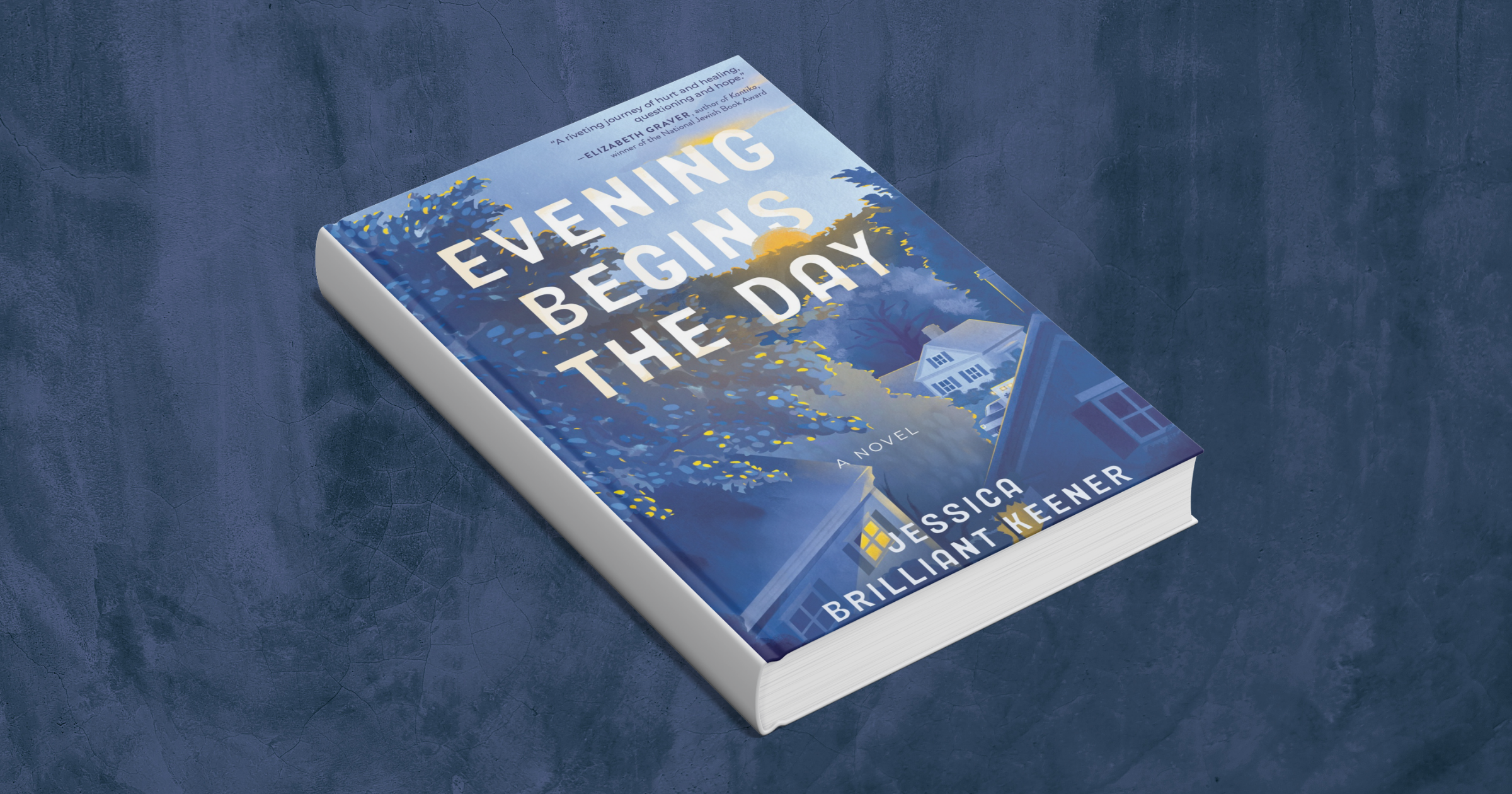
Evening Begins the Day
By Jessica Brilliant Keener (Koehler Books)
Jessica Brilliant Keener’s moving new novel, Evening Begins the Day, tells the intertwined stories of two Jewish families in crisis—the Cohens and the Meyers. Rachel and Ezra Cohen are on the brink of divorce after Rachel discovers that her husband has had an “emotional affair” with a parent of one of his students. Meanwhile, Cynthia and David Meyer are struggling to help their severely depressed teenage daughter, Lauren.
Keener tells her tale through alternating chapters that shift among the women’s perspectives. Rachel’s first-person accounts are particularly compelling as she navigates the murky terrain of this type of infidelity. She does not understand what an emotional affair is until she turns to the internet and discovers that it is a nonsexual relationship “Characterized by emotional intimacy. Romantic bonding. Secrecy. Can wreak havoc on a marriage.”
The chapters chart Rachel’s confusion, shame, hurt and, unsettling for her, curiosity. What exactly did it mean that Ezra told another woman he loved her? Is this real love, or a passing storm in an otherwise stable marriage?
Answers—both hers and others in the book—slowly unfold through a fascinating Jewish tradition: the Counting of the Omer, Sefirat Ha’-Omer in Hebrew, the counting of 49 days from the second day of Passover to the start of Shavuot. Jewish mysticism marks those days as a spiritual journey from the redemption of the Exodus to the revelation of the giving of the Torah at Sinai.
Rachel, an educator and environmental consultant, leaves the North Shore, Mass., home she shares with Ezra and rents a small apartment in a suburb outside Boston, next door to her colleague Cynthia Meyer. The two are working together on a school curriculum focused on environmental issues.
But Cynthia’s family is also in crisis. She and David are at a loss over how to help their daughter, whose despair and rage seem fueled by climate change, systemic racism and social injustice. “Life Sucks. Why leave a message?” is the voicemail greeting on Lauren’s cellphone. At times a familiar portrait of the existential anxiety of her generation, Lauren rejects her parents—particularly her mother, whom she sees as exacting and controlling—constantly skips school and regularly uses marijuana.
Meanwhile, David has reconnected with Judaism through a small, unaffiliated congregation. And it is through this congregation that David learns about the Omer and shares his knowledge with others. The ritual resonates differently with each character, guiding them toward self-examination, tentative healing and possible reconciliation.
In Keener’s novel, the Counting of the Omer becomes an innovative framework for healing. Through her highly relatable characters, she explores marriage, parent-child relationships and the unexpected resilience found in Jewish ritual.
Judy Bolton-Fasman is the author of Asylum: A Memoir of Family Secrets.
 Facebook
 Instagram
 Twitter

Leave a Reply