



Books
Non-fiction


REVIEW: ‘A Force for Good’
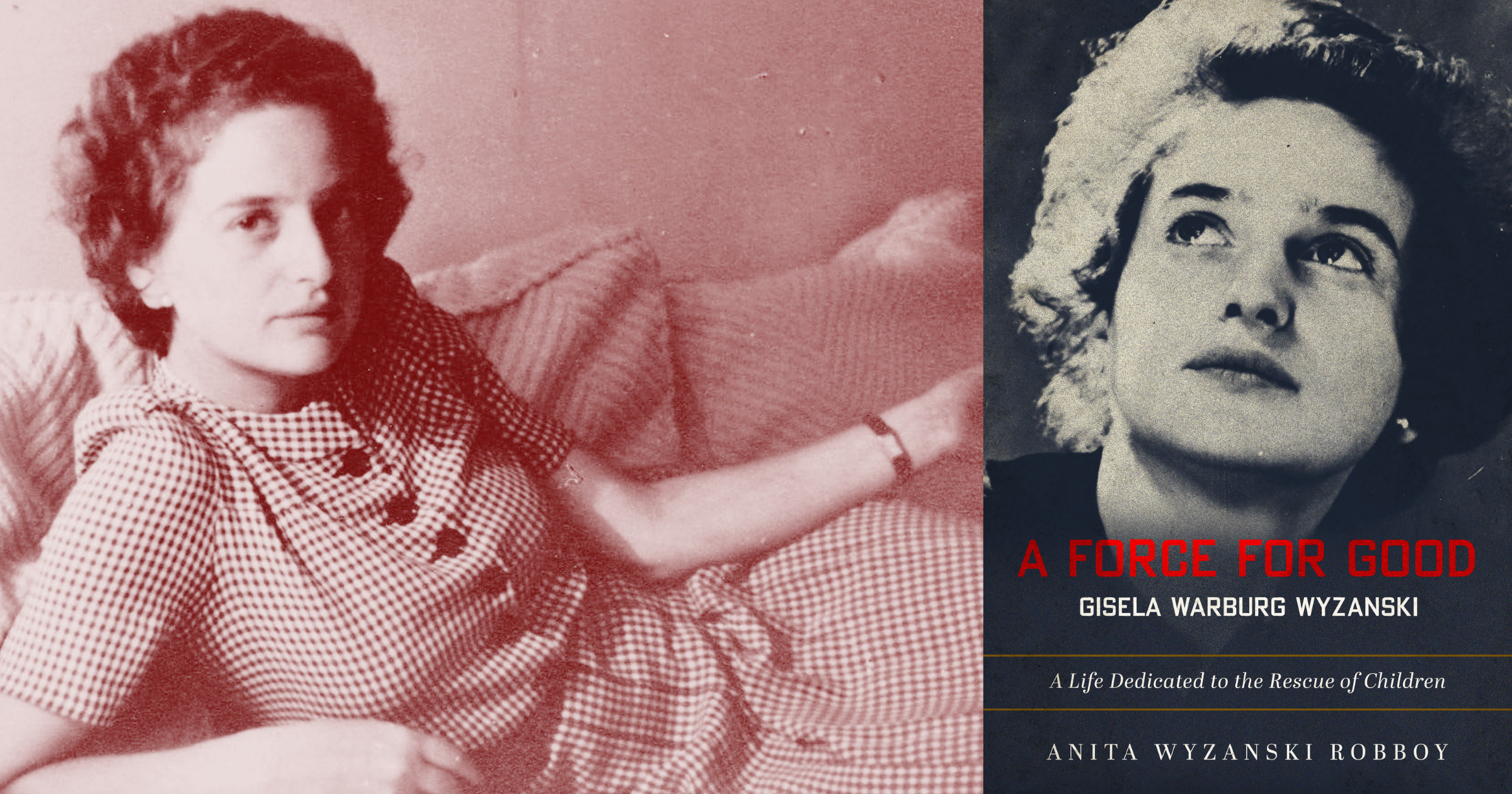
Much has been written about World War II, the Holocaust and the decades or so before the emergence of Israel, but once in a while, new information surfaces that sheds fresh light on fascinating details of life in Europe during that era. Such is the case with A Force for Good, an intimate and loving biography of Gisela Warburg Wyzanski. Born in 1912 into the Warburg German Jewish banking family and later married to a prominent American judge, Charles Wyzanski, she used her wealth and influence to combat the horrors of her times and rescue Jewish children through Youth Aliyah.
This fascinating book grew out of a carefully preserved trove of letters and documents uncovered in 2020 by Wyzanski’s daughter, Anita Wyzanski Robboy, the book’s author. Through vivid and meticulous prose, Robboy tells the story of her courageous mother, who risked her own life to help thousands begin new lives in pre-state Israel.
In 1934, after Adolf Hitler merged the offices of chancellor and president to become reich führer, most of the Warburgs left Germany—some immigrated to the United States, others to British Mandate Palestine. Yet Wyzanski, then a young woman working with Youth Aliyah, remained in order to save Jewish children.
In 1935, an aunt invited her to Palestine—her third trip there. She agreed but asked to meet one of her heroes: Henrietta Szold, founder of Hadassah and director of Youth Aliyah in Israel.
The two met on March 3 of that year, when Szold invited Wyzanski to join her in greeting the fifth group of Youth Aliyah children from Germany at the Jaffa port. They spent several days together, an experience that Wyzanski described as formative. In her letters to her parents, she writes that Szold, then 75, “has a soul of gold, but she is as stubborn as a donkey,” and describes Szold’s daily routine, which began at 5 a.m. with exercise and personal care.
That 1935 trip marked the beginning of Wyzanski’s correspondence with Szold and a treasured intergenerational friendship.
As Hitler continued his assault on Jews, Wyzanski, who had finally left Germany and moved to New York, began working for Hadassah as national chairperson of Youth Aliyah. It was 1940, and the Jewish refugee crisis was deepening.
Wyzanski rose rapidly in Hadassah, working desperately to raise funds and rescue as many children as possible. In 1941, in an address at the 27th Hadassah convention, she spoke of the power of Zionism to strengthen children’s resilience in the face of Hitler’s menace, words that resonate today.
“Transfer of children from Europe to Palestine is then but one aspect of our movement which embraces the physical and psychological needs of a youth yearning for the fundamental rights of life, liberty and the pursuit of happiness,” Wyzanski said. “You should feel proud and blessed that in a world where death and destruction are the bitter portion of millions of human beings, yours is the responsibility and the joy of creating a generation truly imbued with the spirit of democracy and the upbuilding of Palestine.”
Stewart Kampel was a longtime editor at The New York Times.
 Facebook
 Instagram
 Twitter

Leave a Reply