



Arts


Kaliner Gallery Brings a Bit of Tel Aviv to New York City
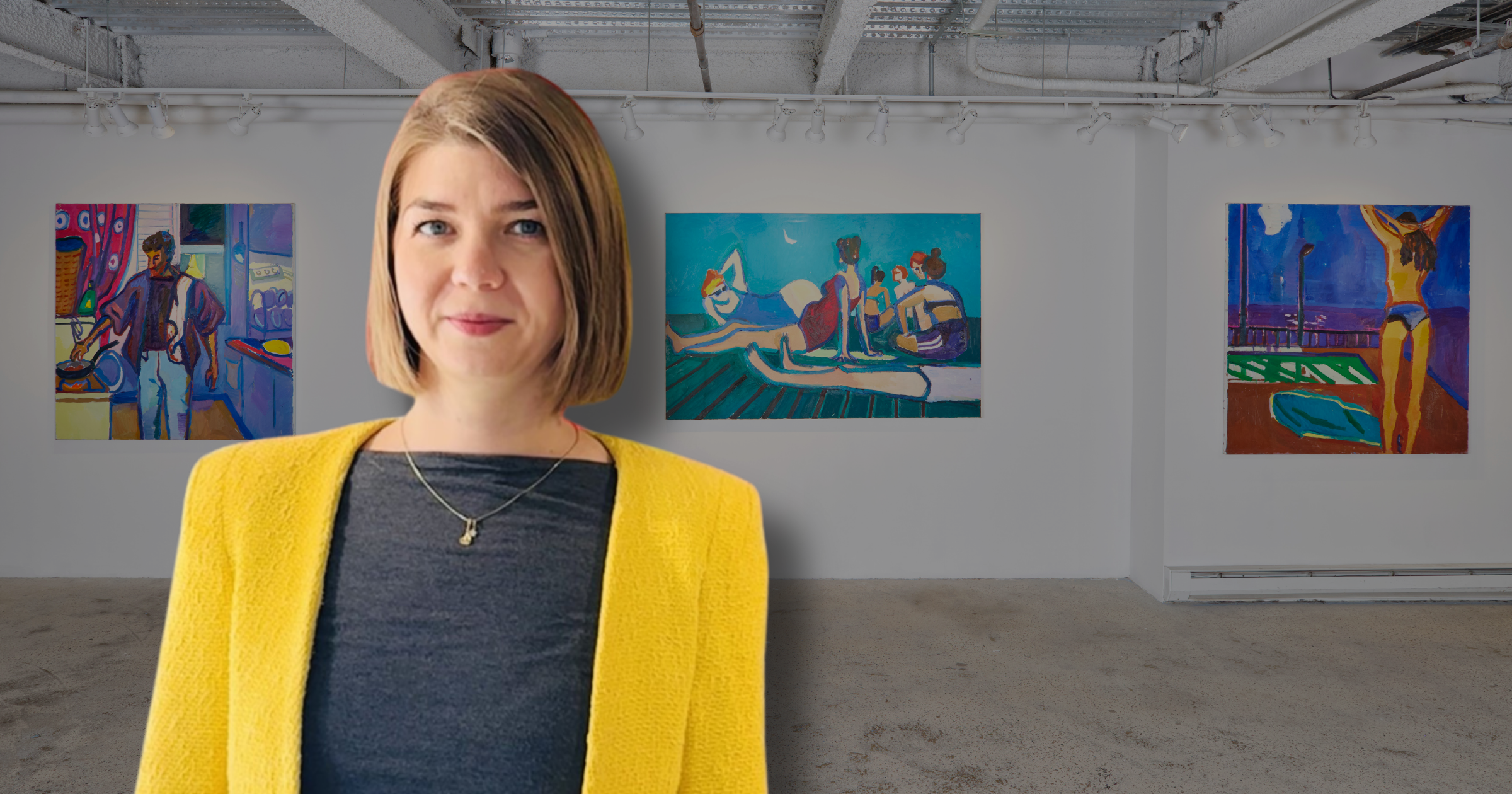
When Maryana Kaliner first saw the street block and raw space on the Lower East Side of New York City that would house her namesake gallery, Kaliner, she knew it was just right.
It reminded her of the Florentin neighborhood in Tel Aviv. “Same vibe: Hipsterish, a mix of low key and upscale,” she said, the type of atmosphere she wanted in her gallery.
That was three years ago, and the Russian-born Israeli gallerist had been unaware of the rich Jewish history of the neighborhood. But what she has since learned about the Lower East Side, once considered the epicenter of American Jewish life, further confirms her initial impression of the light-filled, 800-square-foot space on Allen Street.
Kaliner Gallery is stylishly industrial, with a high ceiling, concrete floors and windows so large that passersby can see the art inside. She stages eight or nine thematic shows a year focusing on contemporary female artists, many of them Israeli. Kaliner, 40, feels strongly about showcasing artists from Israel, she said, “because the art in Israel is amazing. I’m really proud to bring a piece of my culture to New York, in spite of the polarizing conflict.
“Artists didn’t choose this conflict,” added Kaliner, who said she has worn a gold Star of David around her neck since October 7, 2023. “The work deserves to be seen. This is a significant part of my mission.”
In summer 2024, Kaliner exhibited works by three members of Israel’s noted New Barbizon Group—Olga Kundina, Anna Lukashevsky and Natalia Zourabova—in their first New York City show. The collective, initially composed of five figurative painters from the former Soviet Union trained at Russian academies, took its name from the 19th-century French realist Barbizon School.
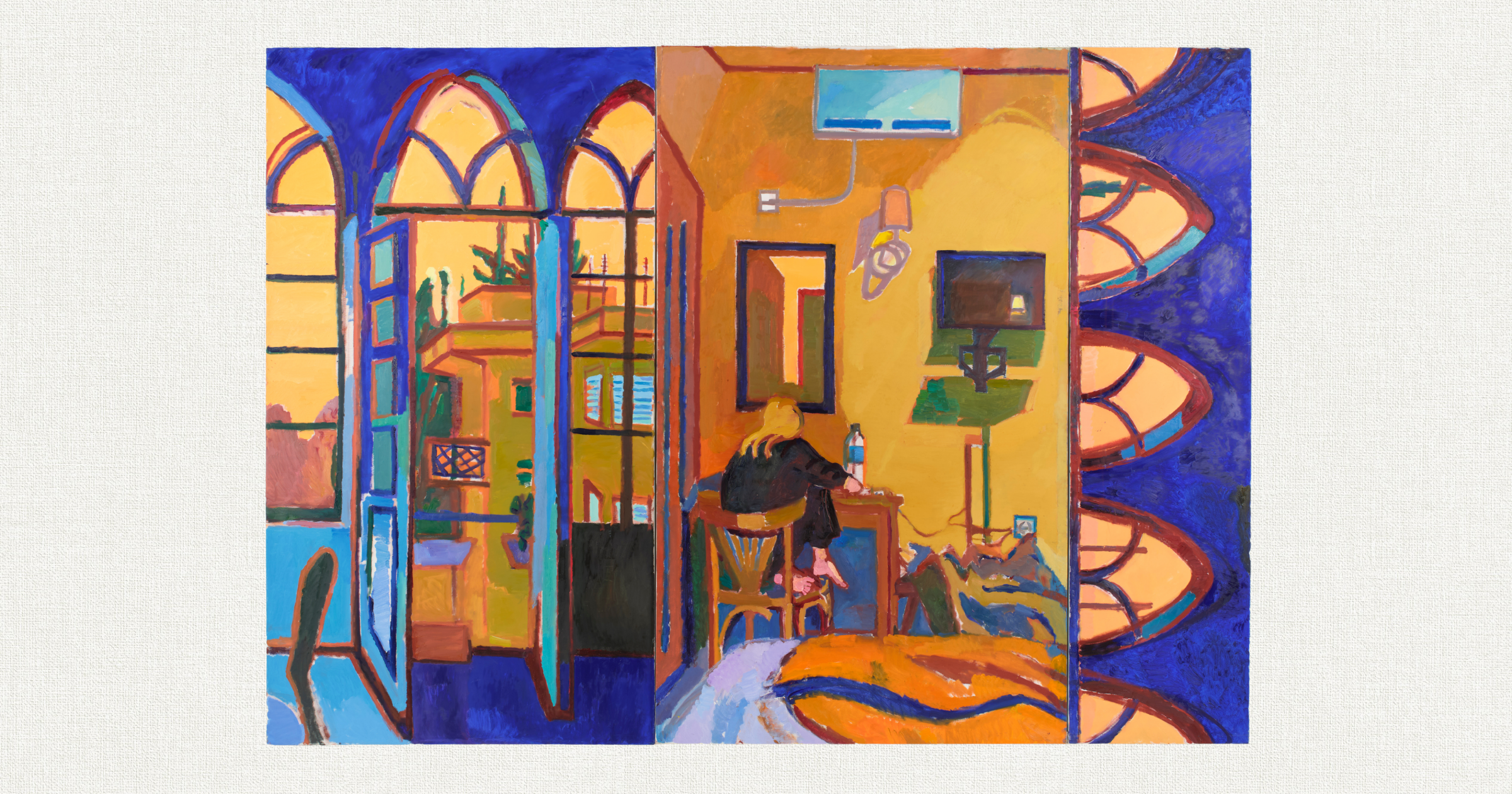
Last year, the gallery featured Zourabova’s work again, in the solo show “Nightlight.” The artist’s oversized oil paintings depict vibrant scenes of everyday Israeli life—balconies, beaches and sunny kitchens. Based in Tel Aviv, Zourabova favors a palette of vivid colors that command attention.
Zourabova was part of the gallery’s recent show, “Belonging to Elsewhere,” which also included Israelis Ruti de Vries, Noa Ironic, Olga Kundina (another member of the New Barbizon Group) and Dana Nechmad. Zourabova’s Table—a domestic scene in which people seem to have just left the room—aligns with the show’s themes of memory and emotional landscape. Many of these works and others are available to enjoy on the gallery’s website.
Nechmad will return to the gallery later this year for a solo exhibition. The artist incorporates embroidery and textiles into her drawings of human figures. Kaliner described the Tel Aviv native’s work as “irreversible. Once you puncture a needle through paper, you can’t reverse it. Her mindset is looking forward, as if to say, ‘You can’t reverse the past, you have to go on.’ ”
Born in Volgograd, Russia, Kaliner moved with her family to Israel when she was 11. They were among the last families to leave Volgograd in 1997, as her grandmother worked as manager of the Jewish Agency for Israel office there. Her family settled in Haifa, where Kaliner loved going to the Haifa Museum of Art as well as the Tikotin Museum of Japanese Art.
After her military service, Kaliner studied economics, finance and international relations. Her subsequent position in finance for an Israeli tech company led to her traveling around the United States in 2019. During these trips, she made a point of visiting museums and galleries.
“Art was my escape, comforting me,” said Kaliner, who shifts easily between English, Hebrew and Russian. While she has no formal art education, she said she is always “working hard on educating myself,” reading and researching. “I was and remain fascinated by the art industry. I think that we as dealers trade in something that holds soul.”
Kaliner noted that for most of her gallery’s three years in business, there has been conflict in the Middle East as well as bias against Israeli artists. Without giving specifics, she said that some art residencies are closing their doors to Israelis, and shows with Israeli artists have been canceled.
“I am aware, and what I am trying to do is create a safe place,” she said, adding that she is grateful that the gallery hasn’t received negative remarks or pushback from locals or from the arts community.
Lately, she is increasingly in touch with Jewish art dealers, curators and others involved in the art world, and she says these days there is more empathy among them.
“October 7 highlighted to me my allies in the industry on a professional level,” she said, noting that there are now nonprofits—she hesitated to name them—who are working behind the scenes to support Jewish and Israeli artists and curators.
When she receives comments that she is “brave” for featuring Israeli artists, she always answers, “I am Israeli. The gallery is a reflection of my vision and who I am. I’m not willing to be someone else.”
Sandee Brawarsky is an award-winning journalist, editor and author of several books, most recently 212 Views of Central Park: Experiencing New York City’s Jewel From Every Angle.
 Facebook
 Instagram
 Twitter

Leave a Reply